How to Store Pet‑walking Supplies Near the Apartment Door

Living in a city apartment often means juggling a tight hallway, a small entryway, and the daily routine of walking a dog or cat. When the leash, treats, waste bags, and rain gear are scattered across the floor, the first impression of your home can feel chaotic before a guest even steps inside. This article walks you through seven thoughtful ways to organize those essentials right by the door without sacrificing style, space, or safety. By the end, you’ll have a functional, attractive zone that welcomes both your four‑legged companion and anyone else who drops by.
1. Choose a Slim, Wall‑Mounted Cabinet That Completes the Entryway
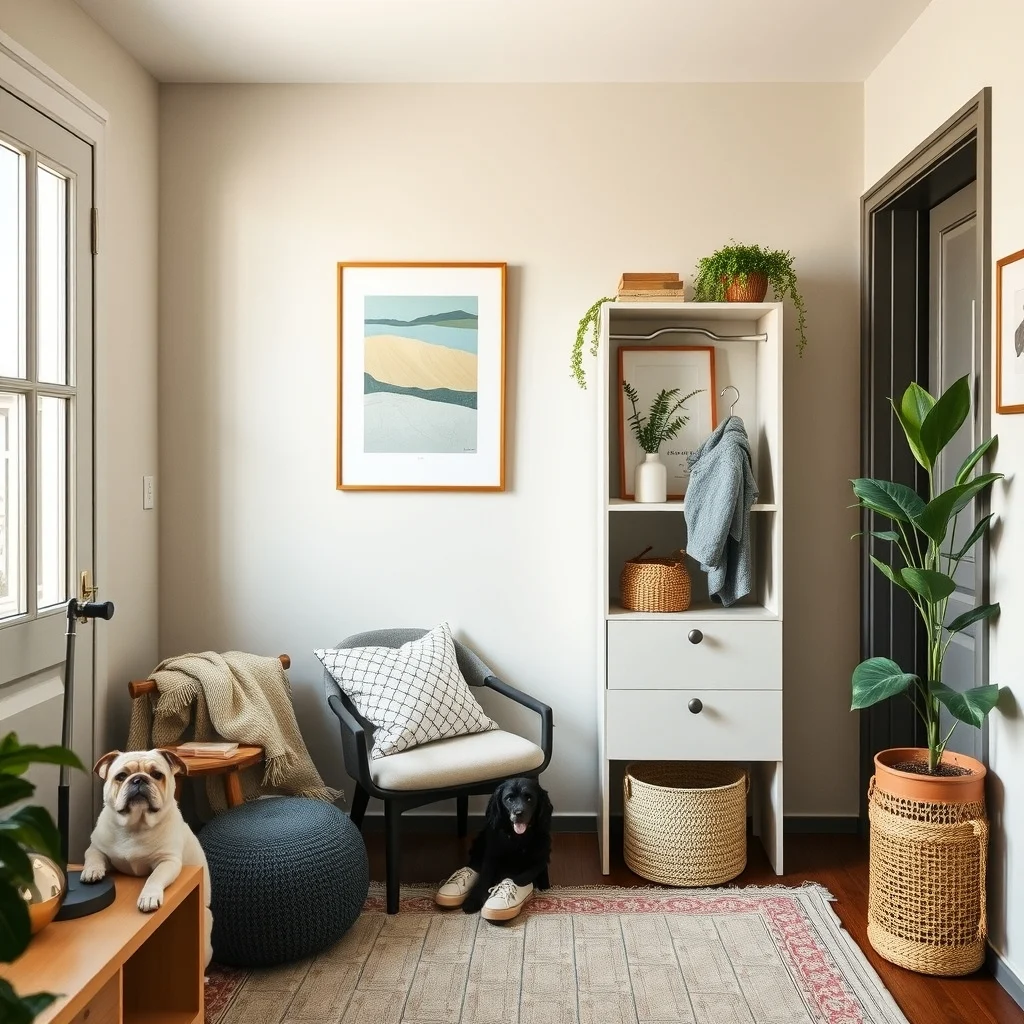
This image is by AI for inspiration only.
A narrow cabinet that stretches from floor to ceiling can hold larger items such as a collapsible carrier, a spare leash, or a small bag of pet food while staying out of the way of foot traffic. Selecting a finish that mirrors nearby trim—perhaps a warm oak veneer or a matte charcoal lacquer—helps the piece blend seamlessly with the surrounding walls. Inside, adjustable shelves allow you to re‑configure the space as your pet’s needs evolve, and a brushed‑metal handle adds a subtle design touch without protruding into the walkway. The vertical orientation makes use of otherwise wasted wall space, keeping the floor clear for quick exits. Just be sure the cabinet is anchored securely to the studs; a wobbly unit can become a safety hazard for both you and your pet.
2. Use a Pull‑Out Tray for Leashes and Collars to Keep Them Visible
Leashes and collars are used several times a day, so they deserve a spot that’s both accessible and organized. A shallow pull‑out tray installed beneath the cabinet door offers a dedicated lane where each leash can slide into its own groove, while collars rest on a small raised ridge. The tray’s surface can be finished in a soft, low‑gloss laminate that resists scratches from metal tags. Because the tray slides out, you can glance at the contents without opening the entire cabinet, which saves time on those rushed morning departures. If the tray is made of a lightweight wood, it adds a warm texture that contrasts nicely with a metal cabinet, but be aware that heavier metal leashes might cause the tray to sag over time, so choose a sturdy hardware set.
3. Incorporate a Small Bench with Hidden Storage for Shoes and Poop Bags
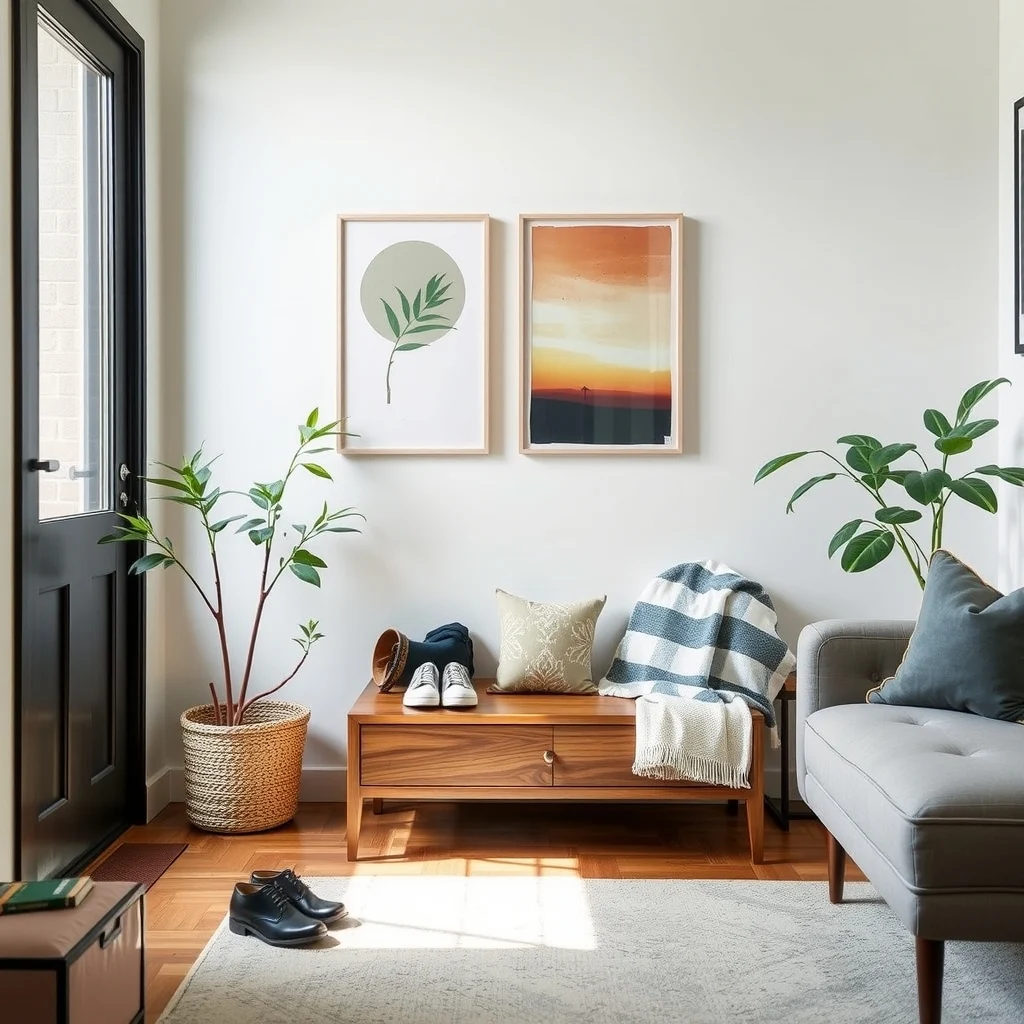
This image is by AI for inspiration only.
A bench that doubles as a seat gives you a place to slip off shoes while keeping your hands free for a leash. Look for a piece with a hinged lid that opens to reveal a compartment sized for a roll of waste bags, a few spare toys, or a compact first‑aid kit. Upholstering the seat in a durable, stain‑resistant fabric—such as a woven polyester in a muted taupe—protects against muddy paws and adds a tactile layer to the entryway. The bench’s height should match the average adult step so that sitting feels natural, yet low enough to stay out of the visual line of sight. One trade‑off is that a bench takes up more floor area than a wall hook, so it works best in apartments where the entry hallway is at least three feet wide.
4. Add a Vertical Mesh Organizer for Waste Bags and Treats
Mesh pockets mounted on a narrow strip of wood or metal create a breathable storage solution for items that need to stay dry but also be easy to grab. The open weave prevents moisture from building up, which is essential for biodegradable waste bags that can become soggy after a rainy walk. By arranging the pockets vertically, you maximize the use of a narrow wall niche without adding bulk. Choose a rust‑proof metal mesh in a brushed bronze finish to echo other hardware in the space, and line the back panel with a thin cork sheet to dampen any rattling sounds when you reach for a treat pouch. The only limitation is that very small items, like a tiny keychain, might slip through the openings, so a secondary small bin may be required.
5. Install a Hook System That Balances Function and Aesthetic
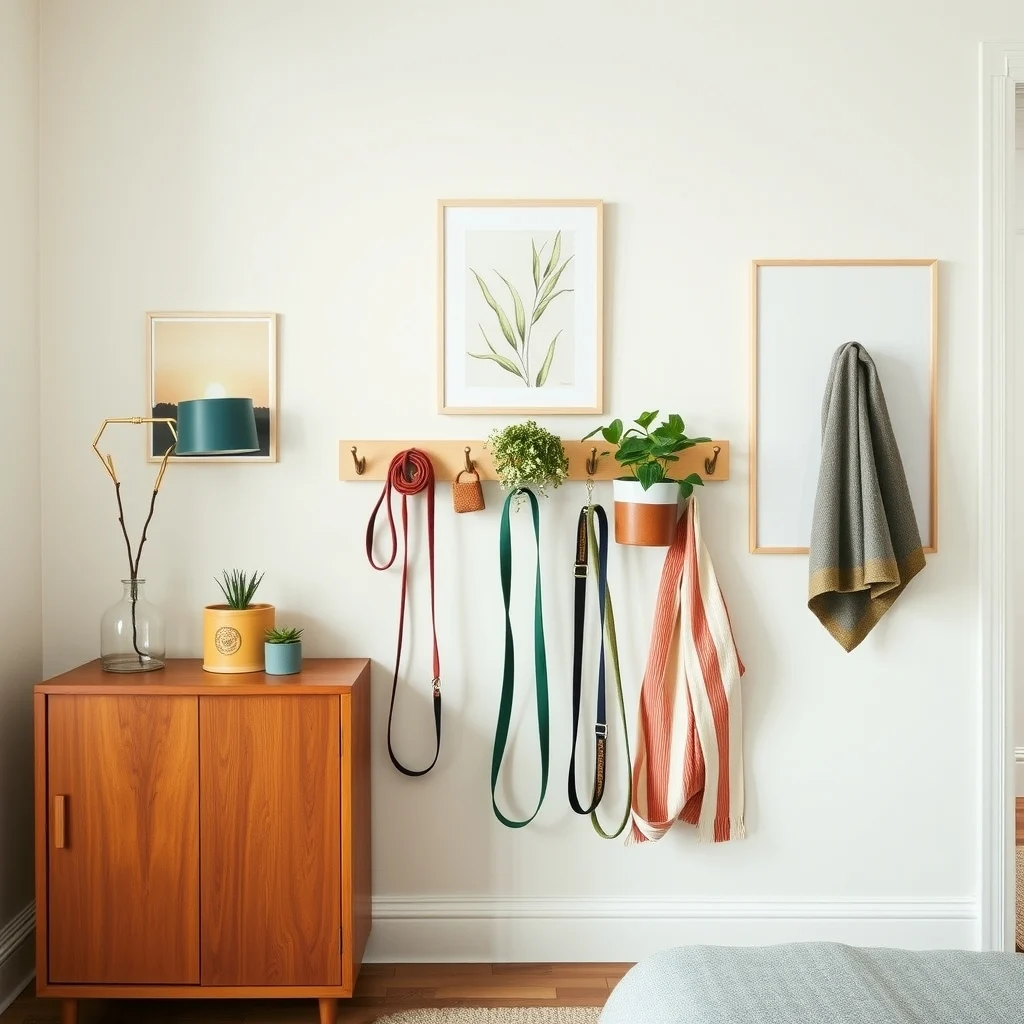
This image is by AI for inspiration only.
Hooks remain the most straightforward way to hang leashes, harnesses, and even a raincoat. Rather than a single row of generic nails, opt for a curated set of decorative hooks—perhaps three brushed‑nickel hooks of varying lengths, each anchored into a reclaimed wood strip. The differing heights allow you to separate heavy leashes from lightweight collars, preventing tangles. The wood backdrop adds warmth and can be stained to match the floorboards, creating a cohesive look. When selecting the hooks, ensure the weight rating exceeds the heaviest item you’ll hang; a thin hook might strip the wall under the weight of a thick, padded harness. Installing the strip at eye level keeps the items visible without forcing you to stoop.
6. Create a Mini “Rain‑Ready” Zone With a Mat and Umbrella Stand
Rainy days often turn the entryway into a mud‑splattered mess. Placing a low‑profile, quick‑dry mat made of recycled rubber in a natural stone hue provides a slip‑resistant surface for wiping paws. Pair the mat with a slender umbrella stand that also serves as a holder for a waterproof tote or a folded raincoat. The stand’s metal frame can be powder‑coated in a muted slate, complementing the mat’s earthy tone while resisting corrosion. This duo not only protects your flooring but also signals to you that the space is prepared for the elements. If space is extremely limited, a fold‑away mat that rolls up into a compact cylinder can be stored behind the cabinet, though it will require an extra step each time you return home.
7. Light the Area Softly to Highlight the Storage While Maintaining Warmth
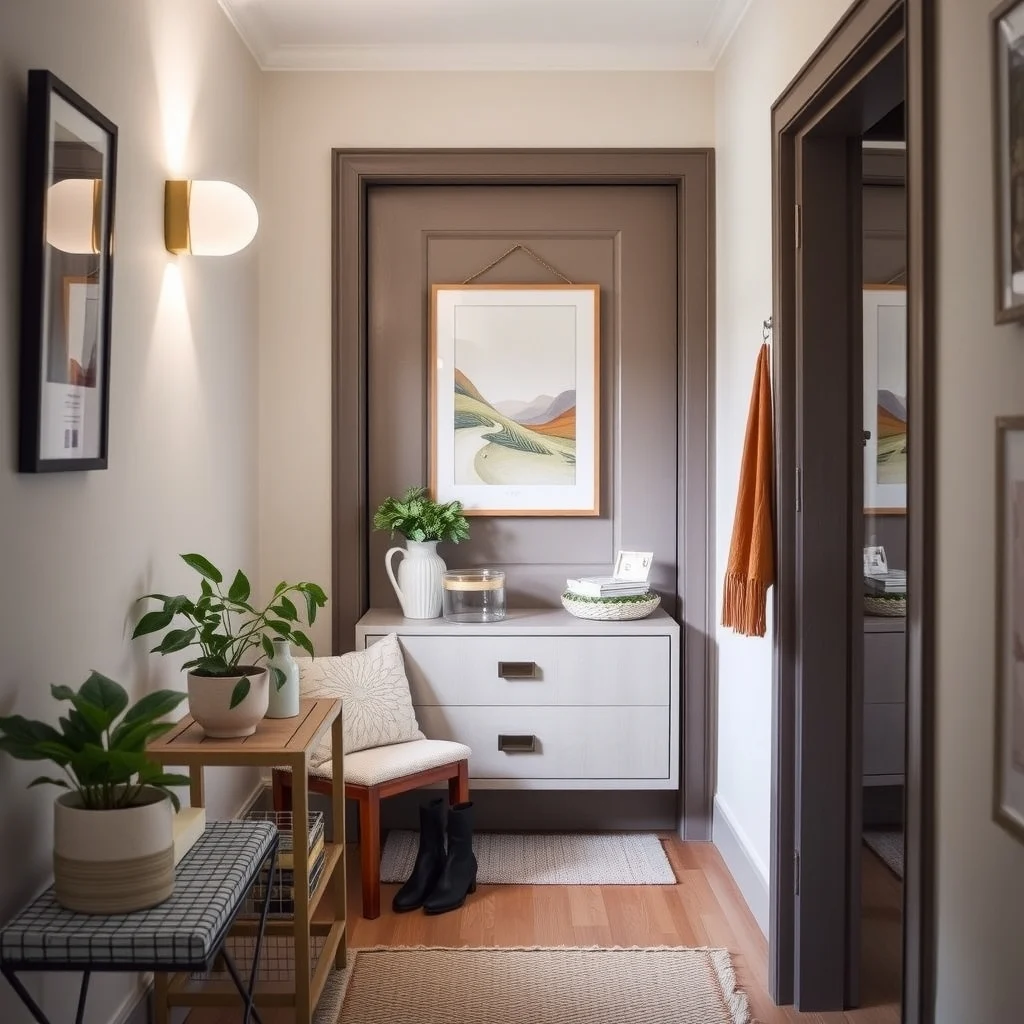
This image is by AI for inspiration only.
Good lighting makes a narrow entry feel welcoming and helps you locate supplies quickly after a dim evening walk. A wall‑mounted LED sconce with a frosted glass shade diffuses light evenly across the cabinet and organizer, casting a gentle glow that highlights the textures of wood, metal, and fabric without creating harsh shadows. Choosing a warm color temperature—around 2700 K—keeps the space feeling cozy, while the low energy draw of LEDs saves on electricity. If the ceiling is low, a recessed fixture can be positioned higher to avoid crowding the headroom. The only drawback is that a single sconce may not illuminate a very deep hallway, so a supplemental plug‑in lamp on a nearby console could be added if needed.
FAQ
This image is by AI for inspiration only.
Can I use a freestanding shoe rack for pet‑walking gear?
Yes, a freestanding shoe rack can hold leashes, treats, and waste bags, but it may take up valuable floor space that could otherwise be kept clear for quick exits.
What material is best for a waterproof mat?
A mat made from recycled rubber or a high‑density polymer resists water and is easy to clean, making it ideal for muddy paws and rain‑soaked coats.
How do I keep the area from smelling?
Regularly empty waste bag dispensers, use a small, sealed container for used bags, and place a discreet odor‑absorbing sachet nearby to maintain freshness.
Is it okay to store pet food near the door?
Storing a small amount of dry pet food in a sealed container is fine, but keep it away from direct sunlight and moisture to preserve its quality.
Final Thoughts
Designing a pet‑walking station by the apartment door is less about adding more furniture and more about integrating purposeful storage into the existing flow of the space. By choosing vertical solutions, combining function with texture, and paying attention to lighting and durability, you create an area that serves both you and your pet without compromising the aesthetic of your entryway. A well‑planned setup reduces daily friction, protects your floors, and presents a welcoming first impression—one that says you care about organization as much as you care about your companion.