Small Apartment Laundry‑to‑closet System for Winter Clothes
When the temperature drops, the closet quickly fills with thick sweaters, wool scarves, and heavy coats, while the laundry area becomes a staging ground for damp socks and freshly washed blankets. In a studio or one‑bedroom layout, the two zones often compete for the same square footage, leaving you to choose between a tidy wardrobe and a functional laundry corner. This article walks through seven ways to merge those functions into a single, well‑designed unit that keeps winter garments organized, dry, and ready to wear without sacrificing style.
1. Stack the Washer and Dryer Inside a Custom Closet Frame
This image is by AI for inspiration only.
© 2026 AI Illustrator — Inspiration Only
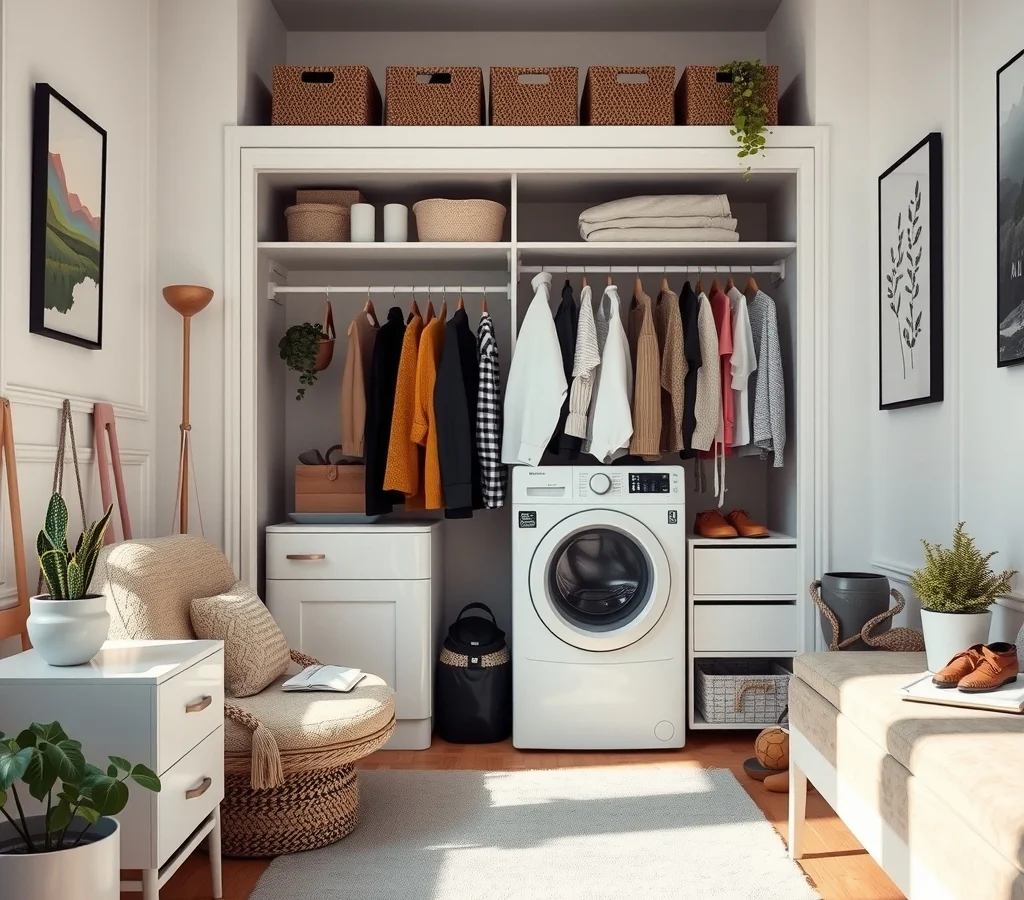
Choosing a stacked configuration lets you place the washer and dryer within a built‑in closet skeleton that reaches from floor to ceiling. By framing the appliances with painted plywood or low‑gloss MDF in a neutral shade such as soft greige, the machines disappear behind a seamless façade that matches the rest of the room. A narrow trim around the doors hides the control panels while still allowing easy access. Because the unit occupies only the width of a standard closet, you retain the full depth for hanging rods and shelving above the appliances. The trade‑off is a slightly higher initial cost for custom carpentry, but the gain in floor space makes it worthwhile for apartments where every inch counts.
2. Install a Pull‑Out Garment Rack Behind the Laundry Door
This image is by AI for inspiration only.
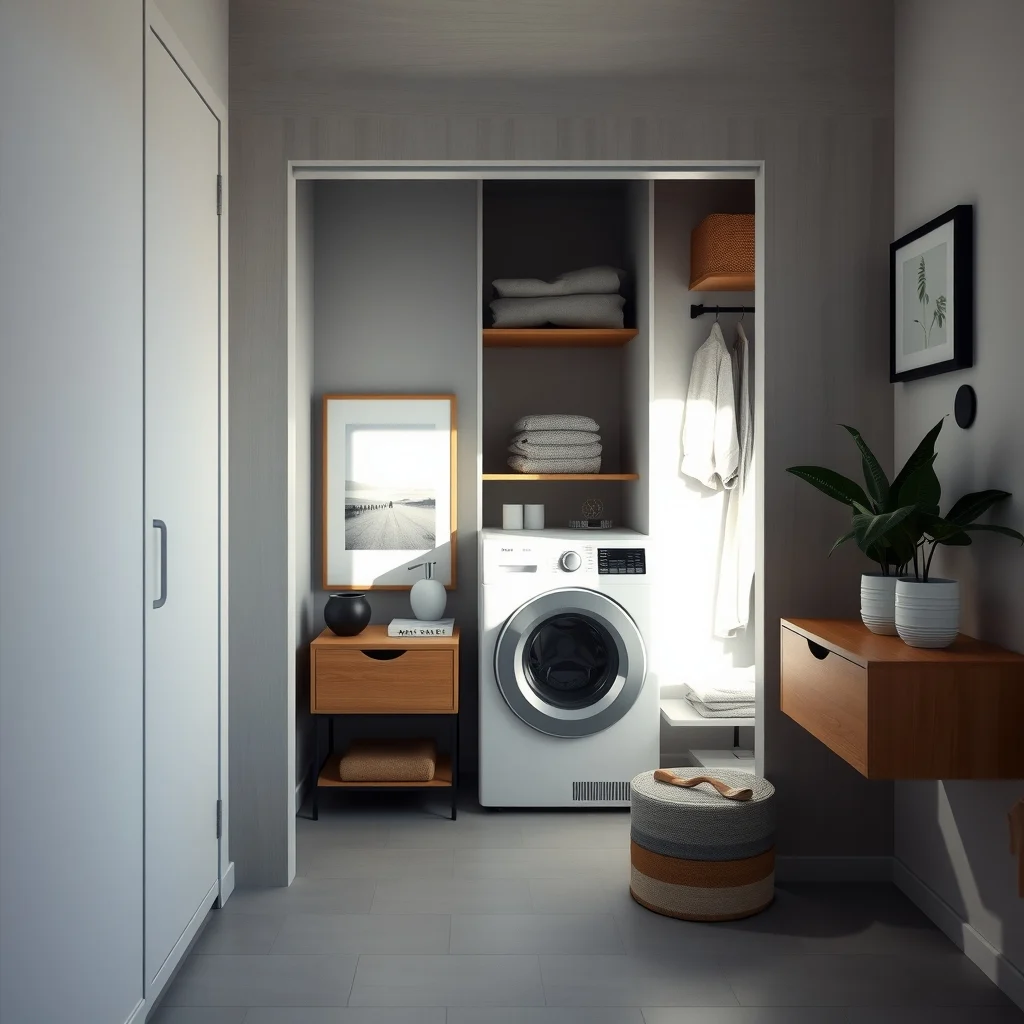
A pull‑out rack that slides out from the back of the closet door provides a dedicated hanging area for coats and jackets while the washer runs. The rack can be built from brushed steel brackets and a wooden rail finished in warm walnut, offering a sturdy yet refined look. When closed, the rack nests flush against the wall, keeping the space tidy; when opened, it extends a full three feet, giving enough length for long coats without crowding the floor. This solution works best when the closet depth exceeds 24 inches, allowing the rack to slide without obstructing the appliances. If the depth is tighter, a narrower, double‑tiered rack can be used, though it will hold fewer items.
3. Use Sliding Doors with a Built‑In Ironing Board
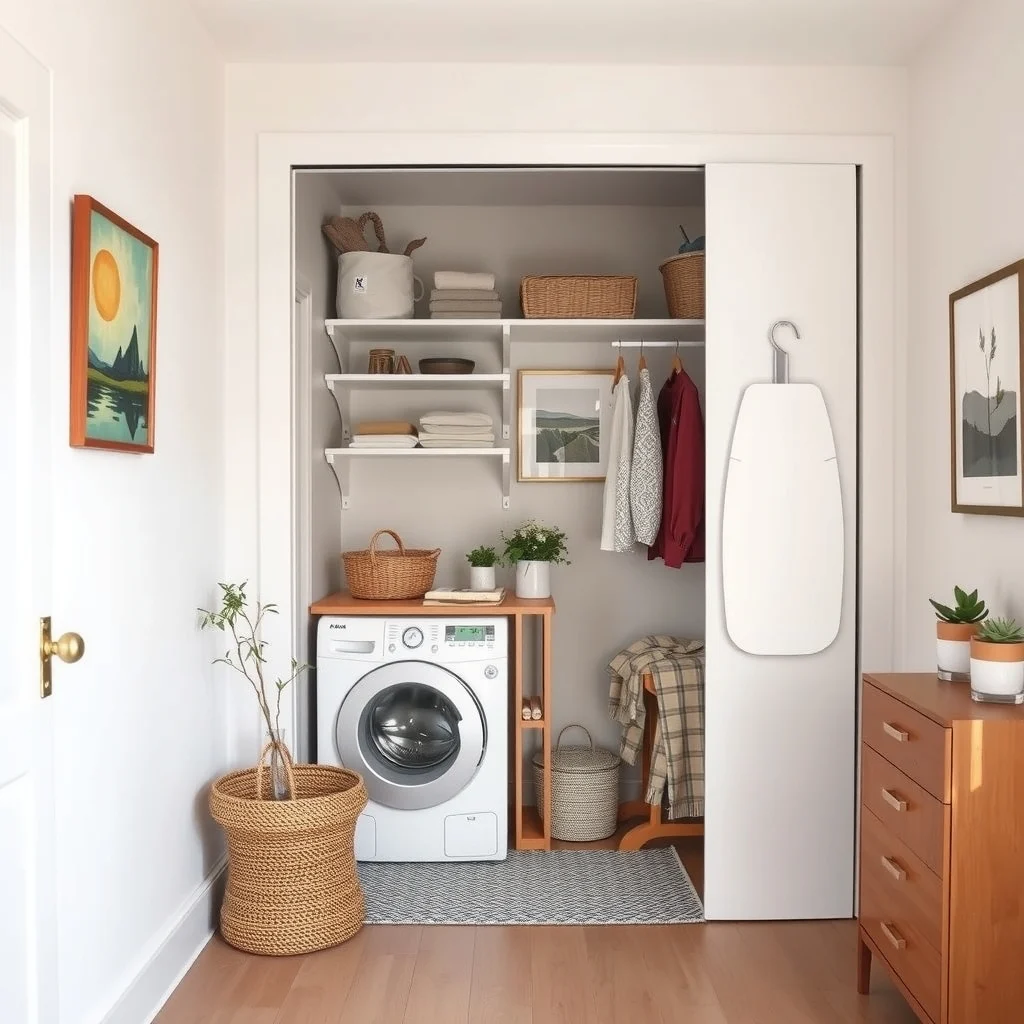
This image is by AI for inspiration only.
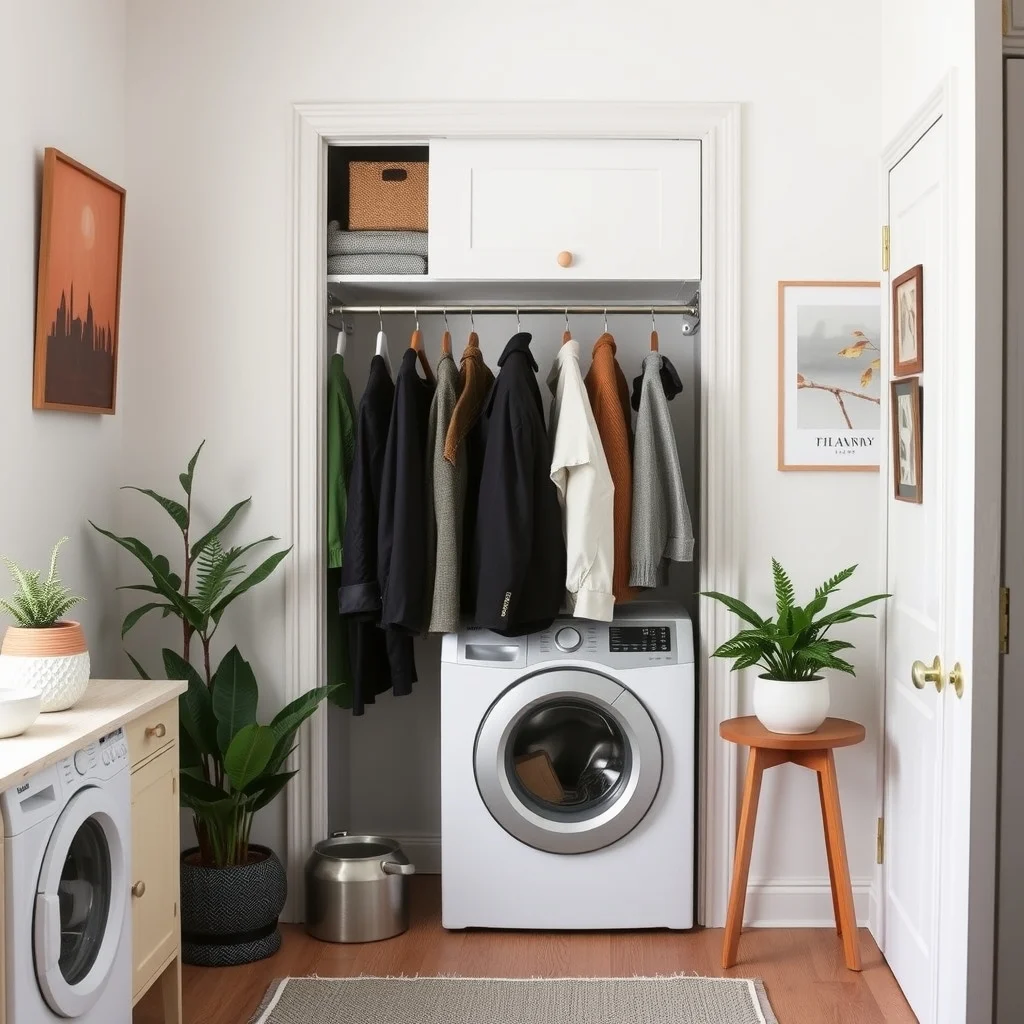
Replacing a traditional hinged door with a sliding panel frees up interior clearance, which is especially helpful when the closet houses both laundry and clothing. Within the panel, a thin, fold‑down ironing board can be installed on the inside face, hinged at the top and supported by a discreet magnetic latch. When you need to press a sweater, the board slides out and folds flat, using the vertical space that would otherwise be empty. The sliding mechanism can be crafted from matte black metal tracks that complement industrial‑style lighting, and the board itself can be covered with a heat‑resistant fabric in a muted charcoal. The main limitation is that the board adds a small amount of weight to the door, so the sliding hardware must be rated for the load.
4. Add Vertical Shelving with Fabric Bins for Seasonal Items
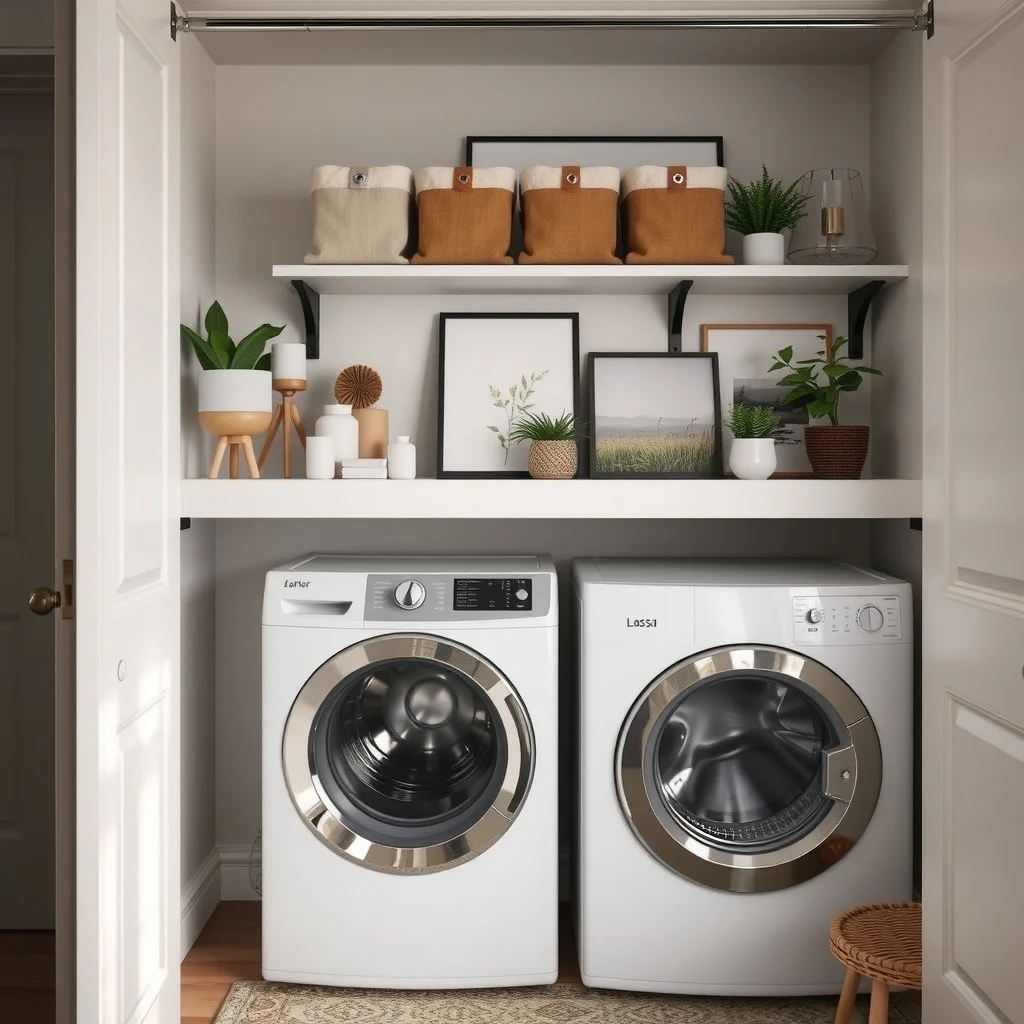
This image is by AI for inspiration only.
Above the washer and dryer, install a row of narrow shelves that run the full width of the closet. On each shelf, place fabric bins made from canvas or linen in earthy tones like deep olive or soft terracotta. These bins are ideal for storing out‑of‑season items such as summer t‑shirts, light scarves, or extra bedding, keeping them out of the way while still accessible. The vertical orientation draws the eye upward, creating an illusion of height that makes the compact space feel larger. One consideration is that heavy bins can cause the shelves to sag over time; using reinforced brackets or a solid back panel mitigates this risk.
5. Incorporate a Fold‑Down Drying Rack That Doubles as a Shelf
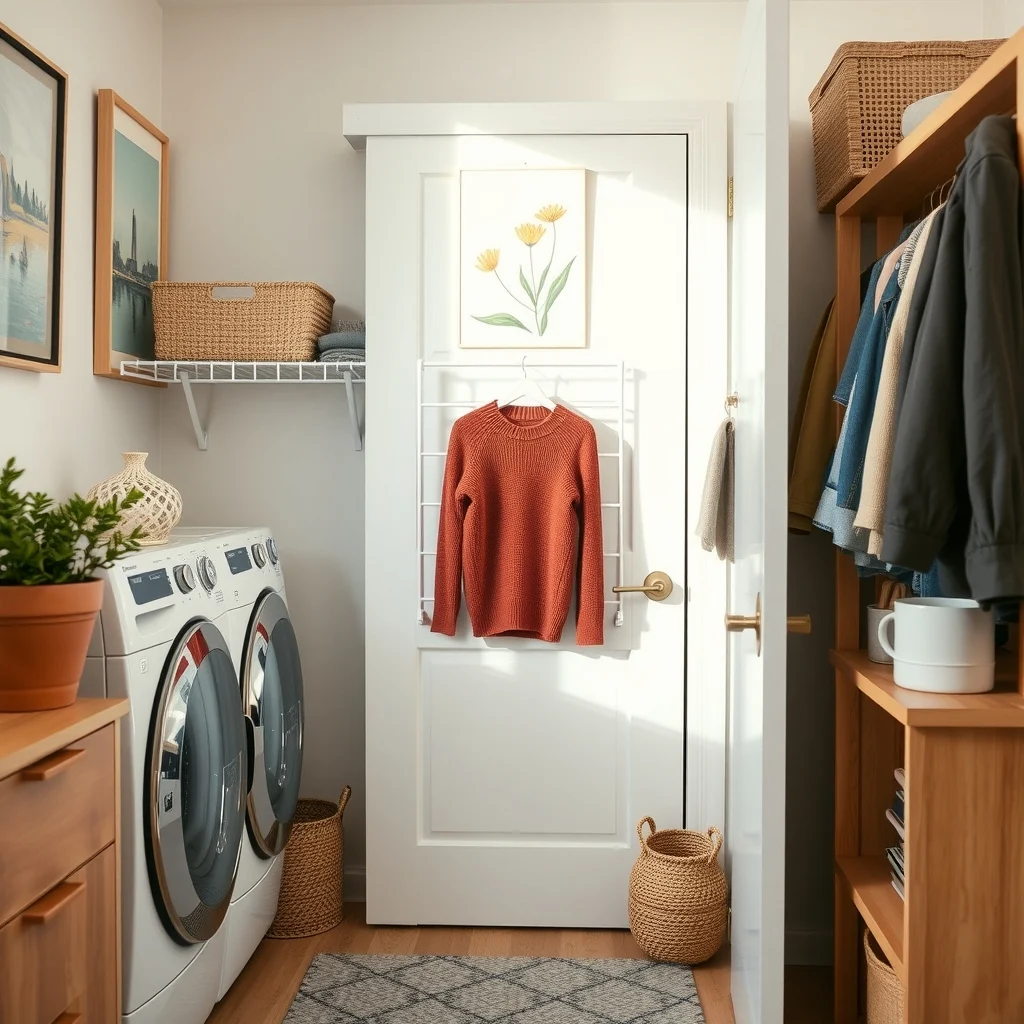
This image is by AI for inspiration only.
A fold‑down drying rack mounted on the interior side of the closet door can serve two purposes: it provides a place to air‑dry delicate sweaters and, when folded up, becomes an additional shelf for folded sweaters or folded blankets. Construct the rack from powder‑coated steel in a brushed nickel finish, and attach a wooden shelf made of light oak that folds down over the rack’s hinges. This dual‑function piece maximizes the limited wall area without requiring extra floor space. The drawback is that the rack must be cleared before the door can close, so it works best when you schedule drying sessions around your daily routine.
6. Place a Heated Coat Rack Near the Laundry Area
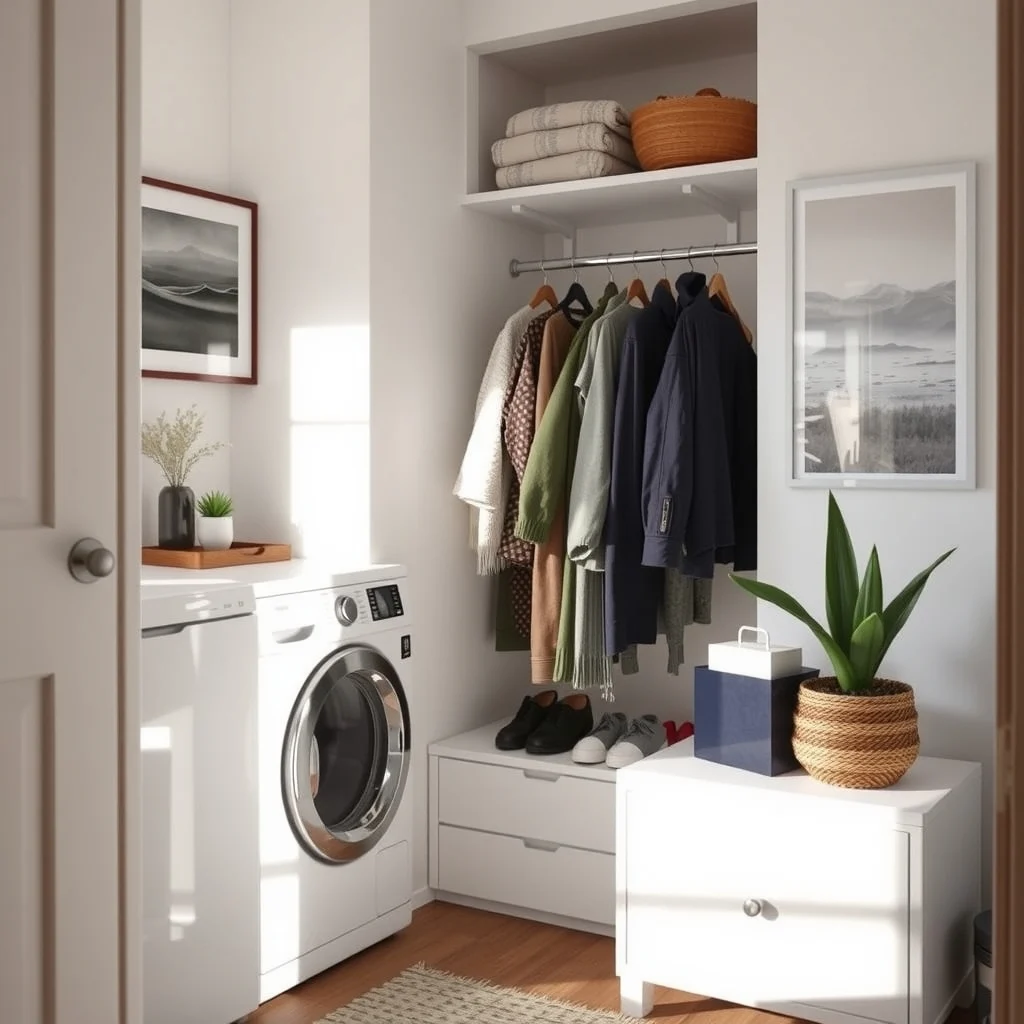
This image is by AI for inspiration only.
A sleek, heated coat rack positioned just outside the closet door offers a warm spot for jackets and scarves to dry after a rainy commute. Choose a model with a stainless‑steel frame and a low‑profile heating element that stays below the surface temperature of a hot cup of tea, ensuring safety in a small apartment. The rack’s minimal footprint—often no wider than a standard floor lamp—means it can sit on a narrow console table or a decorative tray without encroaching on walking paths. While the heat helps prevent musty odors, it does increase electricity usage slightly, so consider using it only during the coldest weeks.
7. Enhance the Space with Soft Lighting and Reflective Surfaces
This image is by AI for inspiration only.
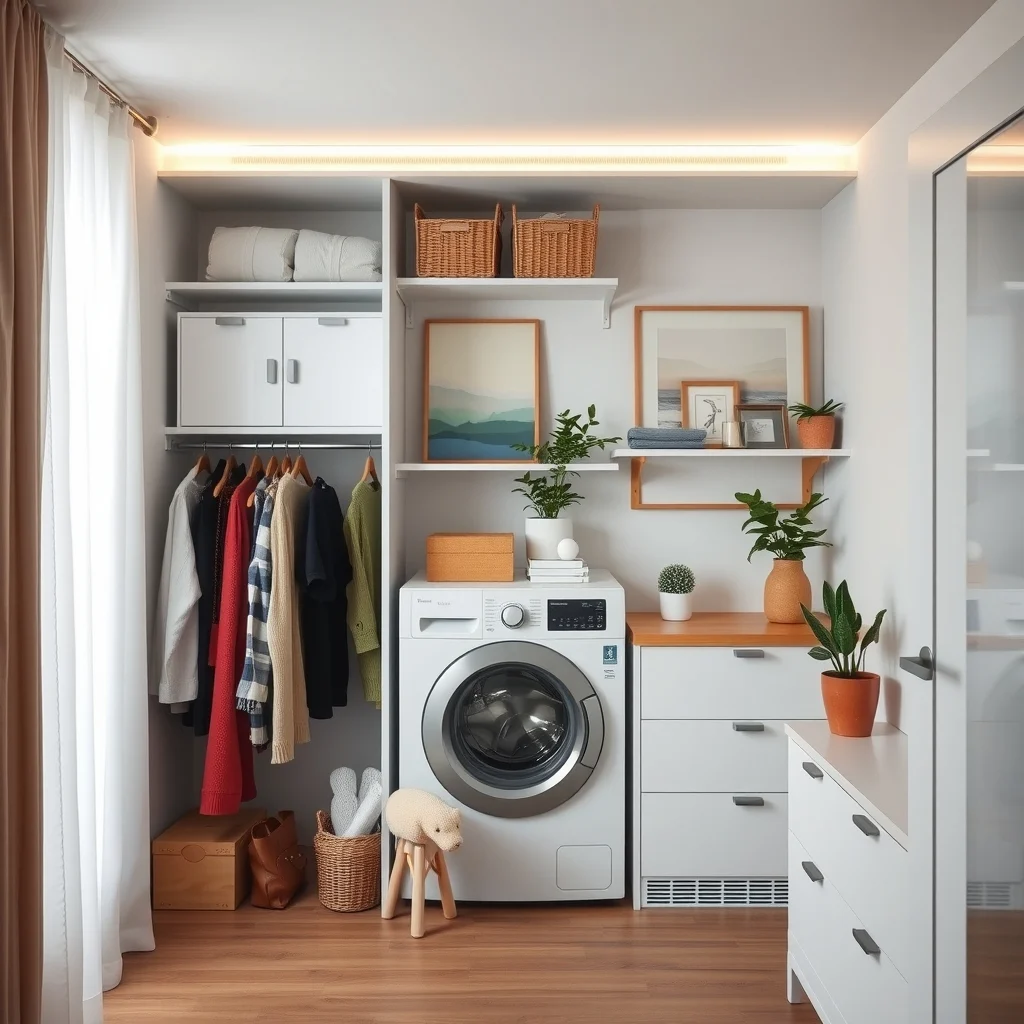
Good lighting transforms a compact laundry‑to‑closet system from a utilitarian nook into a welcoming part of the home. Install a recessed LED strip along the top of the closet frame, casting a diffused glow that illuminates both the appliances and hanging rods without creating harsh shadows. Complement the strip with a small, wall‑mounted mirror on the opposite side; the reflective surface bounces light around the room, making the area feel more open. Choose a warm white color temperature (around 2700 K) to keep the space cozy during winter evenings. The only caution is to keep the lighting fixtures away from direct exposure to steam, which could reduce their lifespan.
FAQ
This image is by AI for inspiration only.
How can I hide the washer and dryer in a small closet without blocking ventilation?
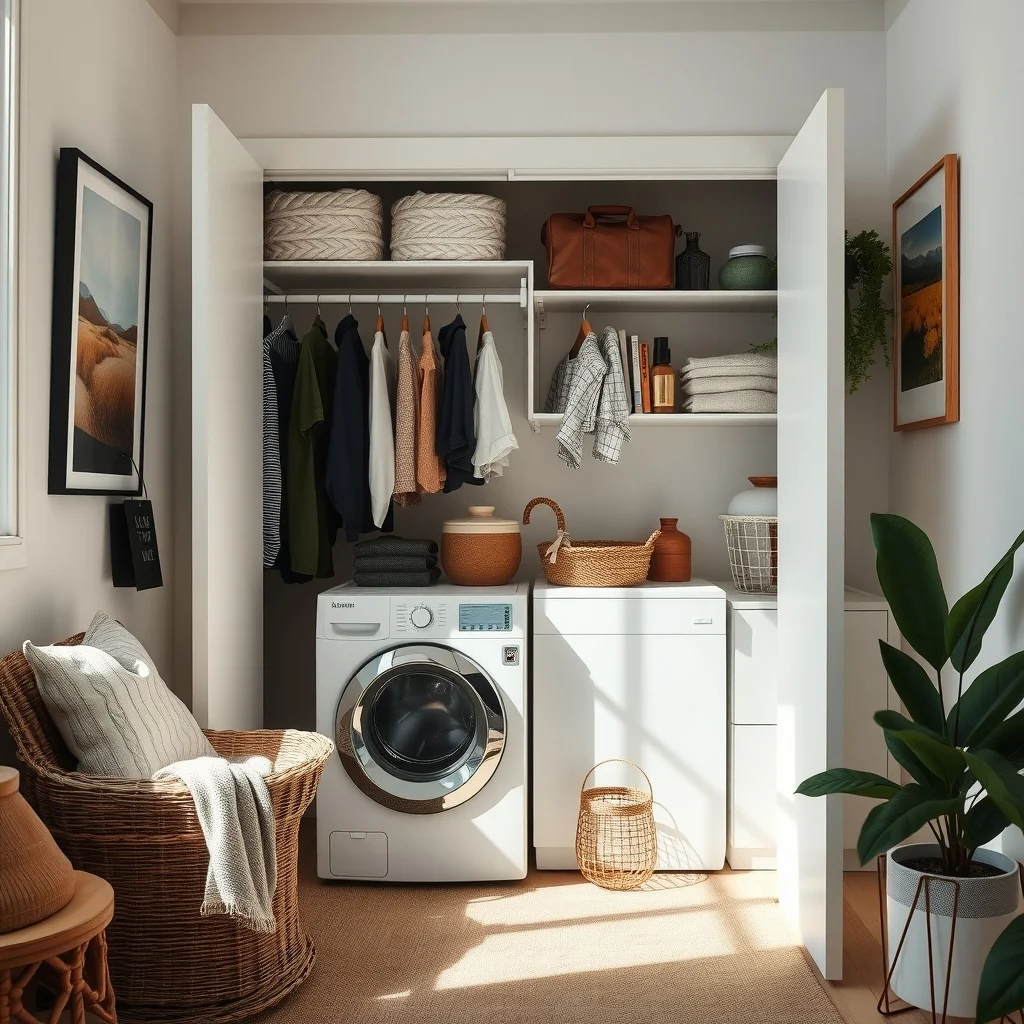
You can enclose the appliances within a custom frame that leaves a three‑inch clearance on the back and sides for airflow. Use vent grills that match the closet’s finish, and ensure the dryer’s exhaust hose exits through a wall or window according to local building codes.
What material is best for storing heavy winter coats?
Wooden hanging rods made of solid oak or maple provide the strength needed for bulky coats. Pair them with a smooth, non‑slip finish to prevent garments from sliding off.
Is it safe to install a dryer vent inside a closet?
Ventilation must lead directly to the exterior; a closet‑mounted vent without a proper duct is not safe. Use a rigid metal duct that runs from the dryer to a wall vent, and keep the duct length as short as possible to maintain efficiency.
How do I keep winter clothes fresh when they share space with laundry?
Place a small, charcoal‑filled air purifier on the top shelf of the closet to absorb moisture and odors. Regularly open the closet doors to circulate air, and use breathable fabric bins instead of plastic containers.
Can a stacked washer‑dryer be placed on a concrete slab?
Yes, as long as the slab is level and the appliances have a vibration‑absorbing mat beneath them. The mat reduces noise and protects the concrete from any potential water seepage.
Final Thoughts
This image is by AI for inspiration only.
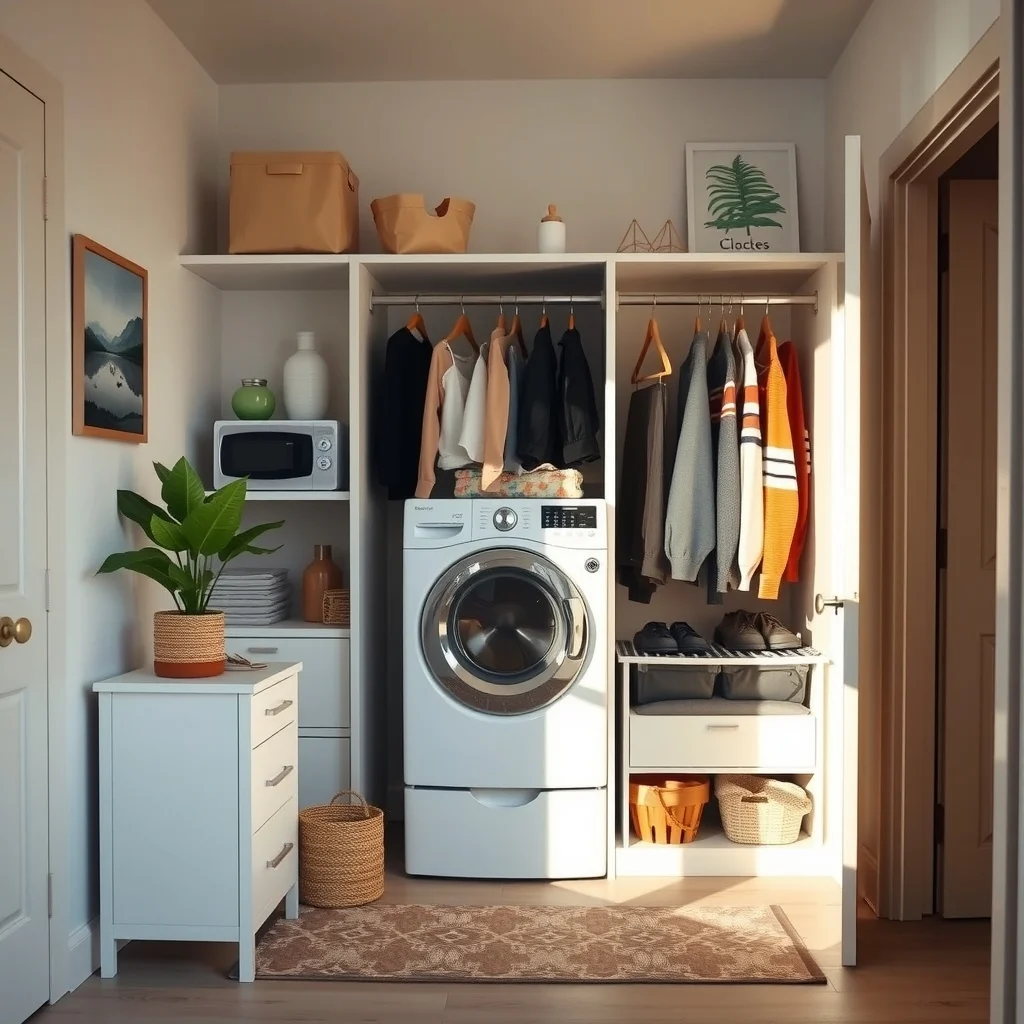
Integrating laundry functions with winter wardrobe storage is a practical response to the constraints of small‑space living. By stacking appliances, adding pull‑out racks, and using clever dual‑purpose fixtures, you create a cohesive unit that serves both needs without sacrificing aesthetics. The key is to balance durability with style—choose materials that withstand humidity while contributing to a calm, inviting atmosphere. With thoughtful planning, the combined laundry‑to‑closet system can become a quiet, organized corner of your home, ready to support the seasonal shift from summer tees to cozy knits.