How to Make a Functional Entryway Beside a Narrow Door

When a doorway is only a foot or two wider than the door itself, the space often feels like an afterthought—a place for shoes to pile up or a hallway that never quite works. Yet that slim corridor can become a welcoming transition if you treat it as a purposeful room rather than a gap. In this article you’ll discover seven ways to shape a narrow entryway into a functional, attractive zone that greets guests, stores the essentials you need daily, and sets the tone for the rest of your home.
1. Embrace Vertical Storage to Maximize Height
This image is by AI for inspiration only.
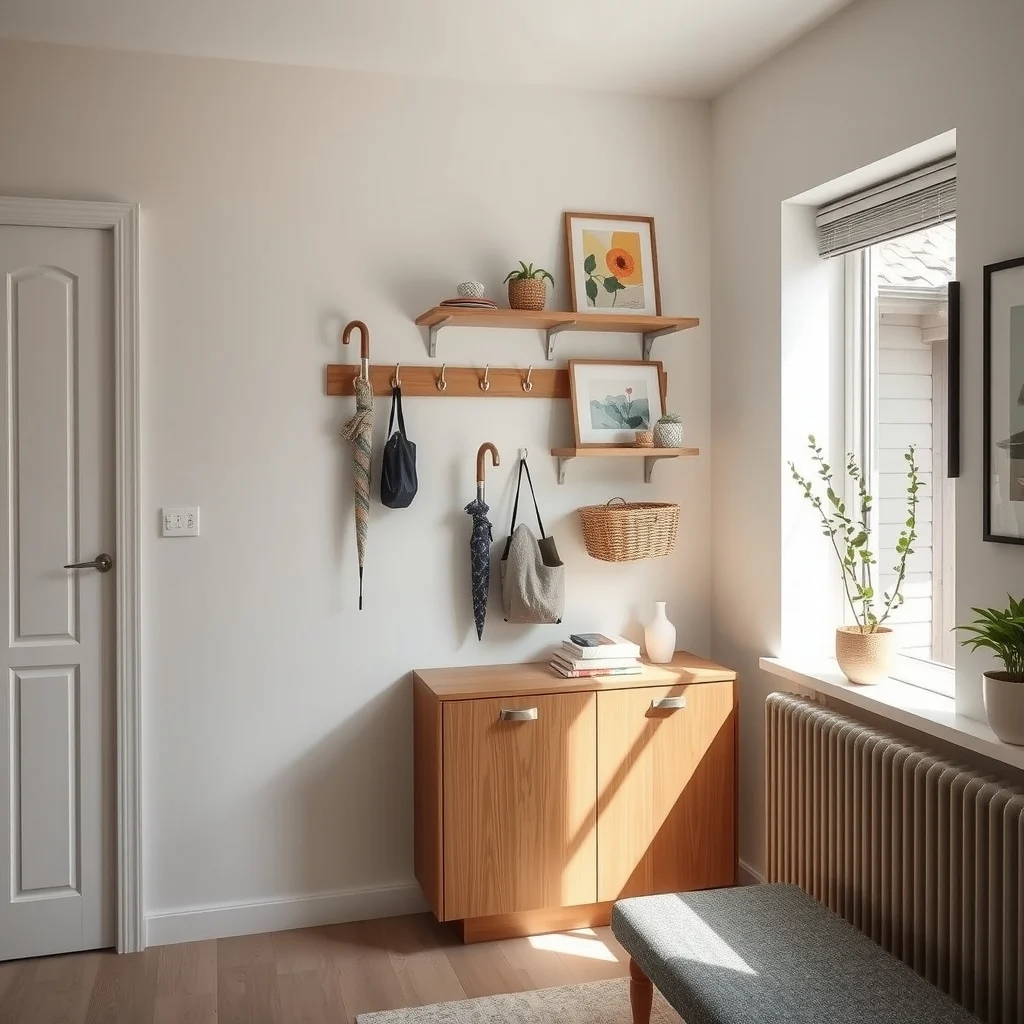
Because floor space is at a premium, the most effective storage often lives above eye level. A tall, narrow cabinet or a series of slim wall-mounted shelves can hold umbrellas, coats, and bags without intruding on the limited width. Choosing a finish that matches or subtly contrasts the surrounding wall—such as brushed oak against a warm greige paint—creates a seamless look while still defining a dedicated storage zone. The vertical orientation also draws the eye upward, making the passage feel taller. When selecting hardware, opt for brushed brass pulls that add a touch of elegance without demanding visual weight. Keep in mind that very deep shelves can become difficult to reach in a confined space, so a depth of about six to eight inches works best.
2. Install a Slim Bench with Hidden Compartments
This image is by AI for inspiration only.
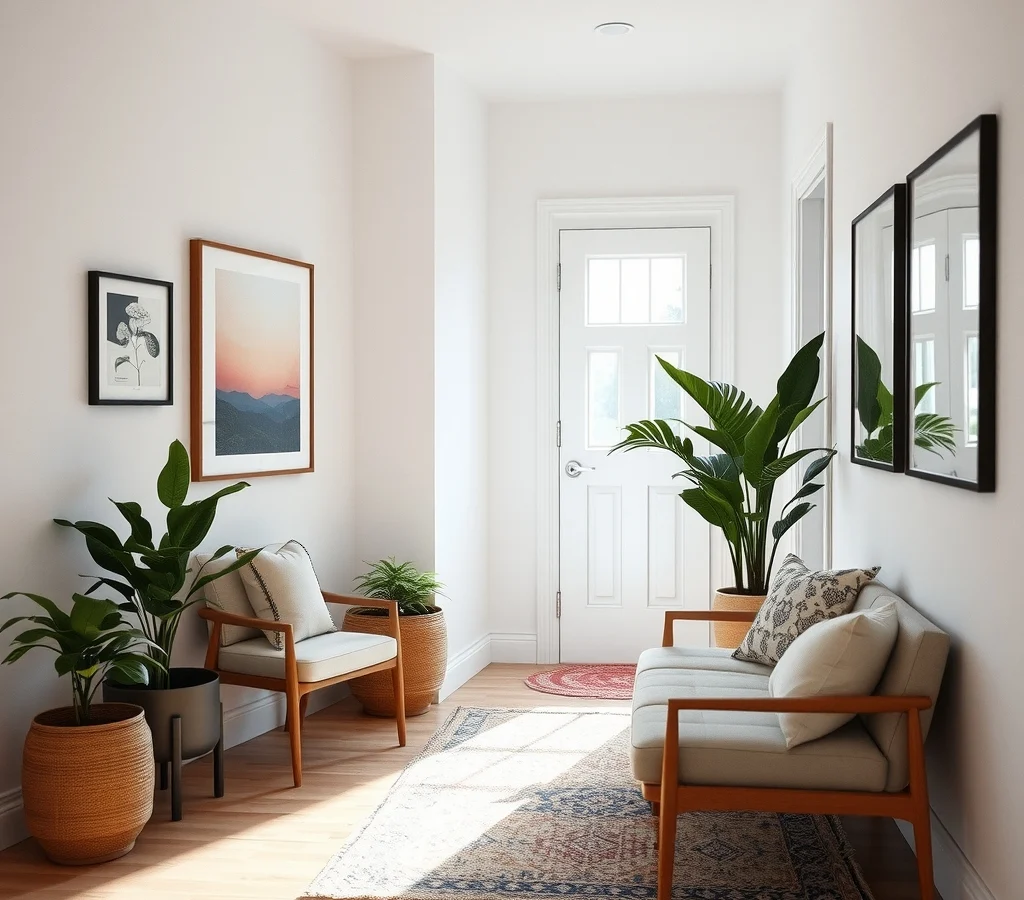
A narrow bench placed against one side of the entryway offers a place to sit while putting on shoes and provides concealed storage for items you prefer to keep out of sight. Look for a bench no wider than twelve inches; a simple linen cushion in a muted terracotta adds comfort without overwhelming the narrow profile. Inside, a shallow drawer or two can hold keys, gloves, and seasonal accessories. The bench’s backrest can be left exposed or upholstered in a fabric that echoes the hallway’s color palette, tying the piece into the overall design. One trade‑off is that a bench takes up a small amount of floor area, so be sure the remaining width still allows for easy passage.
3. Choose a Light‑Reflecting Wall Treatment
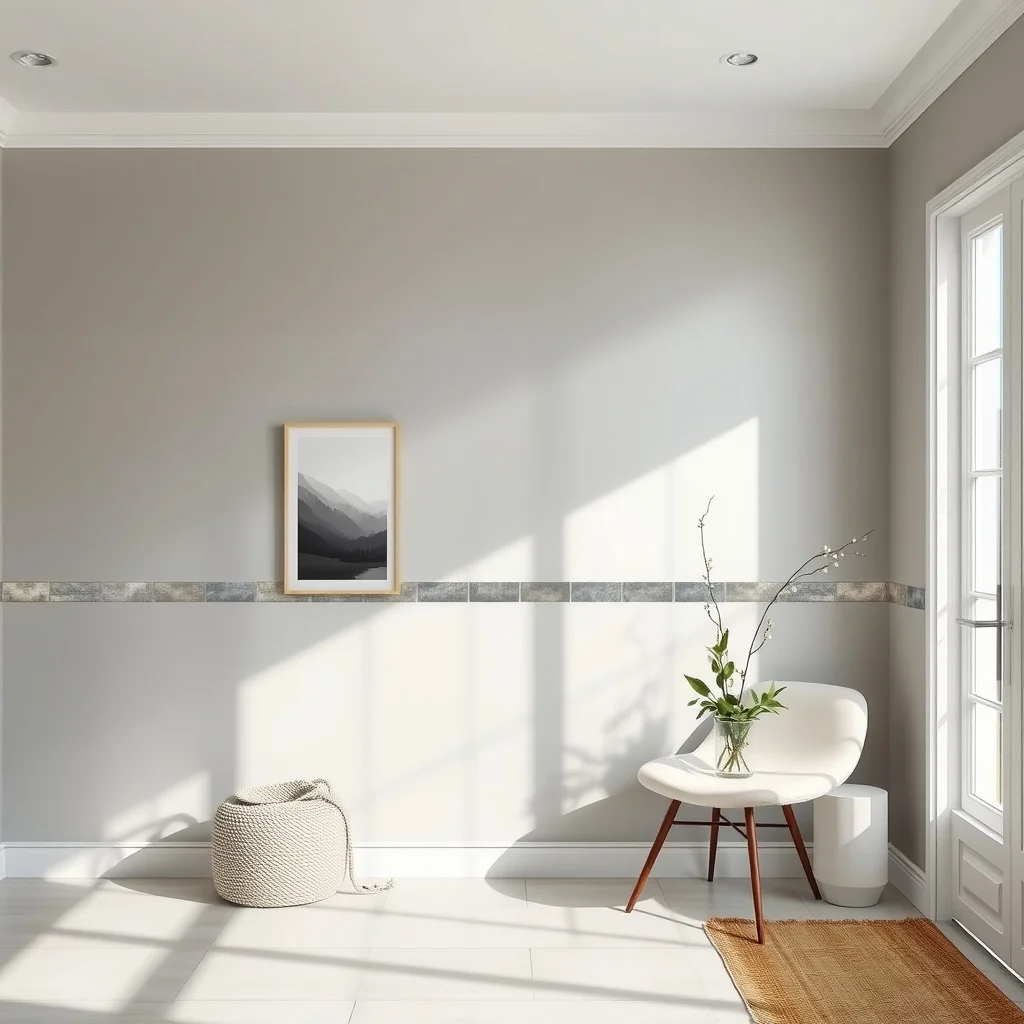
This image is by AI for inspiration only.
Walls that absorb light can make a narrow entryway feel cramped, while reflective finishes open up the space. A satin‑sheen paint in a soft dove gray catches ambient light without creating glare, and a subtle, water‑based wallpaper with a fine, linear pattern adds texture that remains visually light. If you prefer a more tactile surface, a narrow strip of reclaimed wood paneling placed midway up the wall introduces warmth and depth, especially when paired with a warm LED strip hidden behind the molding. The key is to avoid dark, matte colors that would shrink the visual field. Remember to test a sample swatch at the door height, as natural light changes throughout the day.
4. Layer Lighting for Both Function and Mood
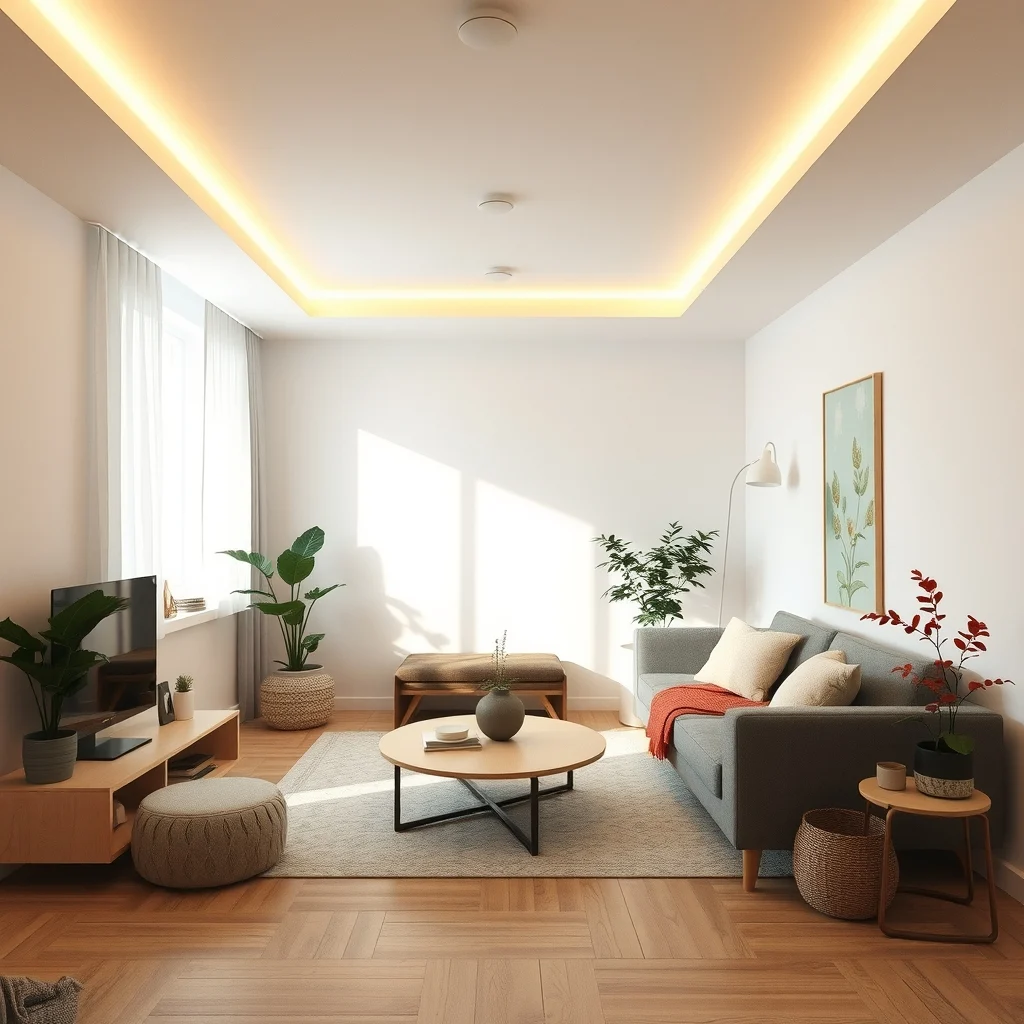
This image is by AI for inspiration only.
A single overhead fixture often leaves a narrow entryway in shadow, making it difficult to locate keys or shoes. A combination of a recessed ceiling light and a wall sconce positioned at waist height creates a balanced illumination. Choose a sconce with a frosted glass shade that diffuses light gently across the floor, reducing harsh contrasts. If the ceiling height permits, a slim pendant with a matte black finish can serve as a visual anchor without dominating the space. Adding a small, battery‑operated motion sensor lamp under the bench ensures that the area lights up automatically when someone steps in, enhancing safety during evening arrivals. Be mindful of the fixture’s scale; oversized pieces can overwhelm the narrow dimensions.
5. Integrate a Mirror to Expand Perception
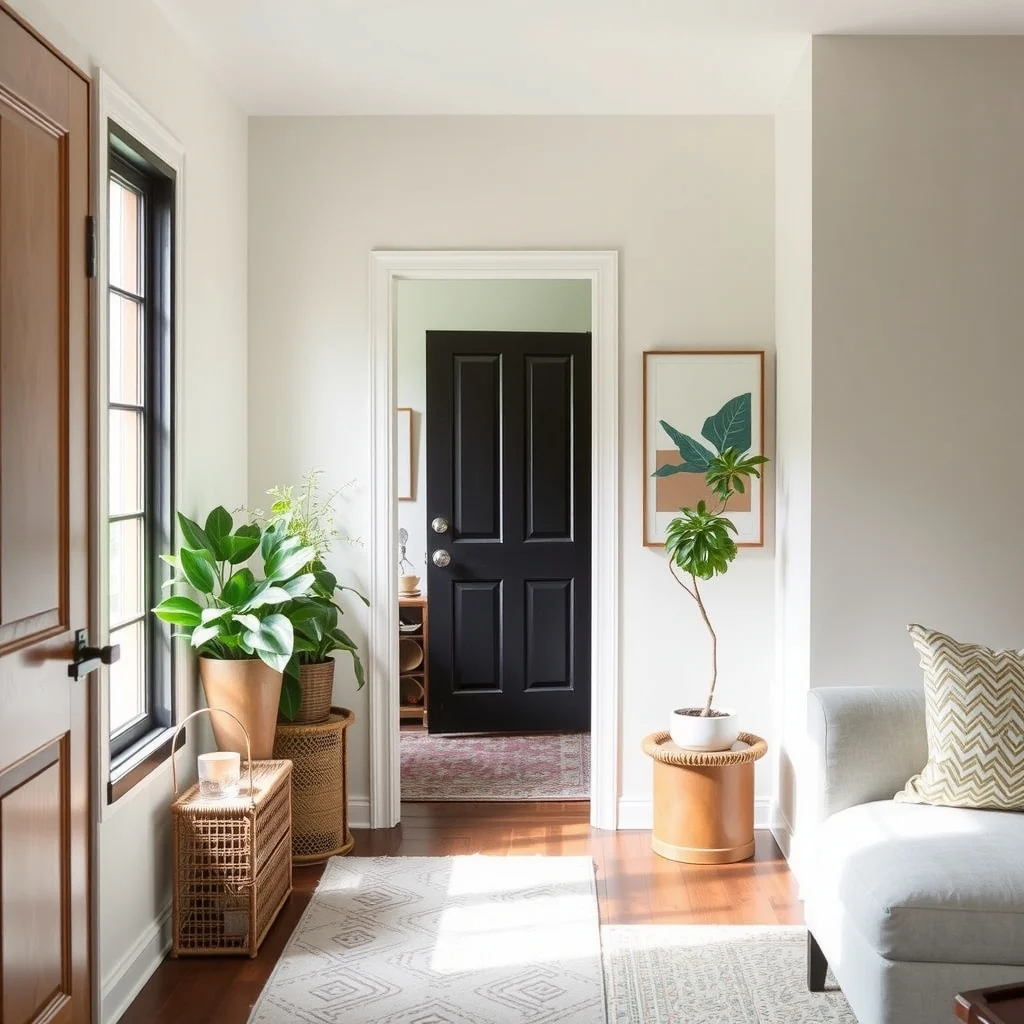
This image is by AI for inspiration only.
Mirrors are a classic tool for enlarging tight spaces, and a vertically oriented mirror placed opposite the door reflects both light and the entryway itself. A frameless, full‑length mirror set into a shallow recessed niche keeps the surface flush with the wall, preserving the slim silhouette. If you enjoy a hint of decor, a thin, reclaimed metal frame in brushed steel adds subtle interest without clutter. The reflected view not only makes the passage appear wider but also offers a convenient spot for a quick appearance check before heading out. The downside is that mirrors can collect fingerprints, so selecting a glass with an anti‑smudge coating simplifies maintenance.
6. Add a Narrow Console for Daily Essentials
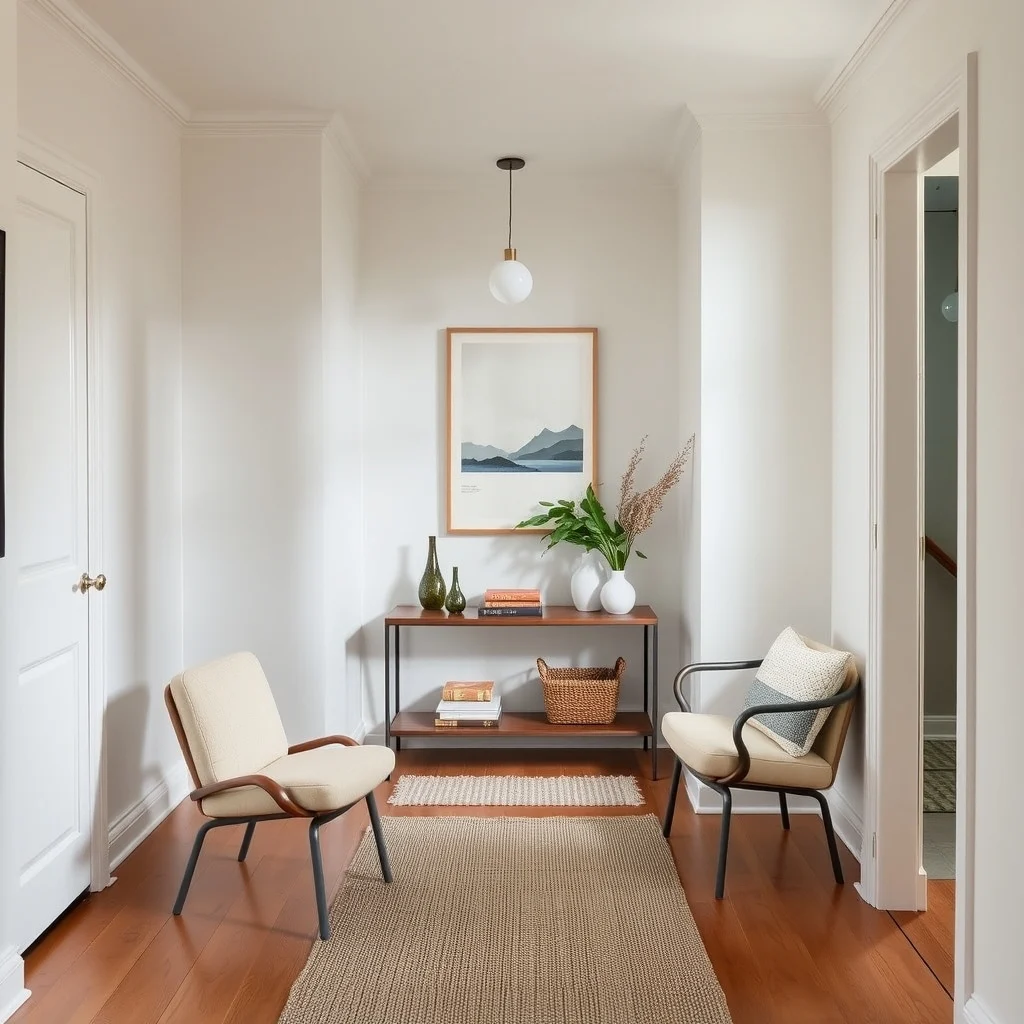
This image is by AI for inspiration only.
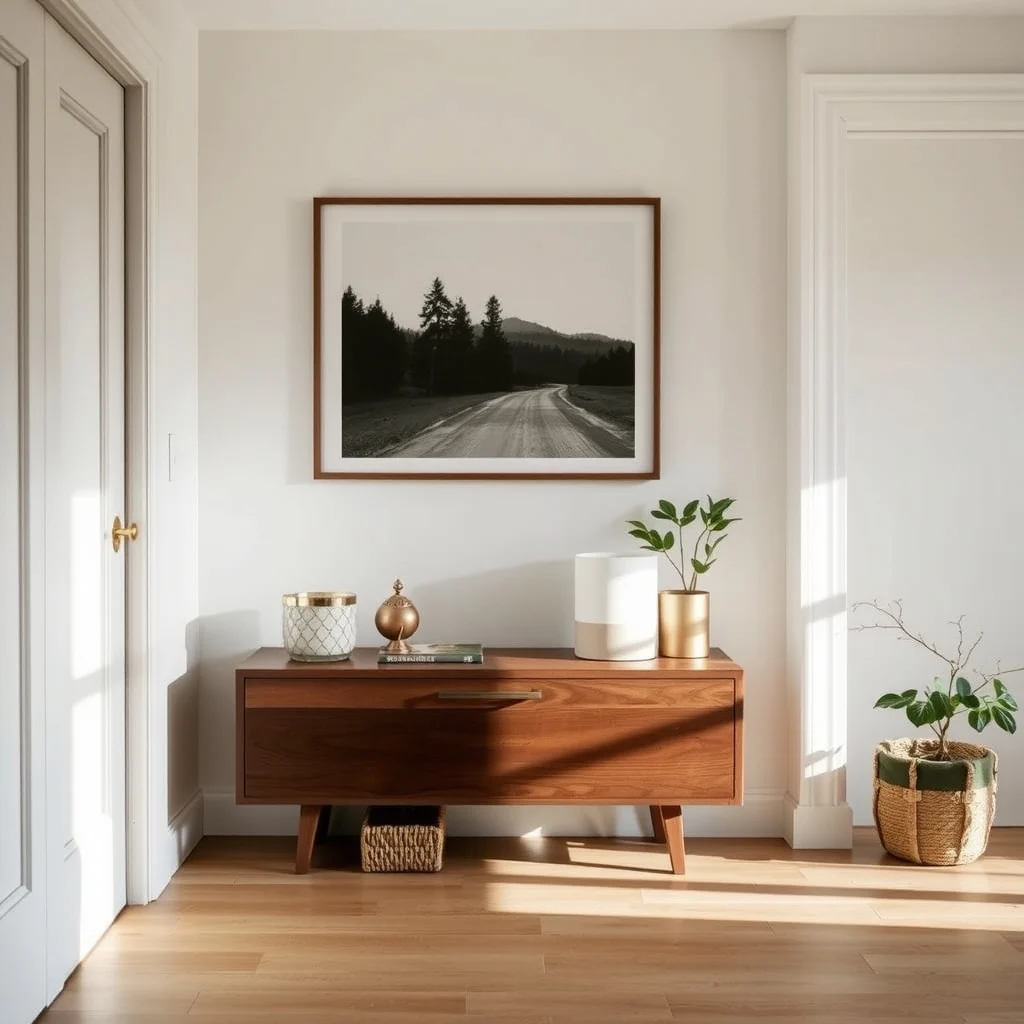
A console table that stretches the length of the entryway, rather than its width, provides a linear surface for mail, a decorative bowl, or a small plant. Opt for a table with a slim metal leg and a thin tabletop in a light walnut veneer; the open leg design prevents the piece from feeling bulky. Placing a low‑profile ceramic vase with a single branch of eucalyptus introduces a natural scent and a pop of muted green without competing with the limited space. Keep decorative items to a minimum—one or two objects maintain visual clarity while still feeling curated. If the floor is uneven, a set of adjustable glides can level the console and protect the wood finish.
7. Use a Cohesive Color Palette to Tie Elements Together
This image is by AI for inspiration only.
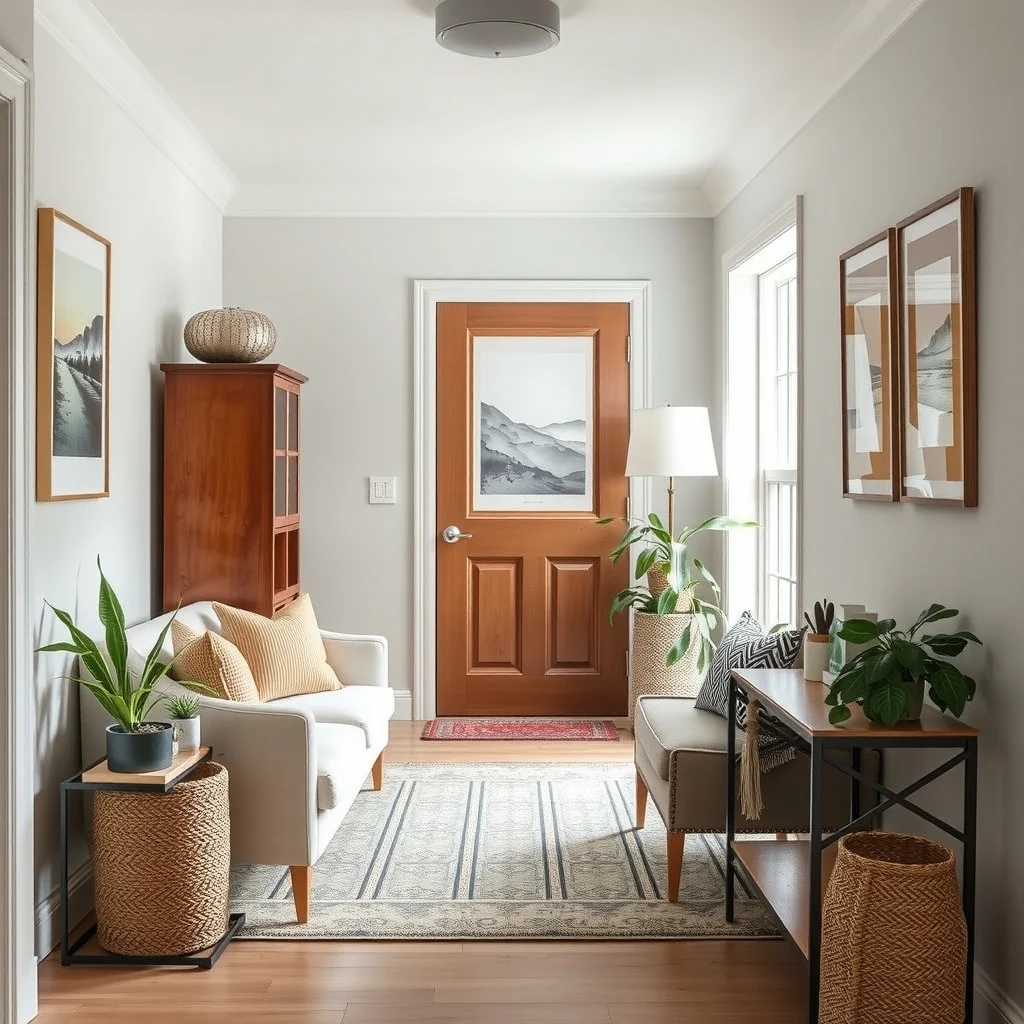
When every inch of a narrow entryway matters, color becomes a unifying force. Selecting a palette that repeats across walls, furniture, and accessories creates continuity that visually stretches the space. For instance, a base of warm greige on the walls, a bench cushion in soft sage, and a console in natural oak all share earthy undertones that blend seamlessly. Accent pieces—such as a brass key holder or a patterned rug runner—can introduce a subtle contrast without breaking harmony. The benefit of a restrained palette is that it reduces visual clutter, allowing each functional element to stand out. However, if the home’s broader interior uses bold colors, you may need to incorporate a single vibrant accent, like a deep teal wall art piece, to maintain a connection with adjoining rooms.
Frequently Asked Questions
This image is by AI for inspiration only.
How wide can an entryway be before I need to rethink the layout?
An entryway that is less than three feet wide typically requires space‑saving strategies like vertical storage and slim furniture. Wider passages can accommodate larger pieces, but the same principles of light and color still apply.
Can I install a wall sconce myself?
Yes, if you are comfortable working with basic electrical tools and the sconce is rated for the voltage in your home. Always turn off power at the breaker before beginning, and follow the manufacturer’s instructions closely. If you are unsure, hiring a licensed electrician ensures safety.
What type of rug works best in a narrow entryway?
A low‑pile runner made of natural fibers such as sisal or jute adds texture without adding height. Choose a length that leaves a few inches of floor visible at each end to keep the space feeling open.
Is it okay to hang a coat rack on the door itself?
Hanging a lightweight coat rack on the door can be a temporary solution, but it may interfere with the door’s swing and can cause wear on the surface. A wall‑mounted rack positioned near the door offers a more stable and aesthetically pleasing option.
How do I keep the entryway tidy with kids?
Designate low, easy‑to‑reach bins for toys and school supplies, and place a small basket for shoes near the bench. Teaching children to return items to these containers after each use builds habit and reduces clutter.
Final Thoughts
This image is by AI for inspiration only.
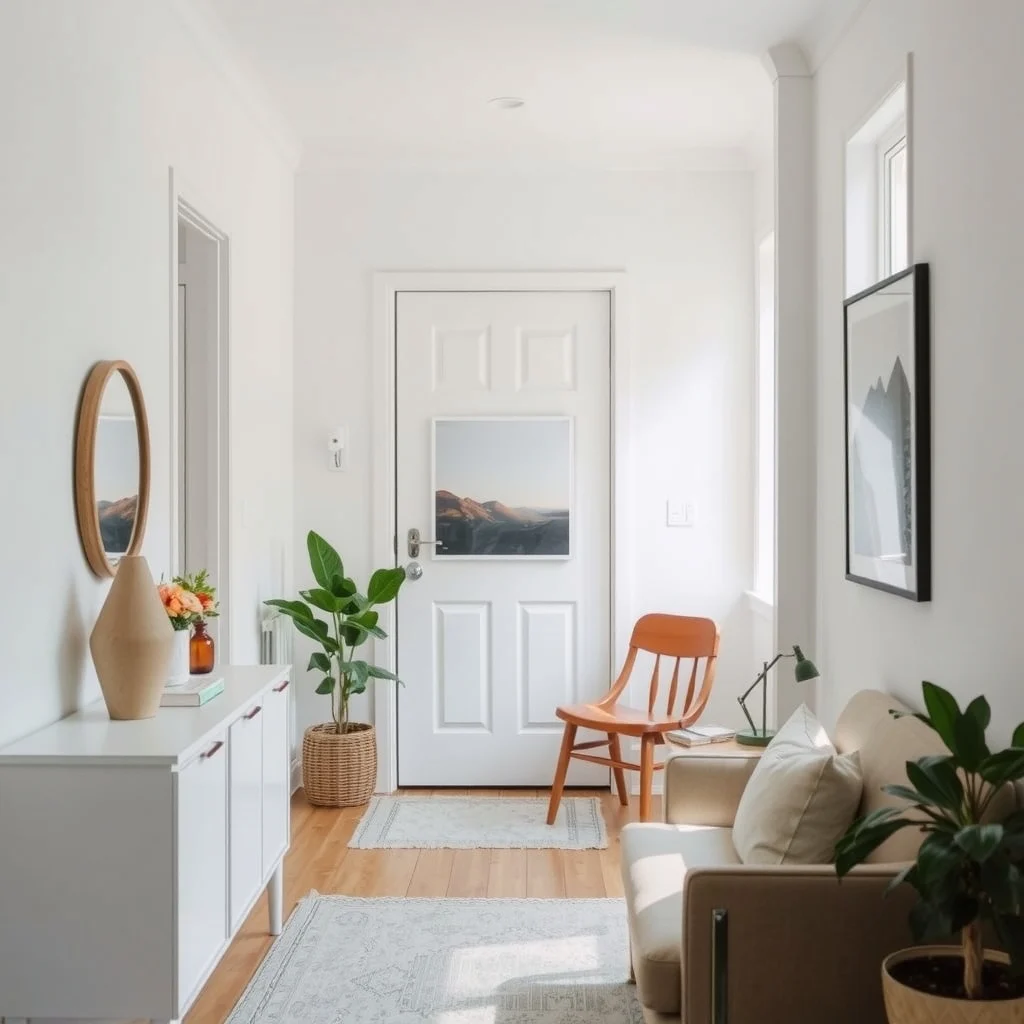
Transforming a narrow entryway beside a slim door is less about adding more and more about choosing what fits and how it works together. By thinking vertically, using reflective surfaces, layering light, and maintaining a cohesive color story, you can turn a cramped passage into a purposeful welcome area. Each suggestion balances practicality with style, allowing you to adapt the ideas to your own home’s character and budget. With thoughtful planning, even the tightest doorway can become a functional and inviting first impression.