
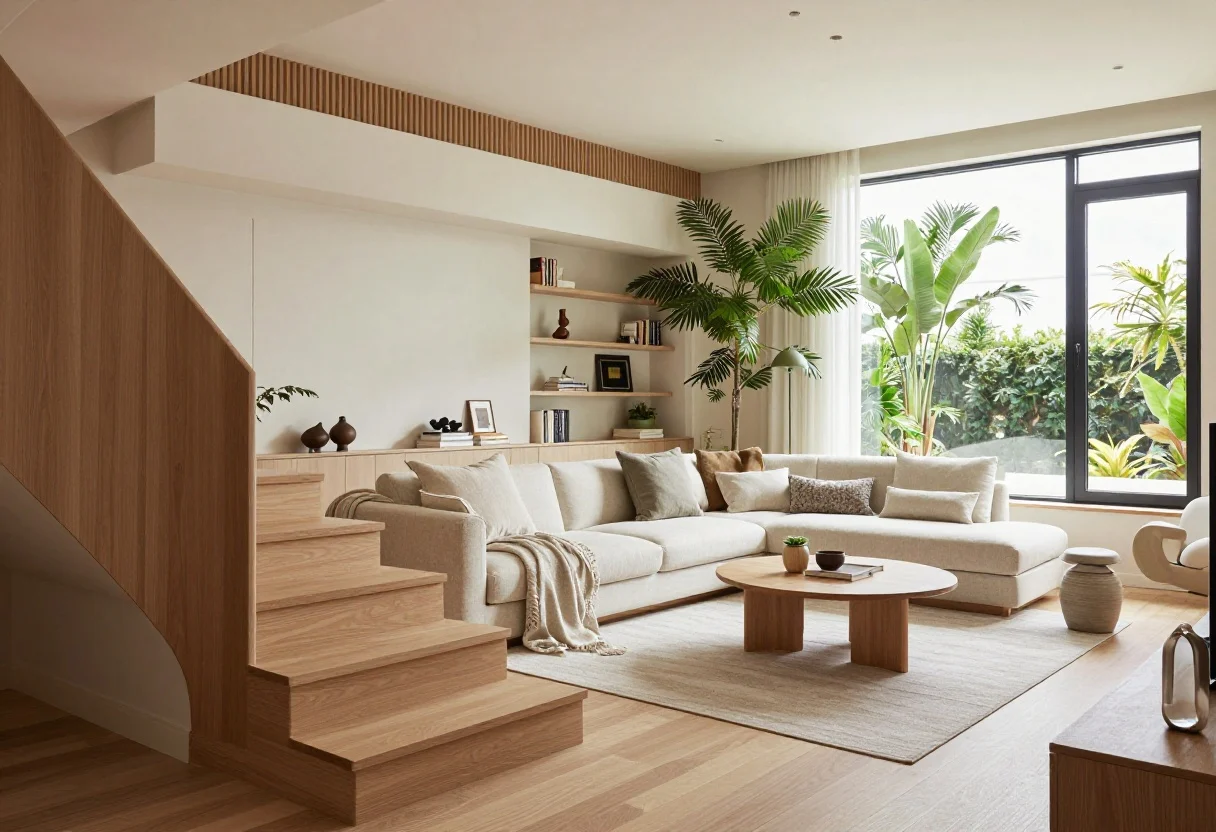
11 Split-level Living Room Ideas That Make the Space Flow Like Magic

Your split-level living room doesn’t have to feel like two awkward strangers at a party. With a few smart moves, you can make those levels mingle, flirt, and totally vibe. Think visual pathways, balanced lighting, and furniture that knows when to lead and when to chill. Ready to make your multi-level space feel effortless? Let’s do it.
1. Define a Visual Path (Without Knocking Down Walls)
This image is by AI for inspiration only.
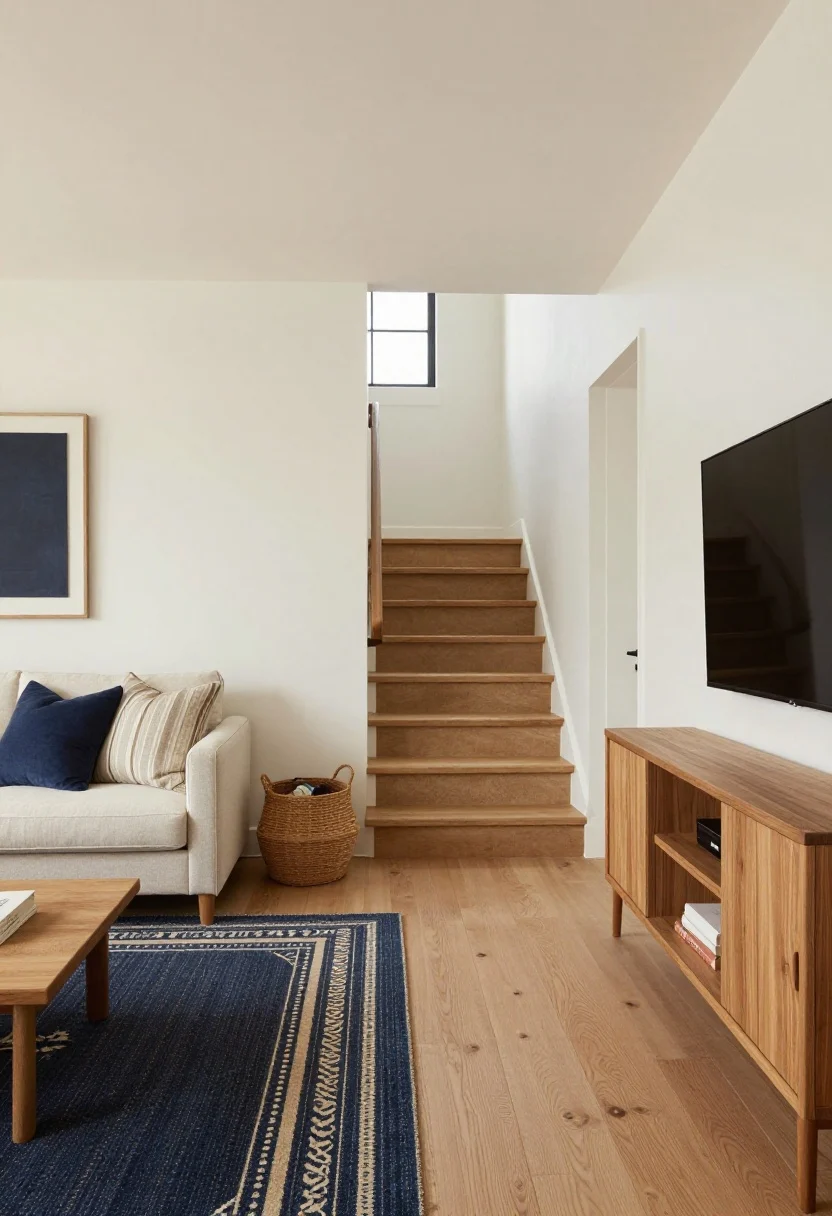
The number one flow killer? Not knowing where to look or walk. Create a clear visual path from the lower level to the upper level so the eye—and your guests—know exactly what’s happening.
Use a runner on the steps and carry the color into a rug below. Add a console table that aligns with the stair direction to nudge movement along. It’s like arrows, but make it chic.
- Repeat one color across both levels—try navy or camel for instant cohesion.
- Anchor with rugs: one on the lower level, one up top, in coordinating patterns.
- Corral the clutter near transitions: a lidded basket by the stairs saves sanity.
What to shop for: Neutral runners, low-pile area rugs, slim consoles, woven baskets.
2. Stairs, But Make Them a Feature
This image is by AI for inspiration only.
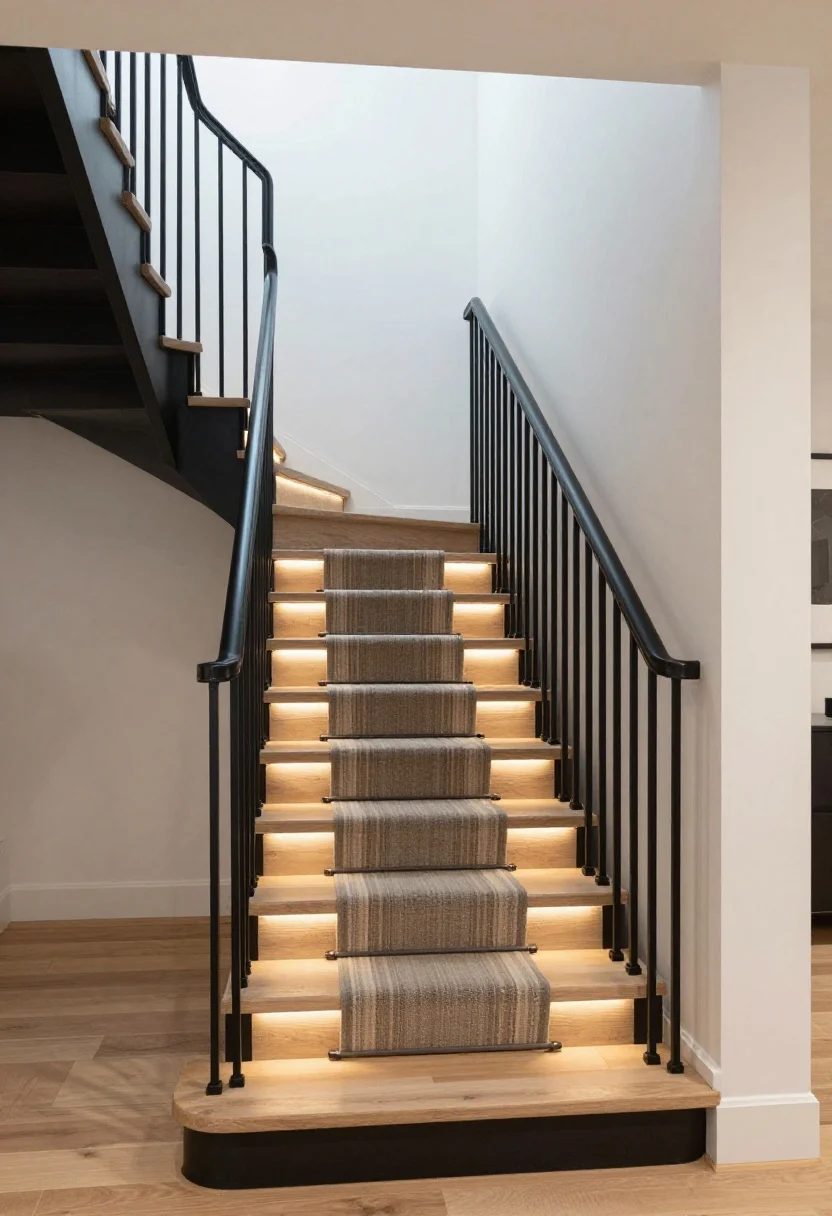
Your stairs are basically the runway. Give them a glow-up and watch the whole room feel intentional.
Consider a stair runner with a subtle stripe to elongate the space. Swap chunky railings for skinny metal balusters or wood slats—lighter sightlines mean better flow. If you’re feeling extra, add an LED strip under each tread for a soft evening glow.
- Stain or paint treads to echo your floor tone.
- Open risers = airy look (check local code first, FYI).
- Wall-mounted handrail in matte black for modern contrast.
3. Layer Lighting to Flatten the Levels (In a Good Way)
This image is by AI for inspiration only.
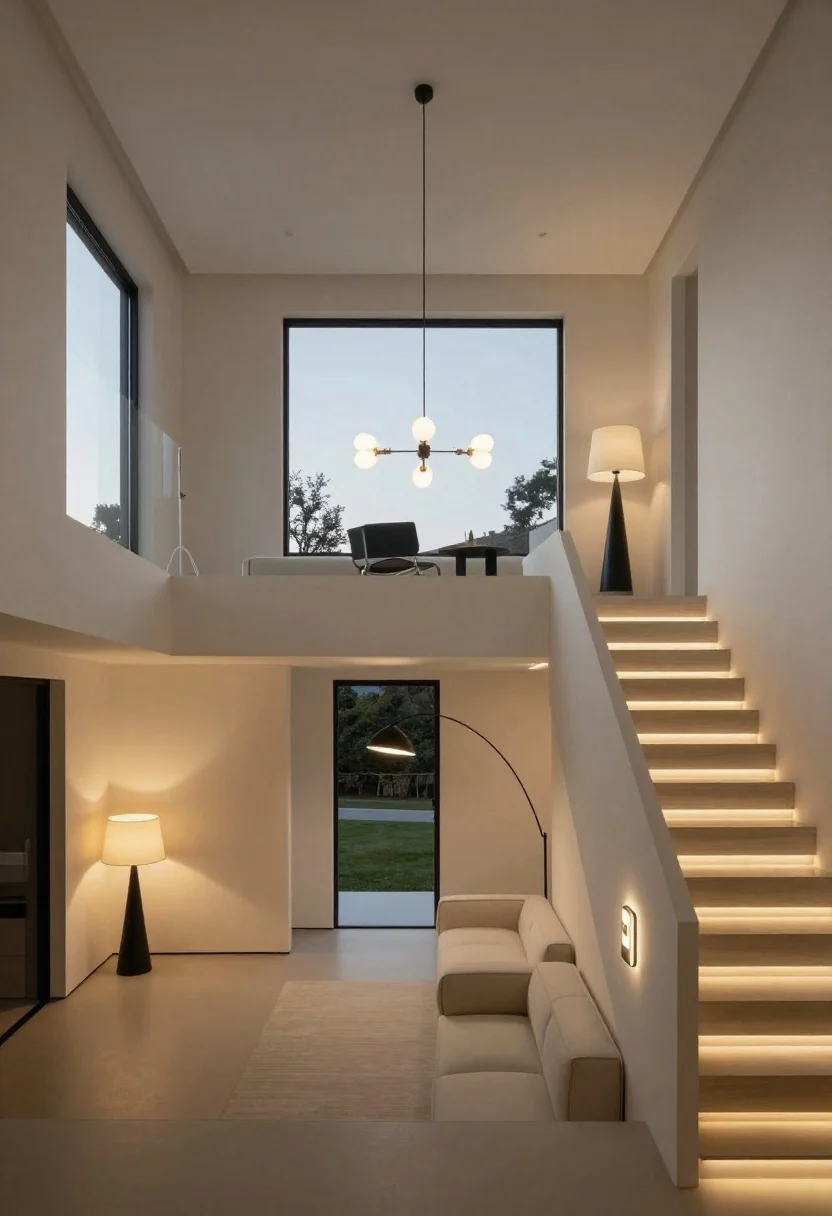
Split-levels get weird shadows. Fix it with a layered lighting plan that stitches the two zones together.
Think of it in three acts: ceiling lighting to wash the whole room, lamps to cozy corners, and accent lights to pull the eye up or down as needed. A pair of matching lamps on different levels? Chef’s kiss for symmetry and flow.
- Ceiling: a flush mount or semi-flush below, pendant or chandelier above.
- Task: arc floor lamp near the sectional; plug-in sconces at the landing.
- Accent: art lights or LED strips on stair nosing.
What to shop for: Floor lamps, plug-in sconces, dimmable bulbs, LED strip lighting.
4. Use Rugs to Zone—Not Separate
This image is by AI for inspiration only.
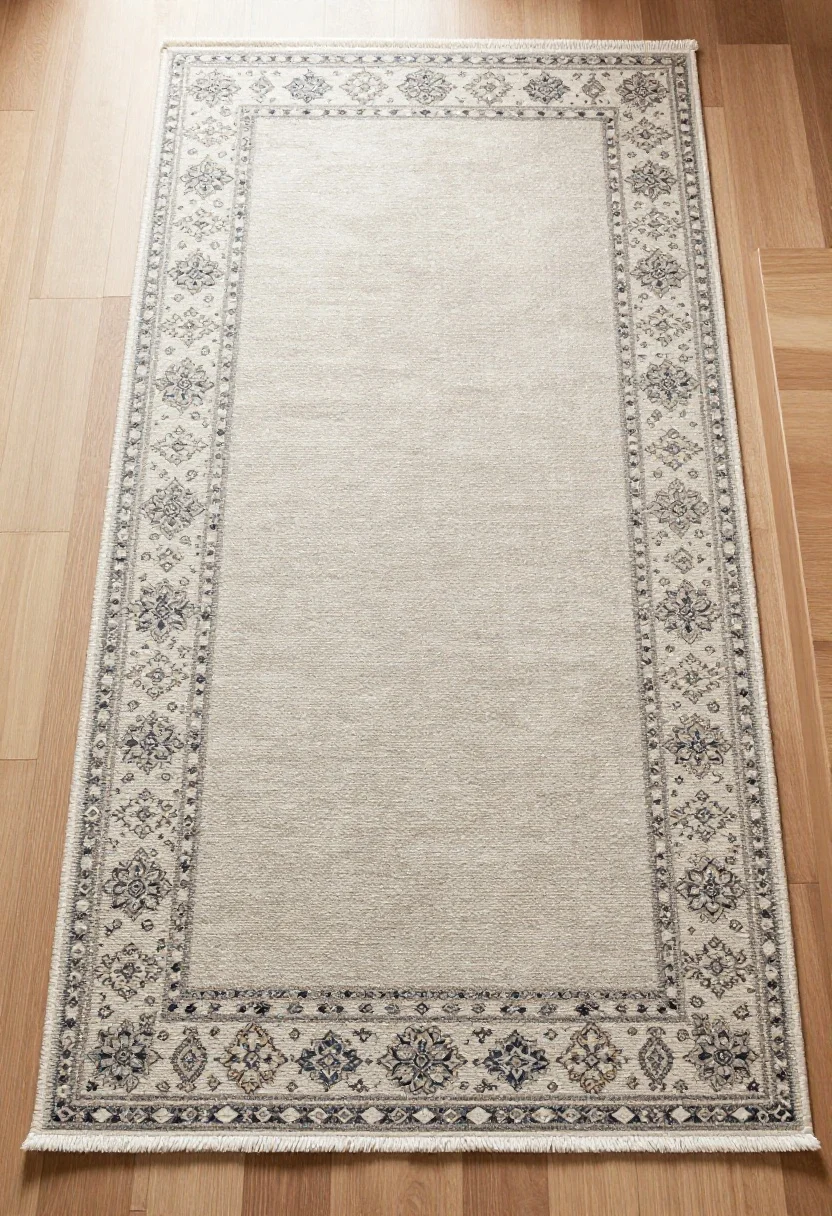
Rugs are your best friends in an open-ish layout. They define zones without building walls, and they instantly add warmth.
Choose a large rug on the lower level to fit the main seating (front legs on, always), then a smaller coordinating rug or runner up top. You want cousin vibes, not twins—same color family, different pattern scale.
- Low pile near stairs to avoid trips.
- Pattern play: small-scale below, larger-scale above (or vice versa).
- Rug pads to prevent sliding, especially by the landing.
5. Float Your Furniture—Even on the Lower Level
This image is by AI for inspiration only.
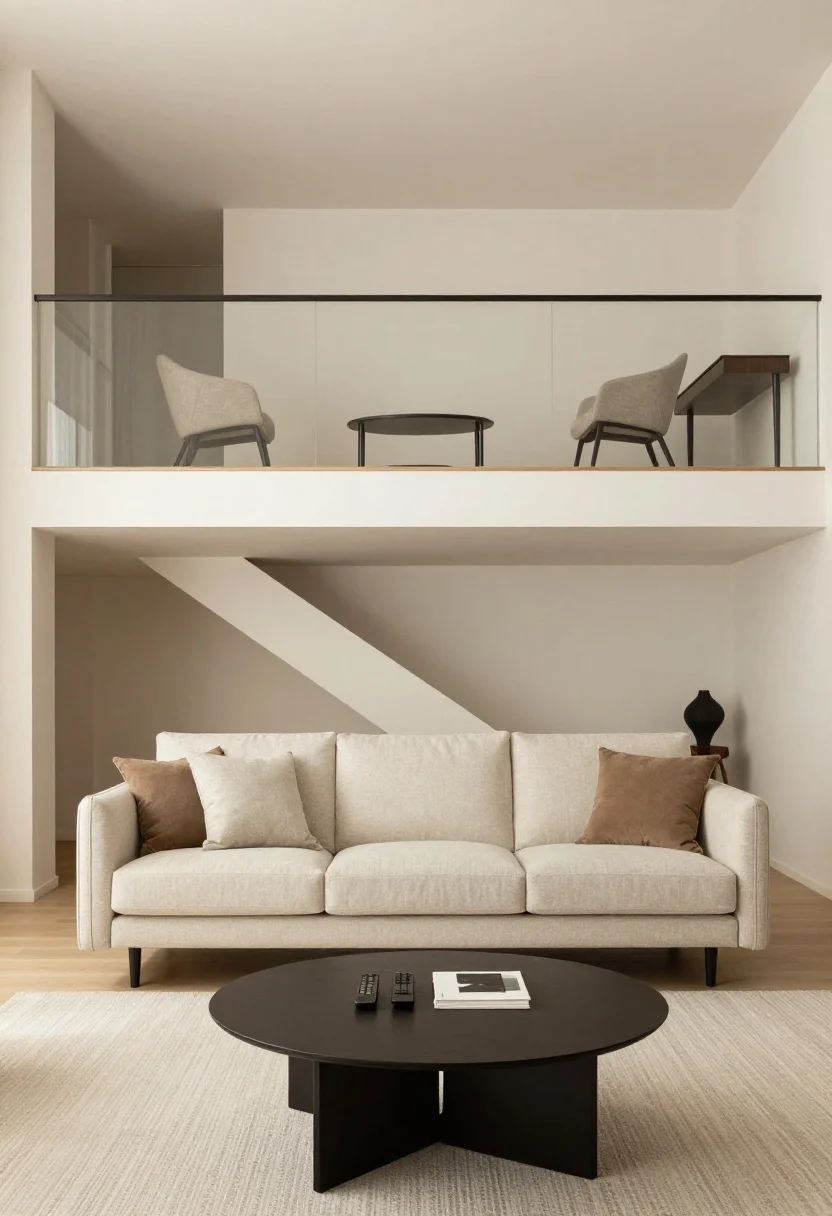
Hugging every piece to the wall makes a split-level room feel like a hallway. Float a sofa with space to walk behind it, aligning its back parallel to the stair line. Suddenly, you’ve got a natural path and a cozy conversation pit.
Balance the upper level with slimmer silhouettes: a narrow console, two accent chairs, or a petite writing desk if it doubles as a loft office.
- Back-of-sofa console with storage to hide remotes and throws.
- Round coffee table to smooth traffic flow.
- Leggy furniture up top to keep things visually light.
What to shop for: Slim consoles, round nesting tables, accent chairs with open bases.
6. Build a Color Bridge Across Levels
This image is by AI for inspiration only.
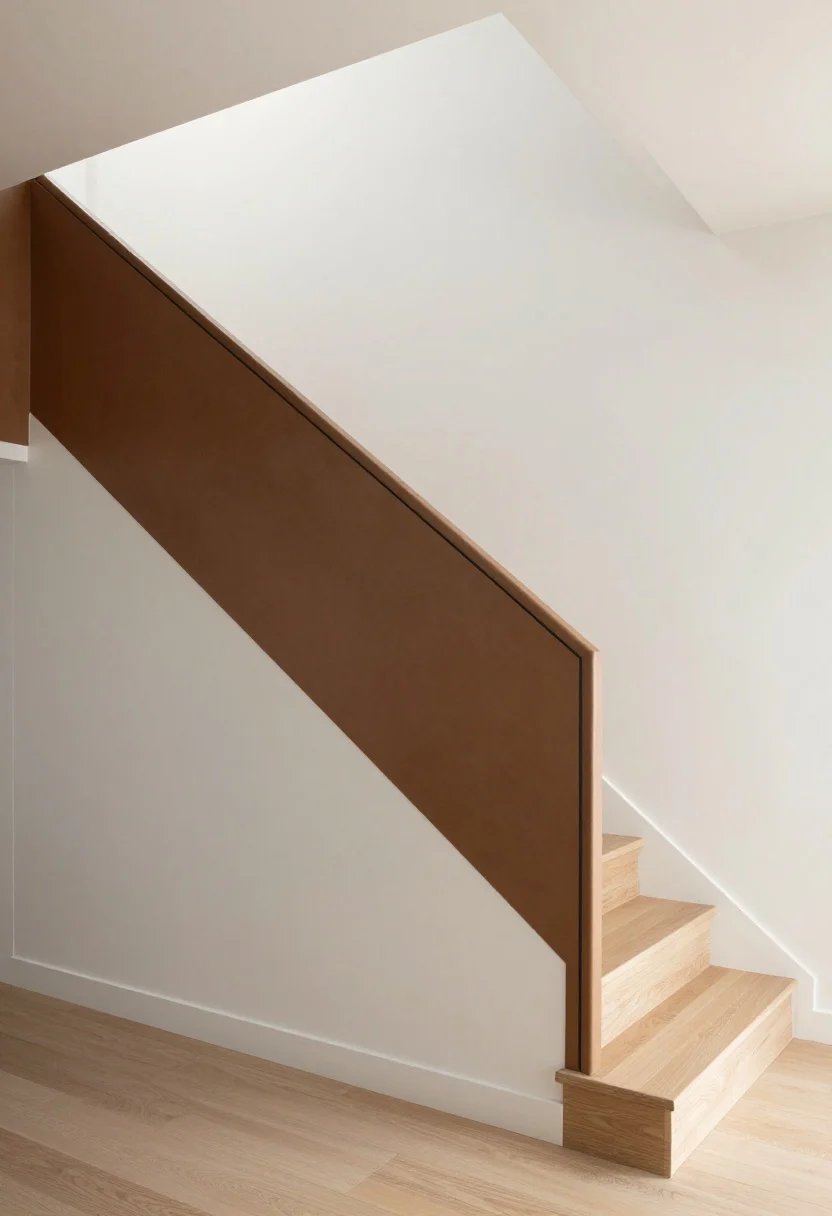
If each level tells a different color story, the whole room feels choppy. Pick one dominant palette and echo it strategically: maybe warm whites, soft clay, and black accents. Then repeat the hits across both zones.
Paint can be your secret weapon. Try the same wall color throughout, then add a tone-on-tone accent on the stair wall to create a calm gradient that unifies everything.
- Rule of three: choose three main hues and stick to them.
- Contrast wisely: darker tones low, lighter tones high to lift the eye.
- Textures count as color: natural wood, stone, and woven fibers warm things up.
7. Create a Two-Stop Seating Story
This image is by AI for inspiration only.
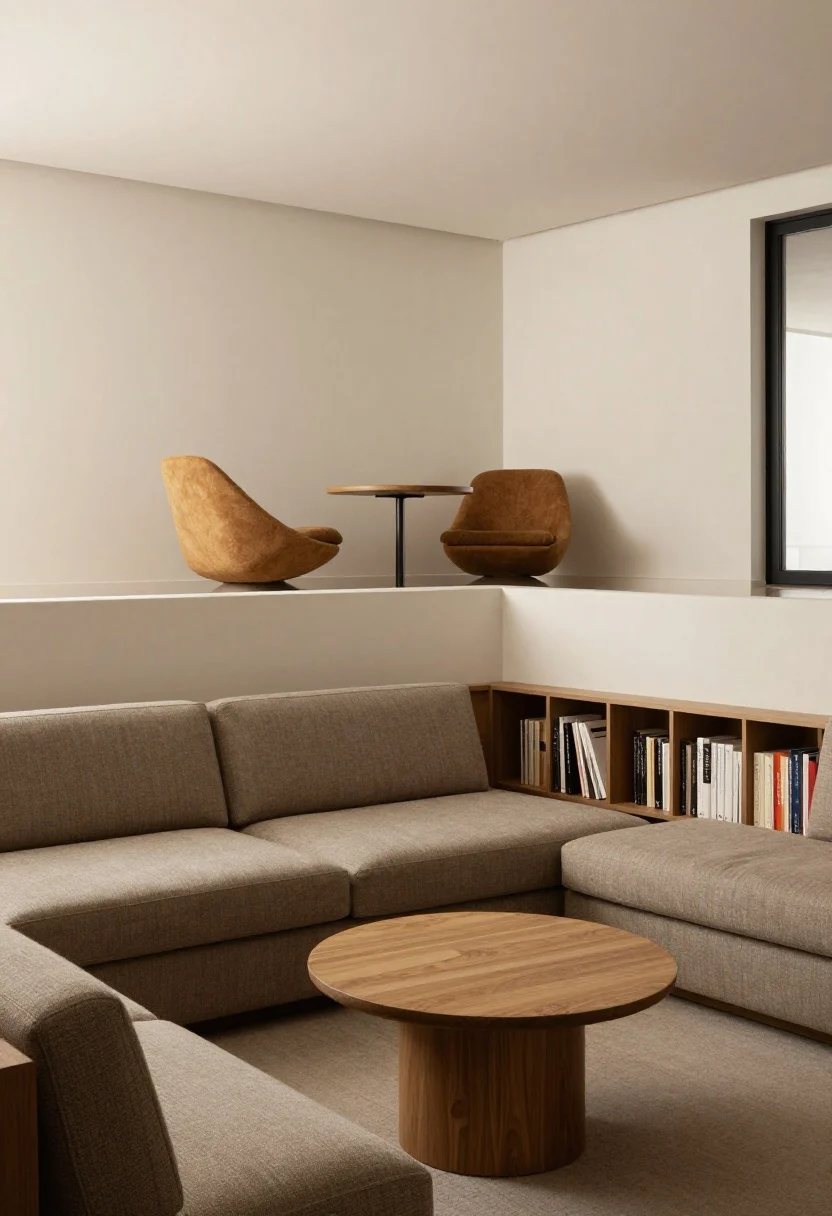
One level can’t have all the fun. Craft a primary seating area below and a secondary perch above—think reading nook, game table, or a petite lounge with swivel chairs that chat up both levels.
Keep lines of sight open. Avoid tall bookcases at the edge of the upper level; opt for low storage or wall-mounted shelves so conversation flows across the levels, not into a visual roadblock.
- Swivel chairs up top for sightline flexibility.
- Bistro or game table near a railing for casual hangs.
- Low-profile storage instead of tall cabinets along the ledge.
What to shop for: Swivel accent chairs, small round tables, low credenzas, wall shelves.
8. Style the Ledge Like a Pro (Not a Dust Trap)
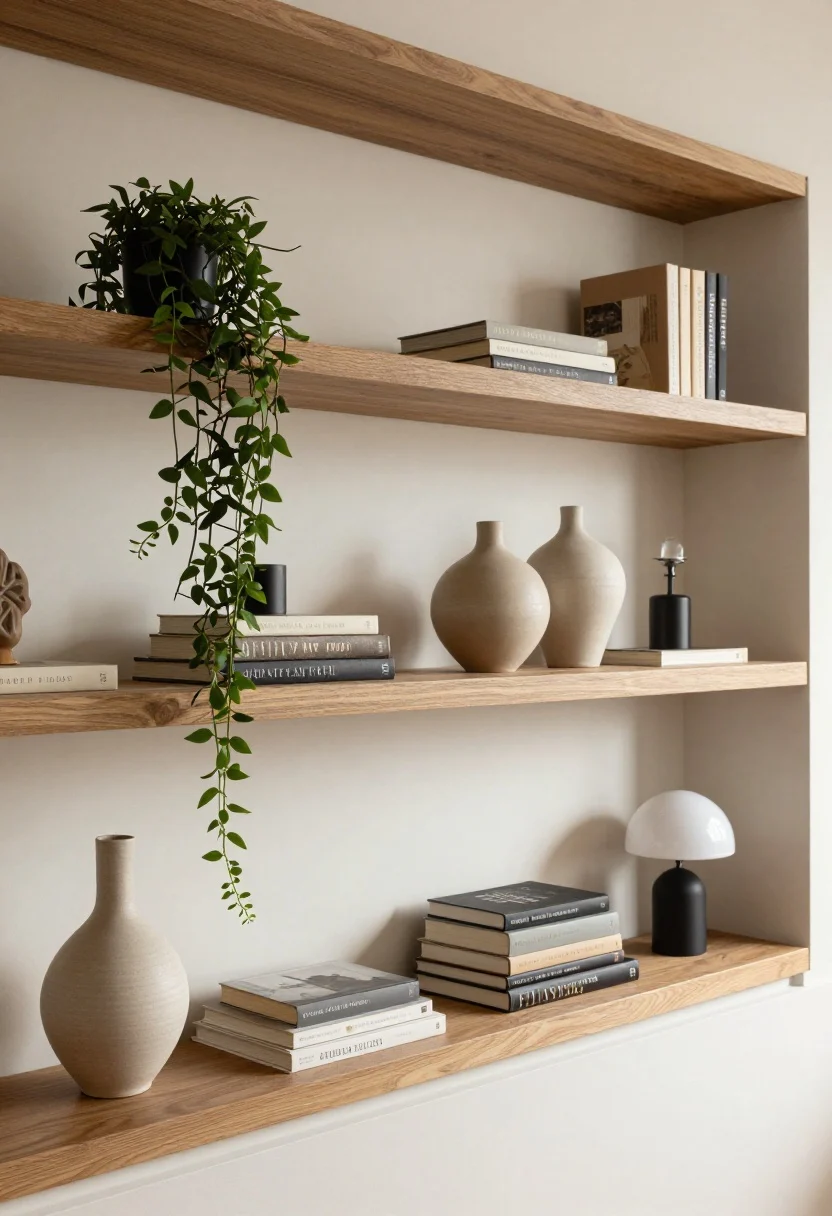
This image is by AI for inspiration only.
The half wall or railing ledge is prime real estate. Treat it like a curated shelf, not a catchall.
Group objects in odd numbers and vary heights: a sculptural vase, a stack of books, a small lamp. Keep the arrangement long and lean so it guides the eye along the transition without blocking the view.
- Keep it low: nothing taller than 12–14 inches near sightlines.
- Repeat materials: black metal, warm wood, ceramic—consistency calms.
- Greenery bridges levels beautifully—trailing plants are MVPs.
What to shop for: Ceramic vases, sculptural bowls, low table lamps, trailing faux or real plants.
9. Make a Media Wall That Works From Both Levels
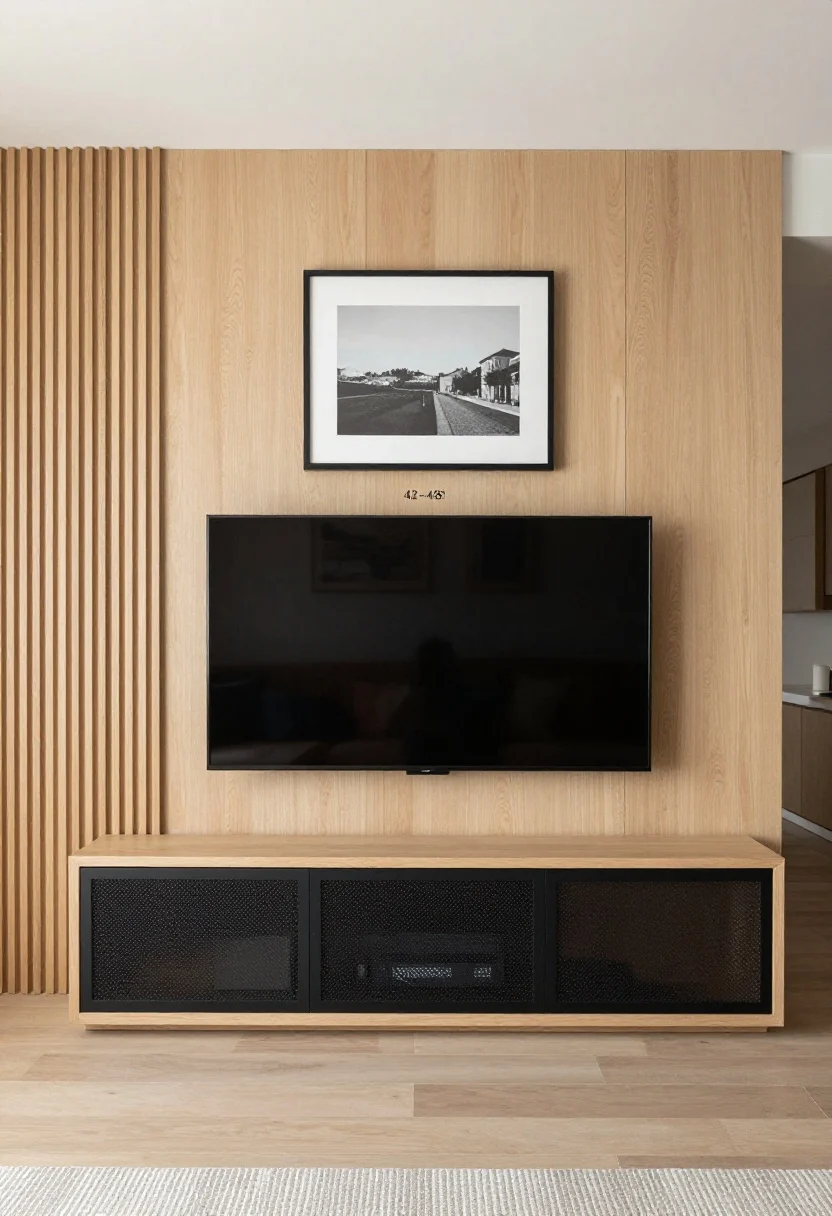
This image is by AI for inspiration only.
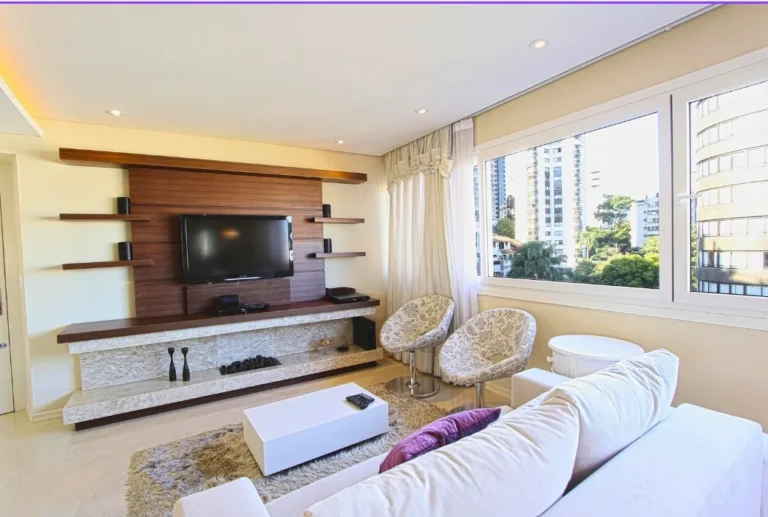
Media zones can hijack the layout if you let them. Design a media wall that reads beautifully from the lower level but doesn’t hog attention from above.
Mount the TV slightly lower than typical to suit seated eye level downstairs, then flank it with vertical elements—slatted wood, tall art, or bookcases—to visually “stretch” the wall so it doesn’t feel bottom-heavy. Hide the cords (we beg you).
- Center line of the TV at 42–48 inches for the lower level.
- Balanced flanking shelves or art to widen the composition.
- Closed base cabinets for devices; mesh fronts if you need IR signal.
10. Bring In Texture: Same Family, Different Personalities
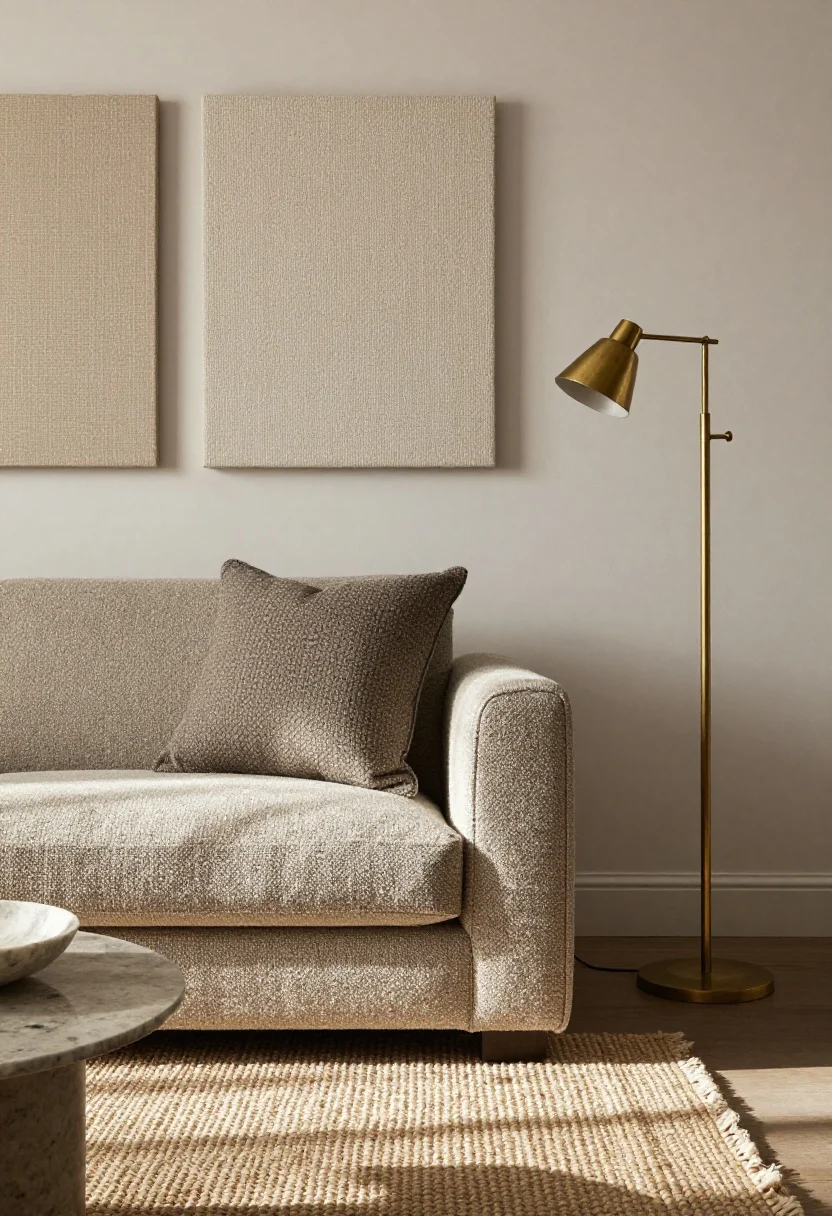
This image is by AI for inspiration only.
When levels change, texture keeps the story consistent. Use similar materials across zones in slightly different executions so everything feels related, not repetitive.
Think boucle on the lower level sofa and a linen weave on the upstairs chairs. Or a sisal rug below and a wool flatweave above. The trick is to echo the vibe, not clone it.
- Three textures minimum: one smooth (leather), one nubby (boucle), one natural (wood or jute).
- Metals match-ish: keep finishes cousins (aged brass + antique bronze).
- Stone moments: a travertine side table or marble bowl adds polish.
What to shop for: Textured throw pillows, boucle ottomans, woven baskets, travertine side tables.
11. Use Art and Drapery to Guide the Eye
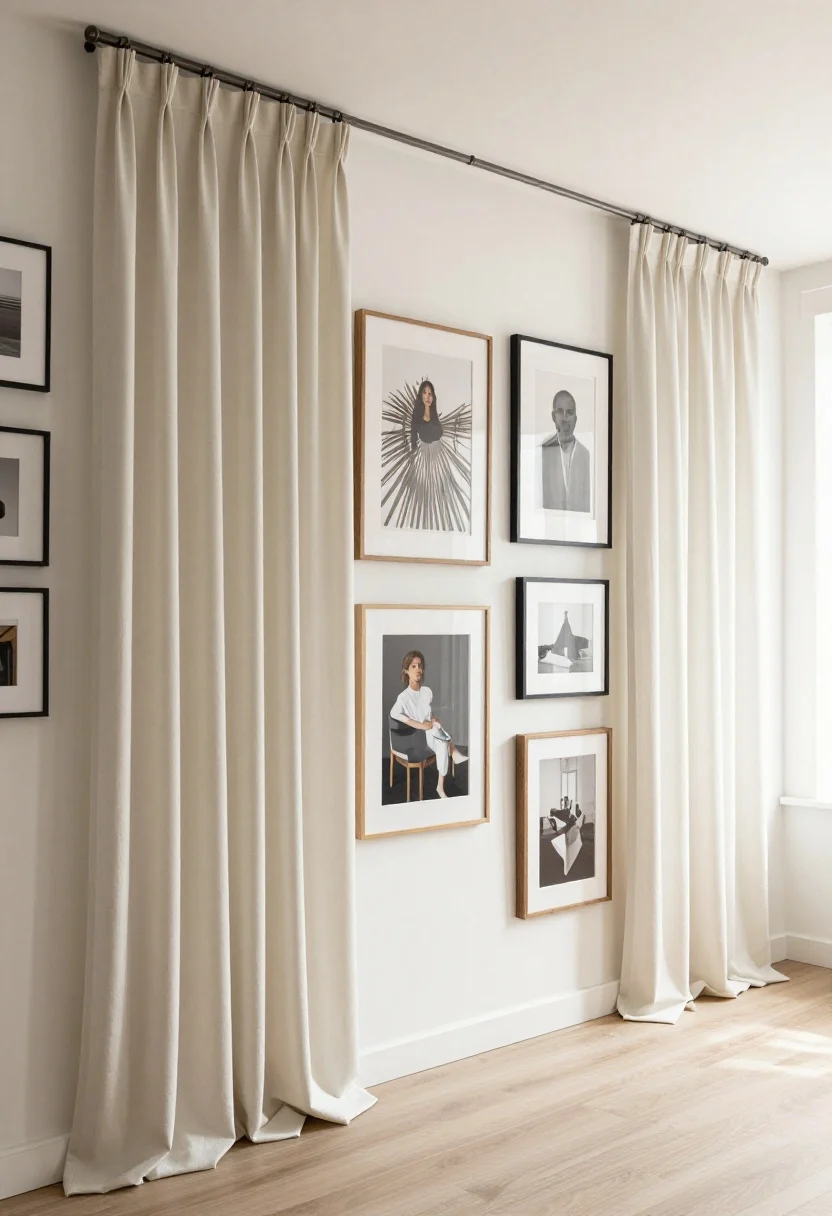
This image is by AI for inspiration only.
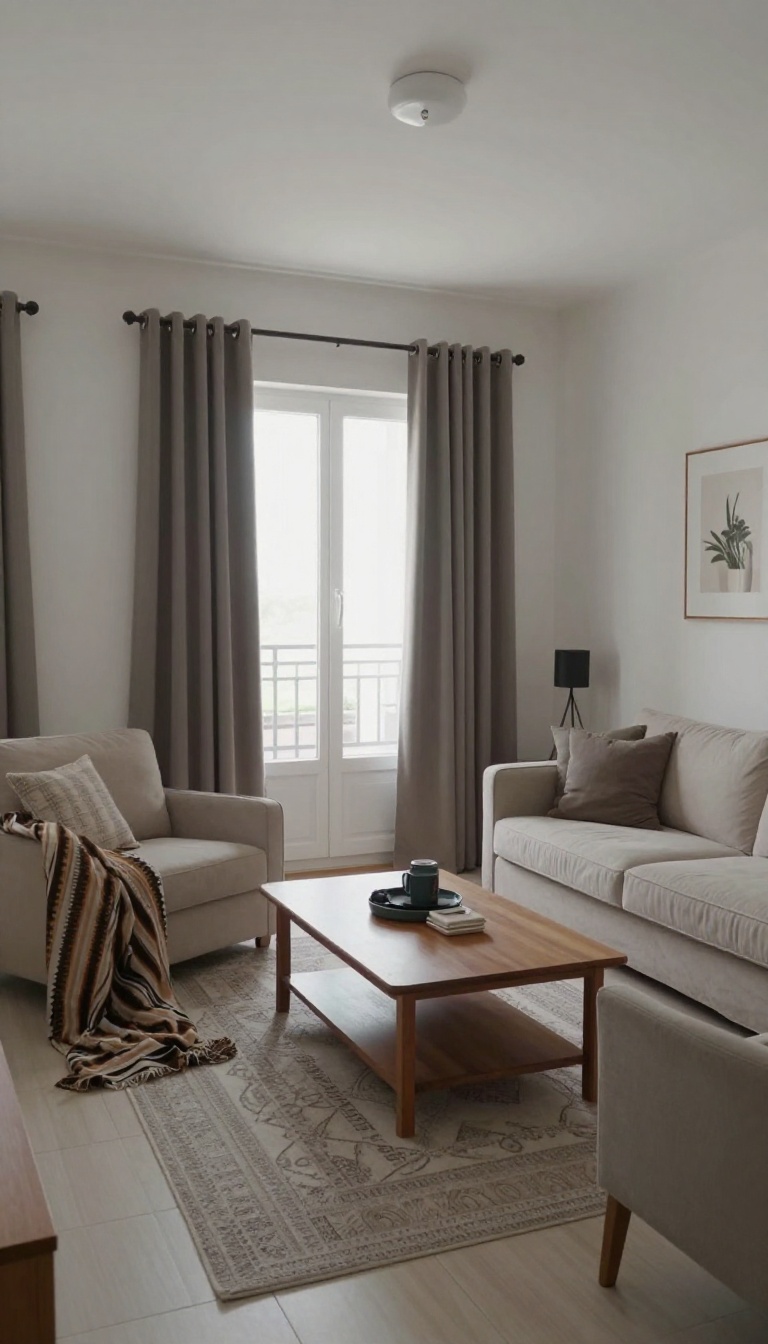
Nothing unites split levels faster than smart vertical lines. Hang art in stair-step groupings that gently climb, and choose drapery that connects heights without overwhelming windows.
Mount curtain rods high on both levels at a consistent elevation if possible. If window heights differ, cheat it: install the rods to align visually and use longer panels to add drama. Bonus points for a large statement piece that’s visible from both zones—it becomes your anchor.
- Stair gallery: frames in consistent finishes; vary sizes for rhythm.
- Full-length curtains: slightly puddled for softness or just kissing the floor for crispness.
- One hero artwork connecting sightlines across the room.
What to shop for: Curtain panels, sleek rods, oversized art prints, frame sets.
Pro Layout Tips to Keep Flowing
- Mind the 3-foot rule: leave at least 36 inches for main walkways.
- Keep furniture heights stepped: tallest against walls, lowest near the room center.
- Repeat one motif (arches, stripes, slats) across both levels for stealth cohesion.
Small Space Split-Level? Try This
- Replace bulky sofas with a loveseat + two chairs.
- Go for nesting tables and ottomans with storage.
- Stick to a tight color palette—fewer hues, more calm.
IMO, the magic is in the repeat: echo color, shape, and texture across levels, and your room will feel intentional, layered, and yes—flowy.
Quick Styling Checklist
- Path defined? Rug runner + console = check.
- Lighting layered? Overhead, task, accent = check.
- Rugs coordinating? Cousins, not twins = check.
- Sightlines open? Low storage near edges = check.
- Textures balanced? Smooth + nubby + natural = check.
What to Shop For (Broad Categories)
- Area rugs, stair runners, rug pads
- Floor lamps, sconces, dimmable bulbs
- Slim consoles, low credenzas, nesting tables
- Swivel chairs, ottomans with storage, round coffee tables
- Curtain panels, rods, oversized art, frame sets
- Baskets, vases, sculptural bowls, trailing plants
Wrap-Up
Split-level living rooms get a bad rap, but with the right moves, those steps become your secret design flex. Guide the eye, layer your light, echo color and texture, and float your furniture with intention. Do that, and your space won’t just flow—it’ll sing.
FAQ
Q: How do I make a split-level living room feel bigger?
A: Keep a consistent wall color, use large rugs to anchor zones, and choose leggy furniture. Add mirrors opposite windows and keep tall pieces on walls, not in the room’s center.
Q: What’s the best sofa layout for a split level?
A: Float the sofa parallel to the stairs with a walkway behind it, then pair it with a round coffee table and two light chairs. This creates flow lines and a natural conversation area.
Q: How do I handle different ceiling heights?
A: Unify with consistent paint and lighting finishes, then emphasize vertical lines—tall drapery, gallery walls, and floor lamps—to visually “lift” the lower level and balance the taller zone.
Shop the Look on Amazon
Disclosure: As an Amazon Associate, this site may earn from qualifying purchases.
These product categories fit this article and give readers an easy next step when they are ready to shop.
- Stair Runners — Defines a chic path and softens transitions.
- Area Rugs — Anchors zones without tripping near stairs.
- Wall Lighting — Layers light and connects both levels.
- Consoles — Guides movement and adds subtle storage.
- Accent Chairs — Keeps sightlines open and seating flexible.
2 Comments