Small Bedroom Nightstand Alternatives With Hidden Storage

When a bedroom feels cramped, the nightstand can become the biggest visual obstacle. A bulky table not only steals floor space but also invites clutter to accumulate on its surface. Fortunately, there are plenty of ways to keep a lamp, a book, and a glass of water within reach without sacrificing precious square footage. Below are seven thoughtfully designed alternatives that blend style with concealed storage, each offering a different balance of function, aesthetics, and ease of installation.
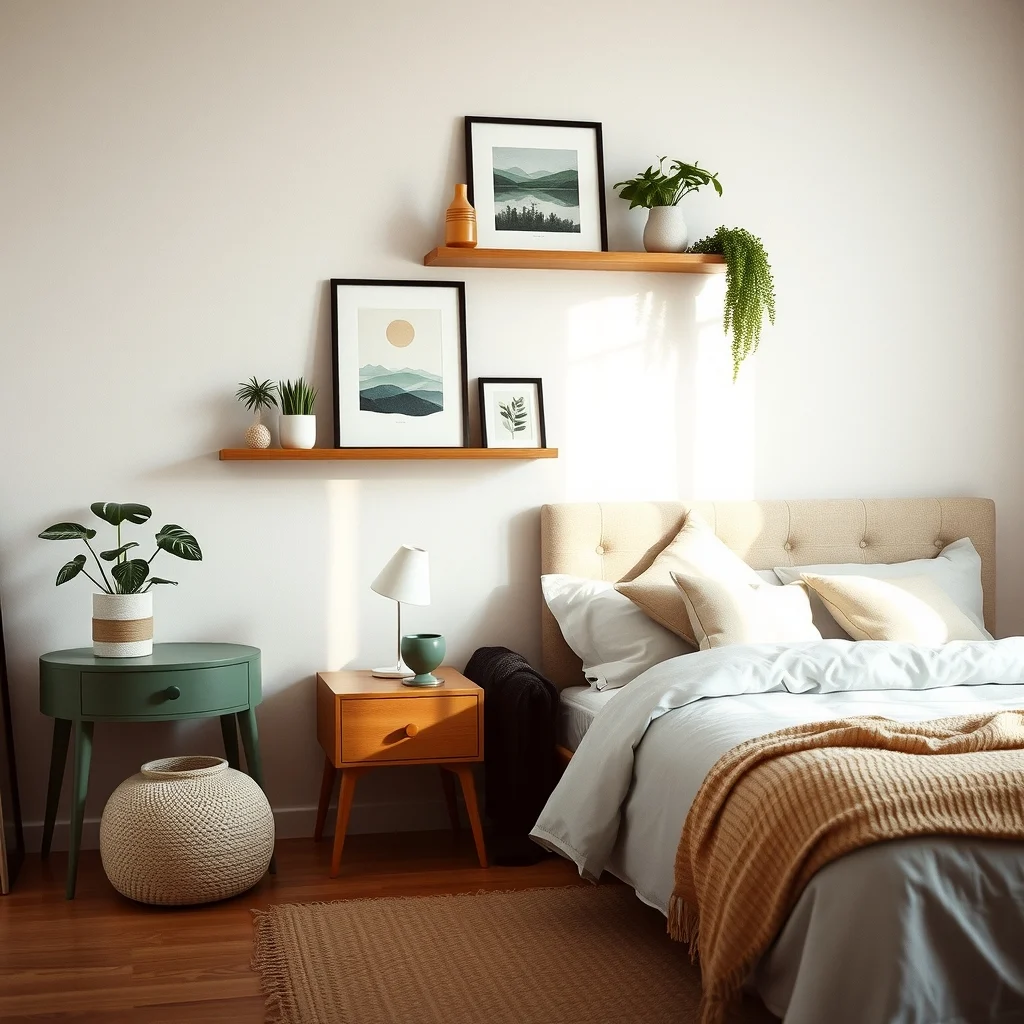
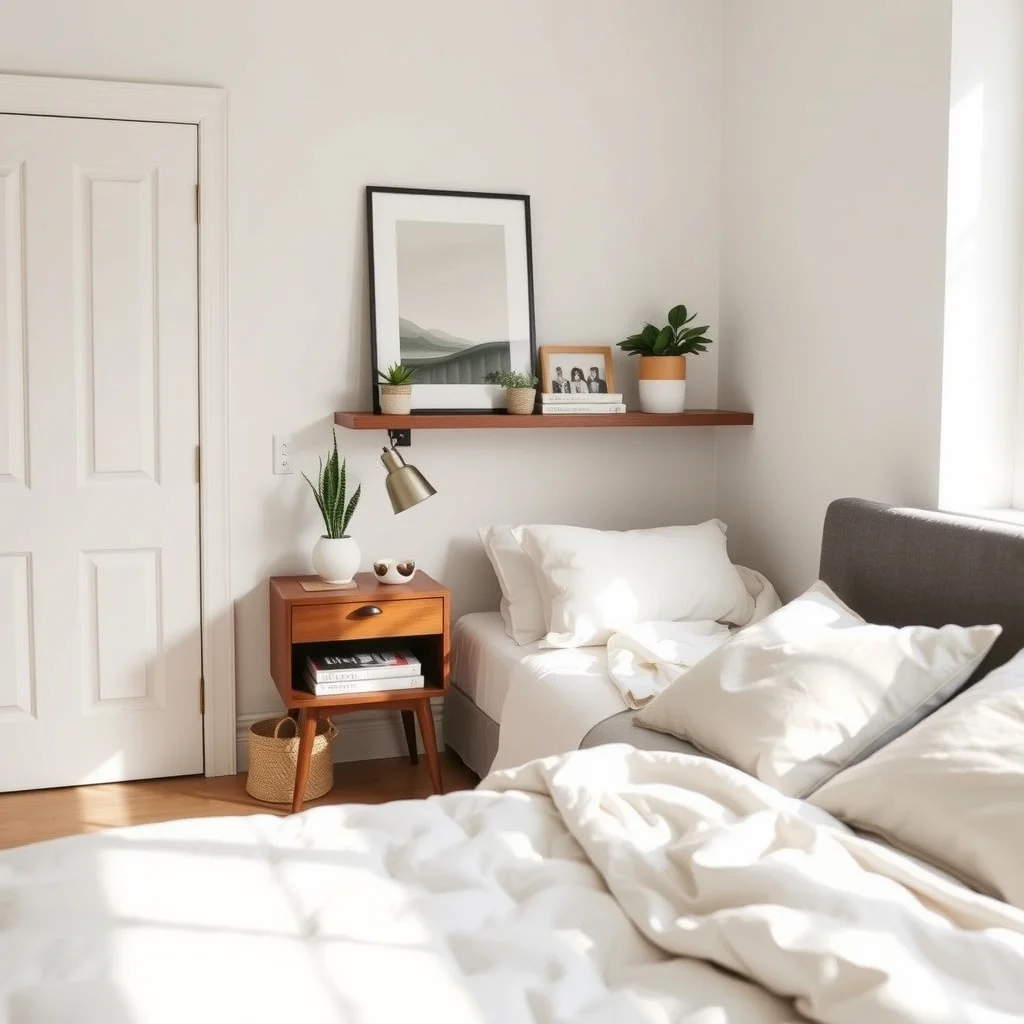
1. Floating Wall Shelf With a Concealed Compartment
This image is by AI for inspiration only.
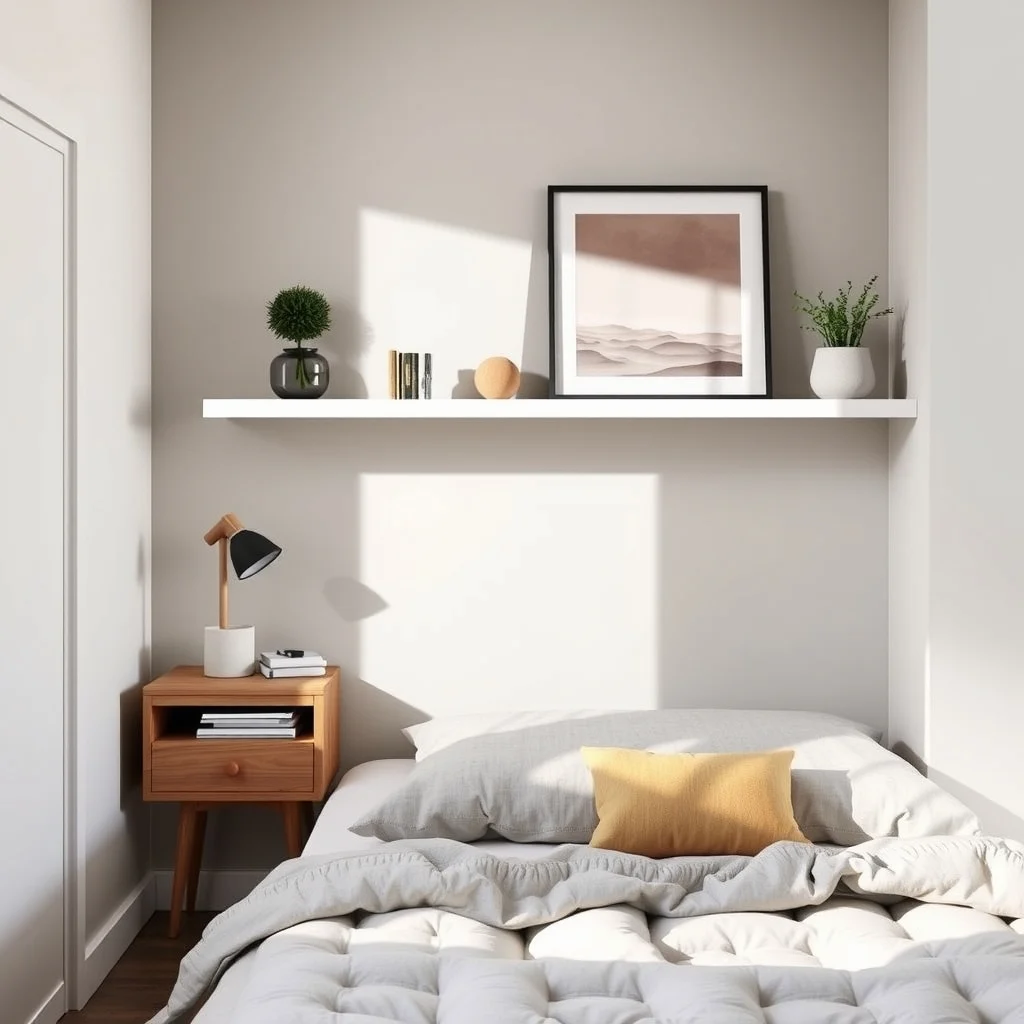
A sleek floating shelf mounted at eye level instantly frees up floor space, and when the shelf incorporates a hidden compartment behind a sliding panel, it becomes a discreet nightstand. The panel can be crafted from the same wood or painted finish as the rest of the shelf, so the storage stays invisible until you need it. Because the shelf is attached directly to the wall, the visual weight is minimal, allowing a small bedroom to feel airier. To make the most of this option, choose a depth of about eight to ten inches—just enough to hold a lamp and a small alarm clock—while the hidden compartment can be a few inches deeper, perfect for stashing chargers, a journal, or a spare set of pajamas. A brushed brass or matte black latch adds a subtle design detail without drawing attention away from the overall calm of the room.
2. Ladder‑Style Shelf That Doubles as a Nightstand
This image is by AI for inspiration only.
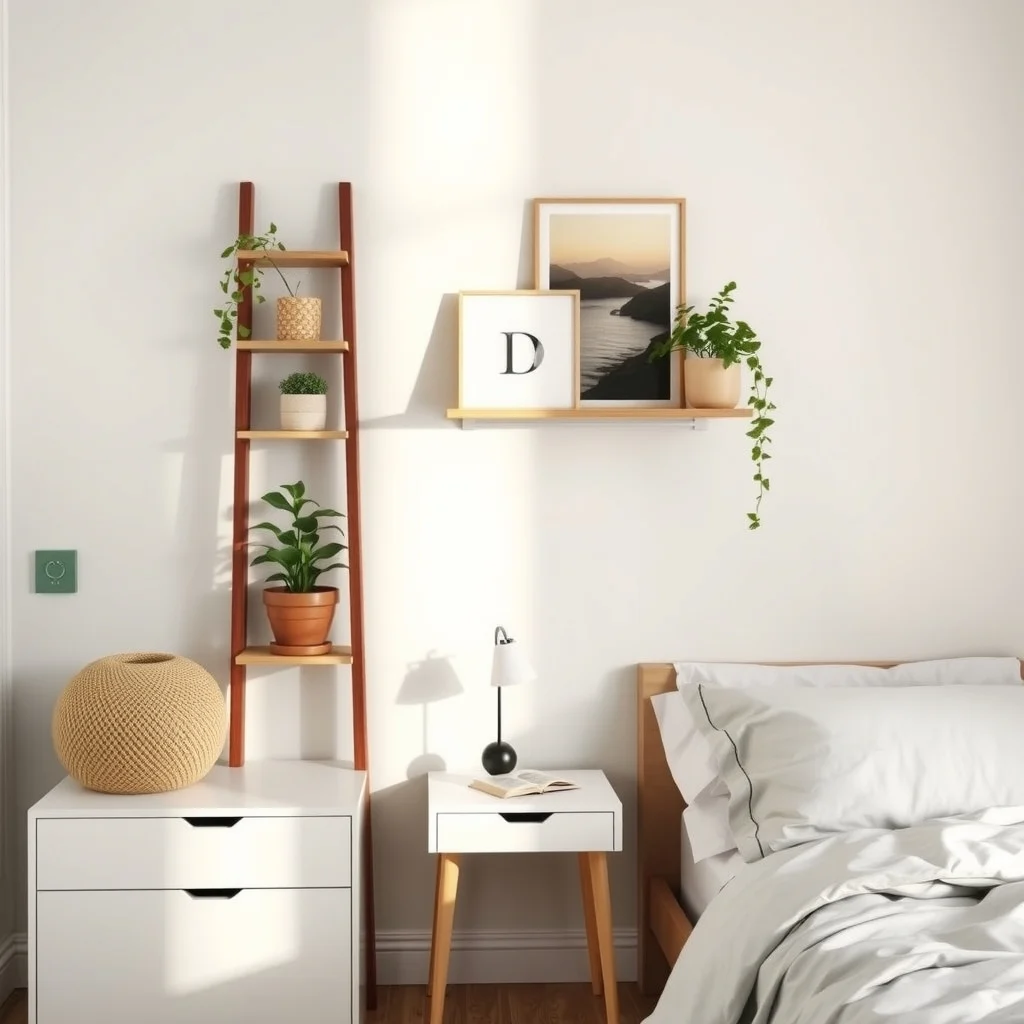
A narrow ladder shelf leans against the wall, offering two or three horizontal rungs that can serve as display surfaces. The bottom rung, positioned at a comfortable height, acts as the primary nightstand surface, while the space beneath can be fitted with a shallow drawer or a pull‑out basket that slides out of sight. The ladder’s vertical lines draw the eye upward, creating the illusion of height—a welcome effect in rooms with low ceilings. Using reclaimed pine or a light oak finish keeps the piece from feeling heavy, and the natural grain adds warmth without overwhelming a modest color palette. The hidden storage works best for items you don’t need at hand every night, such as spare socks or a small box of reading glasses, keeping the top rung tidy for the essentials.
3. Vintage Trunk or Steamer Chest Resting at Bedside
This image is by AI for inspiration only.
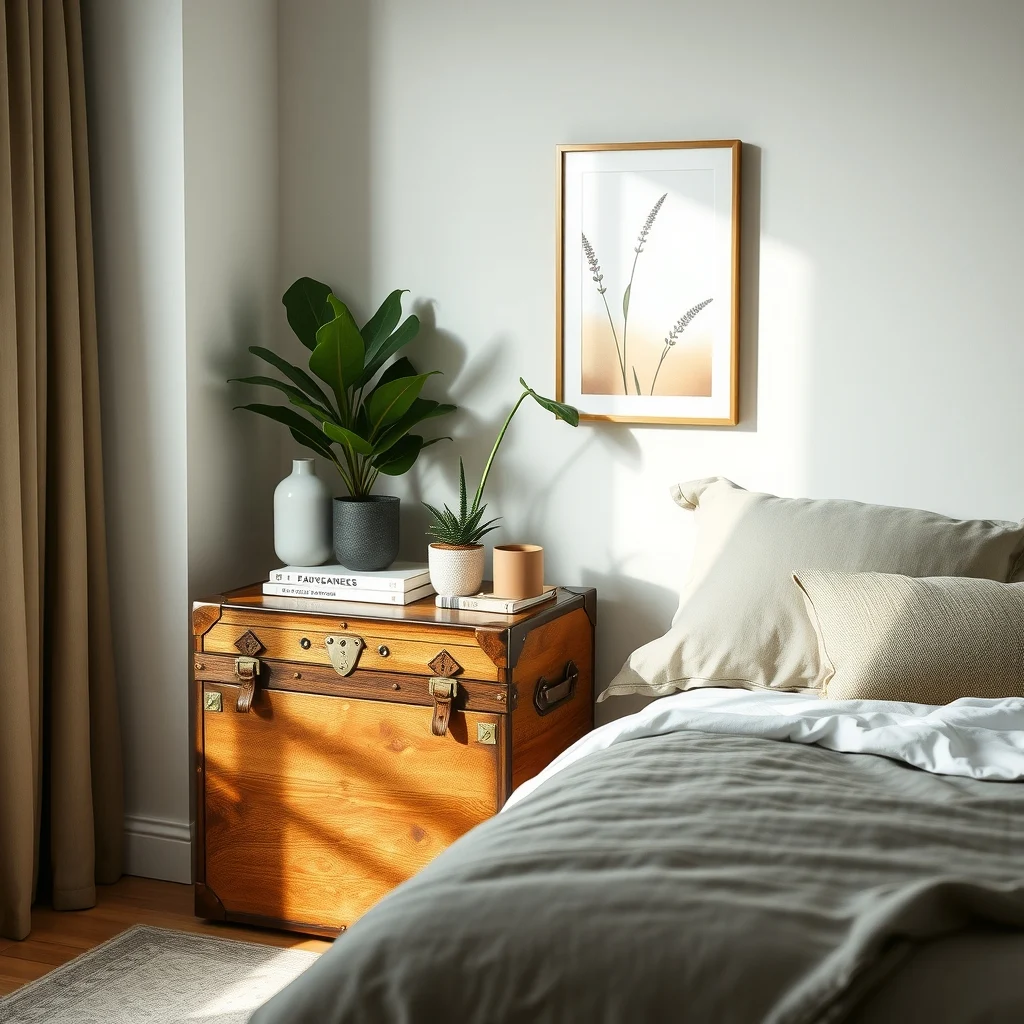
A compact vintage trunk, originally designed for travel, can serve as an eye‑catching bedside table while providing a generous interior compartment. The sturdy leather straps or brass hinges give the piece character, and the lid doubles as a flat surface for a lamp or a decorative tray. Because the trunk’s storage is fully enclosed, you can keep larger items—like a folded blanket or a weekend bag—out of view, reducing visual clutter. Position the trunk so the lid opens toward the wall; this orientation prevents the lid from swinging into the sleeping space. A soft, neutral upholstery on the interior cushions the items inside and protects delicate fabrics from the occasional bump.
4. Built‑In Bedside Nook Using a Recessed Alcove
This image is by AI for inspiration only.
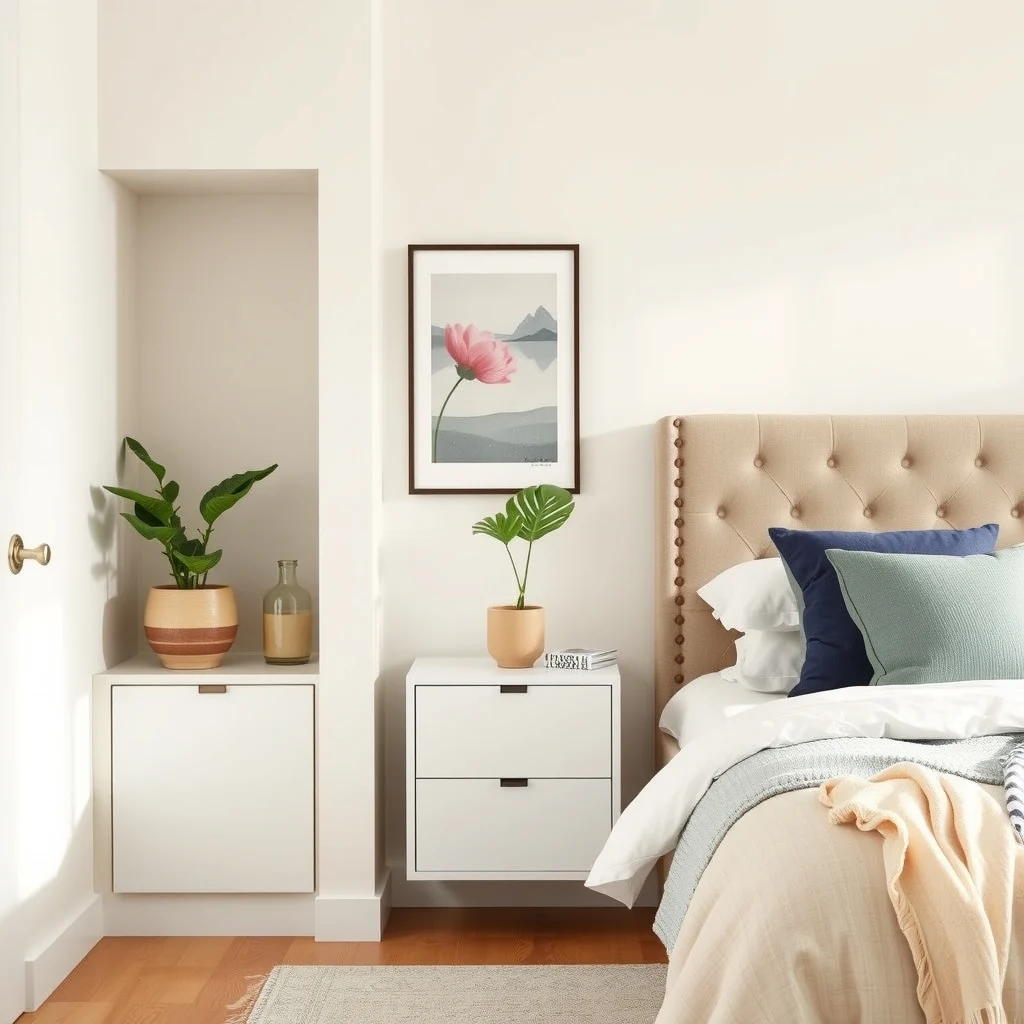
If the bedroom layout includes a slight indentation in the wall or a space between the headboard and a side wall, that niche can be turned into a built‑in nightstand. By installing a shallow cabinet with a hinged door inside the alcove, you create a seamless surface that aligns with the surrounding wall. The cabinet’s exterior can be painted the same hue as the headboard, making it appear as an extension of the bed rather than a separate piece of furniture. Because the storage is recessed, the top of the cabinet stays level with the mattress height, allowing a small lamp or a stack of books to sit comfortably. This solution works best in rooms where the wall is sturdy enough to hold the cabinet’s weight; otherwise, reinforcing the studs or using a lightweight MDF construction will prevent future sagging.
5. Multi‑Tiered Cube Organizer With a Pull‑Out Drawer
This image is by AI for inspiration only.
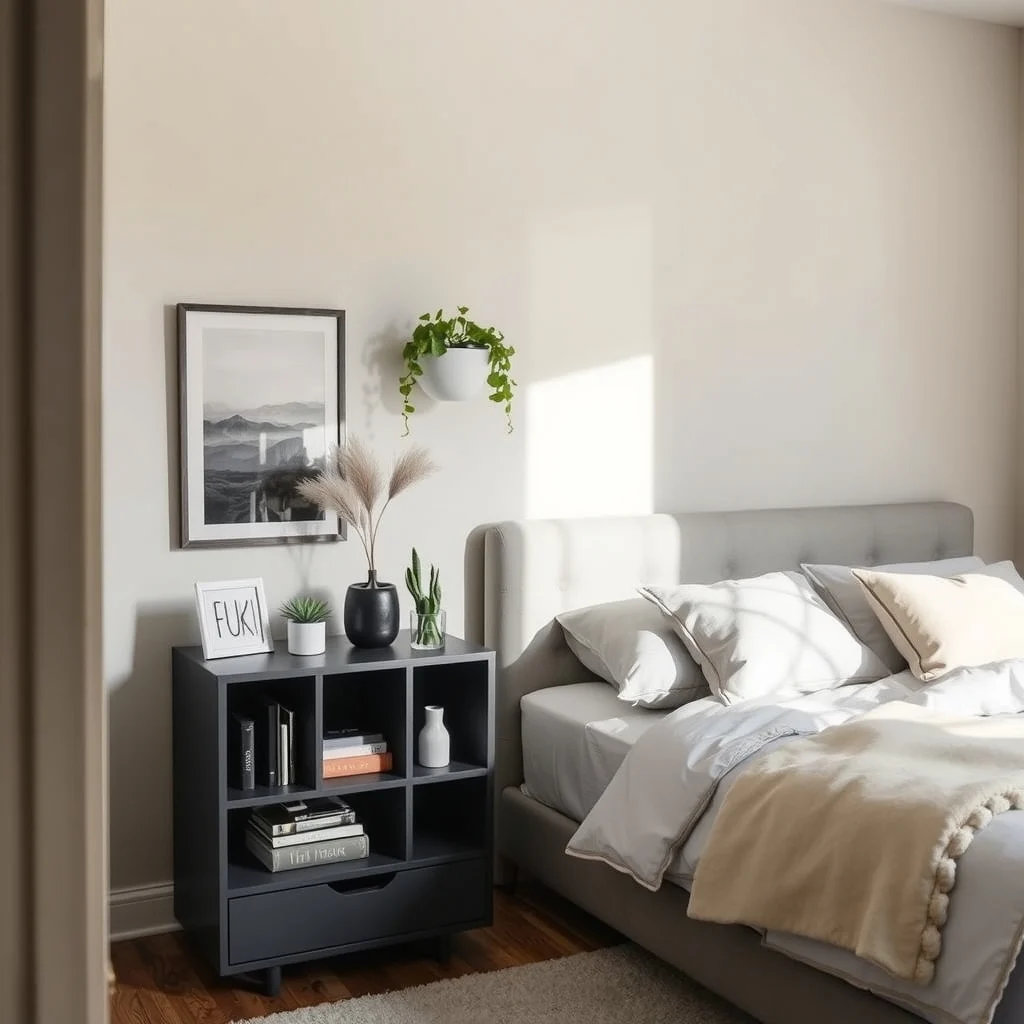
A modern cube organizer, often seen in contemporary living rooms, can be repurposed for the bedroom when one of the cubes includes a concealed pull‑out drawer. Arrange the cubes so the front-facing unit sits at bedside height, with the drawer hidden behind a simple panel that slides forward when needed. The open cubes above provide a place to display a small plant, a framed photograph, or a stack of favorite novels, while the drawer holds nighttime necessities like a spare phone charger or a medication box. Choosing a matte finish in soft gray or muted navy helps the organizer blend with the room’s palette, and the clean lines keep the overall look uncluttered. The main consideration is to ensure the organizer’s overall width does not exceed the space available beside the bed, preserving easy access to the mattress.
6. Small Dresser Drawer Turned Side Table
This image is by AI for inspiration only.
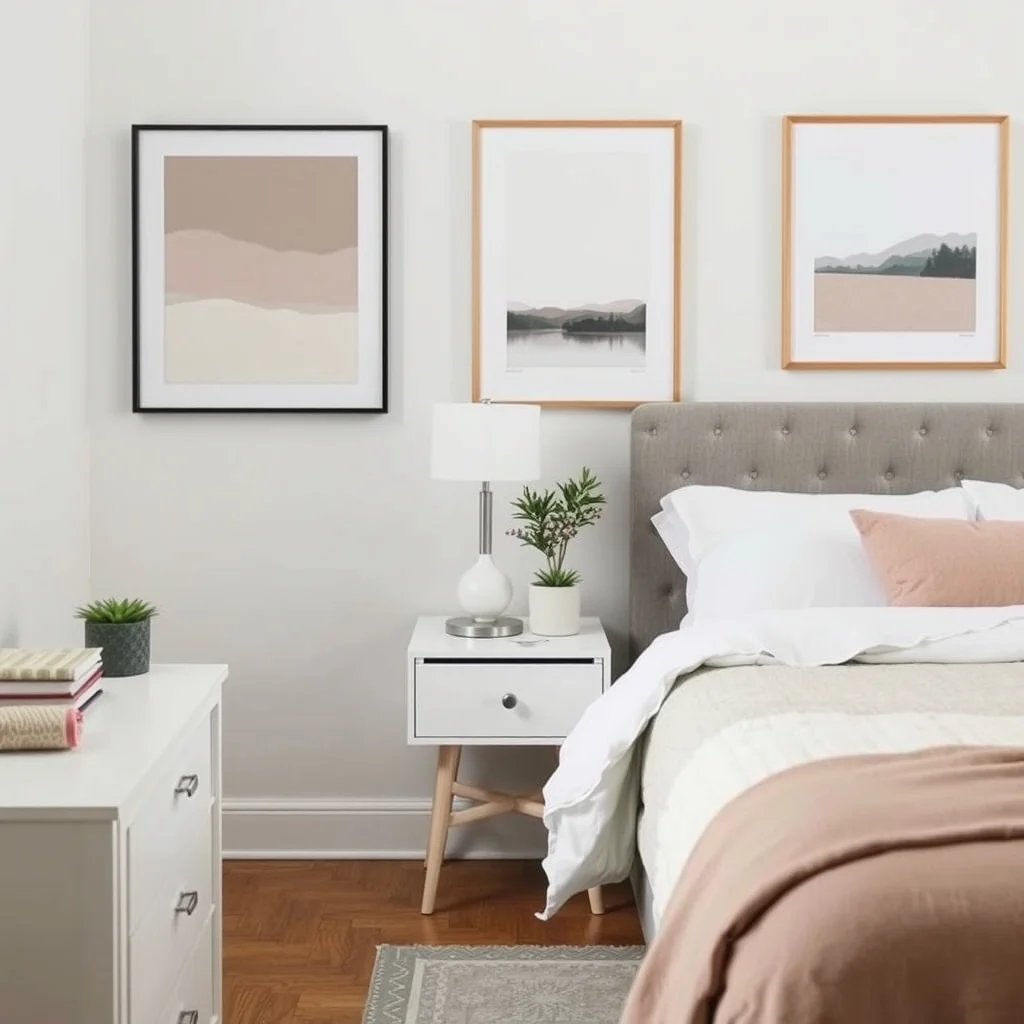
When a bedroom already contains a low dresser, one of its top drawers can be lifted and placed on a set of discreet legs to function as a nightstand. The drawer’s interior remains a hidden compartment, while the exposed top surface offers a stable platform for a lamp and a glass of water. This approach recycles existing furniture, reducing the need for additional purchases, and the uniform finish of the dresser ties the nightstand visually to the rest of the bedroom. To maintain balance, select a drawer that is no wider than the space beside the bed, and add a soft felt pad under each leg to protect hardwood flooring. The main trade‑off is that the drawer’s height may be slightly lower than a traditional nightstand, so a short lamp or a flexible gooseneck fixture works best.
7. Repurposed Kitchen Cart With a Hidden Bottom Shelf
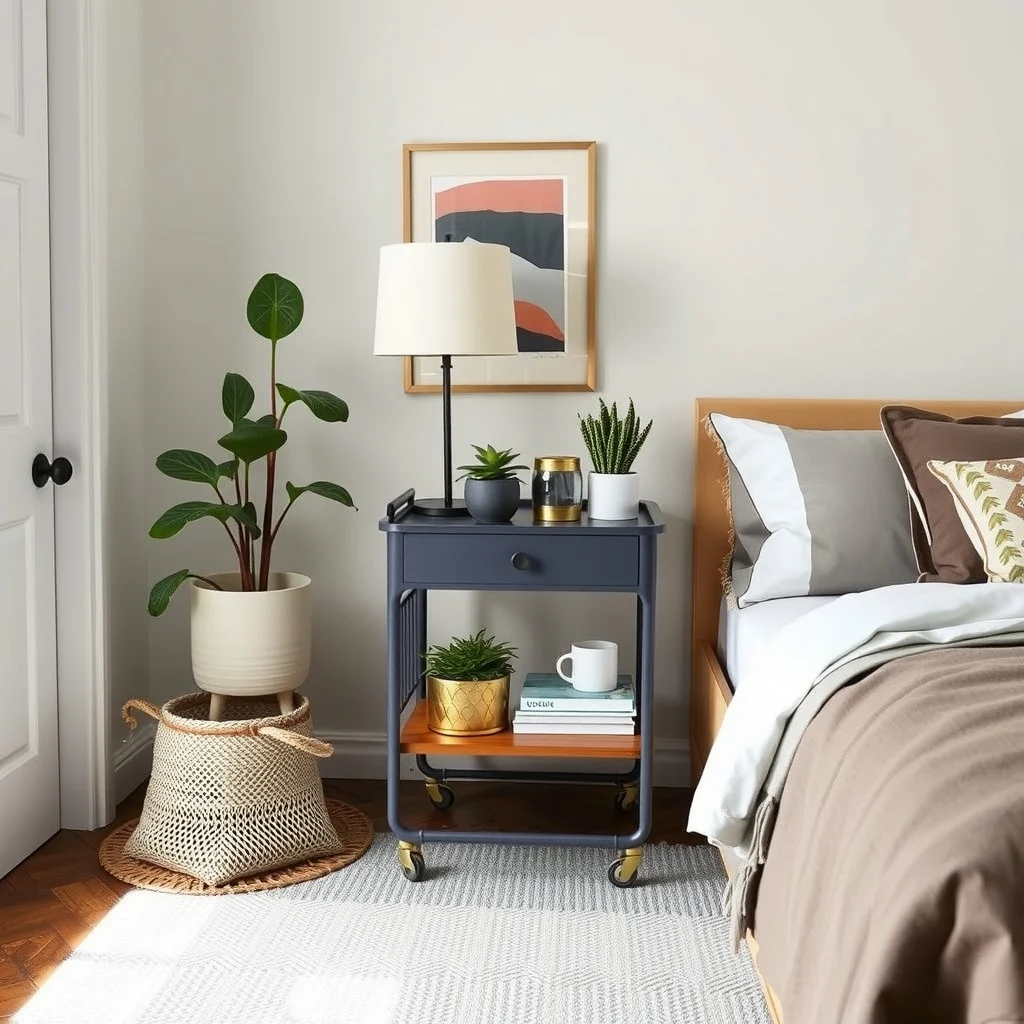
This image is by AI for inspiration only.
A narrow, three‑tier kitchen cart can be transformed into a mobile nightstand that slides under the bed when not in use. The top tier serves as the lamp surface, the middle tier can hold a stack of books, and the bottom tier—often a concealed shelf accessed by a flip‑down panel—stores bulkier items such as a spare pillow or a pair of shoes. Because the cart typically has casters, you can reposition it easily for cleaning or rearranging the room. Opt for a cart finished in a muted white or brushed steel to keep the visual weight low, and ensure the casters lock securely to prevent accidental movement at night. The primary limitation is the cart’s width; selecting a model no wider than twelve inches will keep it from crowding the sleeping area.
FAQ
This image is by AI for inspiration only.
Can I install a floating wall shelf without drilling into studs?
Yes, you can use heavy‑duty wall anchors designed for drywall, but for a shelf that will hold a lamp and a hidden compartment, anchoring into a stud provides the safest support.
What is the best material for a nightstand that will hide electronics?
Solid wood or high‑density MDF with a smooth finish works well because it resists warping and can be painted or stained to match the room’s décor while keeping cords organized inside the concealed compartment.
How high should a bedside surface be for comfortable reading?
The surface should sit roughly at elbow height when you are lying down, typically between 24 and 28 inches from the floor, allowing you to rest a book or tablet without straining your shoulders.
Is it okay to place a lamp on a wooden trunk?
Yes, as long as the lamp’s base is stable and the trunk’s surface is level; a soft cloth under the lamp can protect the wood from heat and scratches.
Do recessed nightstand cabinets require professional installation?
While a basic recessed cabinet can be installed by a confident DIYer, any work that involves cutting into structural studs or running electrical wiring should be handled by a qualified professional.
Final Thoughts
This image is by AI for inspiration only.
Choosing a nightstand alternative is less about finding a single perfect piece and more about matching storage to the rhythm of your nightly routine. Whether you prefer the minimalist look of a floating shelf, the rustic charm of a vintage trunk, or the flexibility of a rolling kitchen cart, each option offers hidden space that keeps the bedside tidy without compromising style. By considering the room’s dimensions, the materials that suit your lifestyle, and the practical trade‑offs of each design, you can create a functional bedside area that feels both intentional and spacious.