How to Store Extra Pillows in a Tiny Bedroom

Living in a small bedroom often means every square foot counts, and the pile of spare pillows that accumulates after a few nights of sleep can quickly become a visual and tactile nuisance. The challenge is not just finding a place to tuck them away, but doing so without sacrificing the room’s sense of openness or the comfort of the bed itself. Below are seven practical approaches that blend storage with style, allowing you to keep extra pillows close enough for a quick change while preserving the room’s airy feel.
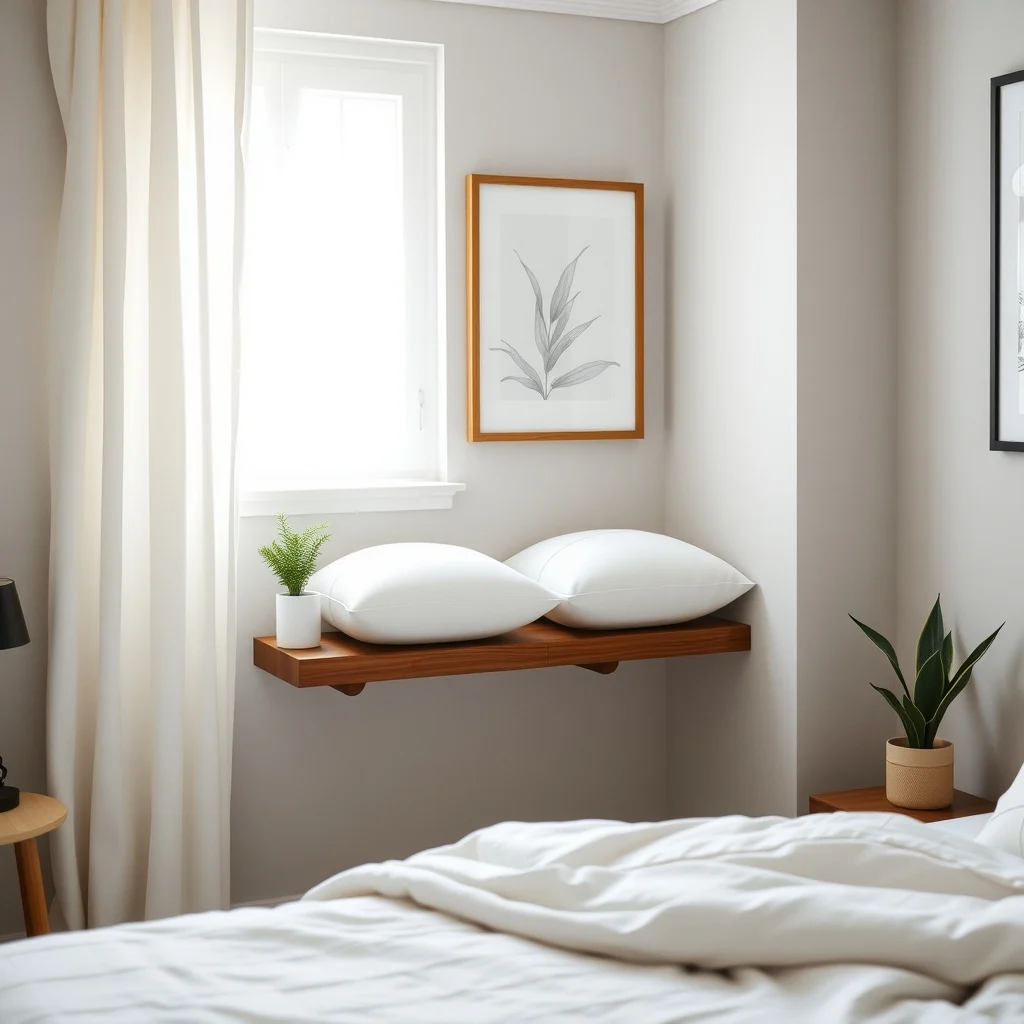
1. Choose a Built‑in Nook or Recess
This image is by AI for inspiration only.
Many older homes feature small alcoves or recessed wall spaces that are often overlooked. By installing a low‑profile shelf or a shallow cabinet inside the niche, you create a hidden compartment that blends seamlessly with the surrounding wall. The key is to keep the depth under eight inches so the unit does not protrude into the walking path. A light‑colored finish, such as soft white oak or brushed pine, reflects natural light and prevents the nook from feeling like a dark pocket. When you need an extra pillow, you simply lift a soft fabric cover and reach in; the pillows stay protected from dust while remaining accessible. The trade‑off is that a built‑in solution requires a bit of carpentry, but the result is a tidy, permanent storage spot that never competes with floor space.
2. Use a Low‑Profile Storage Ottoman

This image is by AI for inspiration only.
A storage ottoman placed at the foot of the bed serves two purposes: it offers a place to sit while you slip on shoes and it hides pillows inside a cushioned lid. Selecting an ottoman upholstered in a fabric that matches or subtly contrasts the bedding—perhaps a muted sage linen or a warm greige boucle—creates visual cohesion. The interior cavity typically accommodates two to three standard pillows, and the lid can be lifted without any mechanical parts, making it a quiet, child‑friendly option. Because the ottoman rests on the floor, it does not interfere with wall space, yet it does occupy a portion of the room’s footprint. If you have limited floor area, choose a slimmer profile or a round shape that fits into a corner without blocking traffic.
3. Hang a Fabric Pocket on the Wall

This image is by AI for inspiration only.
For a lightweight, decorative solution, consider sewing or purchasing a large fabric pocket that hangs from a decorative hook or a slim wall‑mounted bracket. Choose a sturdy canvas or linen in a tone that echoes the room’s palette—perhaps a deep terracotta or a cool slate—and size it to hold three to four folded pillows. The pocket’s open front makes it easy to pull pillows in and out, while the fabric drape adds a soft texture that softens the wall. This method is especially useful in rooms where floor space is at a premium, because the storage lives vertically. The main limitation is that the fabric may collect dust over time, so occasional vacuuming or a quick shake‑out is required to keep the pillows fresh.
4. Repurpose a Small Dresser Drawer
This image is by AI for inspiration only.
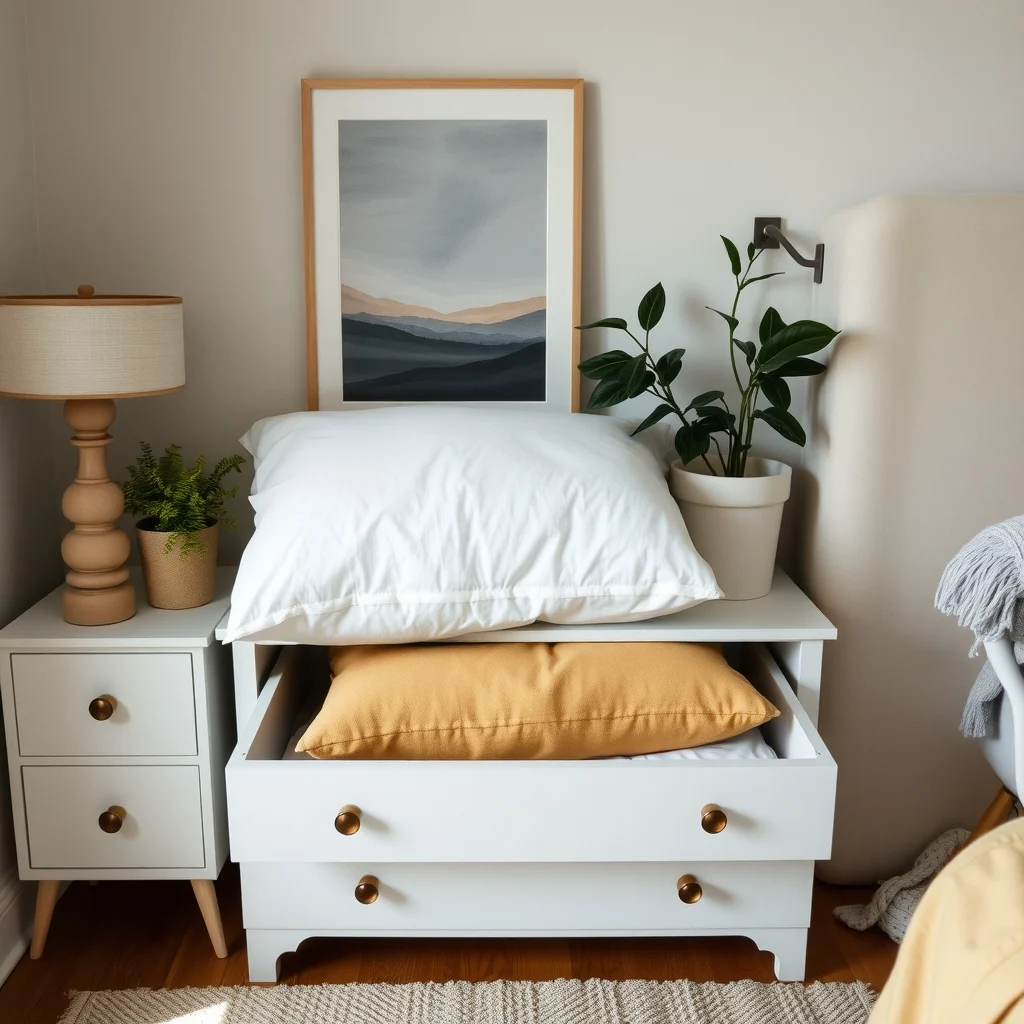
Even a narrow three‑drawer dresser can become a pillow repository if you designate the top drawer for that purpose. By lining the drawer with a breathable cotton sheet, you protect the pillows from lint while allowing airflow. Selecting a drawer with a smooth glide mechanism ensures that opening it does not disturb other items stored nearby. The visual benefit is that the drawer integrates with existing furniture, avoiding the need for additional pieces. However, be mindful of the drawer’s weight capacity; overloading it can strain the slides and cause premature wear. A practical tip is to fold the pillows loosely rather than compressing them, preserving their loft for future use.
5. Install a Slim Under‑Bed Shelf
This image is by AI for inspiration only.
When the bed is raised on a platform or has a sturdy headboard, the space beneath can be turned into a hidden shelf. A narrow metal or wooden rail mounted a few inches off the floor creates a ledge on which a breathable storage bag can sit. Choose a bag made of canvas or mesh that matches the room’s neutral tones, and slide the pillows inside. This approach takes advantage of otherwise wasted volume, and the low profile means the shelf does not interfere with the flow of the room. The downside is that the shelf must be sturdy enough to support the weight of multiple pillows; using a reinforced bracket or a double‑layer board mitigates that risk.
6. Incorporate a Decorative Ladder
This image is by AI for inspiration only.
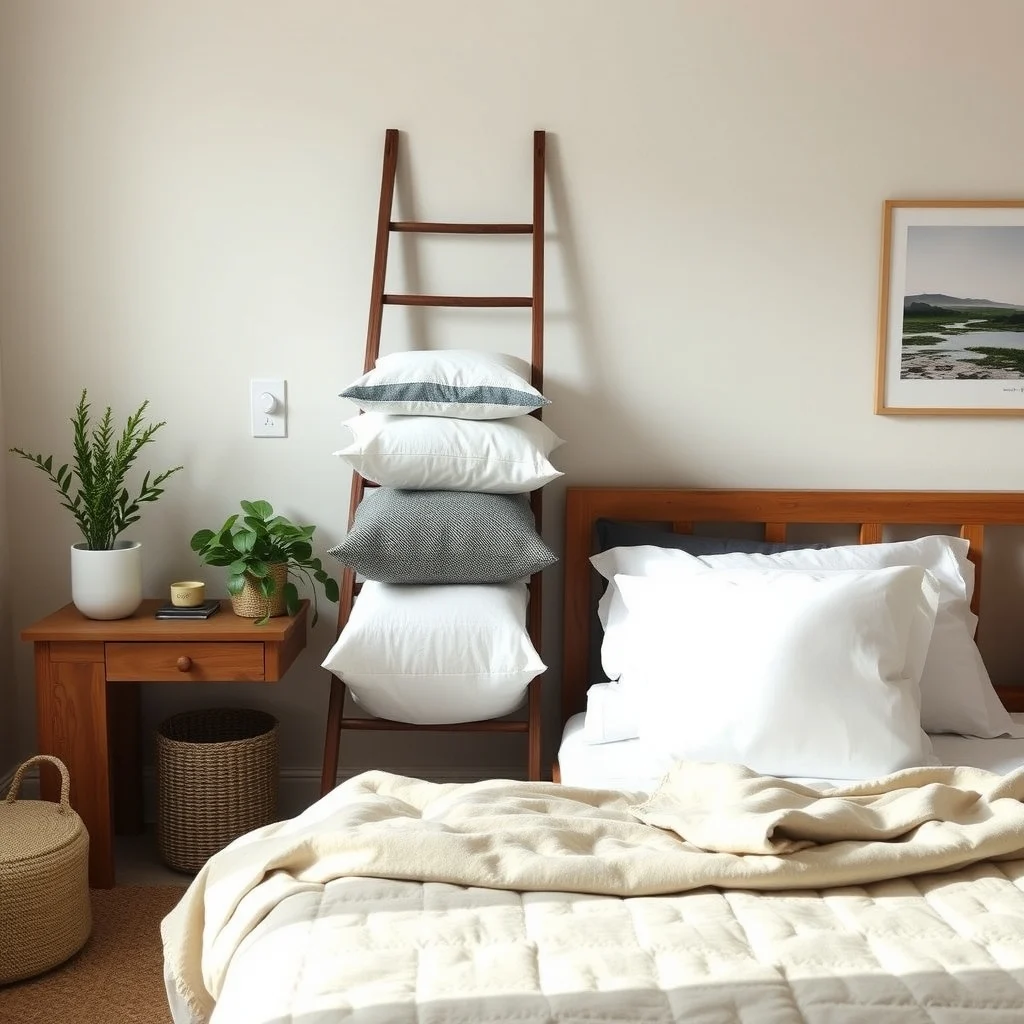
A leaning ladder made of reclaimed wood or painted metal can serve as both a visual accent and a functional pillow rack. By laying a few folded pillows across the rungs, you keep them within arm’s reach while adding a casual, layered look. The ladder’s slanted position creates a sense of movement that draws the eye upward, helping the ceiling feel higher. Selecting a ladder with a narrow width—around twelve inches—prevents it from dominating the floor. One consideration is that the pillows are exposed, so you may want to use pillowcases that can be laundered regularly, or add a light throw that can be tucked over them for a tidy appearance.
7. Opt for a Multi‑Purpose Headboard with Built‑In Bins

This image is by AI for inspiration only.
Modern headboards sometimes feature recessed compartments or shallow bins built into the design. A headboard with two or three low drawers, finished in a matte walnut or soft walnut veneer, provides a discreet spot for extra pillows directly behind the sleeping area. Because the storage is part of the bed’s structure, it does not consume additional room. The proximity means you can reach for a pillow without getting out of bed, which is a subtle convenience. The primary limitation is that headboard bins are typically shallow, so they accommodate only folded or rolled pillows rather than fully fluffed ones. If you prefer plush pillows, consider rolling them tightly before placing them in the compartment.
FAQ
This image is by AI for inspiration only.
How many pillows can I realistically store in a tiny bedroom?
You can comfortably store three to six pillows if you use a combination of the methods described, such as an ottoman, a wall pocket, and an under‑bed shelf.
Is it safe to keep pillows in a wooden drawer?
Yes, as long as the drawer is not overloaded and the wood is treated to resist moisture, a wooden drawer provides a stable, dust‑protected environment for pillows.
Can I use decorative baskets for pillow storage?
Decorative baskets work well, especially when placed on a low shelf or under the bed; just ensure the basket material breathes, like wicker or seagrass, to prevent moisture buildup.
What’s the best way to keep stored pillows fresh?
Store pillows in breathable fabric covers and give them a quick fluff each week; occasional sunlight exposure helps reduce odors and keeps the fill from clumping.
Do these storage ideas affect the room’s aesthetic?
Each solution is designed to blend with the room’s existing colors and textures, so when chosen carefully they enhance rather than detract from the overall look.
Final Thoughts

This image is by AI for inspiration only.
Finding room for extra pillows in a small bedroom does not require sacrificing style or comfort. By thinking vertically, using furniture that doubles as storage, or integrating hidden compartments into existing pieces, you can keep your pillows organized and your space feeling open. Choose the approach that aligns with your room’s layout, your preferred materials, and how often you need to access the pillows. With a little planning, the extra pillows become a quiet convenience rather than a clutter problem.