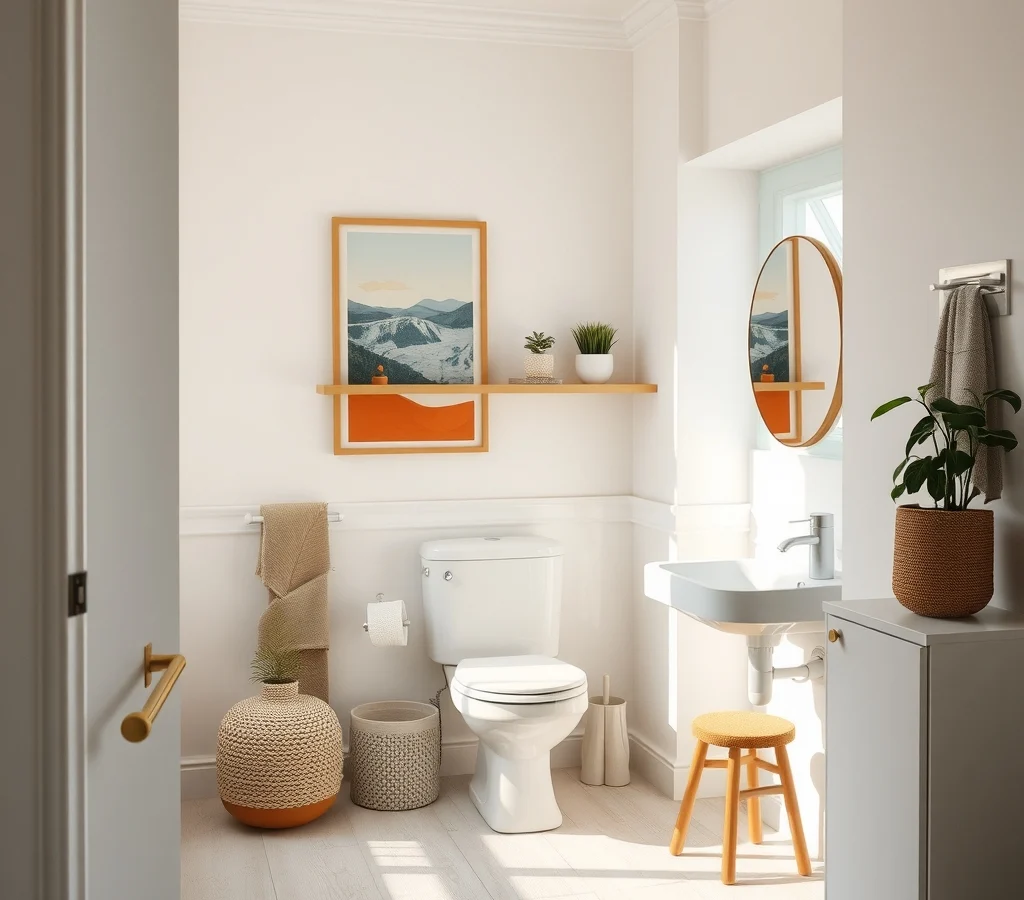
How to Organize a Tiny Bathroom With One Shelf

When a bathroom barely fits a single towel rack, every inch of wall space feels precious. The temptation to cram every bottle, brush, and plush into the limited corners often leads to clutter that makes the room feel even smaller. A well‑chosen shelf can become the quiet hero of the space, offering a place to display, store, and organize without sacrificing style. Below are seven approaches that turn a single shelf into a functional focal point, followed by practical answers to common questions and a short wrap‑up.
1. Choose the Right Shelf Style for the Space
This image is by AI for inspiration only.
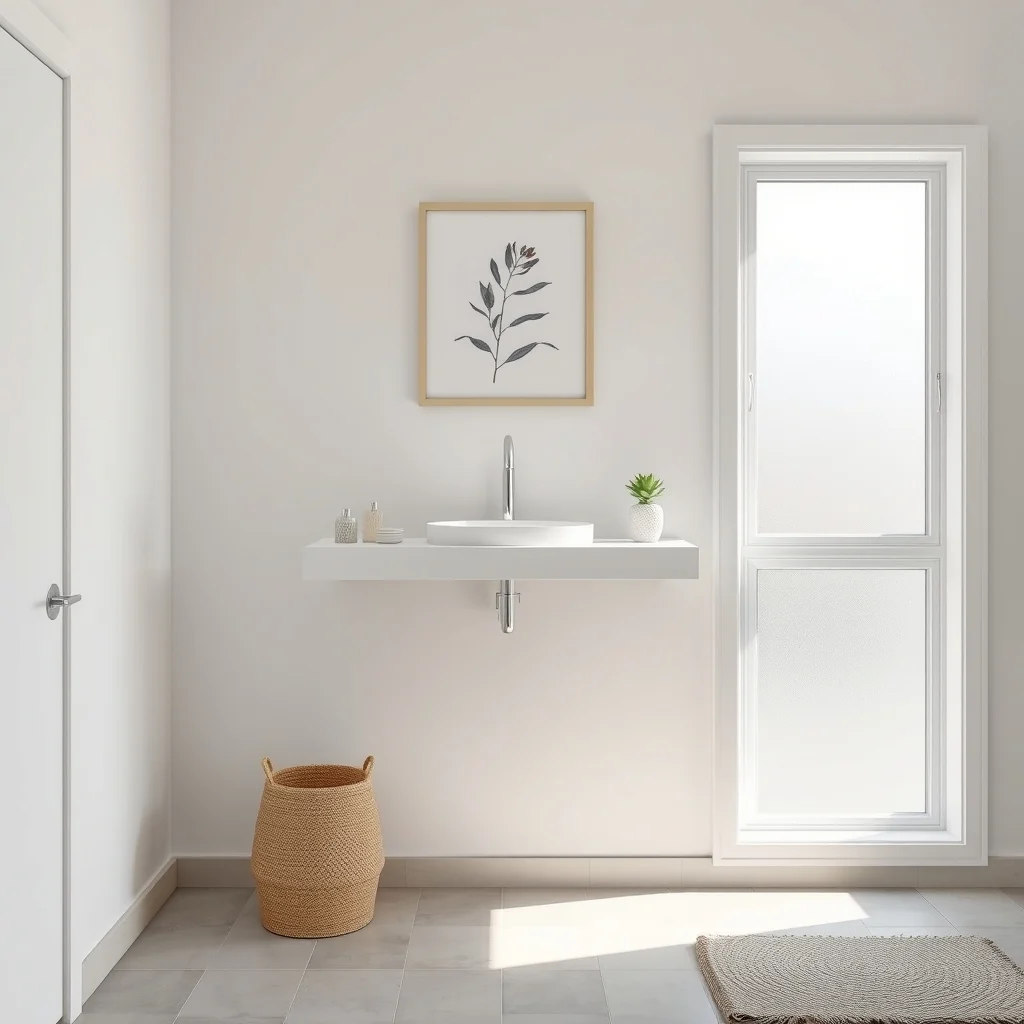
The first decision is whether the shelf should float or be anchored with visible brackets. A floating shelf, typically mounted with concealed hardware, creates an airy feel because the wall behind remains visible. This works especially well in bathrooms with light‑colored walls or subtle tile patterns, where the shelf can appear to hover. A bracketed shelf, on the other hand, adds a visual anchor that can be useful if the wall is prone to moisture and you need extra support for heavier items. Materials such as brushed nickel or powder‑coated steel resist rust, while a reclaimed‑oak board sealed with a water‑based finish brings warmth without warping. Measure the width of the wall between fixtures; a shelf that spans 60‑70 % of that distance offers enough surface without overwhelming the room.
2. Position the Shelf for Maximum Functionality
This image is by AI for inspiration only.
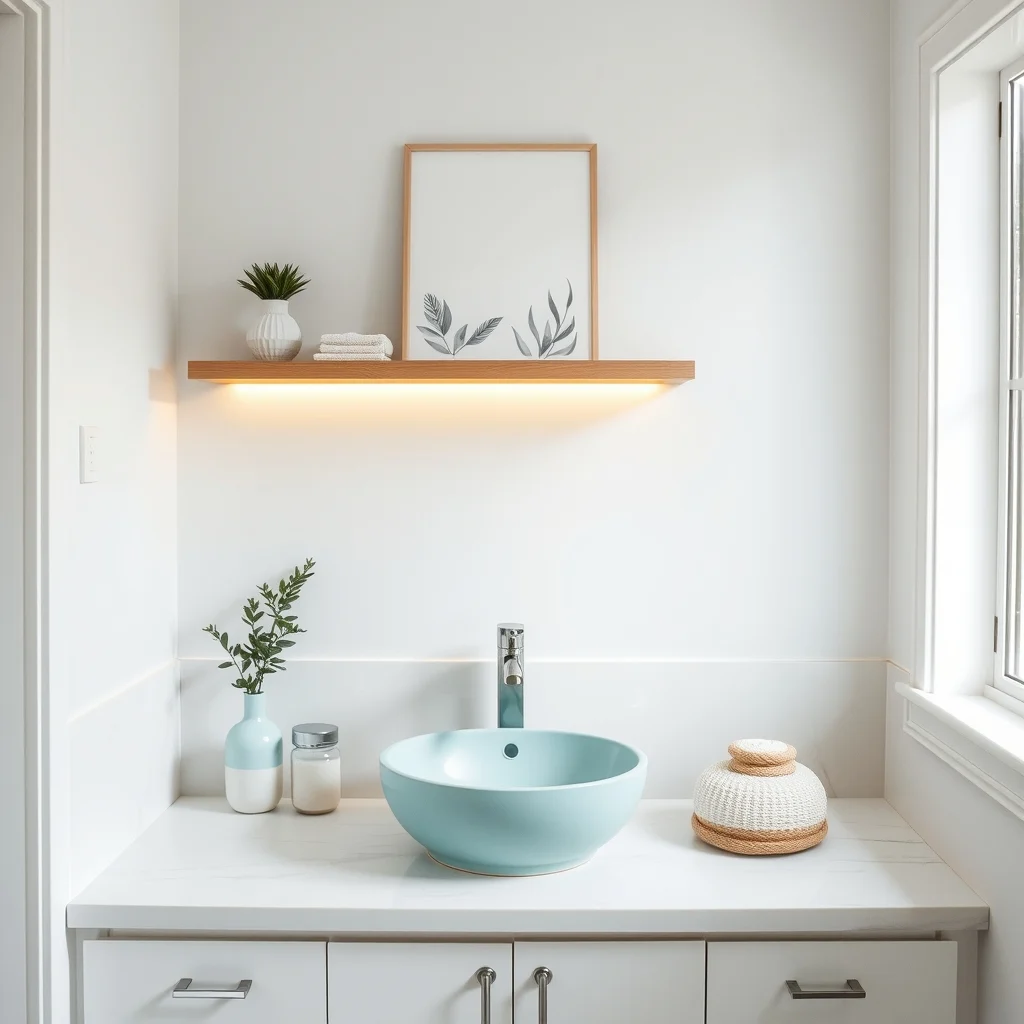
Where you place the shelf determines how naturally you will use it. Installing it at eye level, roughly 55‑inch from the floor, allows you to reach for daily items without bending. If the bathroom includes a vanity, positioning the shelf just above the countertop keeps toothbrushes, hand soap, and a small plant within easy reach while freeing drawer space. In a shower‑only layout, a shelf placed a few inches above the tub rim can hold shampoo bottles that are otherwise difficult to organize. Be mindful of plumbing and electrical outlets; a small stud finder can help you avoid hidden pipes. The trade‑off is that a higher shelf may become a decorative element rather than a storage hub, so balance height with the items you plan to keep there.
3. Use Baskets and Bins to Create Hidden Compartments
This image is by AI for inspiration only.
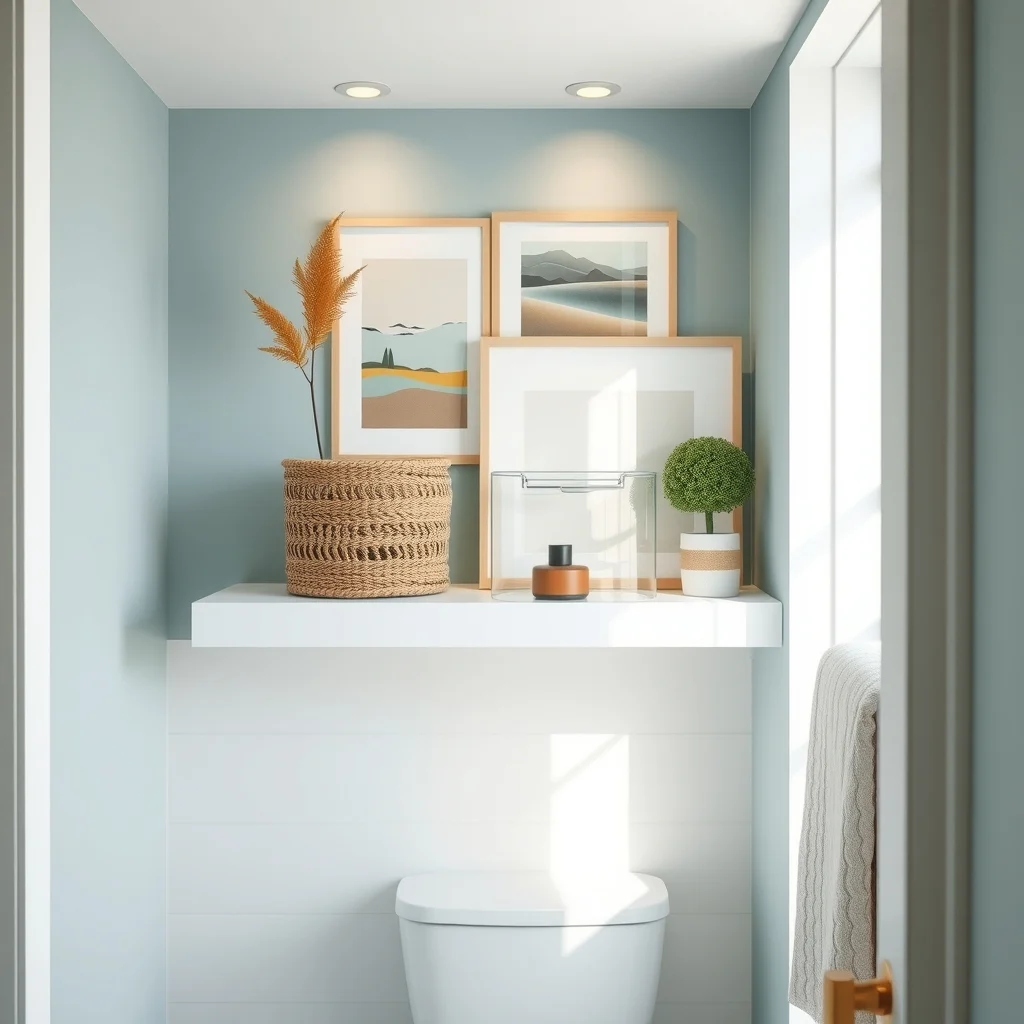
Open shelves can look tidy when you group items inside containers that match the bathroom’s aesthetic. Woven seagrass baskets add a natural texture that softens the hard lines of tile, while clear acrylic bins let you see contents at a glance. Choose sizes that fit the shelf’s depth; a shallow basket of about four inches works well for rolled towels, whereas a deeper bin can hold a stack of shampoo bottles. By assigning each basket a purpose—one for grooming tools, another for cleaning supplies—you create visual order without sacrificing accessibility. The downside is that baskets can collect dust, so a quick wipe each week keeps them looking fresh.
4. Incorporate Vertical Dividers for Small Items
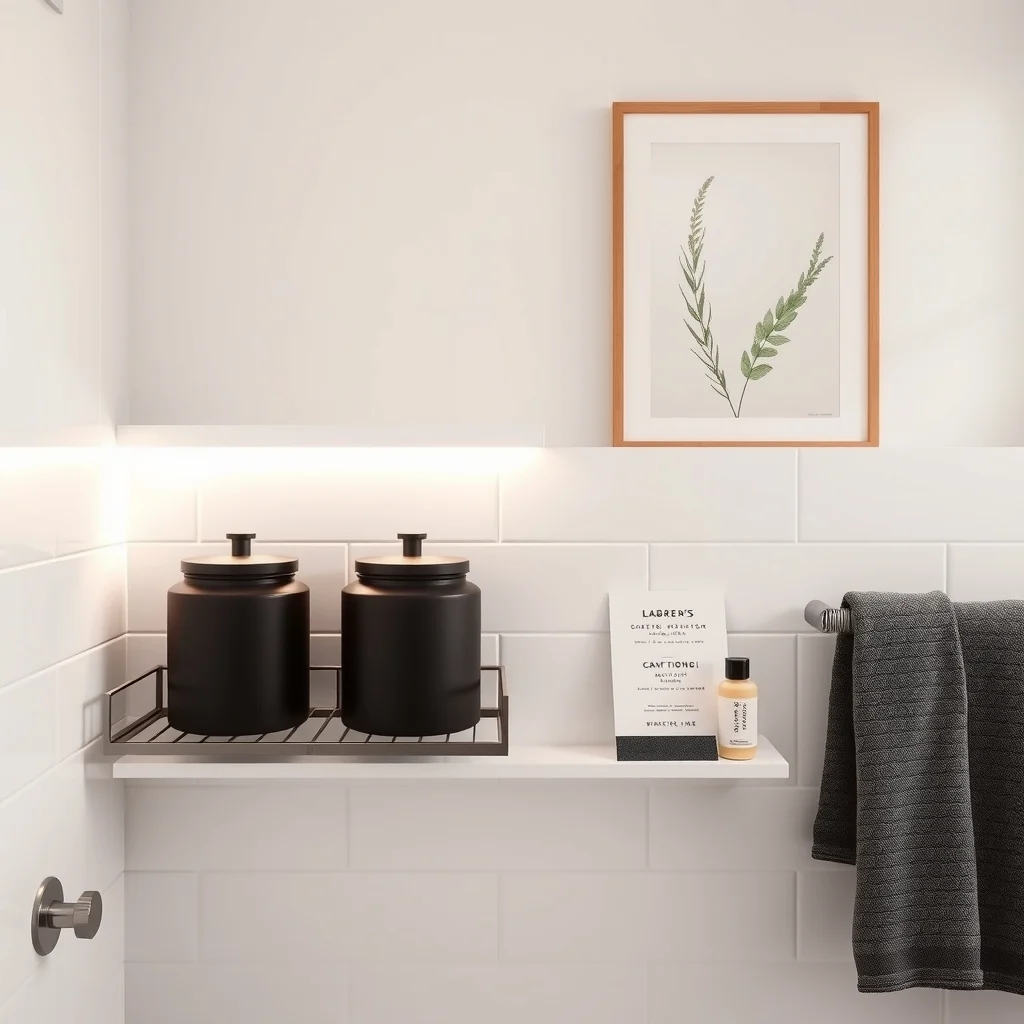
This image is by AI for inspiration only.
When the shelf width is generous but the depth is limited, stacking vertically makes the most of the space. Small ceramic jars or metal canisters placed side by side turn a flat surface into a mini‑gallery of storage. A set of three to five jars, each about three inches tall, can hold cotton swabs, makeup remover pads, or spare toothbrush heads. This approach adds a sculptural element that draws the eye upward, which can make the room feel taller. However, too many tall objects may create a cluttered silhouette, so limit the number to what the shelf can support without looking crowded.
5. Blend the Shelf with the Bathroom Palette
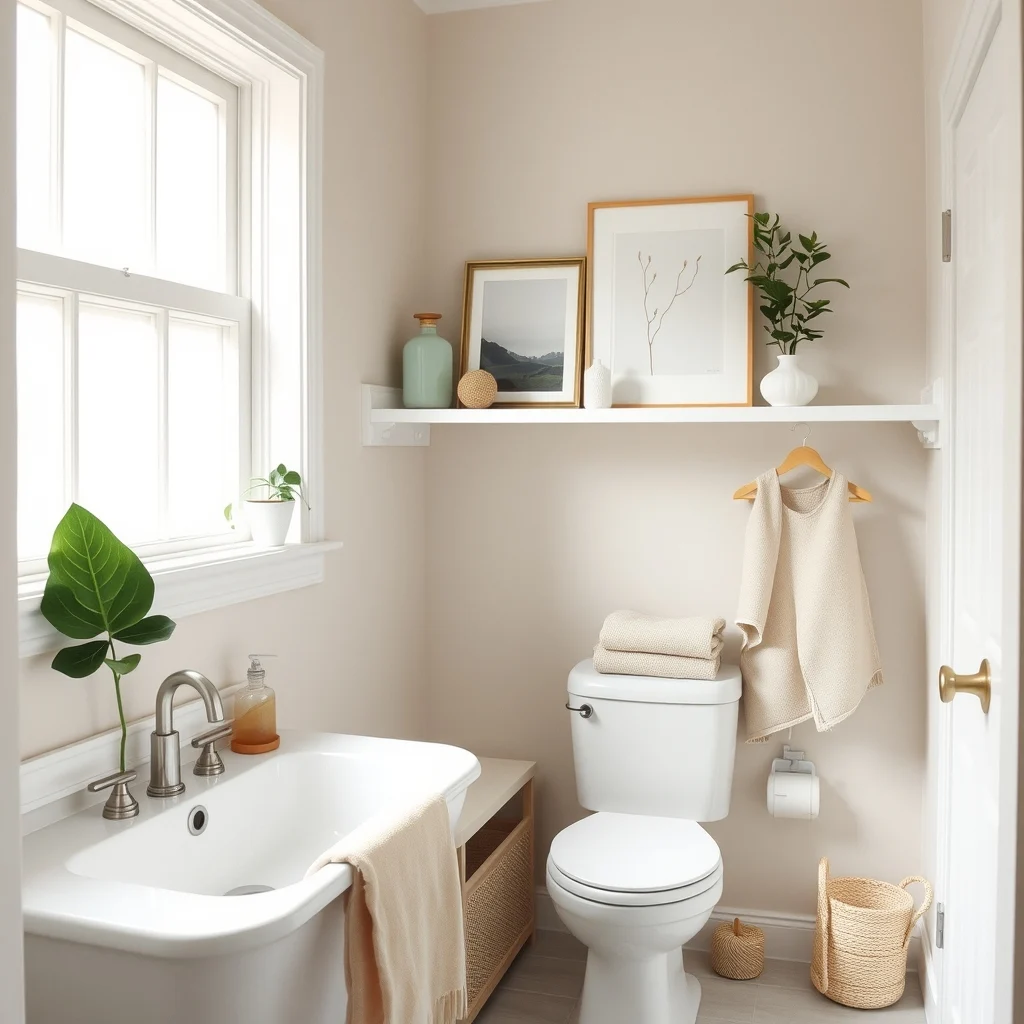
This image is by AI for inspiration only.
Color coordination helps the shelf feel like an integrated part of the design rather than an afterthought. If the walls are painted in a soft greige, a shelf finished in matte white will recede, allowing the items on it to become the focal point. Conversely, a shelf in a muted sage or dusty teal can serve as a subtle accent that echoes the hue of a patterned shower curtain. Matching the hardware—such as brushed brass knobs on a vanity—to the shelf’s metal brackets creates a cohesive look. Keep in mind that darker finishes may show water spots more readily, so they require a bit more maintenance.
6. Add Light and Mirror Elements to the Shelf
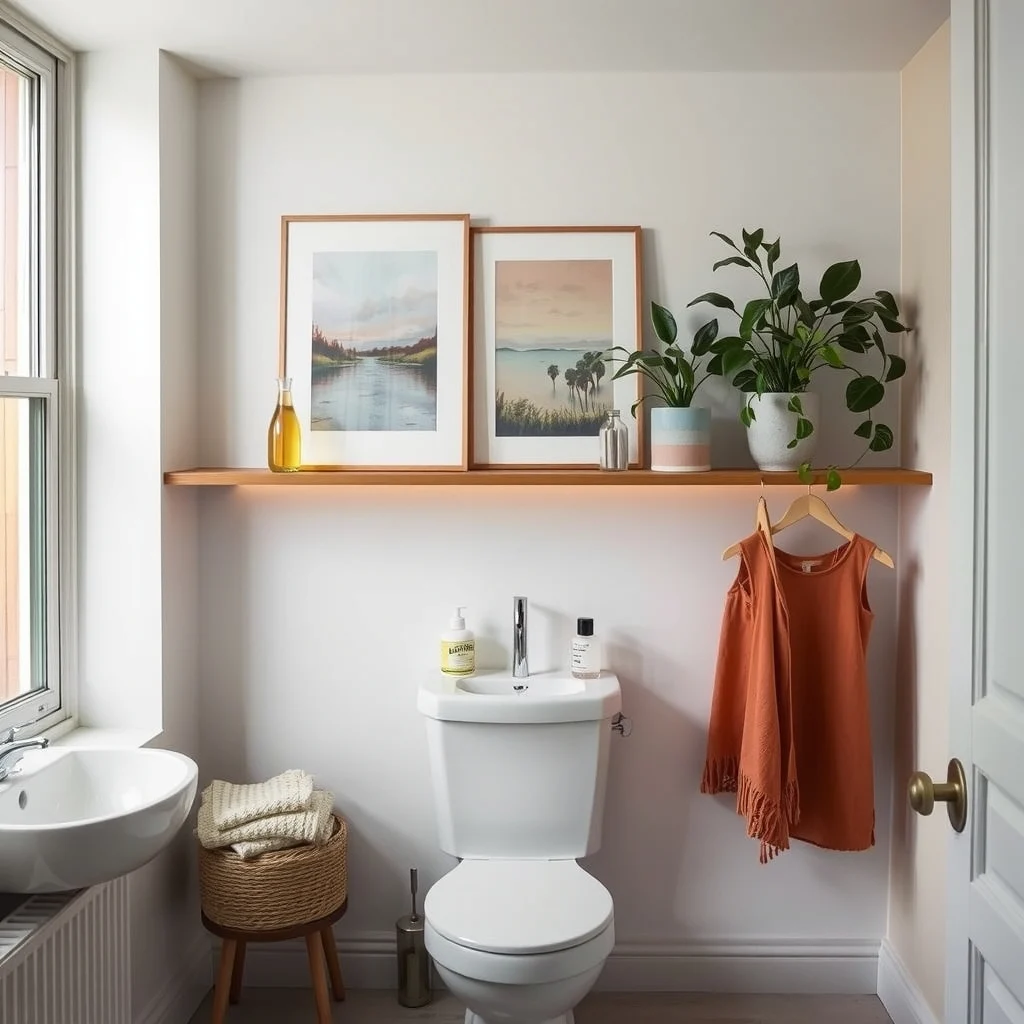
This image is by AI for inspiration only.
Lighting can transform a simple shelf into a functional showcase. A thin LED strip adhered to the underside of the shelf provides a soft wash of illumination that highlights the items placed on top and adds a gentle glow to the surrounding wall. Because LEDs emit little heat, they are safe for use near moisture‑prone areas. Pairing the shelf with a mirrored backing panel not only reflects light but also creates an illusion of additional space. The reflective surface works best when the mirror is framed in the same metal as the shelf brackets, ensuring visual harmony. The trade‑off is the need for a low‑voltage power source; if wiring is not readily available, a battery‑operated LED option can still deliver a modest effect.
7. Keep the Shelf Tidy with Routine Habits
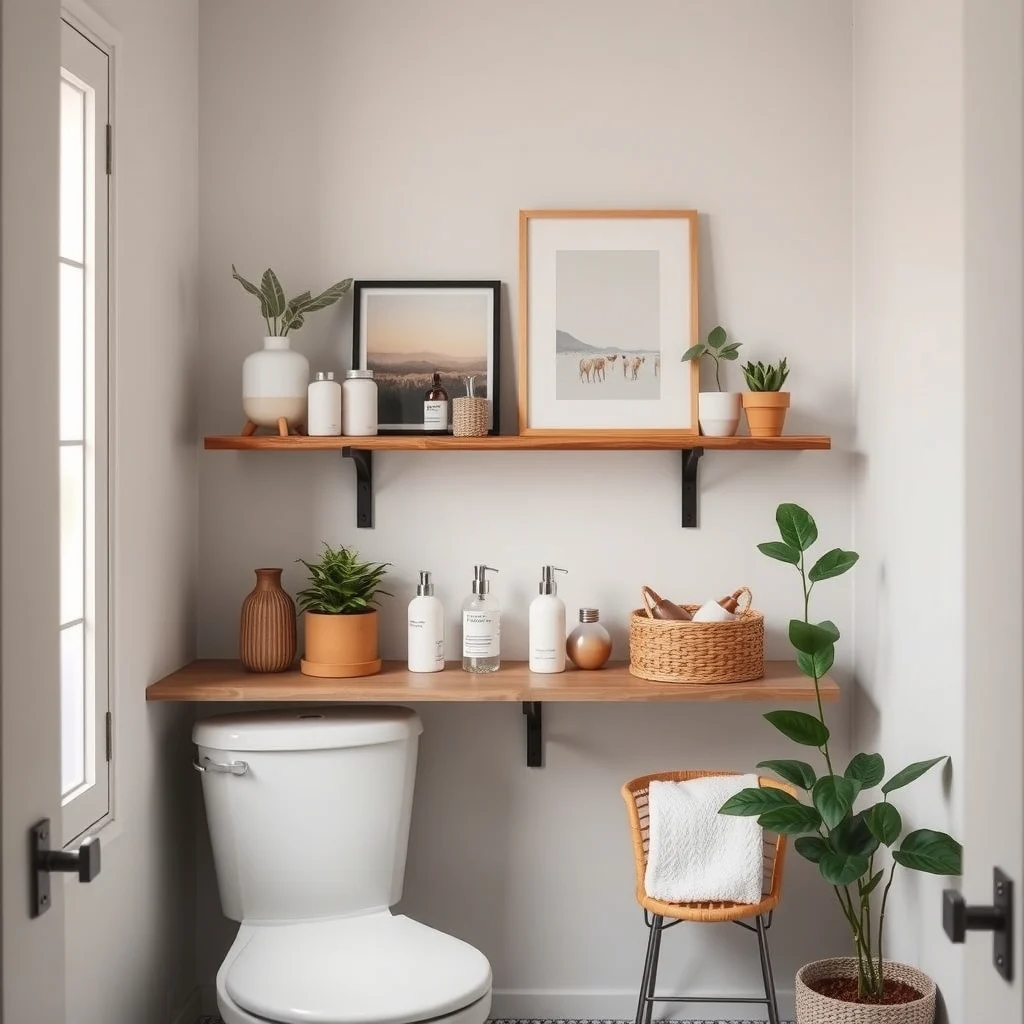
This image is by AI for inspiration only.
Even the most thoughtfully arranged shelf can become a magnet for clutter if you let daily items accumulate. Establish a quick evening habit of returning each product to its designated basket or jar. Limiting the number of decorative pieces—perhaps a single scented candle or a small plant—prevents the shelf from feeling overloaded. When you notice a product nearing its expiration date, replace it promptly to avoid unnecessary buildup. Regularly wiping the surface with a microfiber cloth keeps water marks at bay, especially in a bathroom where steam is constant. The only downside is the discipline required, but the visual payoff makes the effort worthwhile.
FAQ
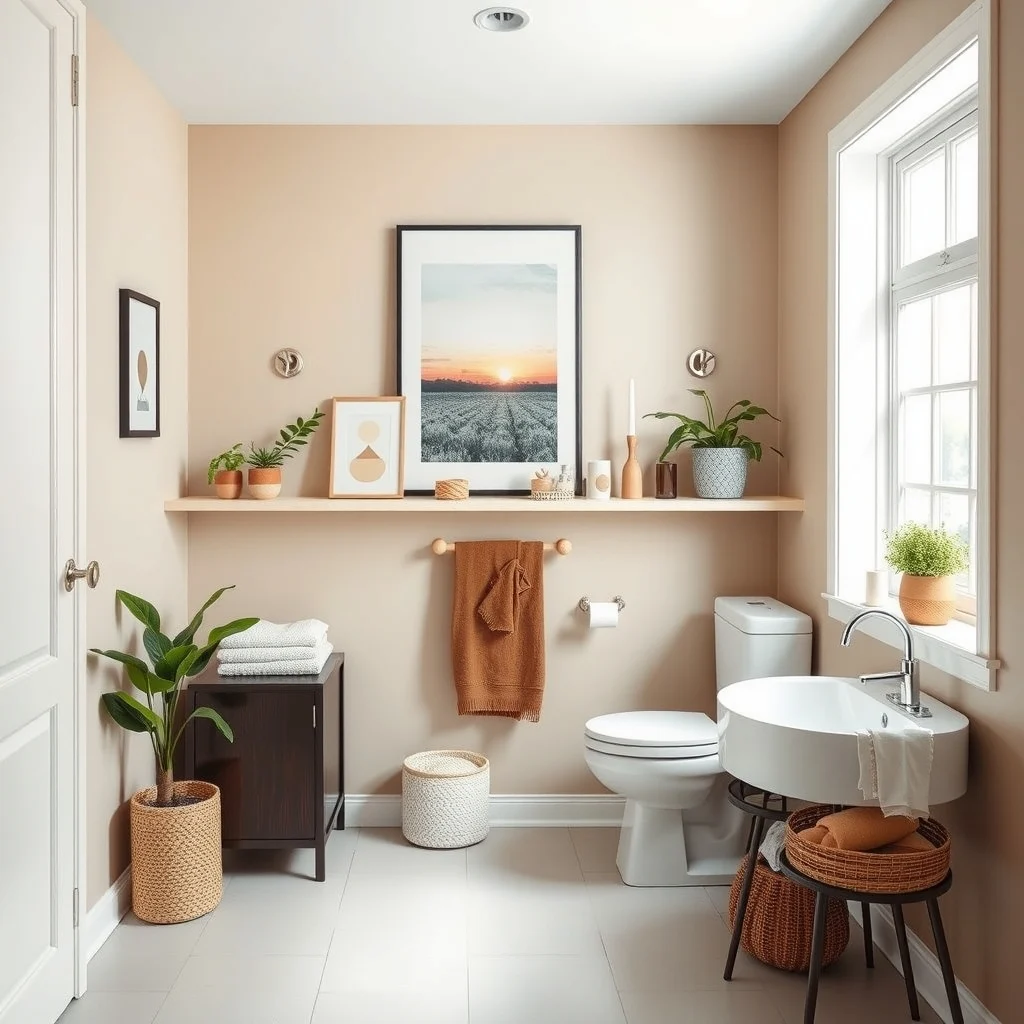
This image is by AI for inspiration only.
How high should a bathroom shelf be installed?
Mount the shelf so the top edge sits around 55 inches from the floor for most users. This height allows easy access without bending and keeps the shelf within the line of sight, which encourages regular use.
Can I use a wooden shelf in a humid bathroom?
Yes, provided the wood is properly sealed with a water‑resistant finish. Choose a hardwood like maple or oak and apply a marine‑grade varnish to protect against moisture.
What are good ways to store toiletries on a single shelf?
Group similar items in matching containers such as ceramic jars for cotton rounds and woven baskets for rolled towels. This creates visual order while keeping each category easy to locate.
Is it okay to mount a shelf above the toilet?
Installing a shelf a few inches above the toilet can be practical for spare rolls and decorative items. Ensure the shelf is securely anchored to studs and keep the height low enough to avoid head bumps.
How do I prevent mold on shelf accessories?
Choose accessories made from non‑porous materials like glass, acrylic, or sealed metal. Wipe them dry after each use and allow air circulation by not overcrowding the shelf.
Final Thoughts
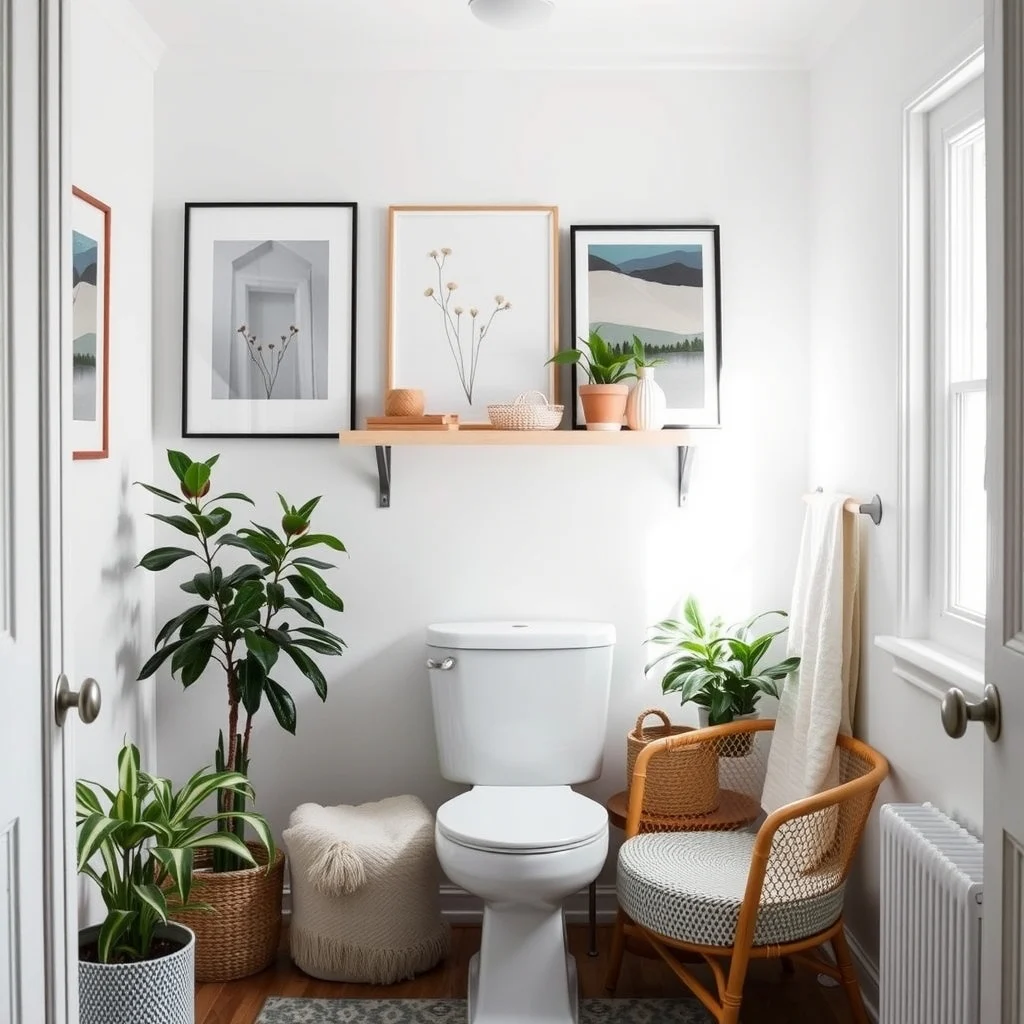
This image is by AI for inspiration only.
A single shelf, when chosen and placed with intention, can reshape a cramped bathroom into a space that feels organized and inviting. By selecting the right style, positioning it thoughtfully, and using containers that complement the room’s palette, you create a functional display that respects both form and function. Maintaining the shelf with simple daily habits ensures the transformation lasts. With these strategies, even the tiniest bathroom can enjoy a sense of order that makes daily routines smoother and more pleasant.