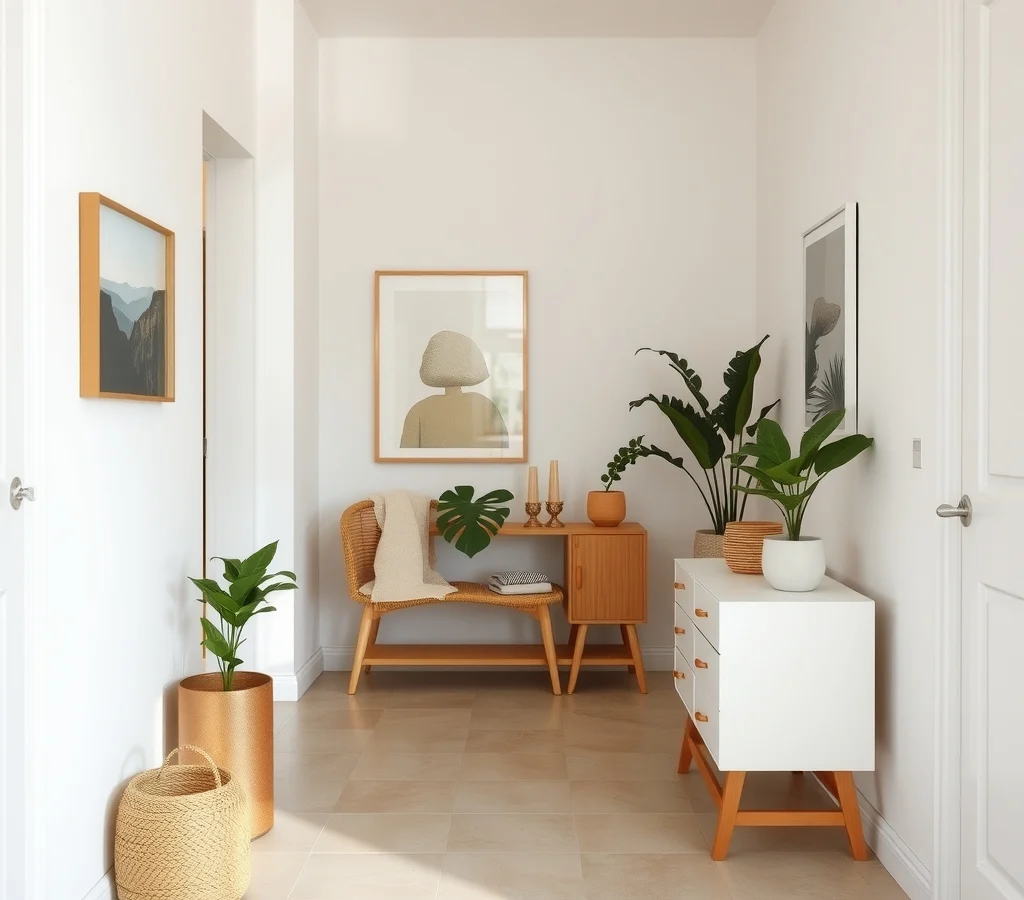
Small Entryway Storage Ideas for Apartments With Tile Floors

Living in an apartment often means making the most of limited space, and the entryway is a prime example. Tile flooring adds durability and a sleek look, but it can also feel cold and hard to anchor bulky furniture. The challenge is to introduce storage that respects the tile’s clean lines while keeping the area welcoming. Below are seven thoughtfully designed ideas that blend function with style, giving you room for shoes, coats, keys, and the occasional parcel without sacrificing the open feel of a tiled entry.
1. Slim Floor‑to‑Ceiling Shelves
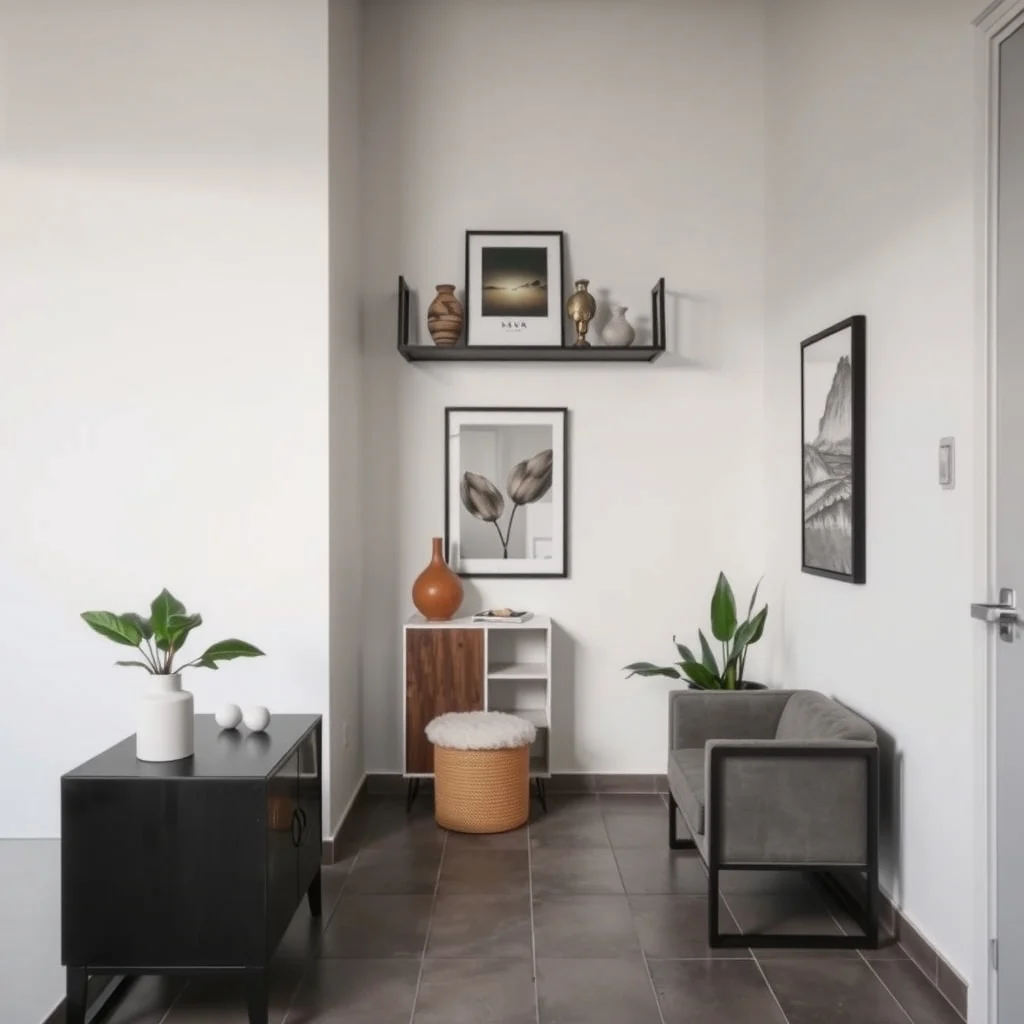
This image is by AI for inspiration only.
A narrow shelving unit that stretches from the floor to the ceiling makes use of vertical space that often goes untouched. By selecting a frame in brushed brass or matte black, the shelf adds a subtle visual anchor without overwhelming the tile’s subtle sheen. The lower shelves can hold sturdy baskets for shoes, while the middle levels are perfect for folded blankets or decorative trays that catch stray keys. The topmost shelf becomes a display zone for a small plant or a piece of art, drawing the eye upward and balancing the room’s proportions. Because the unit is slim—typically no wider than six inches—it slides neatly beside a door without blocking foot traffic. The trade‑off is that you must plan for height; a low ceiling may limit the number of tiers you can comfortably reach.
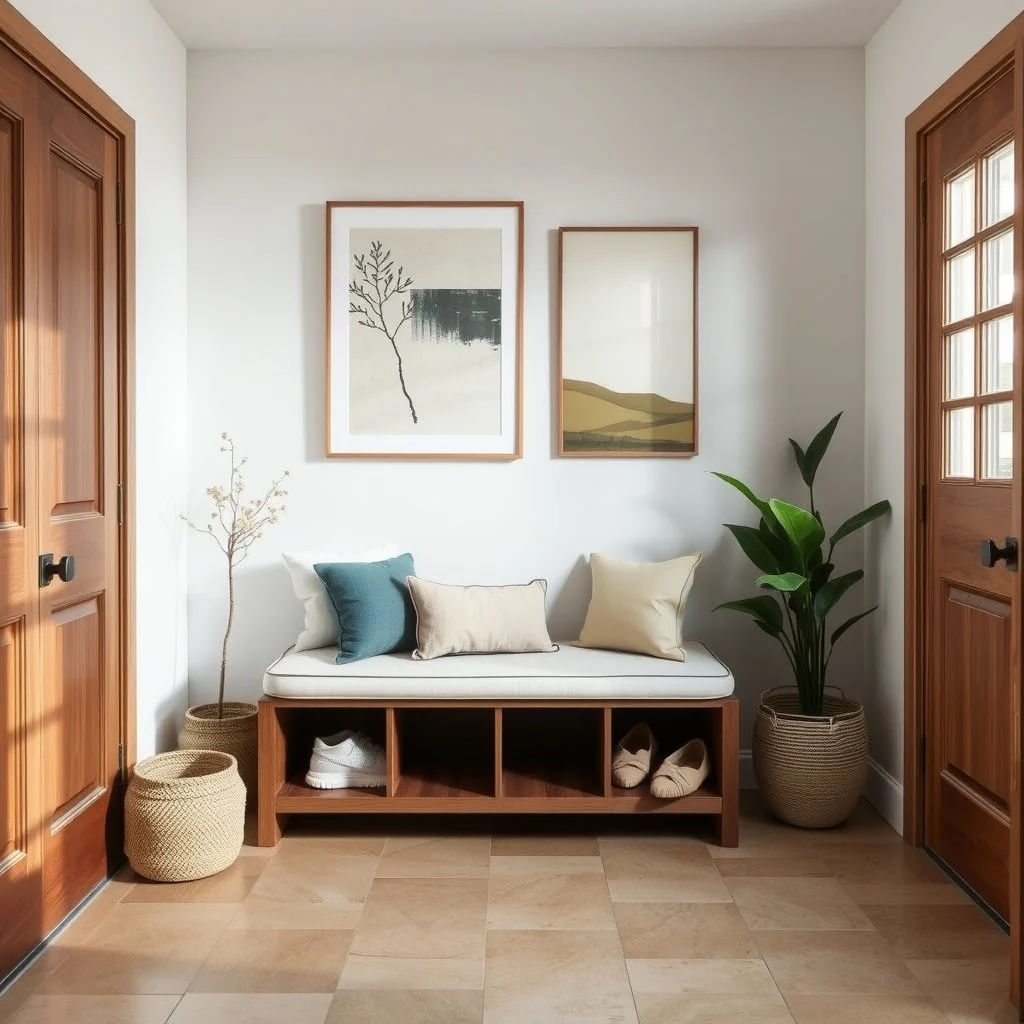
2. Built‑In Bench with Hidden Compartments
This image is by AI for inspiration only.
A low bench placed against the wall provides a place to sit while slipping on shoes, and the interior can be divided into discreet drawers or lift‑top storage. Choosing a bench upholstered in a soft, washable fabric like linen in a warm greige adds comfort against the cool tile, while wooden legs in oak or walnut keep the look grounded. Inside, one compartment can house everyday essentials such as umbrellas, and another can hold a shoe rack that slides out when needed. The bench’s backrest can serve as a perch for a narrow coat hook, creating a multifunctional hub. This solution works well when the entryway is long enough to accommodate a piece that is both seating and storage, but in a very narrow foyer the bench might impede the flow of traffic.
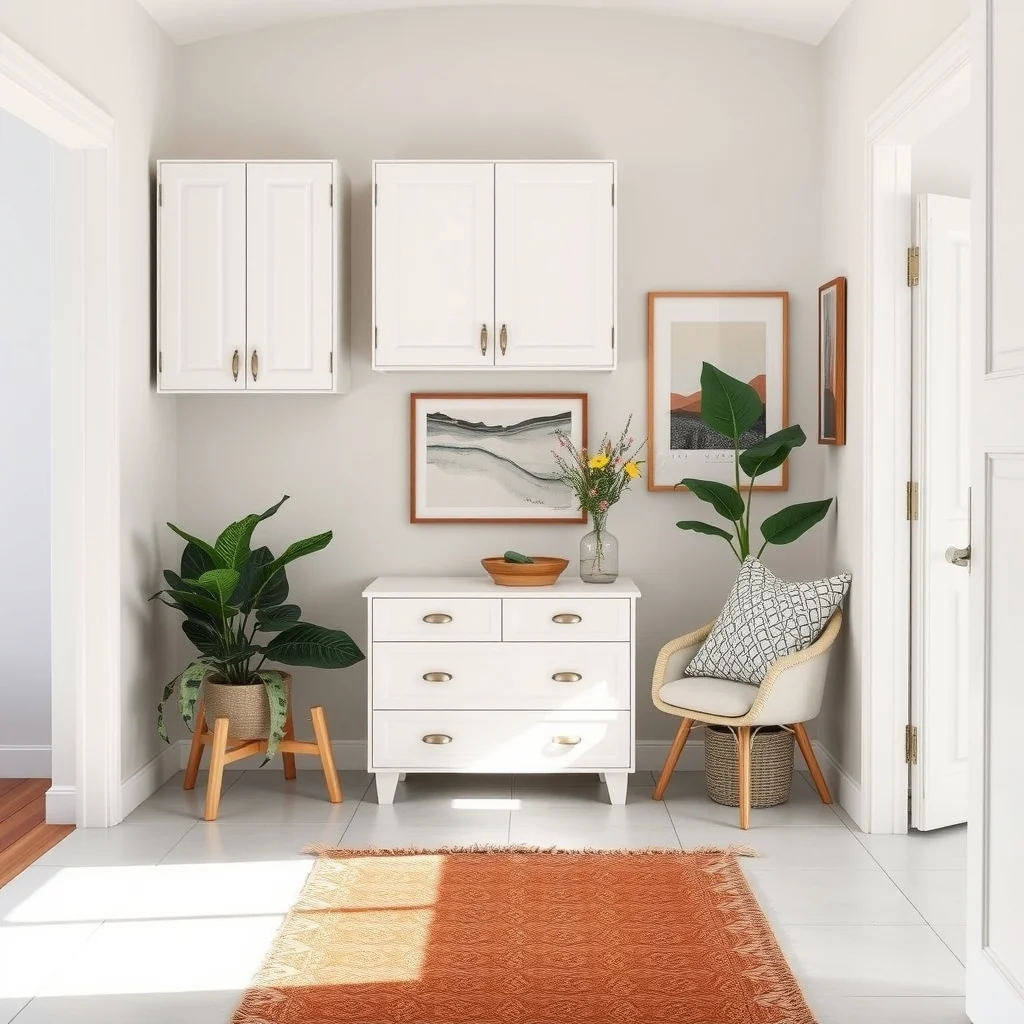
3. Tile‑Safe Wall‑Mounted Cupboards
This image is by AI for inspiration only.
Wall‑mounted cabinets that attach directly to the studs avoid the need for floor‑standing units, preserving the clean expanse of tile. Opt for a cabinet finished in matte white or soft pastel to complement the reflective quality of the floor, and include glass‑front doors for a light‑filled feel. Inside, adjustable shelves can be configured for hats, scarves, and small bags, while a shallow drawer at the bottom catches loose change or mail. Because the cabinet is anchored to the wall, it does not interfere with the tile’s grout lines, and cleaning remains straightforward. The main consideration is the weight of the cabinet; heavy doors require sturdy hardware and may need professional installation to ensure safety.
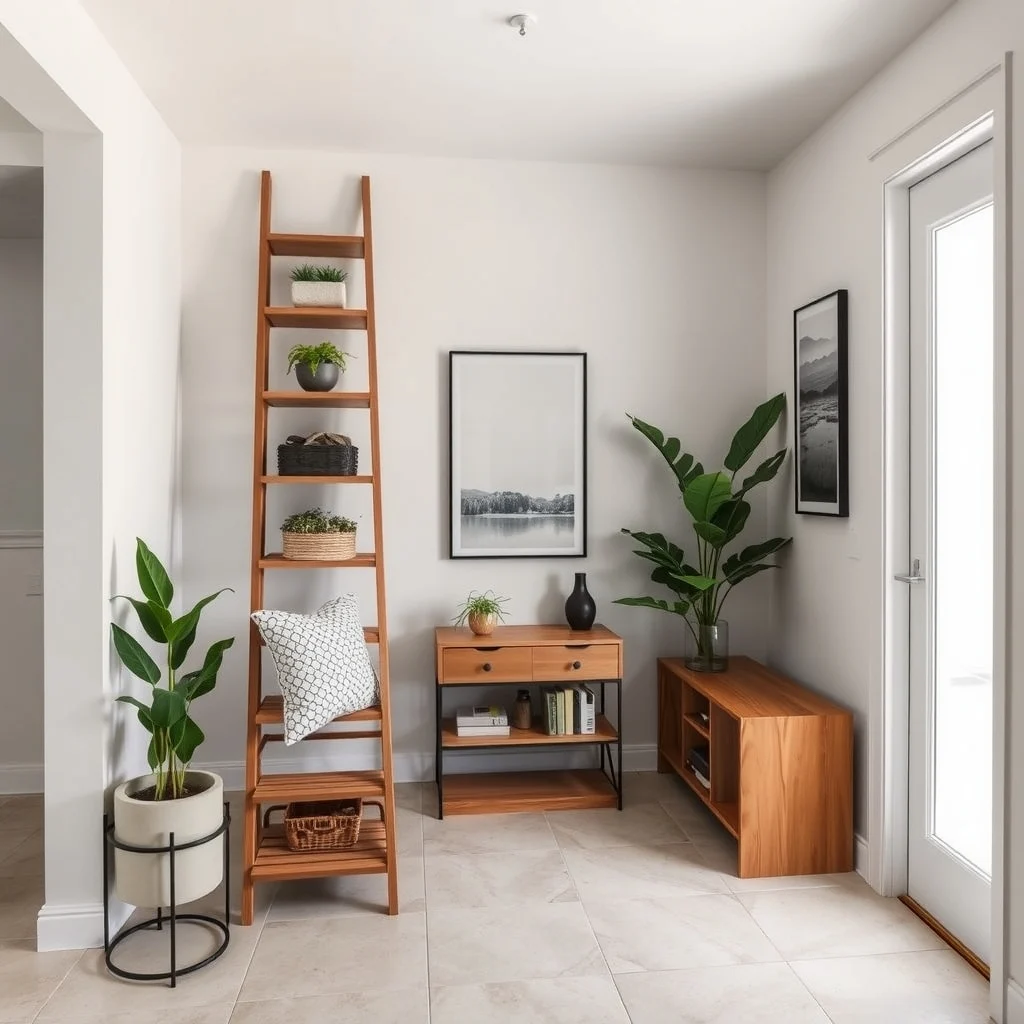
4. Multi‑Tier Ladder Shelf
This image is by AI for inspiration only.
A leaning ladder shelf made from reclaimed pine or painted metal introduces a relaxed, industrial vibe that contrasts nicely with polished tile. The staggered steps act as open shelves, each capable of holding a different category of items—shoes on the bottom, a decorative bowl for keys in the middle, and a small tray for mail at the top. Because the ladder leans, it can be positioned close to the door without needing a permanent attachment, making it ideal for renters. Its open design keeps the floor visible, preventing the space from feeling cramped. However, the open framework can collect dust more quickly, so regular wiping is advisable, especially on the lower steps that sit near the entrance.
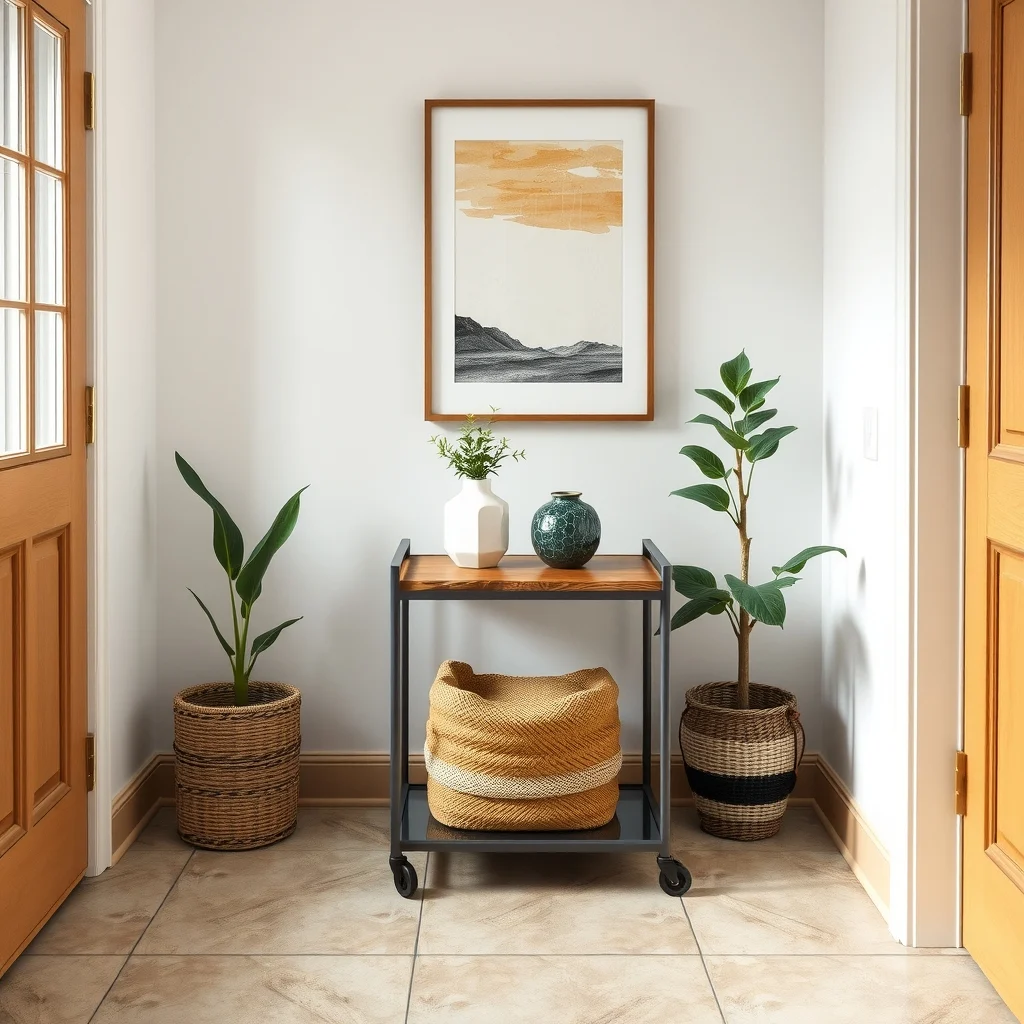
5. Rolling Storage Cart with Tile‑Friendly Wheels
This image is by AI for inspiration only.
A compact cart on soft‑rubber wheels offers mobility that a fixed piece cannot. Choose a cart with a metal frame and a top surface in reclaimed wood, which adds warmth against the cool tile. The top can hold a decorative bowl for loose change, while the lower shelf accommodates a pair of shoes or a small bag. Because the wheels are designed not to scratch tile, you can easily slide the cart aside when you need extra floor space or reposition it to a different corner. The flexibility is a clear advantage, though the cart does occupy floor area and may need occasional re‑balancing if loaded unevenly.
6. Floating Coat Hooks with Integrated Shelf
This image is by AI for inspiration only.
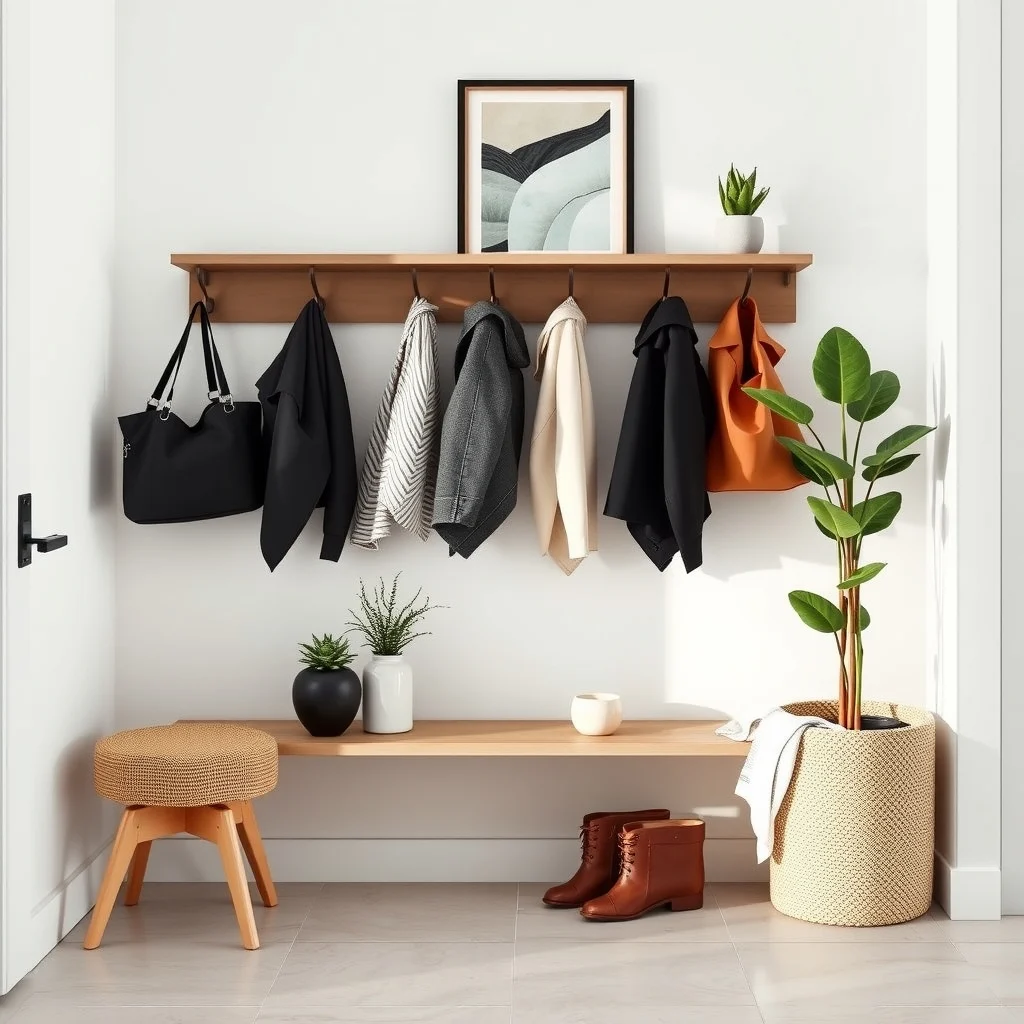
Installing a row of sleek coat hooks at eye level creates immediate hanging space without using floor area. Pair the hooks with a shallow floating shelf directly beneath them; the shelf can hold a decorative tray for keys, a small plant, or a stack of mail. Finishes such as brushed nickel or oil‑rubbed bronze blend well with tile, and the minimalist design keeps the entryway feeling open. Because the system is mounted, it does not interfere with foot traffic, and cleaning around it is simple. The downside is that you must be comfortable with drilling into the wall, and the weight capacity of the hooks limits the size of coats you can hang.
7. Decorative Baskets on a Tile‑Safe Rug
This image is by AI for inspiration only.
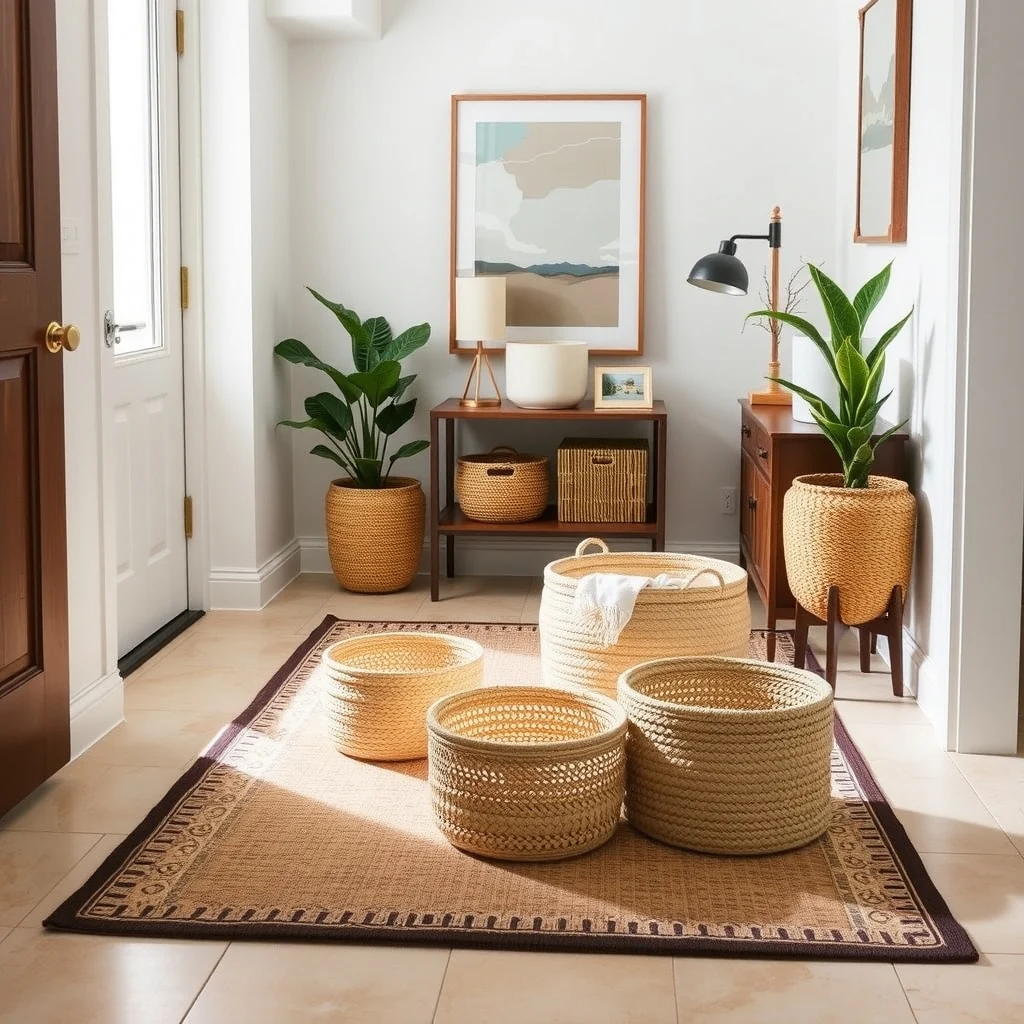
Placing a set of woven baskets on a low‑pile rug designed for tile adds texture and defines a storage zone without permanent fixtures. Choose baskets in natural fibers like seagrass or jute, which contrast pleasantly with the smooth floor, and line the interior with a washable fabric liner to protect the tile from spills. One basket can hold shoes, another can store umbrellas, and a third can serve as a catch‑all for mail and keys. The rug itself protects the tile from scratches and adds a hint of warmth underfoot. While this approach is highly adaptable, the baskets may need occasional reshaping, and the rug requires regular vacuuming to keep dust from accumulating.
FAQ
This image is by AI for inspiration only.
How can I keep tile floors from getting scratched by storage furniture?
Use felt pads or rubber glides under legs and wheels, and choose furniture with a wide, flat base that distributes weight evenly. These measures prevent point pressure that can wear the glaze.
What type of lighting works best in a tiled entryway?
Soft, warm LED fixtures placed near the ceiling or integrated into wall sconces create a welcoming glow without reflecting harshly off the tile. A small pendant can also add focused light over a bench or shelf.
Is it okay to paint the walls a bold color when the floor is tile?
Bold wall colors can create a striking contrast with neutral tile, but it’s wise to test a sample patch first. Dark hues may make the space feel smaller, while lighter shades keep it airy.
Can I install a wall‑mounted cabinet without damaging the tile?
Yes, by using a stud finder to locate studs and mounting brackets that avoid direct contact with the tile. If drilling is a concern, consider adhesive mounting strips rated for the cabinet’s weight.
How often should I clean the entryway to maintain tile shine?
Sweeping daily removes grit that can scratch the surface, and mopping with a pH‑neutral cleaner once a week keeps the glaze looking fresh. Avoid harsh chemicals that can dull the finish.
Final Thoughts
This image is by AI for inspiration only.
Tile floors offer a resilient canvas for an entryway, and with the right storage solutions you can turn a functional passage into a polished welcome area. Whether you prefer built‑in fixtures, movable carts, or simple baskets, each idea respects the tile’s aesthetic while addressing everyday clutter. By considering the height, weight, and material of each piece, you’ll create a harmonious entry that feels both organized and inviting, no matter how tight the apartment footprint may be.