How to Store Handbags in a Small Closet

Finding a tidy spot for a growing handbag collection can feel like solving a puzzle in a room that already feels cramped. The challenge isn’t just about fitting more items; it’s about keeping the bags visible, protected, and easy to reach without turning the closet into a cluttered hallway. Below are seven approaches that blend practical organization with the aesthetic of a well‑styled space, so you can enjoy your accessories without sacrificing the calm of a small closet.
1. Use a Tiered Shelf System That Mirrors Your Closet Height
This image is by AI for inspiration only.
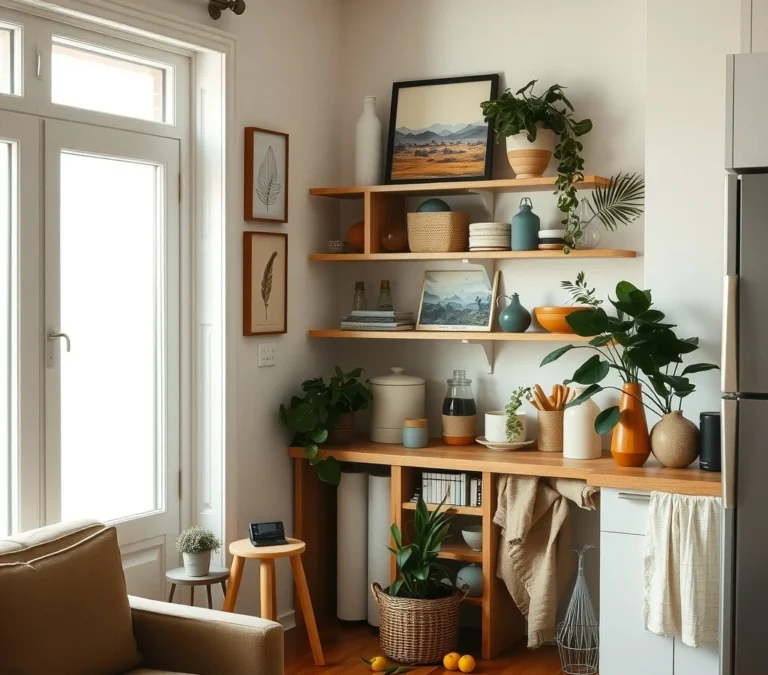
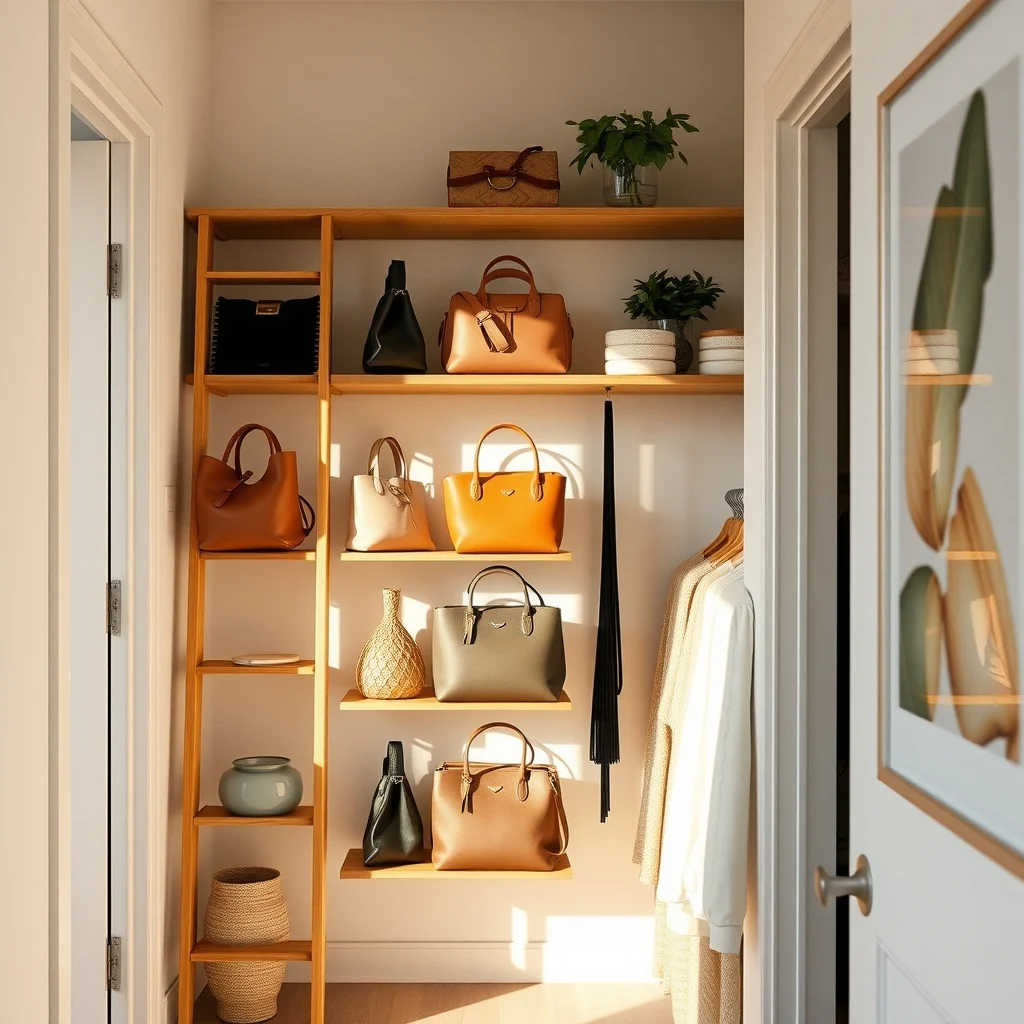
Installing a narrow, tiered shelf that runs the full height of the closet makes use of vertical space that often goes unnoticed. A simple wooden ladder shelf, finished in a soft oak or painted in a muted greige, provides three to four shallow ledges where handbags can sit upright. The open design prevents the bags from being squashed, and the natural wood tone adds a warm backdrop that highlights leather tones and fabric textures. When arranging the bags, place the most frequently used pieces on the lower tier for easy access, and reserve the top level for special‑occasion items that you only need occasionally. The trade‑off is that very large totes may not fit on the shallow ledges, so those might need a different home.
2. Hang Bags on a Customizable Pegboard with Decorative Hooks
This image is by AI for inspiration only.
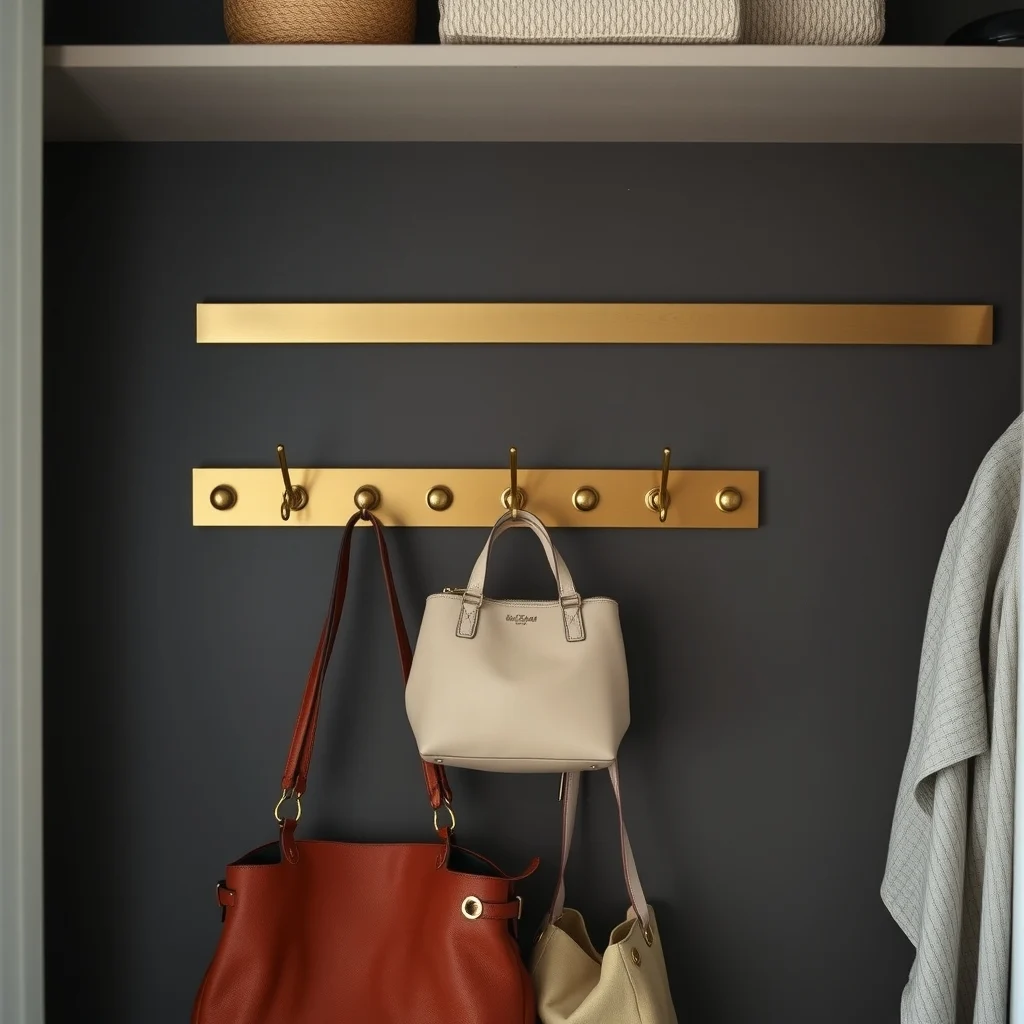
A pegboard mounted on the back wall of the closet offers a flexible canvas for hanging handbags of varying shapes. Choose metal hooks with a brushed brass finish to complement a contemporary closet interior; the metallic gleam contrasts nicely with dark leather while echoing any brass hardware elsewhere in the room. By positioning hooks at different heights, you can create a visual rhythm that keeps the bags from touching each other, reducing the risk of scuffs. The system is adaptable—if you acquire a new pair of shoes or a scarf, you can simply move a hook. However, very soft or delicate bags may need a padded hook or a small fabric sleeve to avoid stretching the straps.
3. Incorporate Clear Acrylic Boxes for Seasonal Bags
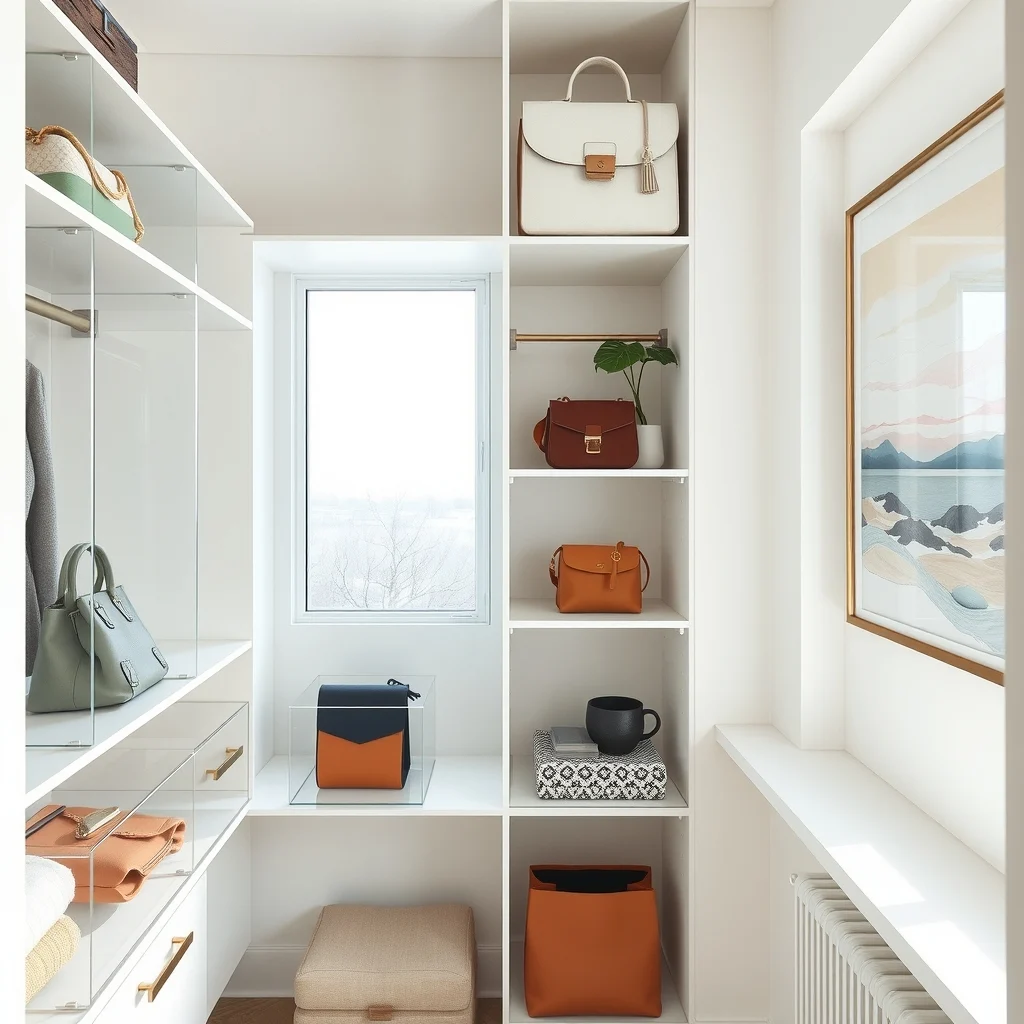
This image is by AI for inspiration only.
Clear acrylic storage boxes sit neatly on a single shelf and let you see each bag without opening the container. The transparent material works well in a closet that benefits from natural light streaming through a frosted door, as the boxes reflect a soft glow that brightens the space. Inside each box, line the bottom with a thin layer of felt to cushion the bag and keep dust at bay. This method is especially useful for seasonal handbags you don’t need year‑round; you can stack the boxes vertically, maximizing the limited floor area. The downside is that the boxes add a modern, almost industrial feel that may clash with a more traditional, wood‑heavy decor.
4. Add a Pull‑Out Fabric Drawer Lined with Velvet
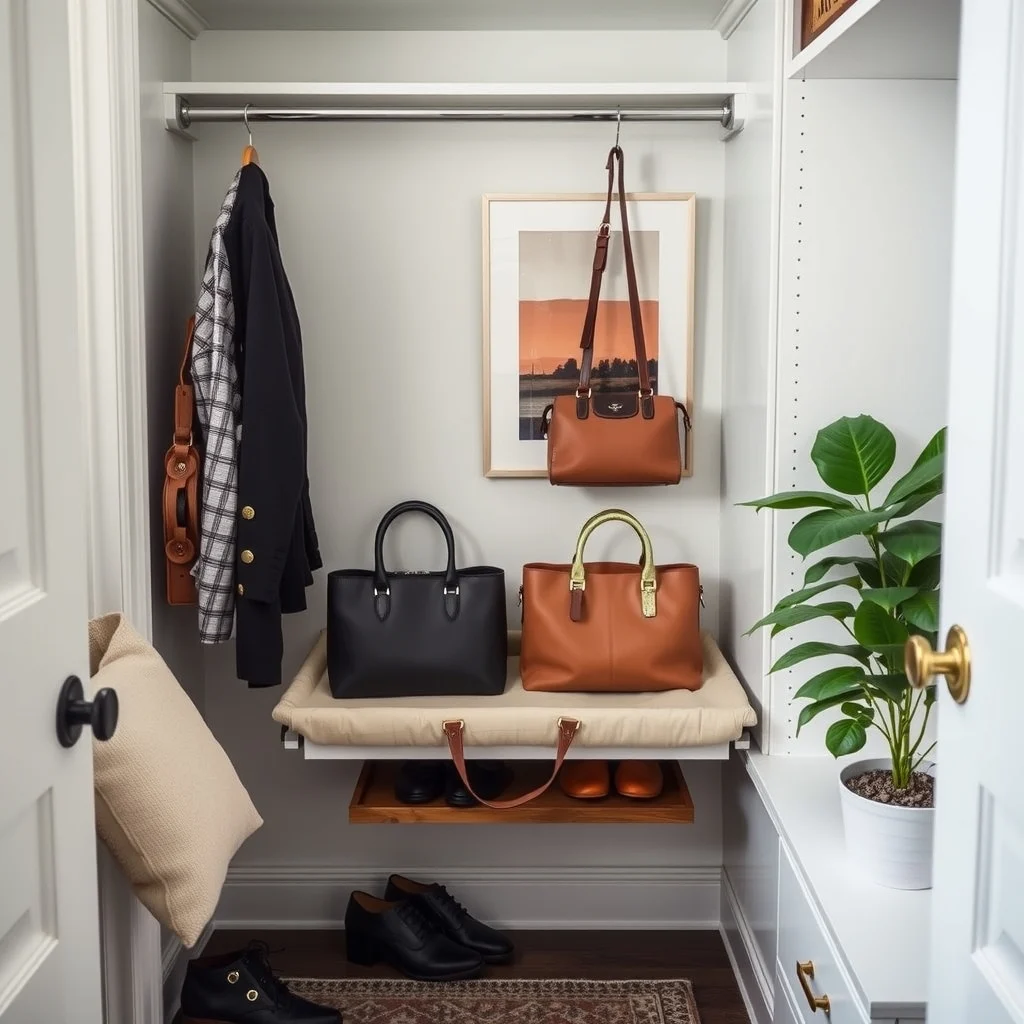
This image is by AI for inspiration only.
A shallow pull‑out drawer installed beneath a hanging rod offers a discreet home for handbags that you want to keep out of sight. Lining the interior with a soft velvet in a neutral taupe protects delicate finishes and adds a tactile element that feels luxurious every time you slide the drawer open. Because the drawer slides on low‑friction runners, it can be placed low enough to stay out of the line of sight while still being reachable without bending. The drawer’s fabric surface also helps contain any stray lint or dust. One limitation is that the drawer depth must accommodate the bag’s thickness; overly bulky backpacks may not fit without adjusting the drawer’s dimensions.
5. Use a Hanging Closet Organizer with Individual Pockets
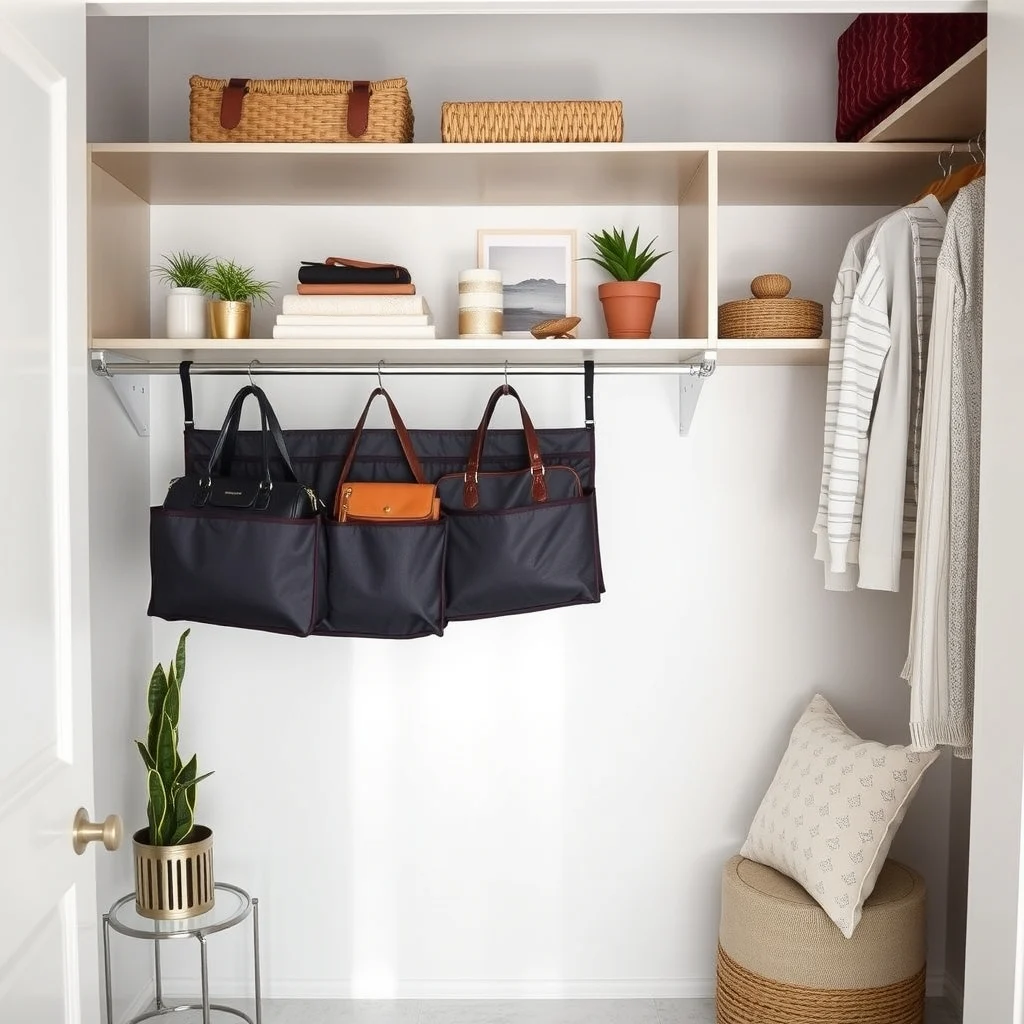
This image is by AI for inspiration only.
A hanging organizer that hangs from the closet rod provides multiple pockets, each large enough for a single handbag. Opt for a fabric in a soft charcoal or muted navy to blend with a modern closet palette while keeping the visual weight low. The pockets keep the bags upright and separated, which reduces wear on straps and handles. Because the organizer hangs vertically, it does not consume floor space, leaving room for shoes or a small bench. The main consideration is that the organizer’s weight capacity varies; very heavy leather tote bags may stretch the fabric over time, so it’s best suited for medium‑weight items.
6. Install a Slim Pull‑Down Ladder for Quick Access
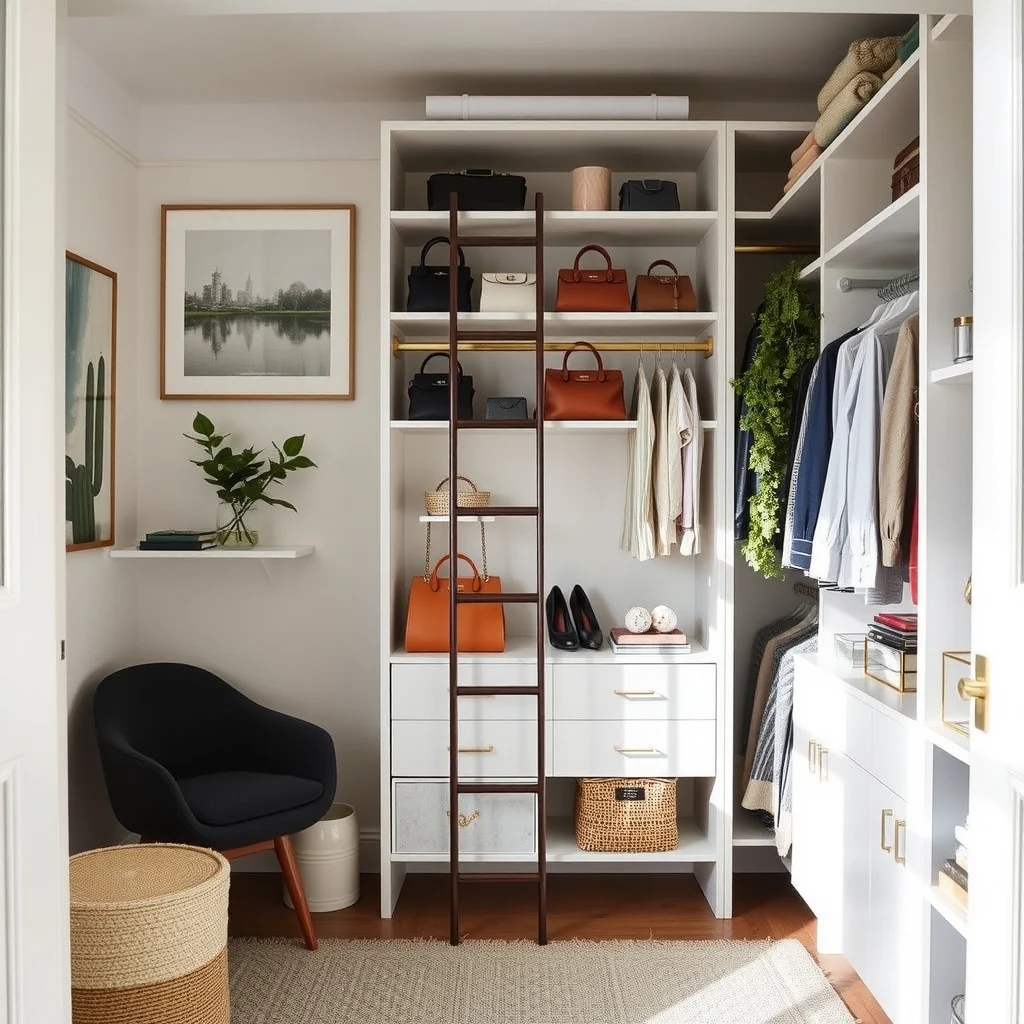
This image is by AI for inspiration only.
A slim pull‑down ladder, similar to those used in boutique displays, can be anchored to the top of the closet and lowered when you need to reach higher shelves. The ladder’s narrow profile, often finished in matte black or brushed nickel, fits comfortably in a narrow closet without obstructing the door swing. When extended, it offers a stable platform to place a handbag temporarily while you choose another piece, turning a potential inconvenience into a functional moment. The ladder also adds a subtle decorative element that echoes industrial design trends. Keep in mind that the ladder requires a sturdy top rail; older closet frames may need reinforcement before installation.
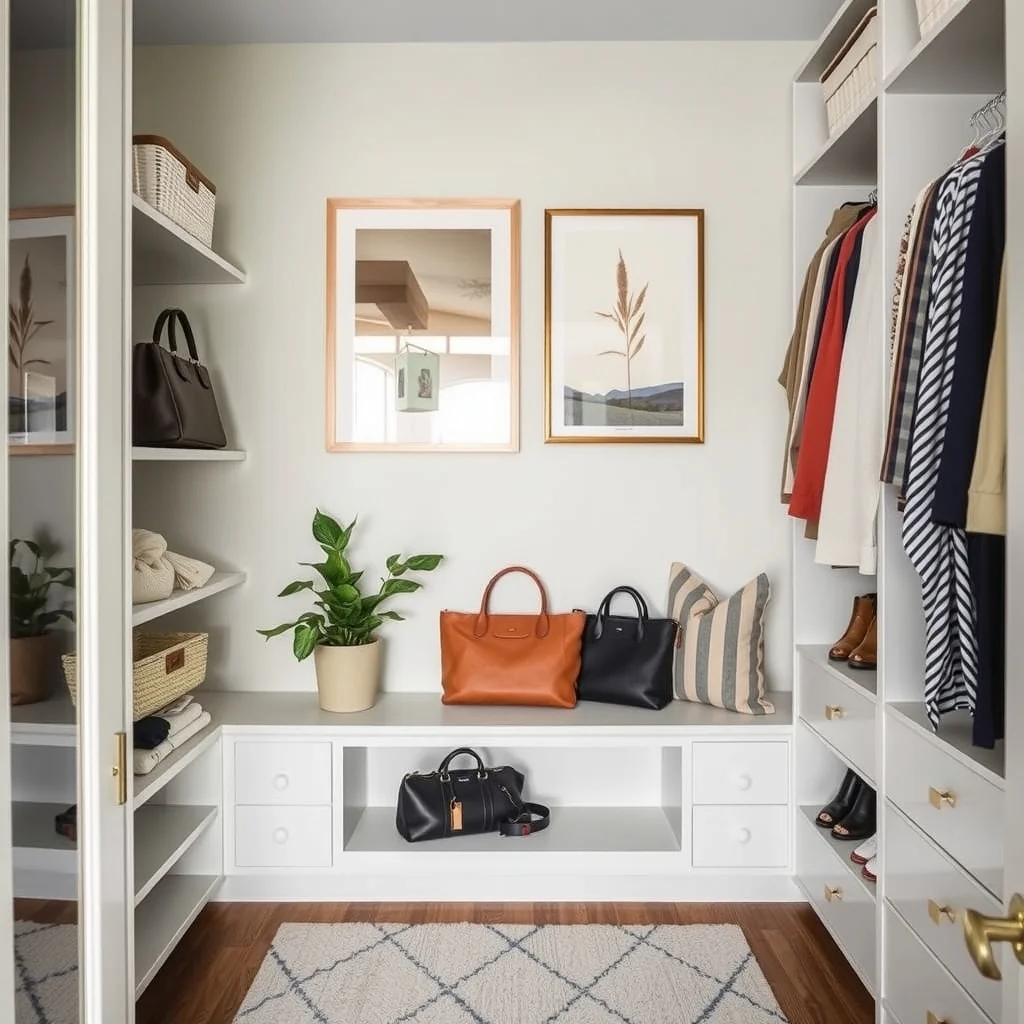
7. Create a Dedicated “Bag Nook” with a Built‑In Bench
This image is by AI for inspiration only.
If the closet layout permits, carving out a small nook at the bottom of the closet and installing a low bench provides a dual purpose: a place to sit while you choose a bag and a hidden compartment beneath for storage. Upholster the bench in a durable linen in a soft dove gray, which resists wear and complements most color schemes. The space under the seat can hold a few larger handbags, keeping them out of the way but still accessible. This solution adds comfort to the routine of selecting accessories and integrates seating into a closet that otherwise lacks it. The primary limitation is the need for at least a few extra inches of depth, which may not be feasible in ultra‑tight closets.
FAQ
This image is by AI for inspiration only.
How can I protect my handbags from dust in a small closet?
Cover each bag with a breathable cotton dust cover or store it in a clear acrylic box. The fabric allows air circulation while preventing dust from settling on the surface, and the box offers an extra layer of protection for bags you use less frequently.
What is the best material for hooks that hold delicate handbags?
Choose hooks with a smooth, padded coating such as silicone or a soft metal finish. These materials reduce friction on straps and handles, helping to preserve the bag’s shape over time.
Can I use a standard closet rod for hanging a pegboard?
Yes, as long as the rod can support the weight of the pegboard and the bags you plan to hang. Reinforce the mounting brackets if the combined load feels heavy, and make sure the rod is securely anchored to studs.
Is it safe to store handbags near a heat source?
No, keep bags away from radiators or direct sunlight. Heat can cause leather to dry out and fabric dyes to fade, so a cooler, well‑ventilated area is preferable for long‑term storage.
How often should I rotate the bags in my closet?
Rotate the collection every few months to give each bag a chance to breathe and to prevent one side of a leather bag from developing uneven wear. This habit also helps you remember which pieces you own and reduces the impulse to purchase duplicates.
Final Thoughts
This image is by AI for inspiration only.
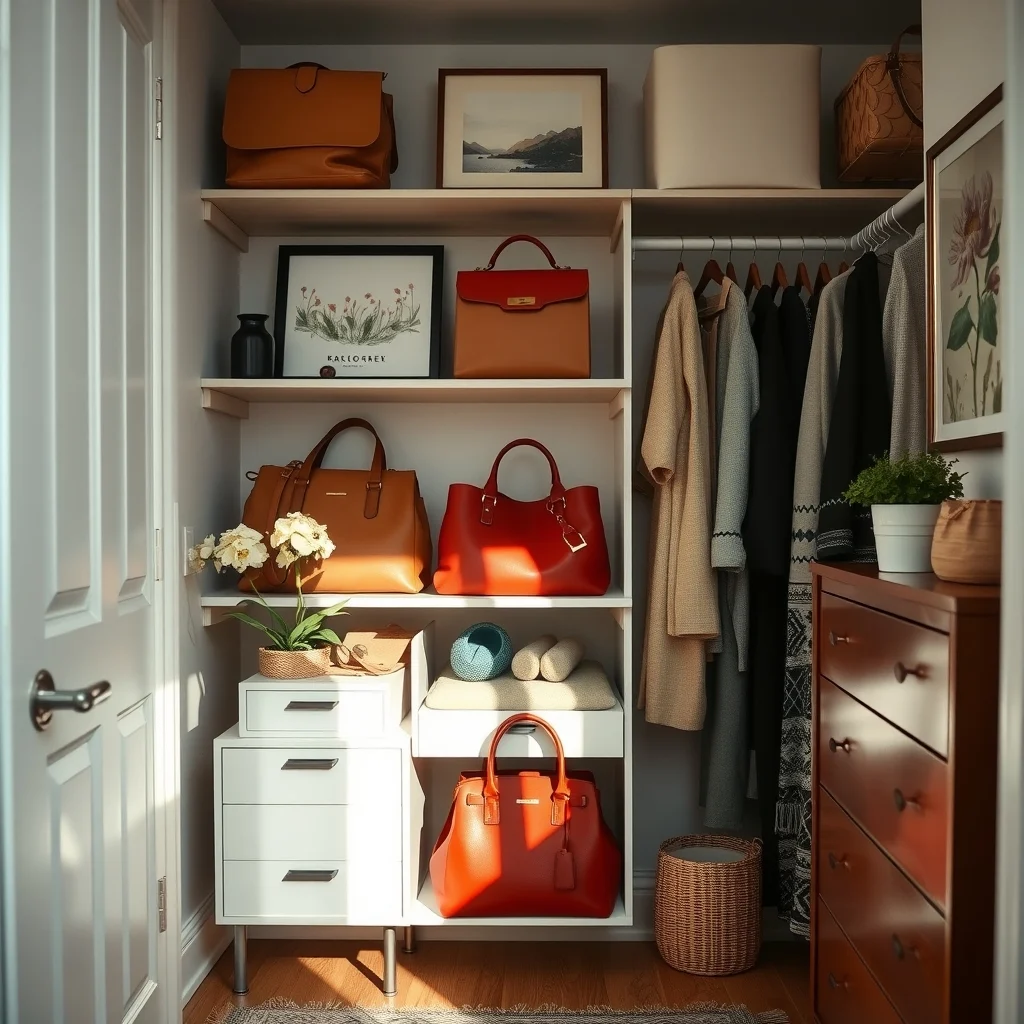
Organizing handbags in a small closet is less about forcing every piece into a single solution and more about blending storage methods that respect the bag’s shape, your daily routine, and the visual harmony of the space. By combining vertical shelves, flexible hanging options, and discreet drawers, you can create a system that feels intentional rather than cramped. The goal is simple: each bag should be easy to find, safe from damage, and displayed in a way that complements the rest of your home décor. With the right approach, even the most modest closet can become a curated showcase for your favorite accessories.