
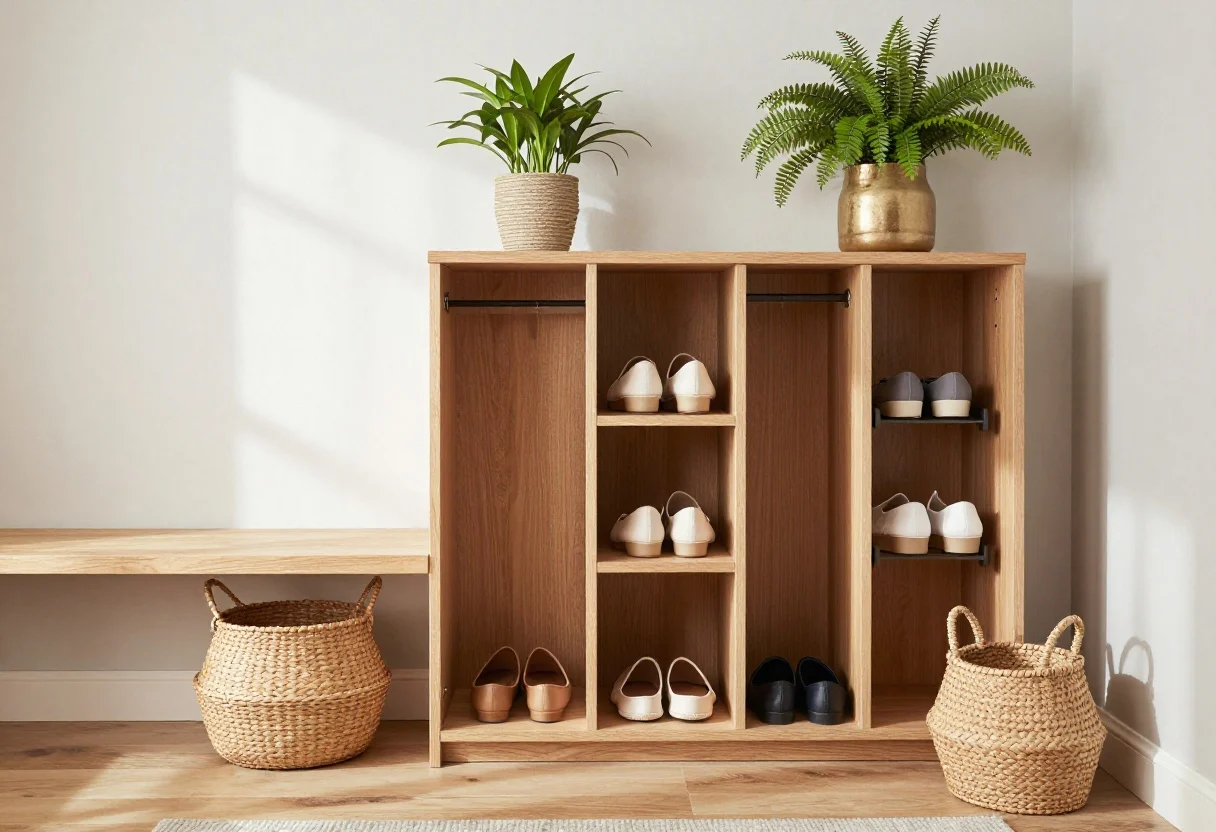
The Shoe Storage Problem I Finally Solved in My Small Space (and How You Can Too)

Let’s be real: shoes multiply when you’re not looking. One minute you own six pairs, the next your entryway looks like a clearance bin exploded. I used to trip over sneakers daily—cute!—until I cracked a system that actually works in a small space. Here’s exactly what I did, what I learned, and how you can copy-paste the plan without sacrificing style.
1. Audit The Chaos Like A Stylist
This image is by AI for inspiration only.
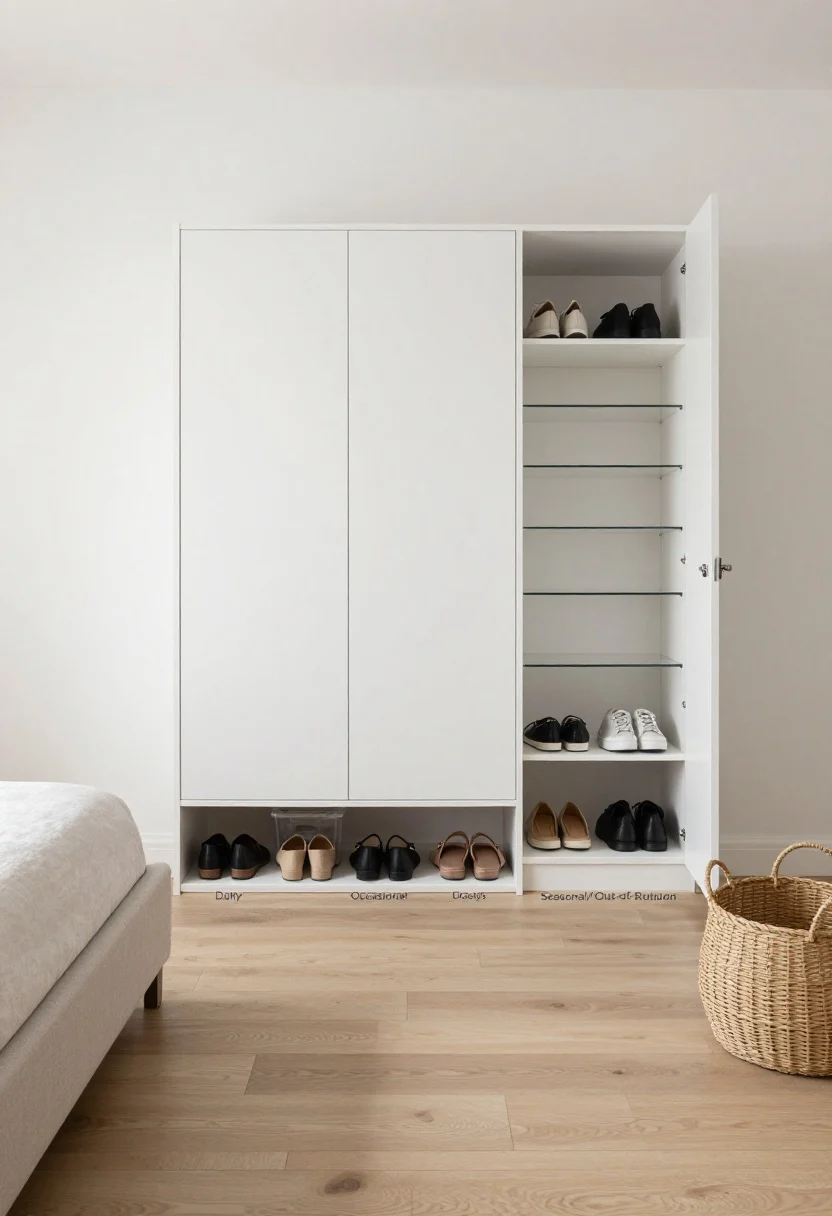
Before buying anything, I did a ruthless shoe audit. Nothing fancy—just three piles on the floor: Daily, Occasional, and Seasonal/Out-of-Rotation. If a pair didn’t earn its keep, it left the building. Bye, blister boots.
This is the unsexy step that makes every other step actually work. Once I knew how many pairs I truly needed accessible (12, FYI), I could design storage that fit real life instead of fantasy life.
Quick Tips
- Set a cap per zone: 6 pairs by the door, 6 in the bedroom, the rest stored.
- Match storage to usage: Grab-and-go sneakers need open access; heels can live behind doors.
- Measure in “pairs,” not inches: Count how many pairs each spot should hold before shopping.
What to shop for: Slim shoe cabinets, under-bed bins, closet shelf dividers.
2. Create A Two-Stop “Runway” Entry
This image is by AI for inspiration only.
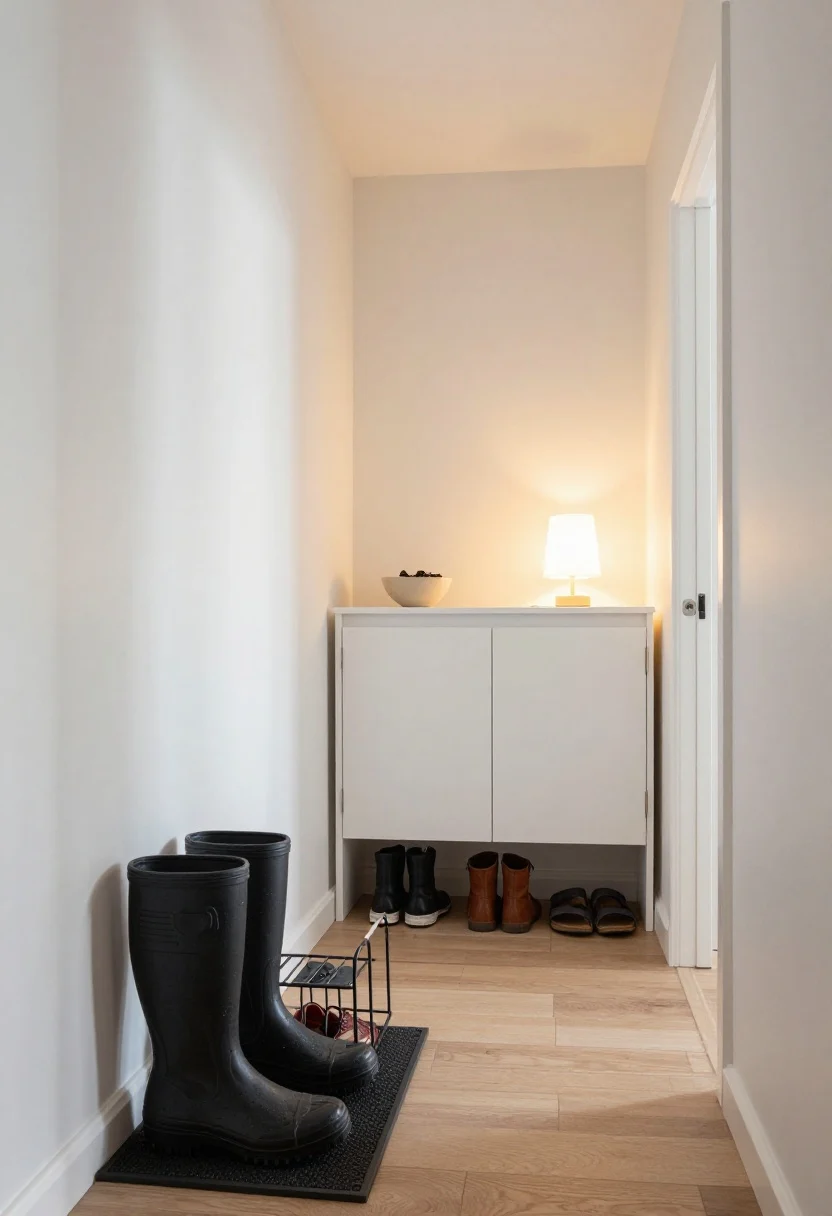
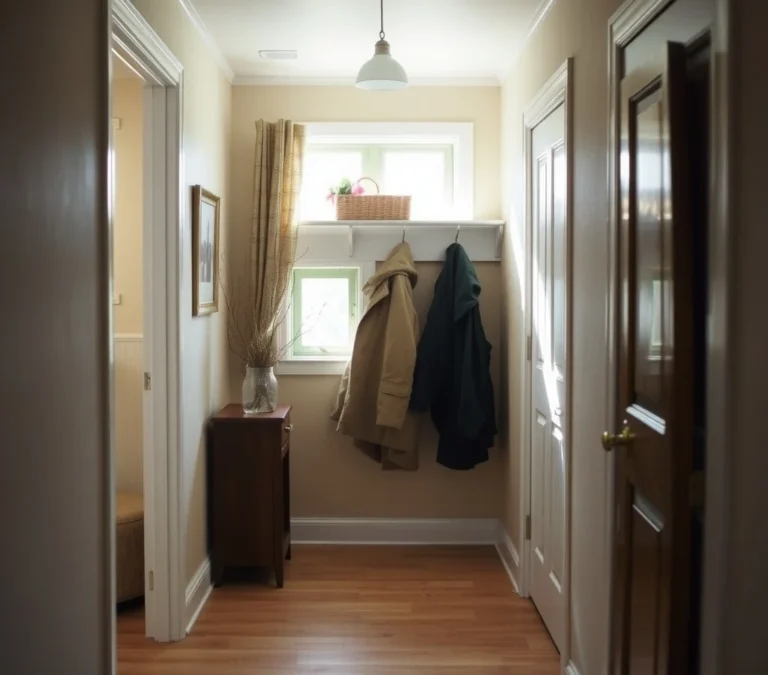
I split the entry into two jobs: Drop Zone and Hide Zone. The drop zone handles the daily chaos with zero effort; the hide zone keeps it pretty. Think “take off, tuck in, walk away” in 15 seconds.
My drop zone is a low tray or mat for wet shoes and a small open rack for the pairs in heavy rotation. The hide zone is a slim cabinet with doors—like a shallow dresser—that swallows the rest without hogging floor space.
How I Set It Up
- Wall space first: A 7-inch-deep cabinet fits almost anywhere and looks built-in.
- Double-duty top: Style the cabinet with a bowl for keys and a small lamp. Cozy and useful.
- Seasonal swap: Winter boots snag the open rack; warm-weather sandals live behind doors.
What to shop for: Slim shoe cabinets with doors, small entry racks, absorbent boot trays.
3. Go Vertical, Not Wider
This image is by AI for inspiration only.
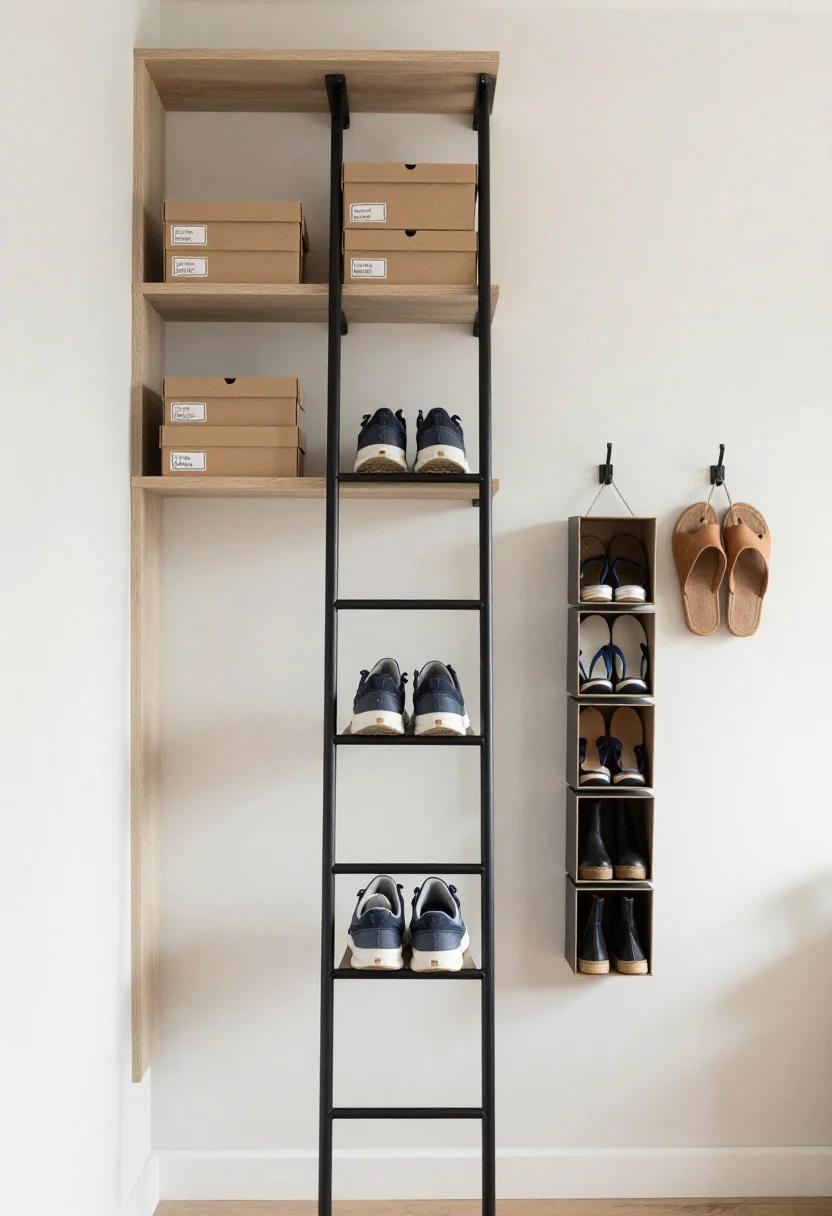
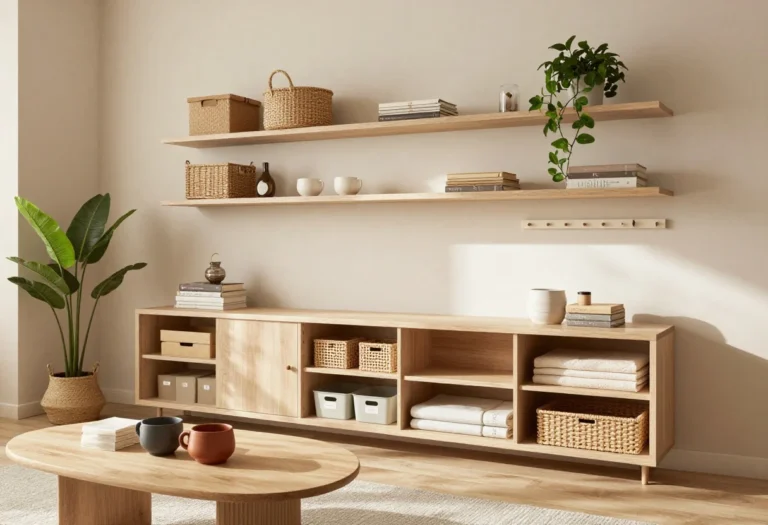
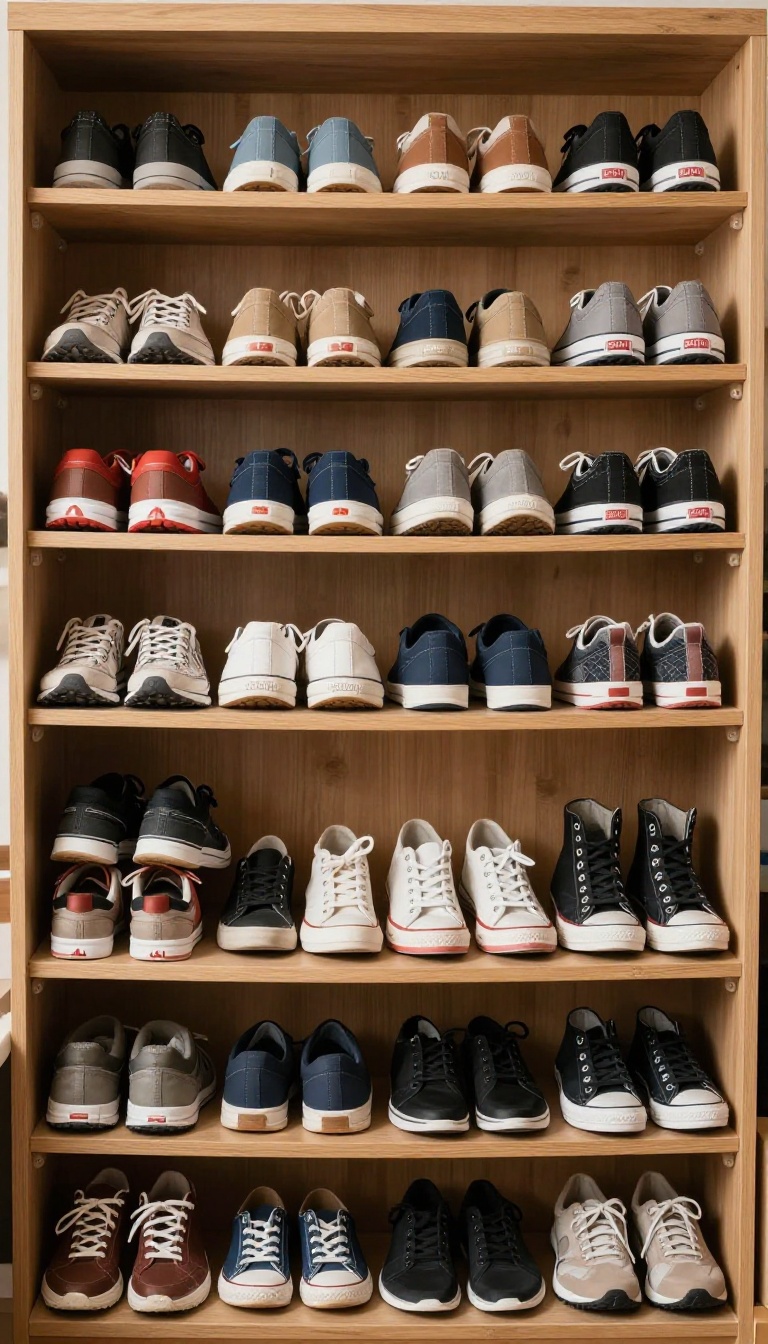
In small spaces, the floor is prime real estate. I chased height instead. Tall, narrow units gave me 3x the storage without eating the hallway. Plus, vertical lines look cleaner and more tailored, IMO.
I added a ladder-style rack for flats and sneakers, and hung two floating shelves above the cabinet for off-season boxes. It’s like a shoe library—someone should shush me.
Vertical Wins
- Over-door pockets for flip-flops and kids’ shoes (label by size or person).
- Stackable cubes for boots—one boot per cube keeps them upright.
- Hooks for clogs and slides; hang by the heels to free shelf space.
What to shop for: Over-door organizers, wall shelves, narrow ladder racks, modular cubes.
4. Under-Bed Real Estate: Use It All
This image is by AI for inspiration only.
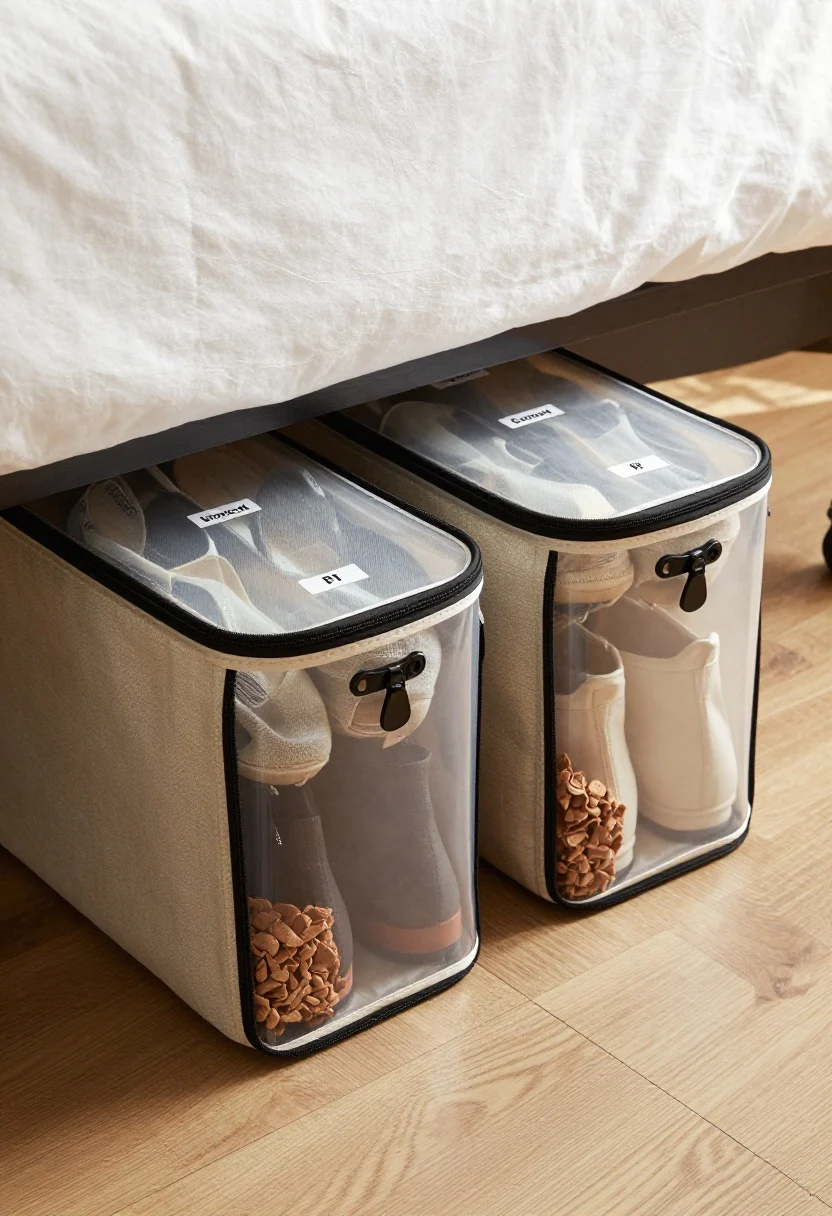
Under the bed is basically Narnia for storage—deep, slightly mysterious, and criminally underused. I slid in two zippered under-bed bins and labeled them by season. Out of sight, zero dust, and I can grab a pair without unzipping my sanity.
Pro tip: group by activity (workout, dressy, errands) so you’re not playing Where’s Waldo with your loafers at 7 a.m.
Under-Bed Best Practices
- Hard-sided bins keep heels from stabbing through.
- Clear tops = less rummaging.
- Cedar chips or sachets to keep things fresh.
What to shop for: Low-profile rolling bins, vacuum bags for rarely worn heels, cedar inserts.
5. Design Shelves Like You Style A Shelfie
This image is by AI for inspiration only.
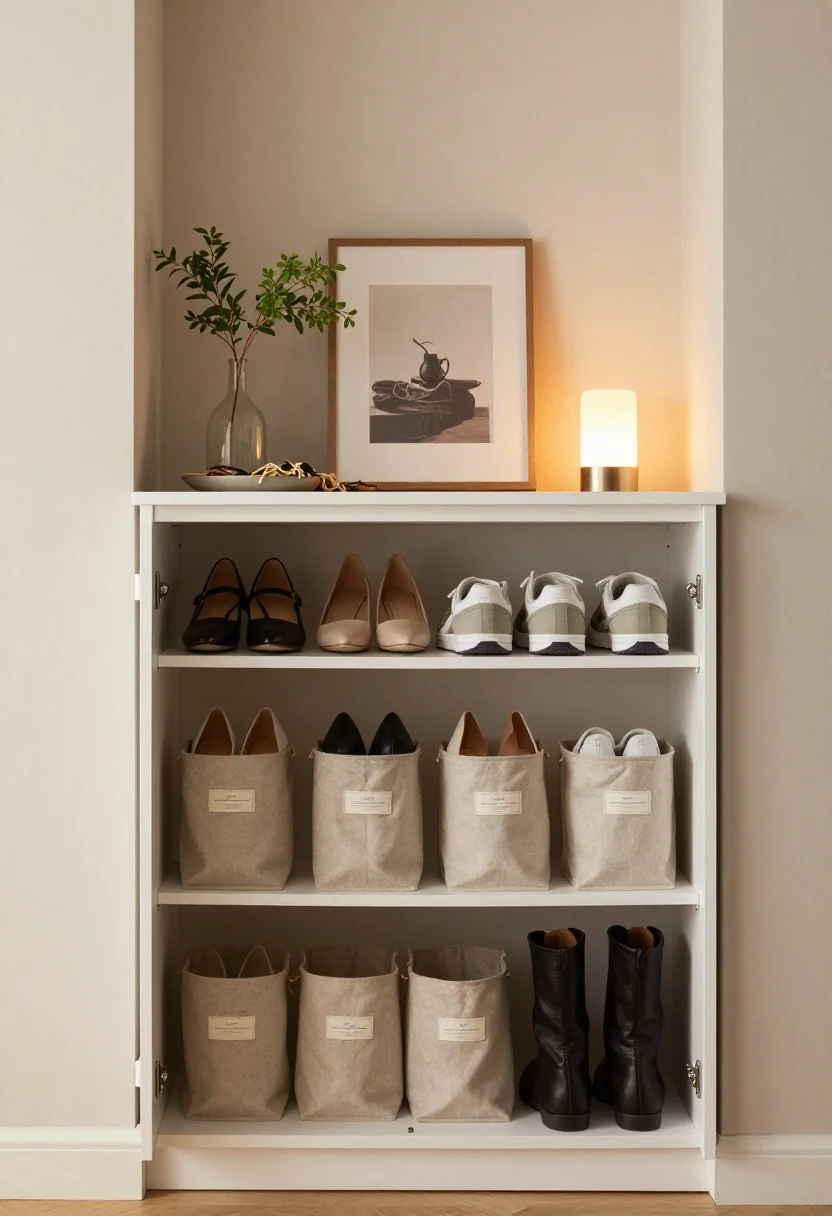
Function is non-negotiable, but you can still have cute. I treated the entry cabinet like a styled moment. A tiny vase, a tray for stray laces, and a framed print turned “shoe storage” into “intentional design.”
Inside, I adjusted shelves to fit real pairs. No more wasting vertical inches on air. Heels get staggered toe-to-heel; sneakers line up like soldiers. Boots stand with boot shapers so they don’t slouch into sadness.
Make It Pretty (And Practical)
- Mix open and closed: airy on top, hidden below.
- Neutral bins with labels keep things uniform.
- Lighting matters: a small lamp turns clutter into a vignette.
What to shop for: Boot shapers, fabric bins, adhesive labels, small table lamps.
6. Create Micro-Zones For Each Person
This image is by AI for inspiration only.
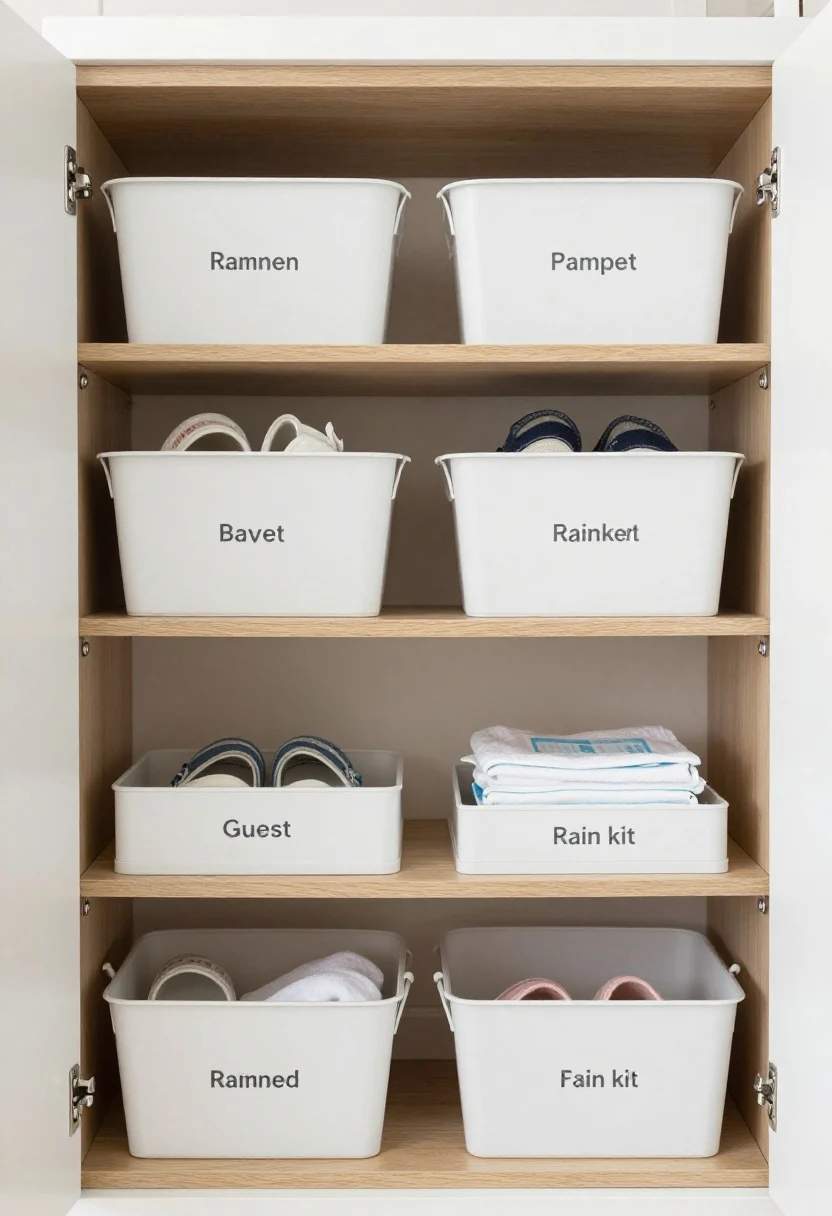
If more than one human lives in your home, you need micro-zones. One shelf per person. One hook per person. One bin per person. That’s it. No negotiating with roommates over who owns the glitter sneakers.
I added name labels on the inside of cabinet doors. Not cute-cute, but wildly effective. We also set a house rule: if your micro-zone is full, you rotate or remove. Limits are liberating, who knew?
Zone Ideas
- Kid-friendly lower shelves so they can put shoes away without a pep talk.
- Guest basket for slippers and shoe wipes—hotel vibes at home.
- Rain kit: mini towel, extra tray liners, and a collapsible boot rack.
What to shop for: Labeled baskets, low racks for kids, slim umbrella stands.
7. Maintenance That Doesn’t Feel Like Chores
This image is by AI for inspiration only.
My old system failed because it required “effort.” This one runs on tiny, automatic habits. I do a 60-second reset at night: return pairs to the rack, tuck extras in the cabinet, wipe the tray if it’s wet. Done.
Monthly, I swap seasonal shoes and give everything a quick clean. If a pair hasn’t been worn in 90 days and it’s not seasonal, it moves to the donate pile. You’ll be shocked how much calmer an entry feels when the floor is visible.
Low-Lift Habits
- One-in, one-out: new pair in, old pair out.
- Weekly lint-roll of shelves to keep dust off suede.
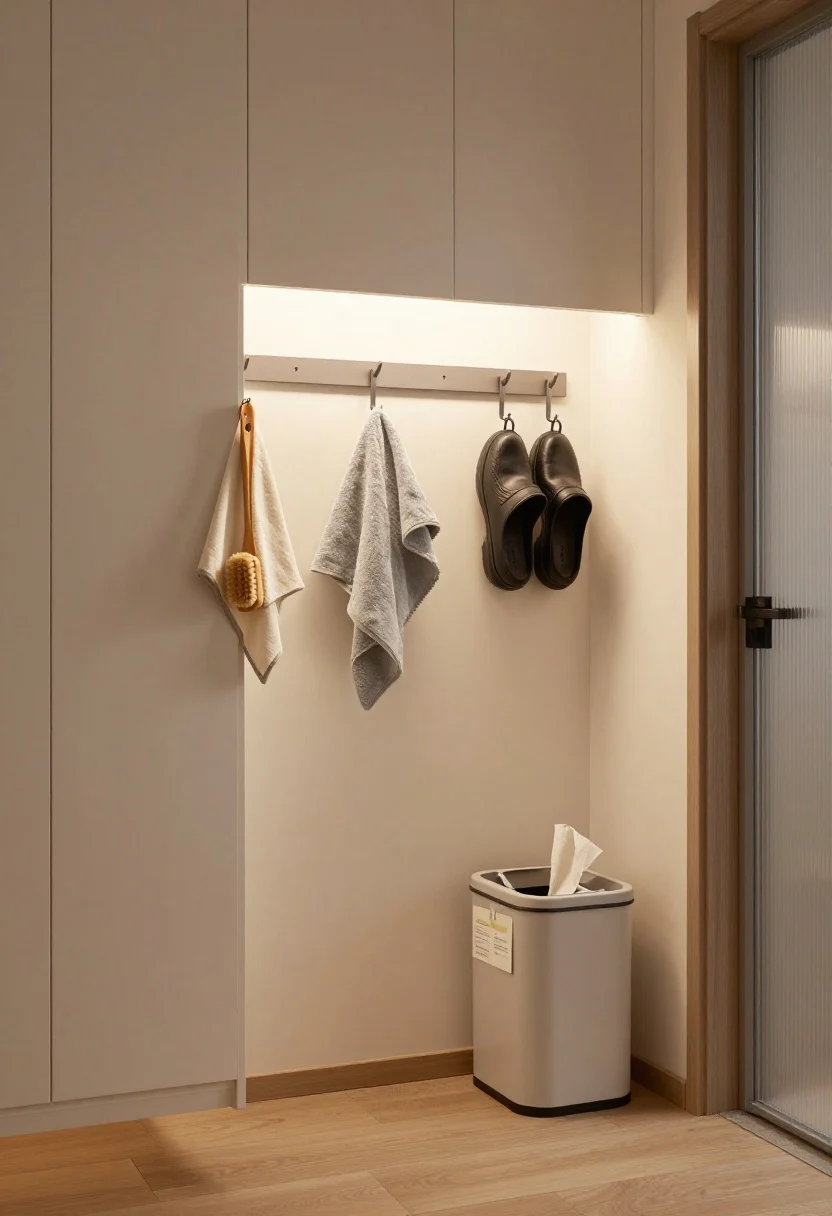
- Door hook for a quick-shine cloth—fast fixes keep shoes rotation-ready.
What to shop for: Shoe care kits, microfiber cloths, small trash bin for tags and tissue.
Final Takeaways
- Edit first, then buy storage.
- Use vertical solutions and under-bed space.
- Mix open access for dailies with closed storage for everything else.
- Label zones so the system survives Monday mornings.
You don’t need a bigger entryway—you need a smarter one. Start with the audit, add one storage piece at a time, and let the space breathe. Your toes (and your sanity) will thank you.
FAQ
Q: How many pairs should live by the door?
A: Cap it at 6–8 pairs total for a small space. Keep the rest in a cabinet or under the bed and rotate weekly.
Q: What’s the best way to store tall boots without a closet?
A: Use boot shapers and stand them in stackable cubes or a narrow bin beside a cabinet. They’ll hold their shape and stay out of the traffic zone.
Q: Open rack or closed cabinet—which is better?
A: Both. Open racks for everyday pairs you grab constantly; closed cabinets for everything else to reduce visual clutter and dust. Hybrid systems win in small spaces.
Shop the Look on Amazon
Disclosure: As an Amazon Associate, this site may earn from qualifying purchases.
These product categories fit this article and give readers an easy next step when they are ready to shop.
- Space-saving cabinet — Shallow, closed storage to hide extra pairs neatly.
- Vertical pockets — Uses door space for flip-flops and kids’ shoes.
- Low-profile bins — Maximizes under-bed space and keeps shoes dust-free.
- Narrow vertical rack — Adds height-based storage without widening footprint.
- Boot supports — Keeps tall boots upright and preserves shape.
2 Comments