How to Keep a Small Dresser Organized With Drawer Dividers

When a compact dresser sits against a bedroom wall, every inch of its interior becomes precious. Too often the drawers turn into a jumble of socks, scarves, and stray accessories that make the space feel chaotic rather than calming. The good news is that a well‑chosen set of drawer dividers can turn that small piece of furniture into a model of order without sacrificing style. Below you’ll find seven ideas that show how to select, arrange, and maintain dividers so the dresser works for you, not against you.
1. Measure First, Then Pick a Divider System
This image is by AI for inspiration only.
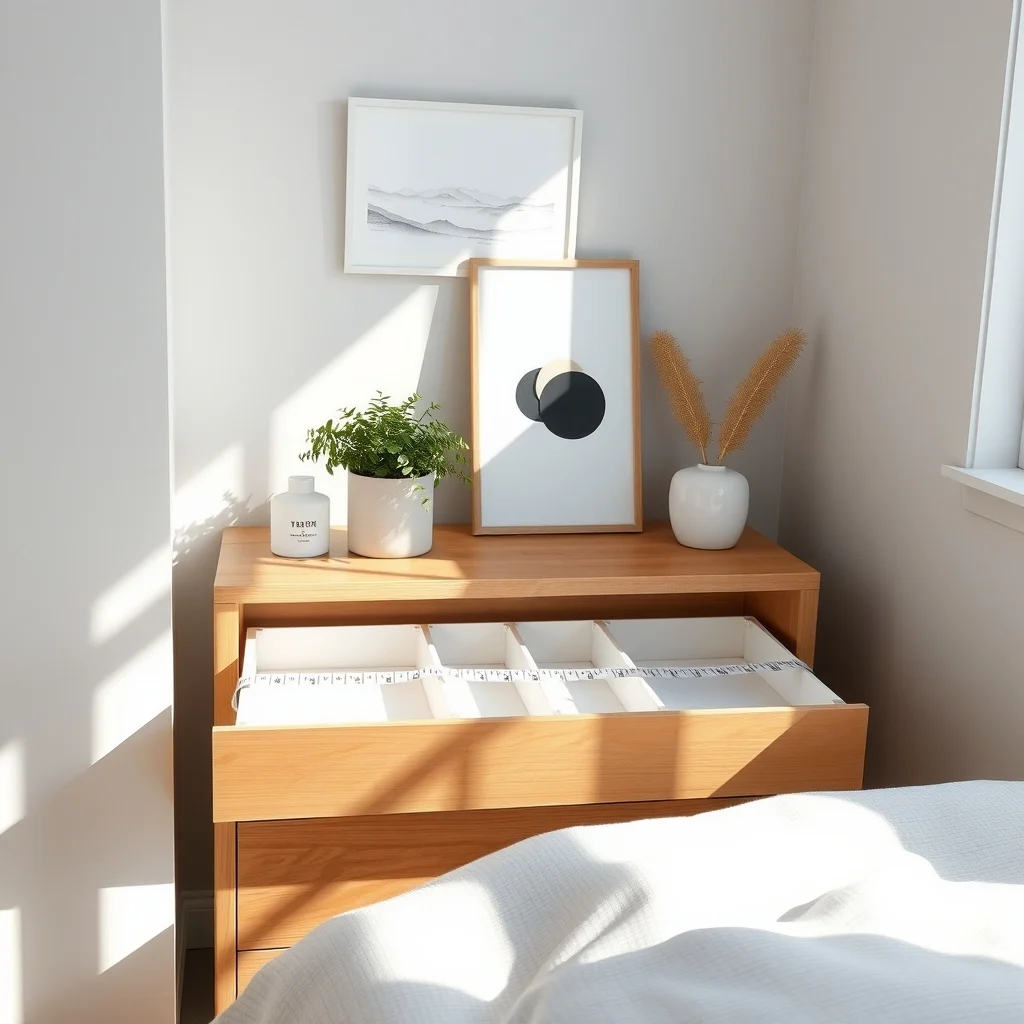
Before you buy anything, open each drawer and take a quick measurement of its interior width, depth, and height. Knowing the exact dimensions lets you decide whether a modular, adjustable divider or a set of fixed inserts will fit best. Modular systems, often made from lightweight bamboo or clear acrylic, let you slide panels to create custom compartments for everything from thin socks to folded tees. Fixed inserts, such as metal trays that snap into place, are ideal when you want a permanent layout that won’t shift as you close the drawer. By matching the divider’s size to the drawer’s interior, you avoid the frustration of a piece that hangs over the edge or leaves an awkward gap.
The extra step of measuring also reveals whether a drawer has a tapered front that could affect how far a divider can slide in. In those cases, a low‑profile acrylic divider that sits just under the front lip often works better than a bulkier bamboo set. The result is a drawer that feels intentionally arranged rather than improvised.
2. Choose Materials That Complement Your Bedroom Palette
This image is by AI for inspiration only.
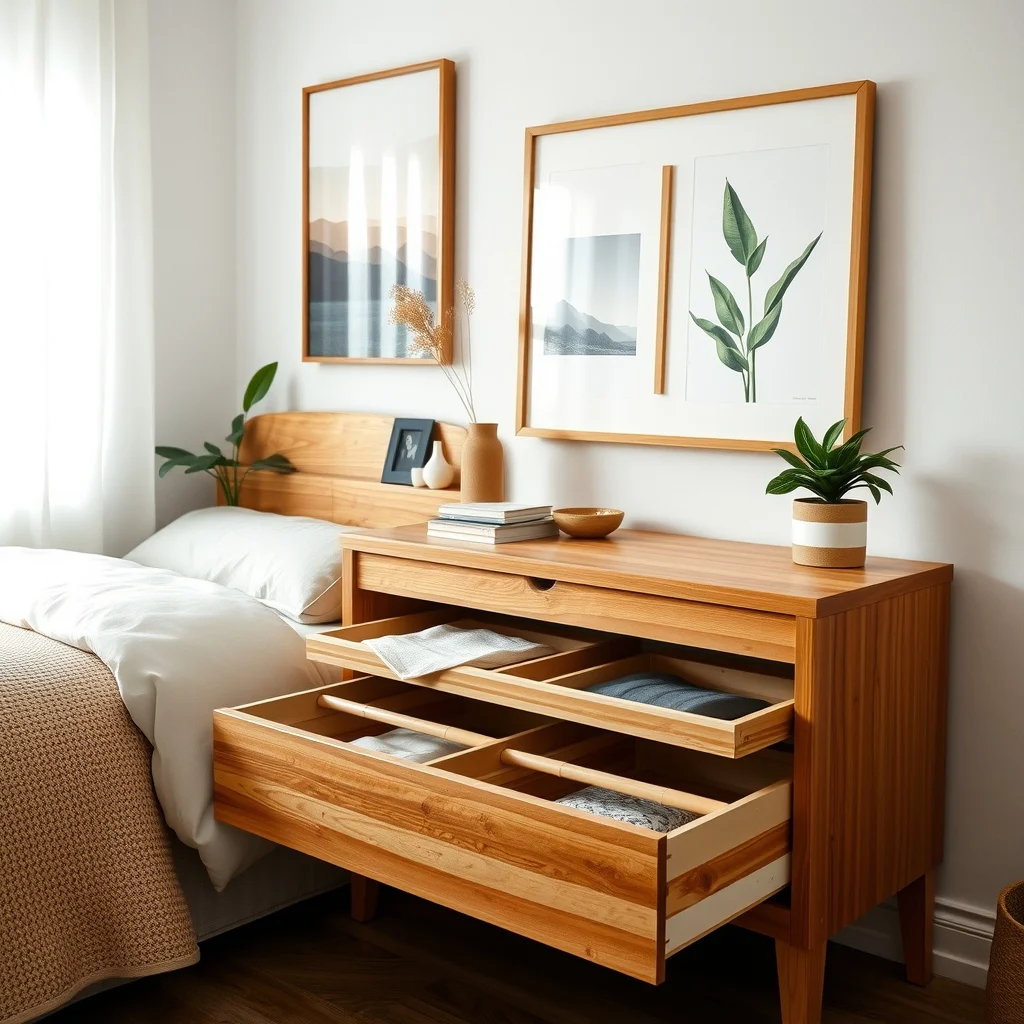
Drawer dividers are functional, but they also become a subtle design element that can echo the room’s color scheme. If your bedroom features warm wood tones, bamboo dividers blend naturally, adding a soft, organic texture that mirrors a walnut nightstand or a reclaimed oak floor. For a more contemporary vibe with crisp whites and cool greys, clear acrylic panels keep the visual field open, allowing the fabric of your linens or the hue of a pastel sweater to remain the focal point. Metal dividers finished in brushed brass or matte black can add a touch of industrial chic, especially when paired with a metal‑legged dresser.
Beyond aesthetics, material choice influences durability. Bamboo resists warping in humid climates, while acrylic can scratch if handled roughly. If you anticipate frequent drawer access, a sturdy metal option may hold up longer. Selecting a material that both looks good and stands up to daily use ensures the dividers stay part of the décor rather than becoming an eyesore.
3. Create Zones for Different Garments
This image is by AI for inspiration only.
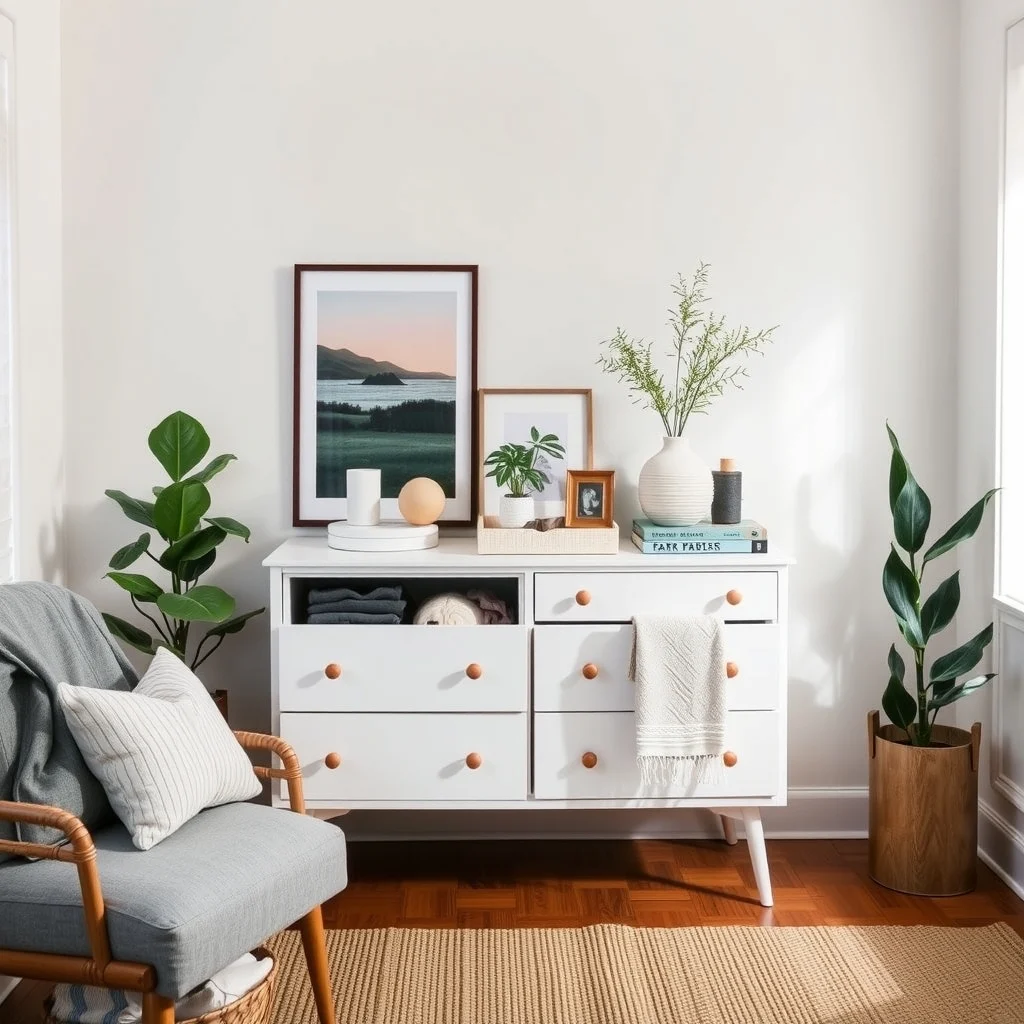
One of the simplest ways to make a small dresser feel larger is to assign each drawer a clear purpose and then use dividers to reinforce that purpose. For example, a top drawer might house everyday underwear and socks, so you could place a narrow vertical divider that creates two slim columns—one for socks, one for underwear. The next drawer could be dedicated to t‑shirts, and a horizontal divider can split the space into a shallow tray for rolled tees and a deeper section for folded shirts.
This zoning approach reduces the time spent searching for a specific item because everything lives in its own defined slot. It also prevents larger pieces from crowding smaller ones, which often leads to a mess. The trade‑off is that you need to be realistic about how many items you truly need in each category; over‑stocking a zone defeats the purpose of the divider.
4. Use Fabric Pouches for Soft Items
This image is by AI for inspiration only.
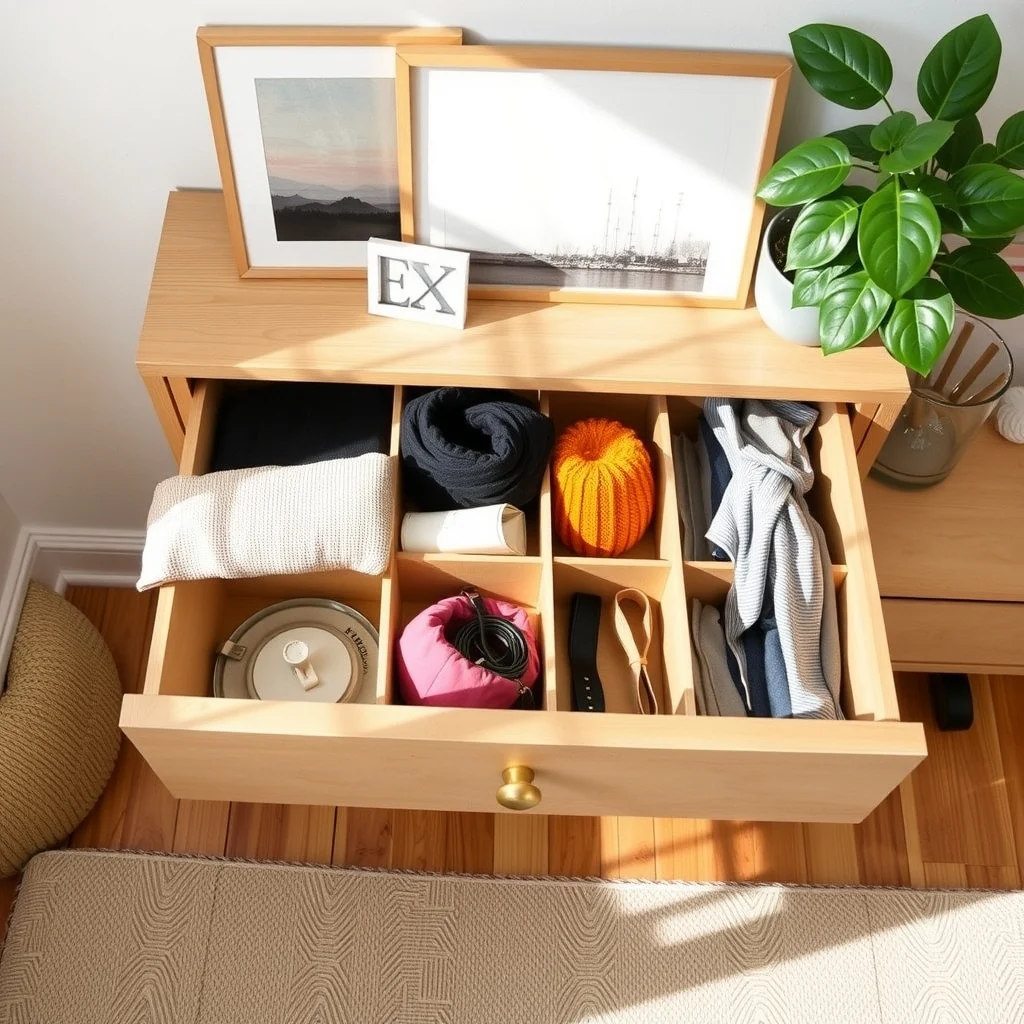
While rigid dividers excel at separating hard‑folded clothing, they can leave gaps where softer items like scarves, belts, or delicate lingerie slip through. Adding a small fabric pouch that hangs from a divider’s side panel solves this problem without adding bulk. Choose a pouch in a neutral linen or a muted cotton that complements the drawer’s interior—perhaps a soft sage or a warm sand tone that echoes the room’s accent colors.
The pouch not only gathers loose pieces but also adds a tactile layer that makes opening the drawer a pleasant experience. A potential downside is that the pouch takes up a fraction of the drawer’s width, so it works best in drawers where you already have a dedicated zone for accessories. If you find the pouch interfering with other items, consider a slimmer mesh pocket that slides into the divider’s slot.
5. Align Dividers With Lighting and Visibility
This image is by AI for inspiration only.
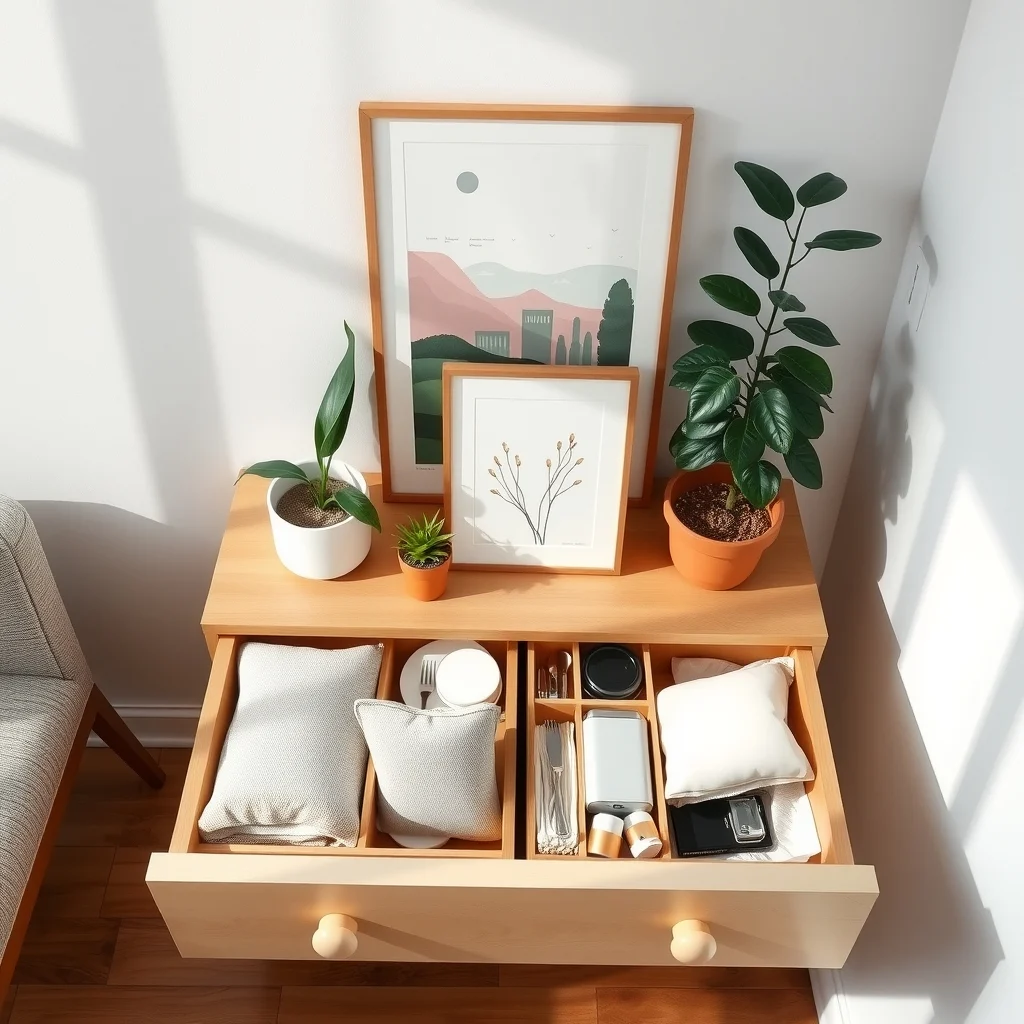
Even the best‑organized drawer can feel cramped if you can’t see what’s inside. Position dividers so that the most frequently used items sit near the front of the drawer, where natural light from a nearby window or a soft bedside lamp can illuminate them. A shallow compartment at the drawer’s opening lets you glimpse a folded sweater without pulling everything out.
If your bedroom relies on warm, low‑level lighting, consider using dividers with a slightly reflective surface—such as brushed metal or a satin‑finished acrylic—to bounce light into the interior. This subtle glow makes the contents easier to locate and adds a gentle sparkle that enhances the overall ambiance. The only caution is to avoid overly glossy finishes that could create glare when the drawer is opened under bright daylight.
6. Label Discreetly for Quick Retrieval
This image is by AI for inspiration only.
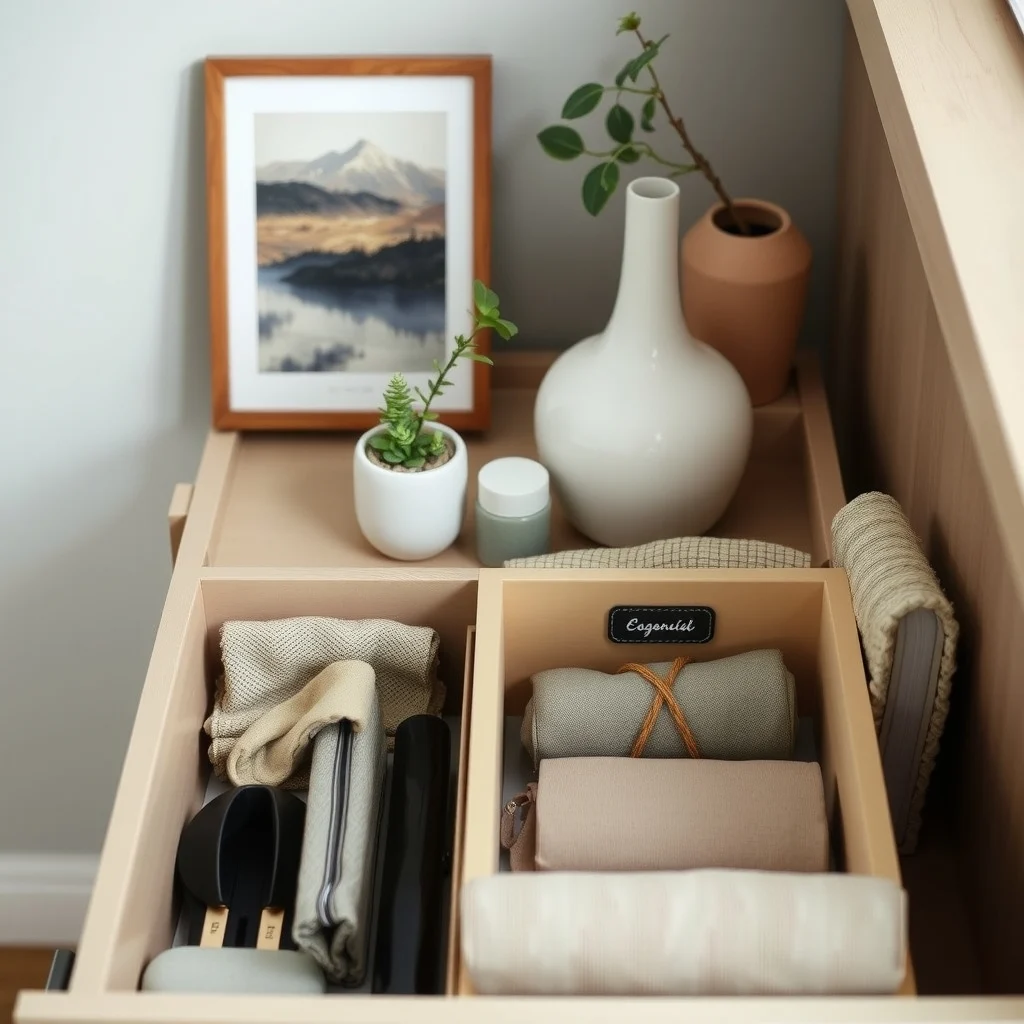
When a drawer holds multiple categories, a small label can be a lifesaver. Instead of bulky tags that stick out, opt for thin, fabric‑covered labels that slide under the divider’s edge. A muted charcoal label with white lettering blends with most décor palettes while remaining legible. Place the label on the inside front edge of each compartment so it’s visible when the drawer is opened but hidden when closed.
Labeling encourages consistency; you’ll be less tempted to toss a stray sock into the wrong zone. However, labels can become outdated if you change the drawer’s function, so keep a spare set on hand for quick swaps. A simple label system adds an element of order without sacrificing the drawer’s clean lines.
7. Maintain the System With Seasonal Refreshes
This image is by AI for inspiration only.
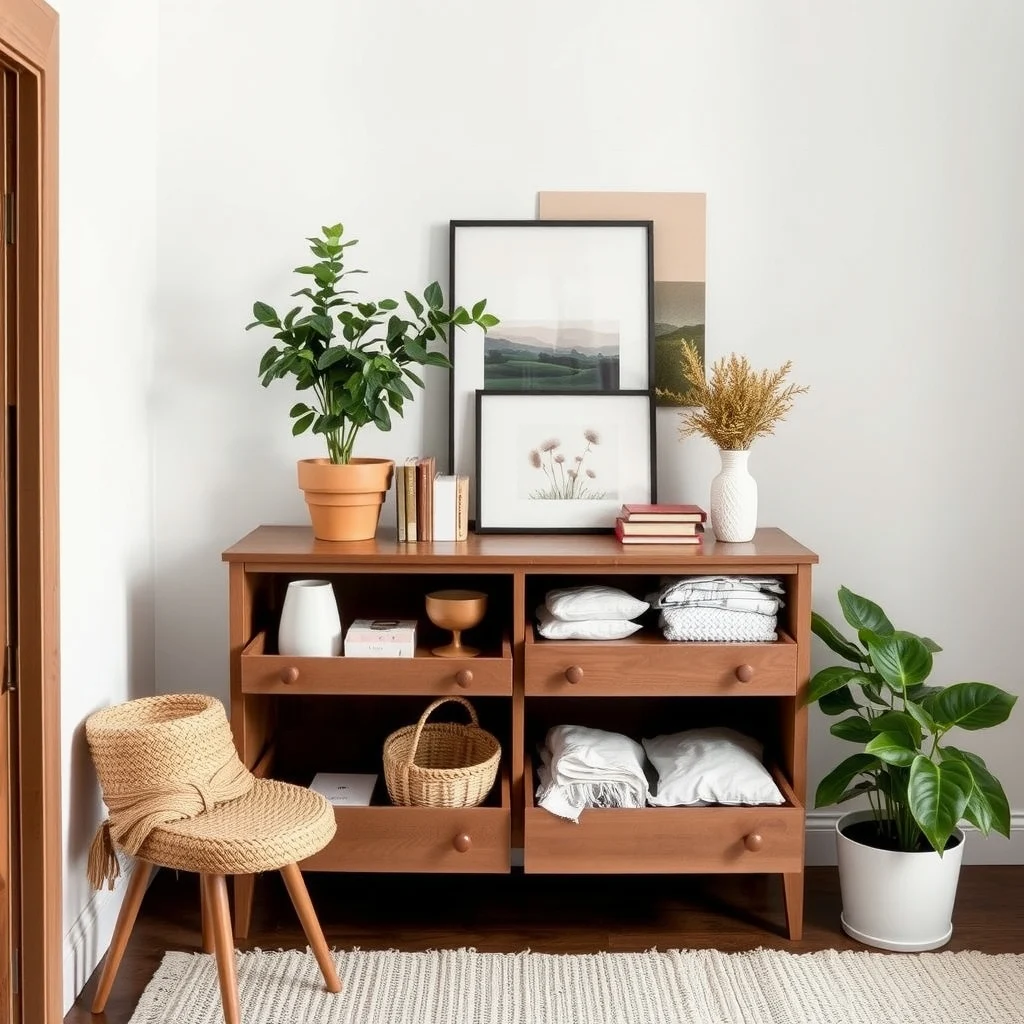
Even the most thoughtfully arranged dresser benefits from an occasional reset. At the start of each season, pull the dividers out, wipe them down with a soft cloth, and reassess whether each zone still matches your wardrobe needs. For instance, a summer drawer might need more space for lightweight tops, while a winter drawer could shift toward thicker sweaters.
During this refresh, you may discover that a divider is warped or that a fabric pouch has collected dust. Replacing or cleaning these components keeps the dresser looking fresh and functional. The downside is that regular maintenance requires a few minutes of attention, but the payoff is a drawer that never feels overrun and always reflects the current style of your bedroom.
FAQ
This image is by AI for inspiration only.
What size dividers work best for a narrow dresser drawer?
Adjustable bamboo or acrylic dividers that can be trimmed to a width of 12–14 inches work well for narrow drawers, allowing you to create multiple slim compartments without crowding the space.
Can I use drawer dividers in a dresser with metal handles?
Yes, metal handles do not interfere with internal dividers. Just ensure the divider’s height does not exceed the drawer’s interior depth, so the handles remain easy to grip.
Are acrylic dividers safe for children’s rooms?
Acrylic dividers are non‑toxic and shatter‑resistant, making them suitable for a child’s dresser as long as they are secured properly and not placed where a child could pull them out.
How do I keep fabric pouches from sliding around?
Choose pouches with a built‑in hook or a small loop that can be clipped onto the divider’s side rail; this keeps them anchored while still allowing easy access.
Do I need to buy a full set of dividers for all drawers?
Not necessarily. Start with the drawer that holds the most miscellaneous items—often the top or middle drawer—and add dividers there first. Expand to other drawers as you see the benefit.
Final Thoughts
This image is by AI for inspiration only.
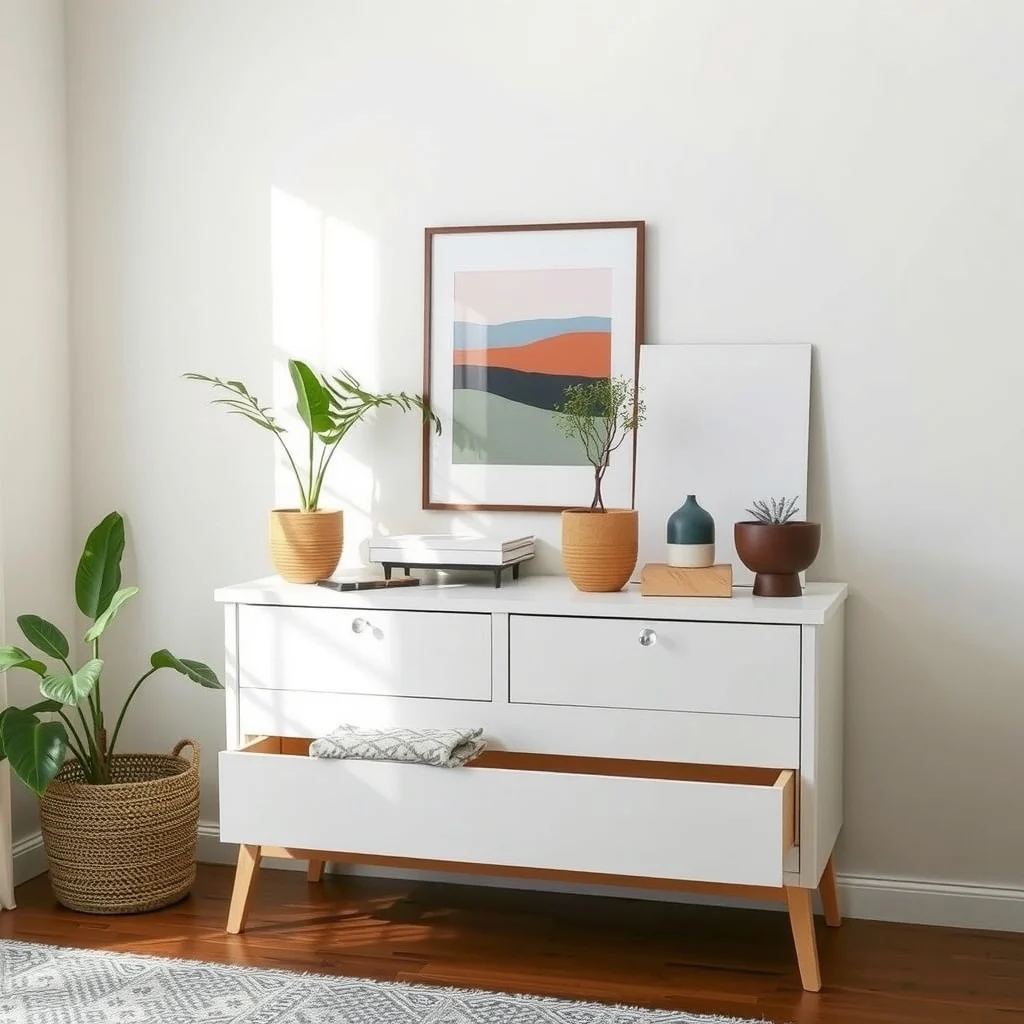
Organizing a small dresser with drawer dividers is less about buying the fanciest product and more about understanding how each piece fits into the room’s rhythm. By measuring accurately, selecting materials that echo your décor, zoning garments, adding soft‑pouch accessories, considering lighting, labeling discreetly, and committing to a seasonal refresh, you create a drawer system that feels both functional and harmonious. The effort you put into arranging those compartments pays off every time you open the drawer and find exactly what you need, neatly presented and ready to wear.