How to Create More Storage Around a Small Bed

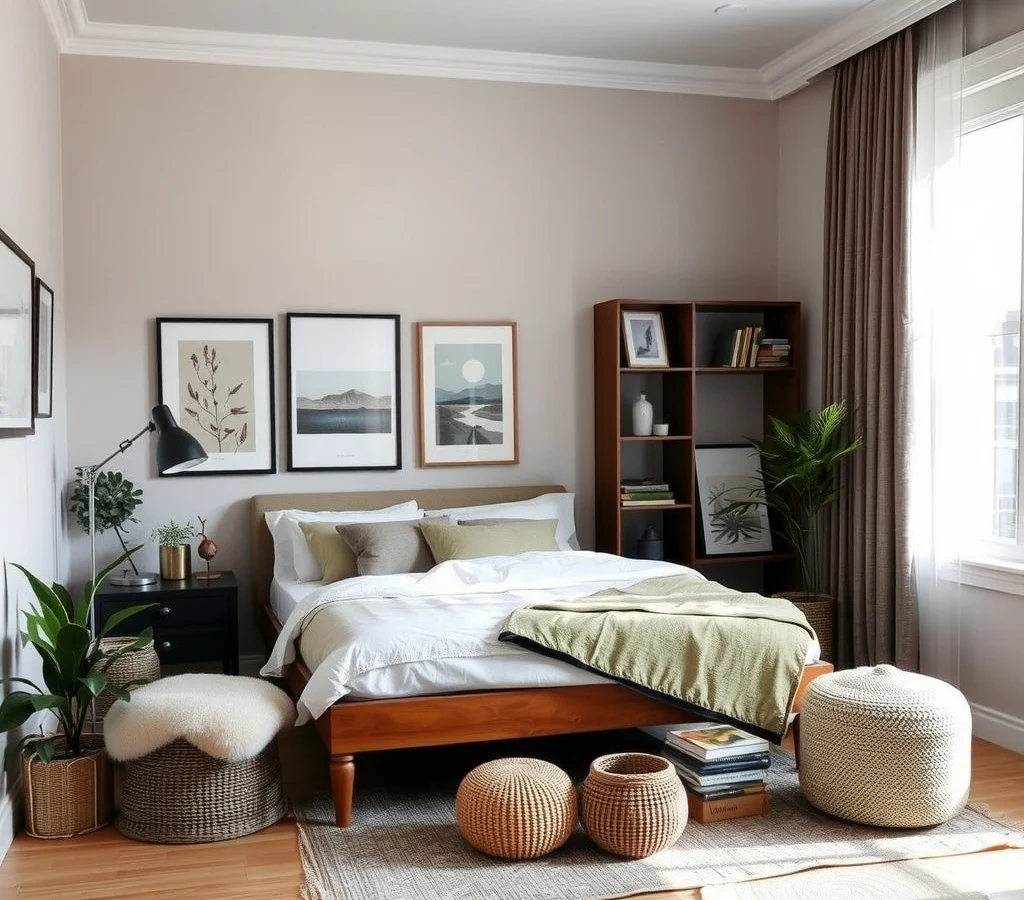
Living in a room where the bed dominates the floor can feel cramped, especially when the closet is a separate walk‑in or the dresser is already full. The challenge is to add storage without sacrificing the sense of openness that a small sleeping area needs. Below are seven approaches that turn the space around a modest bed into functional, attractive storage zones. Each idea balances aesthetics with practicality, so you can choose the solutions that fit your style, budget, and daily routine.
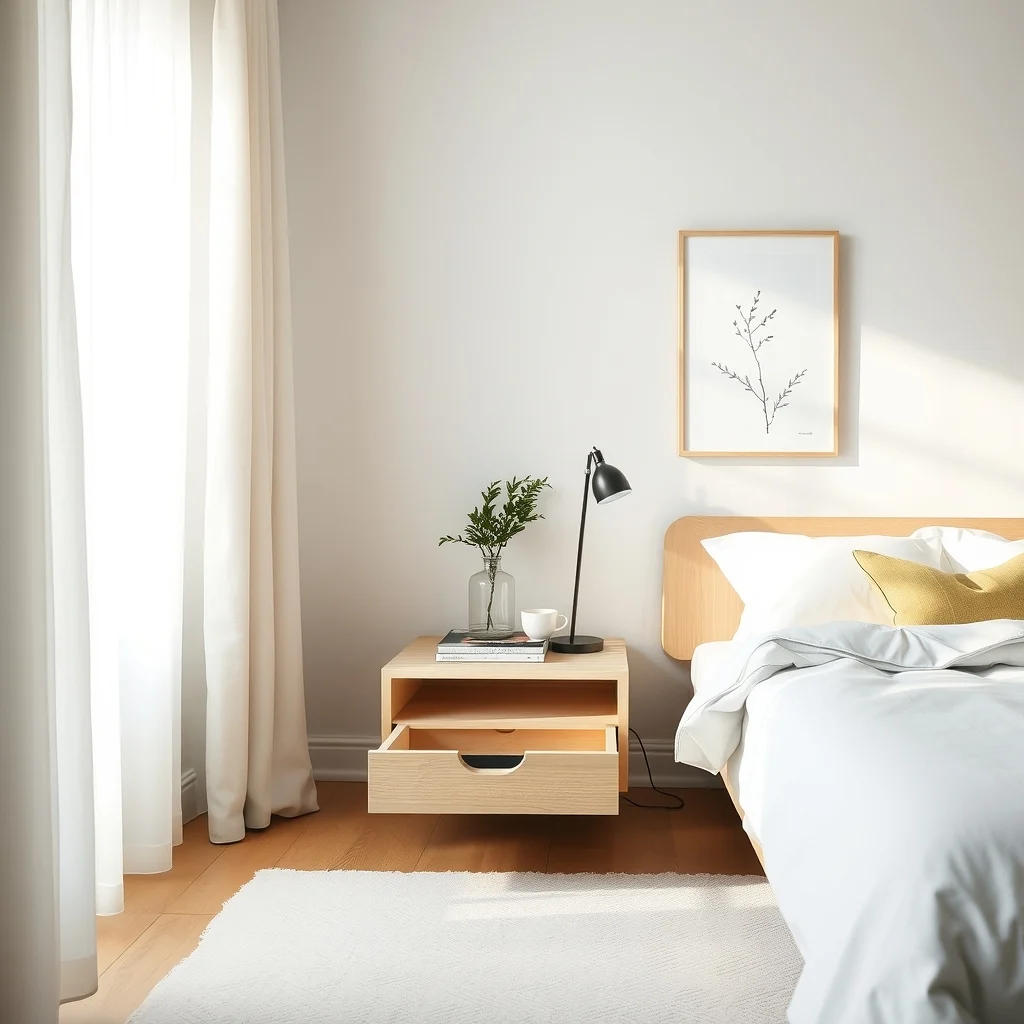
1. Float a low-profile nightstand that doubles as a drawer
This image is by AI for inspiration only.
A nightstand that sits just a few inches off the floor creates a subtle visual break while offering a hidden compartment. Choosing a piece in a light oak finish keeps the room feeling airy, and a single drawer provides a place for books, chargers, or a pair of glasses. Because the surface is low, the nightstand doesn’t compete with the headboard, allowing the wall behind the bed to remain a visual anchor. If you prefer a softer look, a painted white or muted greige nightstand can blend with pastel bedding and keep the area feeling cohesive. The main trade‑off is that a single drawer limits the amount of bulk you can store, so it works best for everyday items rather than large seasonal pieces.
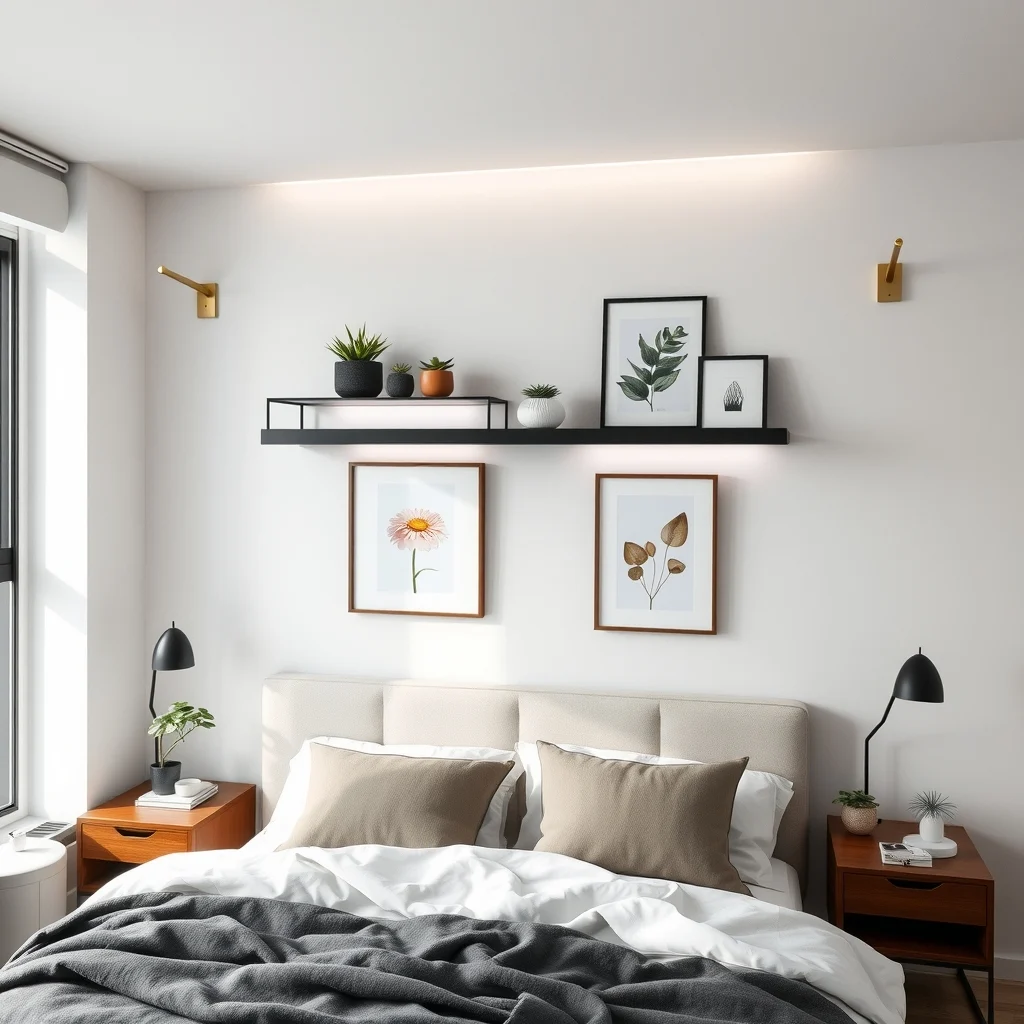
2. Install slim wall-mounted shelves above the bed
This image is by AI for inspiration only.
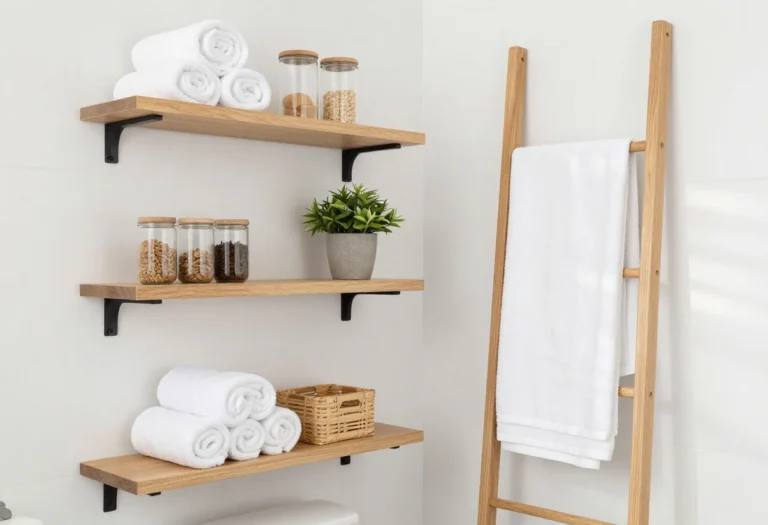
Running a narrow shelf line just below the ceiling draws the eye upward, making the room feel taller while delivering extra storage. A brushed brass or matte black bracket adds a hint of texture without overwhelming the space. Use the shelves for decorative boxes, a few folded sweaters, or a small plant to introduce a touch of greenery. The height keeps the shelves out of reach for children, which can be a safety advantage. However, the load capacity of thin shelves is limited, so they are best suited for lightweight items rather than heavy books or electronics.
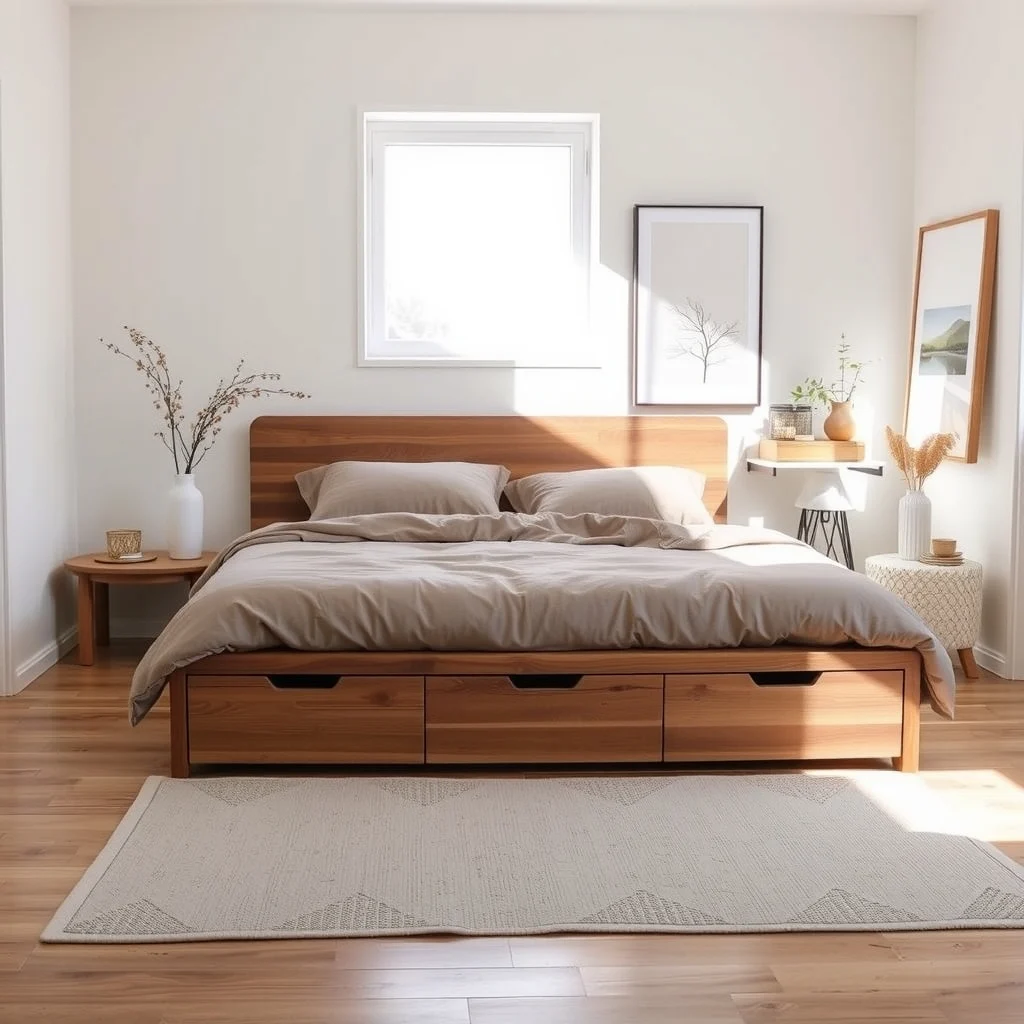
3. Choose a bed frame with built‑in storage drawers
This image is by AI for inspiration only.
Many modern platforms incorporate shallow drawers beneath the mattress, turning the underside of the bed into a concealed closet. Opt for a frame with three to four drawers, each about six inches deep, to accommodate linens, pajamas, or a stack of towels. A fabric‑upholstered headboard in a soft linen can soften the overall look while the drawers stay hidden. The benefit is a tidy appearance with a clear line of sight across the room. On the downside, the drawers add a few inches to the overall height of the bed, which may affect ceiling clearance in rooms with low roofs.
4. Use a storage bench at the foot of the bed

This image is by AI for inspiration only.
A low bench with a hinged lid serves as both a seating spot and a hidden compartment. Selecting a bench in a textured weave fabric or a warm walnut veneer adds visual interest without demanding much floor space. You can store extra blankets, seasonal shoes, or a small collection of board games inside, and the bench provides a convenient place to sit while dressing. The bench’s footprint is usually no wider than the mattress, so it doesn’t encroach on the surrounding walls. Keep in mind that the bench’s lid can be heavy; choosing a soft‑close hinge can prevent slamming and prolong the hardware’s life.
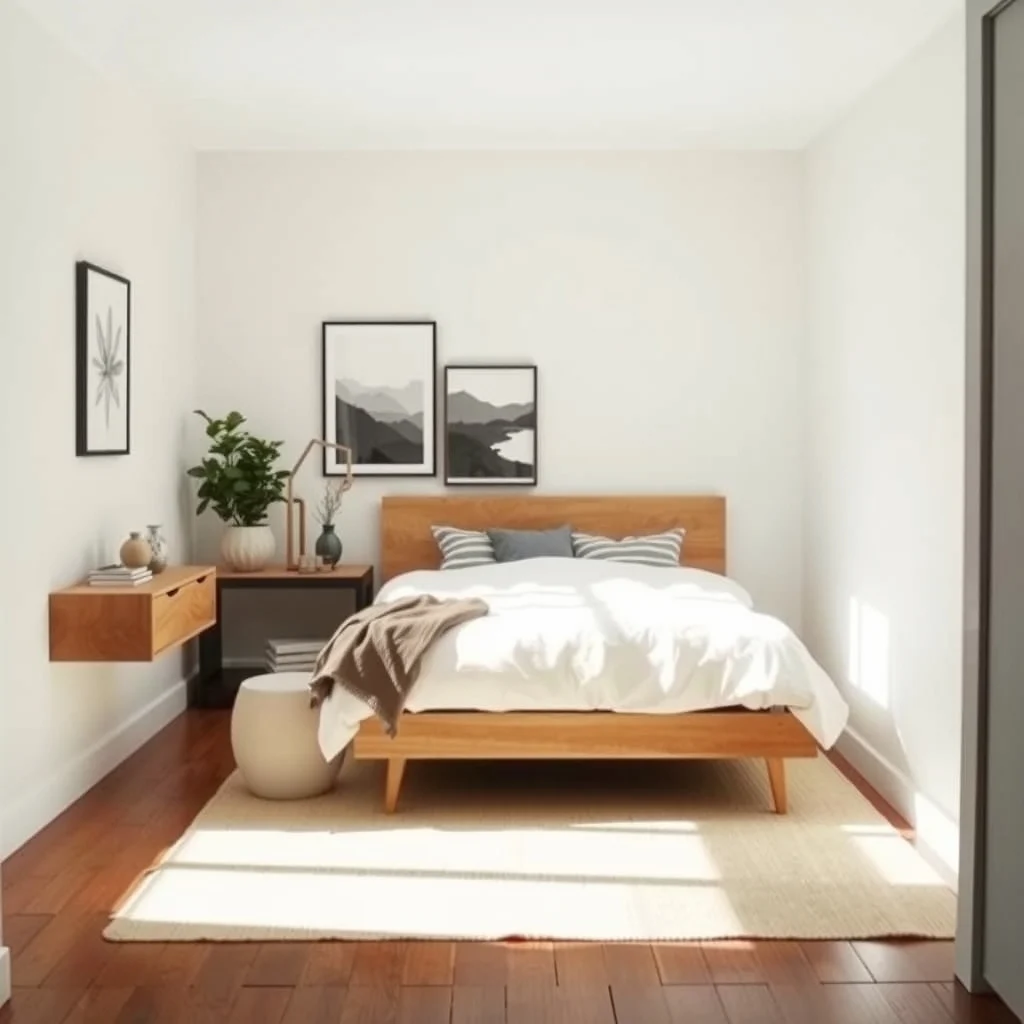
5. Add a narrow console table against an empty wall
This image is by AI for inspiration only.
When a side wall is left bare, a slender console can become a vertical storage solution. A table about twelve inches deep fits snugly between the bed and the wall, leaving a clear pathway for traffic. Choose a piece with a couple of open shelves or a single lower cabinet to hold items like a water bottle, a few magazines, or a decorative tray for jewelry. The narrow profile prevents the console from feeling bulky, and a light metal frame in brushed nickel can echo other hardware in the room. The limitation is that a console’s width is restricted, so it won’t replace a full‑size dresser but rather supplements existing storage.
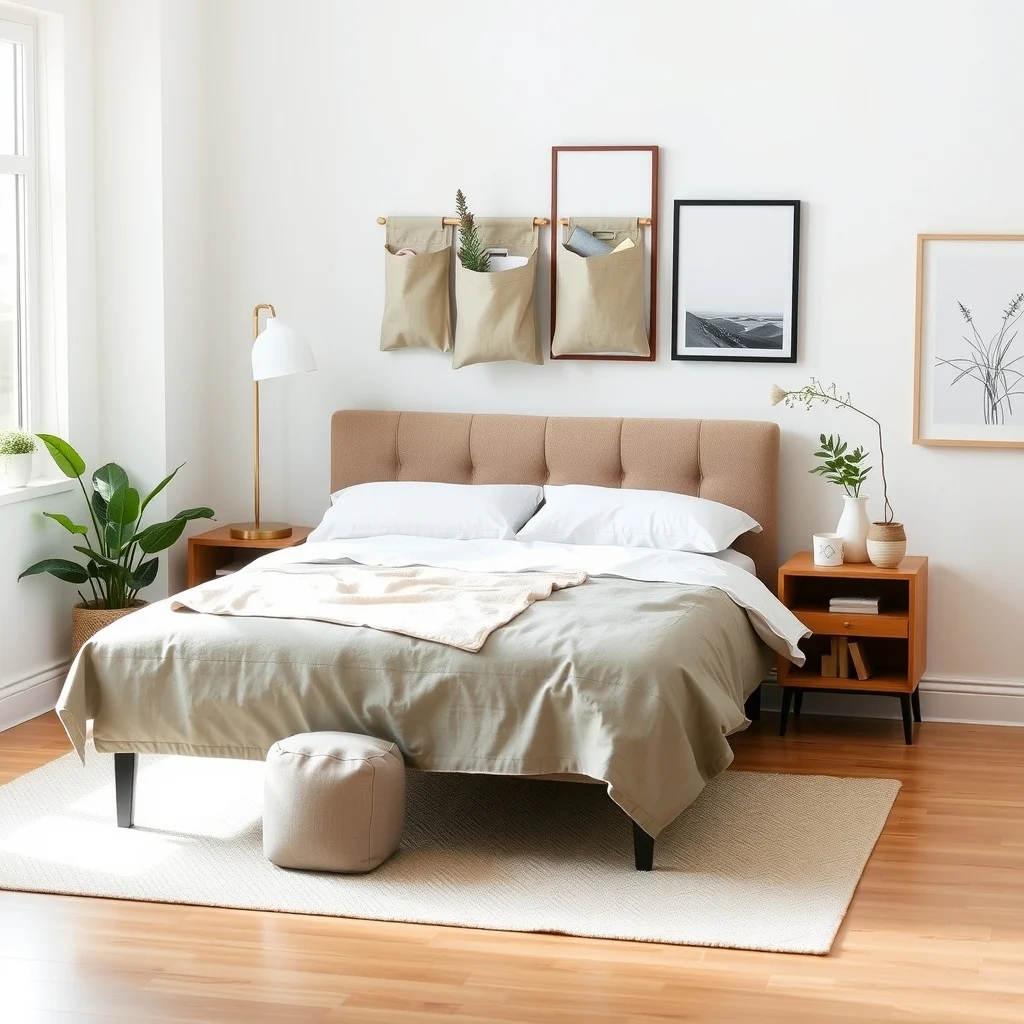
6. Incorporate a hanging organizer on the back of the headboard
This image is by AI for inspiration only.
Many headboards include a small ledge or can be fitted with a set of fabric pockets that hang from the top. Selecting an organizer in a neutral tone such as soft taupe lets it blend with bedding while still providing pockets for a phone, a notebook, or a pair of earbuds. The hanging design uses vertical space that would otherwise be empty, and it keeps nighttime essentials within arm’s reach. Because the organizer is attached to the headboard, it does not require drilling into the wall, making it a renter‑friendly option. The trade‑off is that the pockets are shallow, so they are unsuitable for bulky items.
7. Create a built‑in niche between the bed and a side wall
This image is by AI for inspiration only.
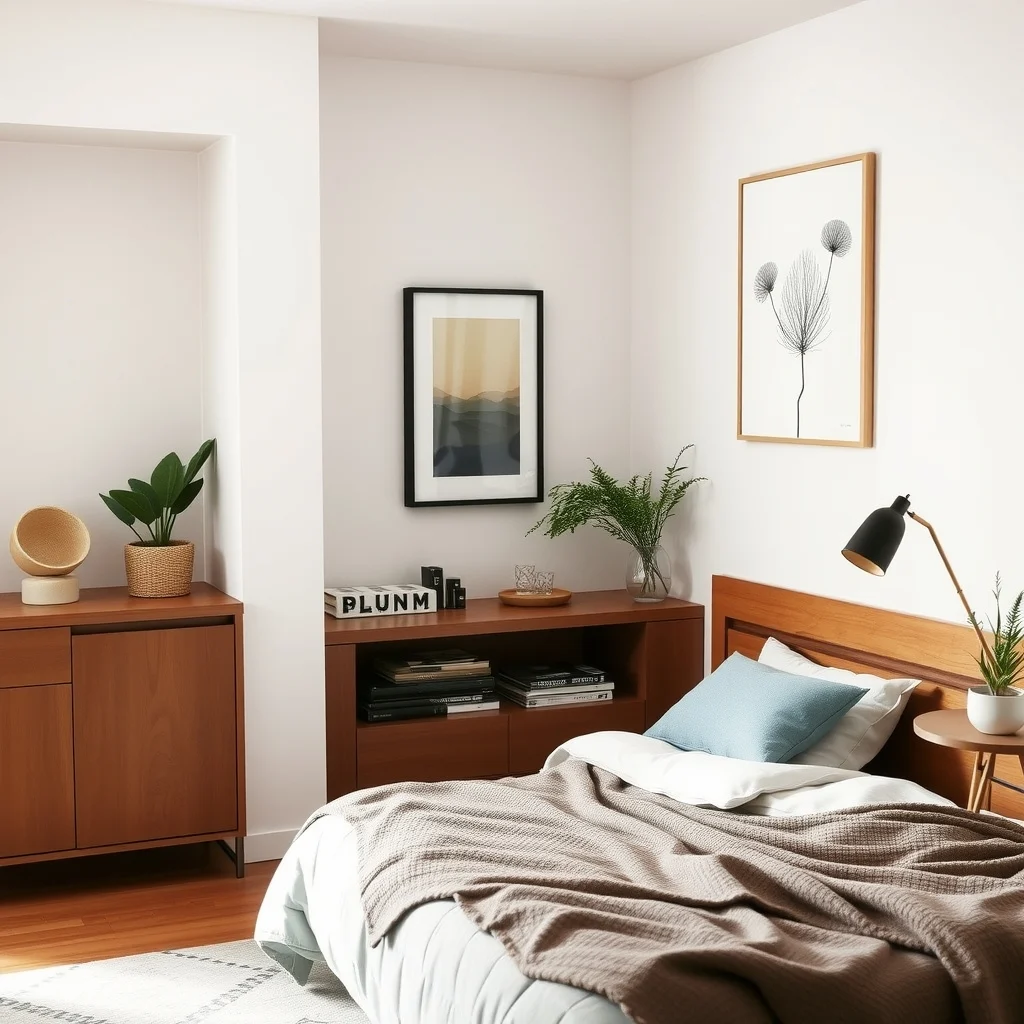
If the layout allows a small gap between the mattress and an adjacent wall, carving out a recessed niche can provide a custom storage alcove. Framing the niche with the same wood as the bed frame creates a seamless look, while a simple interior lighting strip adds a warm glow for evening reading. Inside the niche you can place a few decorative baskets, a slim lamp, or a stack of folded linens. This solution maximizes otherwise wasted space and adds an architectural feature that feels intentional. Building a niche does require some carpentry skill and may involve minor wall modifications, so it’s best suited for homeowners comfortable with DIY projects or those willing to hire a carpenter.
FAQ

This image is by AI for inspiration only.
How can I add storage without making the room feel cluttered?
Choose pieces that blend with the room’s color palette and keep surfaces clear; hidden drawers and vertical storage help maintain a clean look.
Is it safe to install wall-mounted shelves above a bed?
Yes, as long as you use appropriate anchors for your wall type and follow the weight limits indicated by the shelf manufacturer.
What’s the best material for a storage bench that will last?
Solid wood such as oak or maple offers durability, while a fabric cushion can be replaced if it wears, extending the bench’s life.
Can a floating nightstand work in a small bedroom with low ceilings?
It can, because the nightstand’s low profile does not add height; just ensure the clearance between the floor and the bottom of the nightstand is sufficient for easy cleaning.
Do I need professional help to build a niche?
While a skilled DIYer can handle a simple recess, involving a carpenter ensures structural integrity and a finished look, especially if the wall contains wiring or plumbing.
Final Thoughts
This image is by AI for inspiration only.
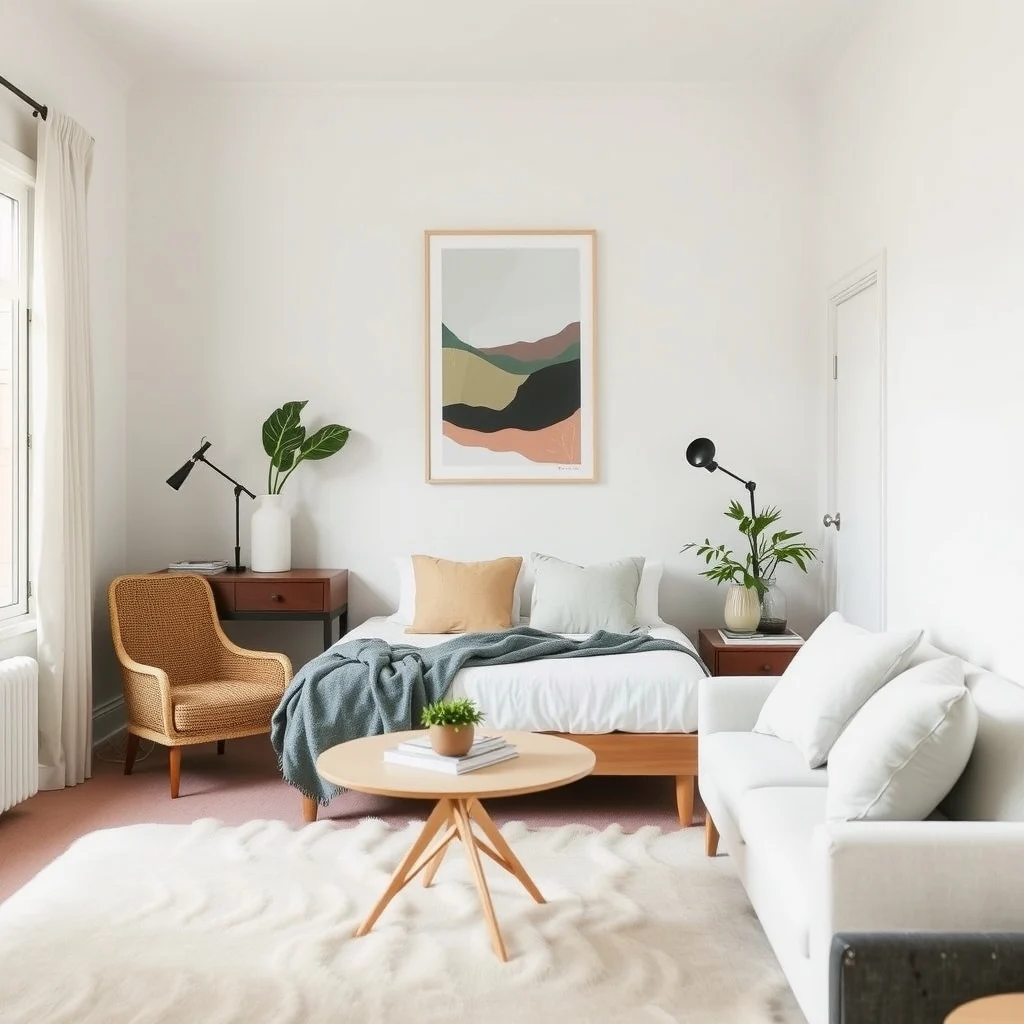
Creating more storage around a small bed is less about adding furniture and more about thinking vertically, using hidden compartments, and turning unused corners into purposeful spaces. By selecting pieces that complement your existing decor and respecting the room’s proportions, you can keep the area feeling open while gaining the organization you need. Whether you opt for a floating nightstand, a built‑in niche, or a simple hanging organizer, each solution adds a layer of functionality that makes the bedroom a more comfortable, livable retreat.