How to Organize a Tiny Fridge for More Usable Space

Living in a small apartment or sharing a compact kitchen often means the refrigerator feels like a cramped pantry that never quite fits everything you need. The real challenge isn’t just the limited cubic footage; it’s the way items pile up, hide behind each other, and force you to open the door repeatedly. This article walks you through seven practical strategies that transform a tiny fridge from a cluttered obstacle into a well‑ordered, functional extension of your kitchen. Each idea focuses on a different aspect of interior design—layout, containers, door accessories, and even lighting—so you can choose the approaches that suit your style and budget.
1. Clear the interior and reassess what truly belongs
This image is by AI for inspiration only.
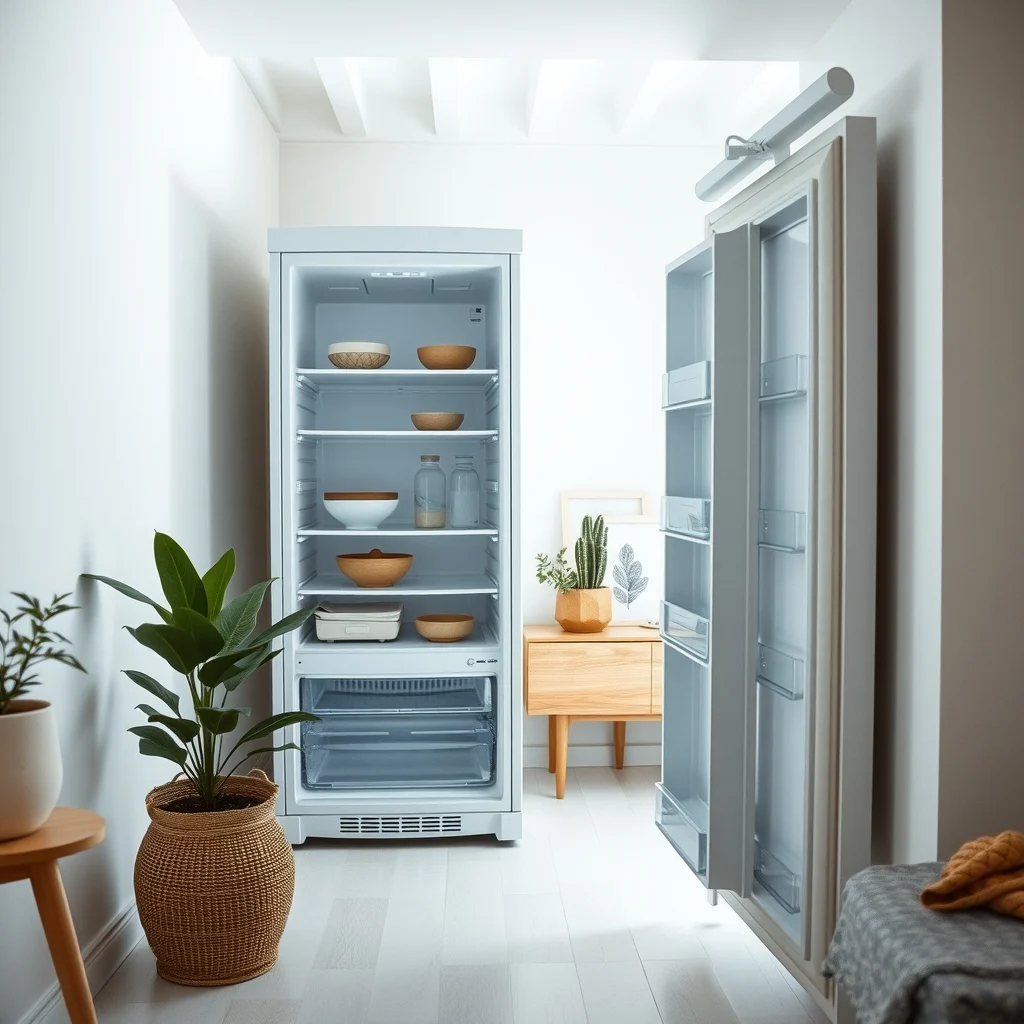
Before you reach for any organizer, empty the fridge completely. A clean slate reveals hidden corners, uneven shelves, and items that have been forgotten for weeks. As you sort, separate foods that are past their prime from those you actually use. This moment of assessment often uncovers duplicate condiments, half‑filled jars, and expired dairy that occupy valuable space without providing any benefit. Once the unnecessary items are removed, wipe down the interior with a mild solution and dry it thoroughly; a fresh surface helps new containers stay in place and reduces the chance of odors lingering. The act of clearing also gives you a realistic sense of how much room you truly have, setting the stage for the next steps.
2. Group items by temperature zone and usage frequency
This image is by AI for inspiration only.
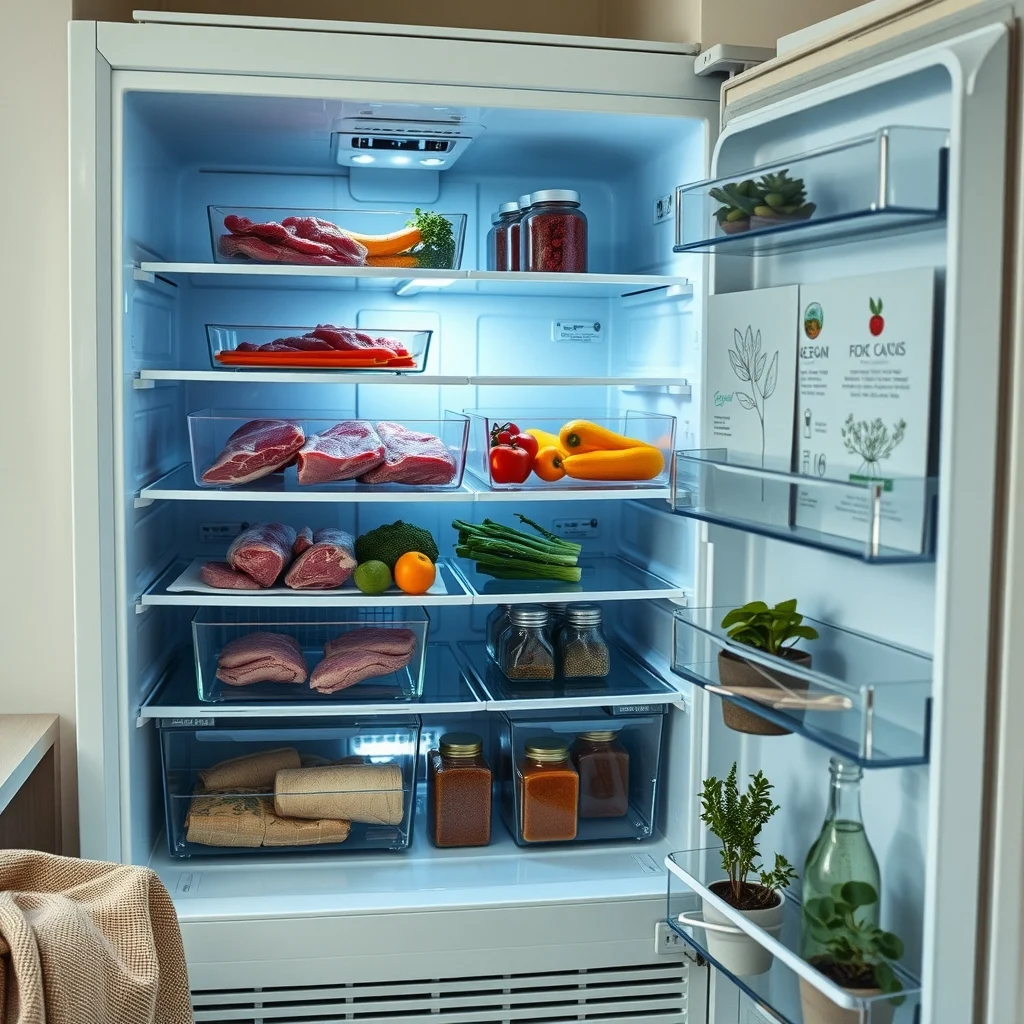
Even the smallest refrigerator has subtle temperature gradients: the lower shelf stays the coldest, the middle area maintains a moderate chill, and the door is the warmest zone. Placing raw meats on the coldest shelf prevents cross‑contamination, while items you grab daily—like butter, cheese, or a glass of water—belong in the most accessible spot. By arranging foods according to both temperature needs and how often you reach for them, you reduce the number of door openings, which in turn keeps the overall temperature more stable. This logical grouping also creates visual order; you’ll recognize at a glance where each category lives, making meal prep feel smoother and less frantic.
3. Use clear containers and stackable bins that match the interior
This image is by AI for inspiration only.
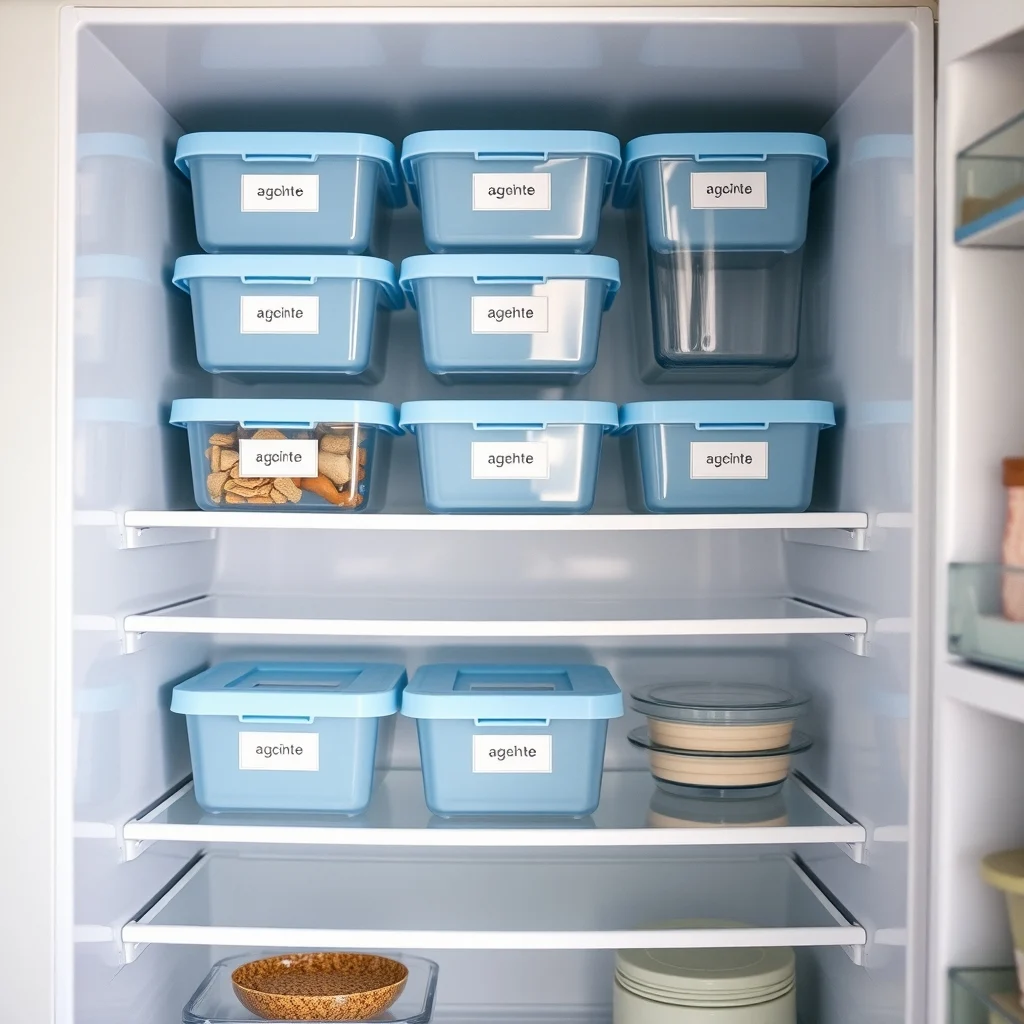
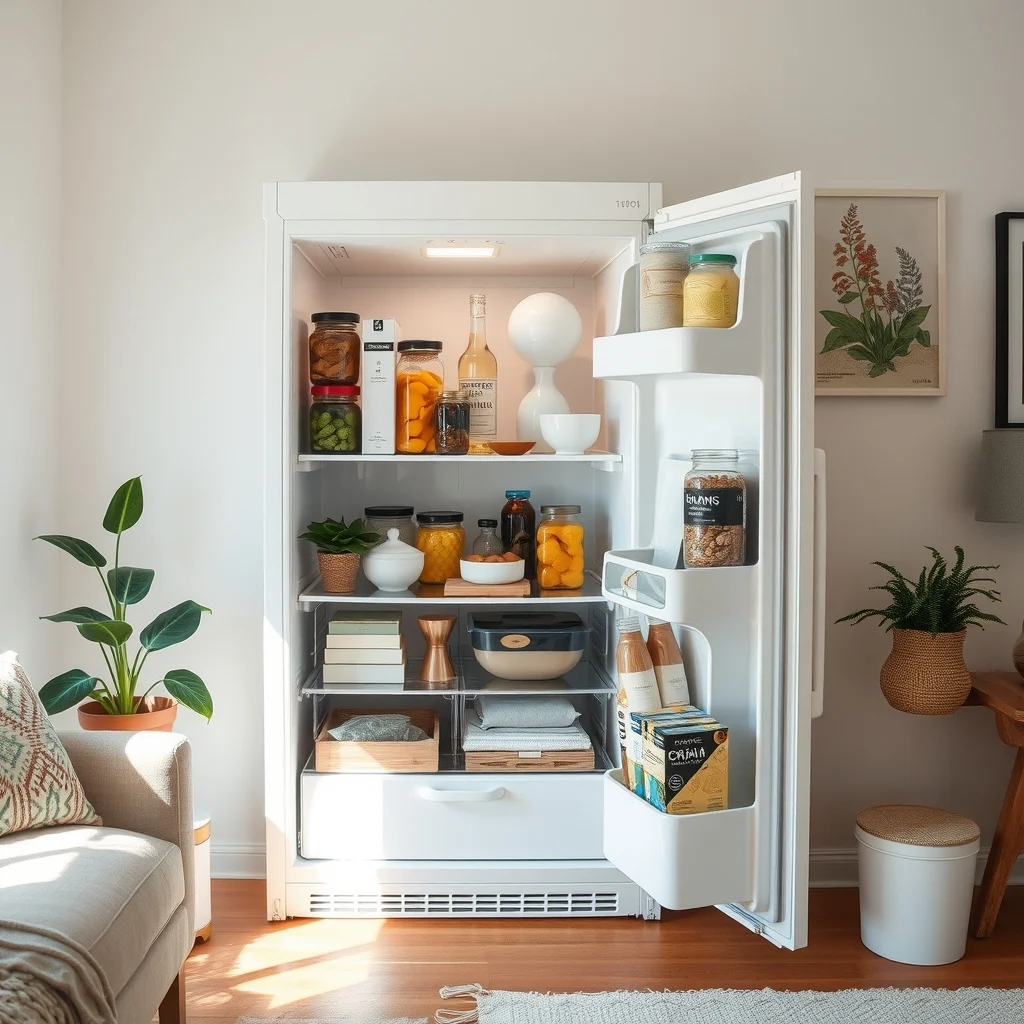
Transparent, hard‑shelled containers allow you to see the contents without pulling everything out, a small visual cue that saves seconds each time you search for a snack. Choose bins that are sized to fit the exact width of a shelf, avoiding the need for awkward gaps that become dust traps. Stackable options, such as low‑profile crates made from brushed aluminum or matte white acrylic, let you build a vertical hierarchy without sacrificing stability. When the bins are slightly narrower than the shelf, the edges act as a natural barrier, keeping items from sliding forward as the door closes. The key is to select materials that are easy to wipe clean and that complement the fridge’s interior finish, whether that’s stainless steel or a soft‑white coating.
4. Add a slim pull‑out drawer or shelf to create a hidden tier
This image is by AI for inspiration only.
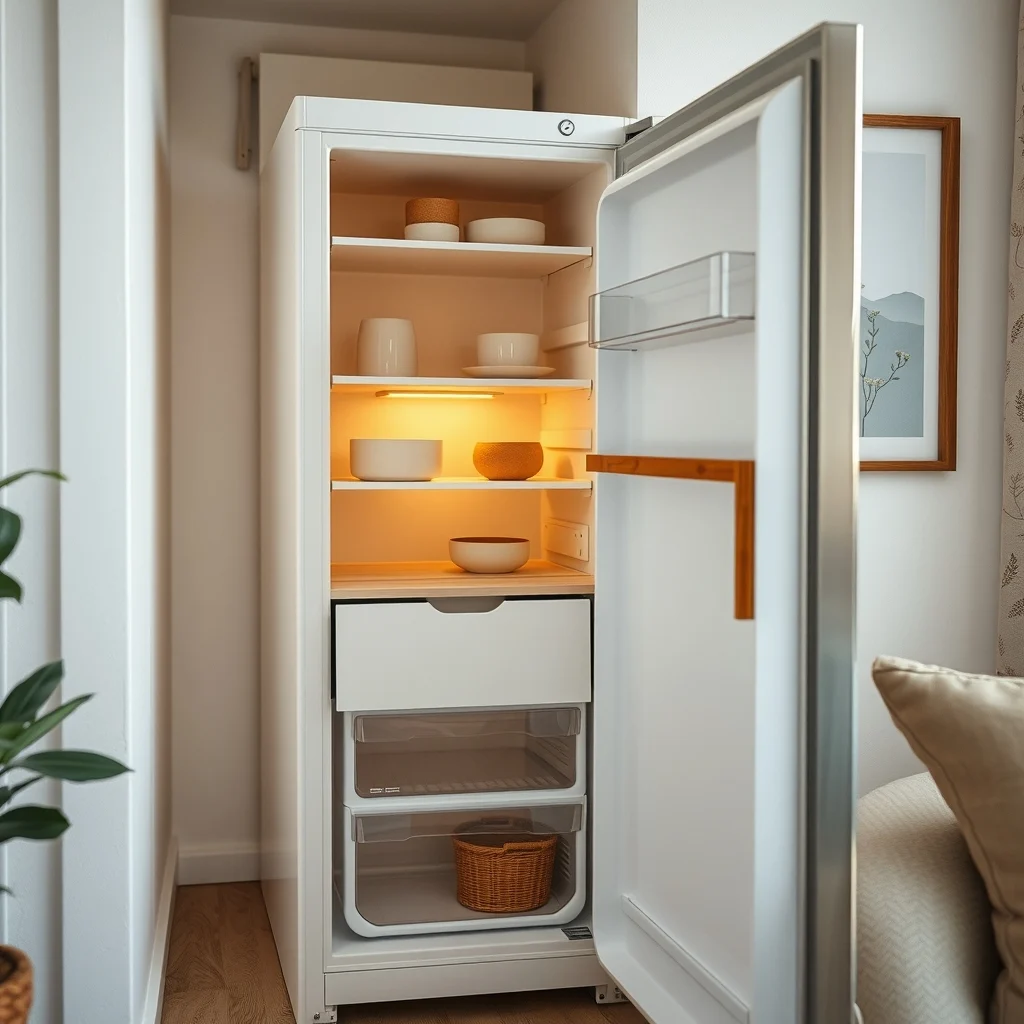
Many compact refrigerators have a small gap between the top shelf and the interior wall. Installing a custom‑cut, shallow drawer—often available as a DIY kit in home‑improvement stores—turns that void into a usable layer for items like snack packs, small jars, or a stack of reusable water bottles. The drawer slides out on low‑friction runners, allowing you to access its contents without disturbing the rest of the layout. Because it sits lower than the main shelves, the drawer remains out of the way for larger dishes while still offering a dedicated spot for lightweight goods. The trade‑off is a slight reduction in overall vertical space, so it works best when you have a handful of items that fit comfortably within the drawer’s depth.
5. Install a magnetic strip for small metal accessories
This image is by AI for inspiration only.
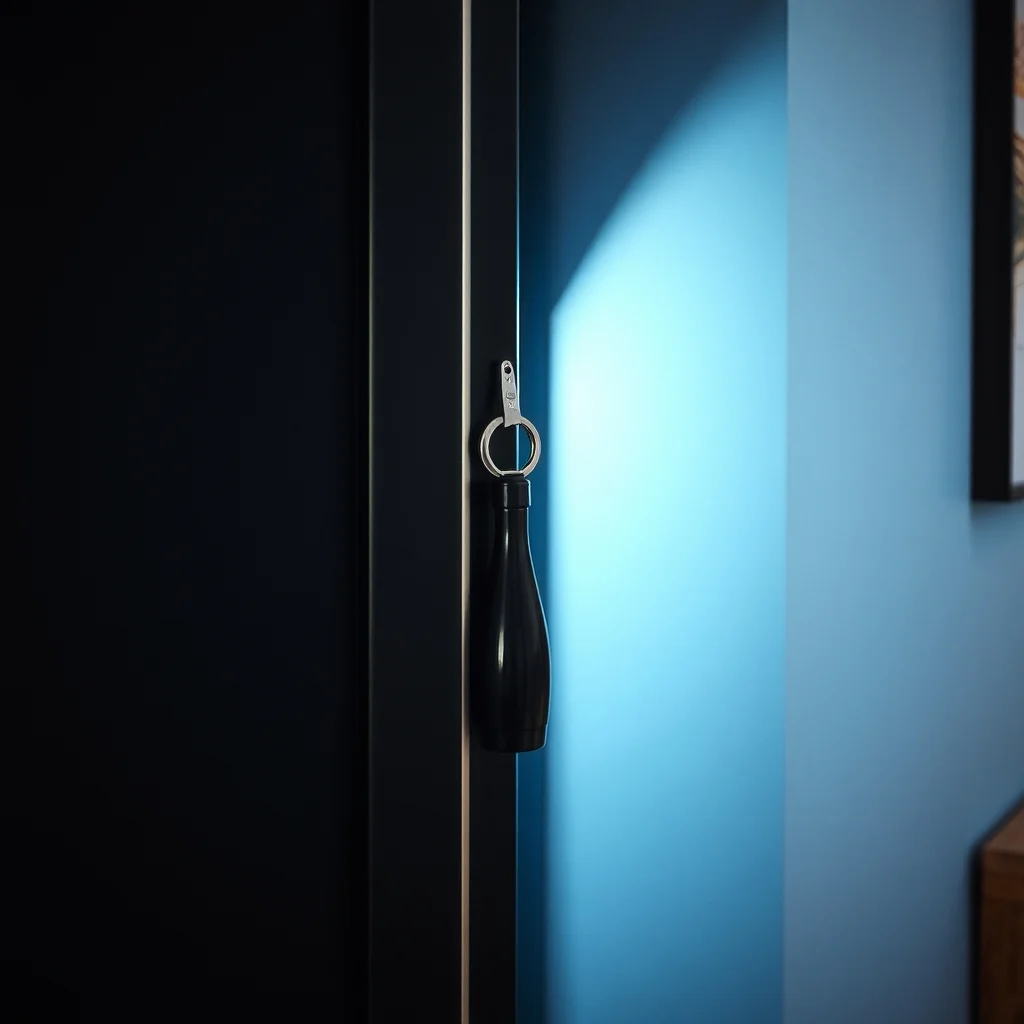
A thin magnetic strip adhered to the interior wall—often sold as a kitchen organizer for knives—provides a discreet place to hang metal tools such as a small bottle opener, a set of magnetic spice tins, or a compact thermometer. The strip takes up virtually no visual space, yet it turns an otherwise unused wall into a functional hook. Because the magnets hold items securely, you avoid the risk of them falling when the door is opened. This solution is especially useful in a tiny fridge where drawer space is at a premium; a few essential metal accessories can be kept within reach without crowding the shelves. If you prefer a less permanent option, a removable magnetic board can be swapped out when you need to clean the interior.
6. Optimize door storage with custom inserts
This image is by AI for inspiration only.
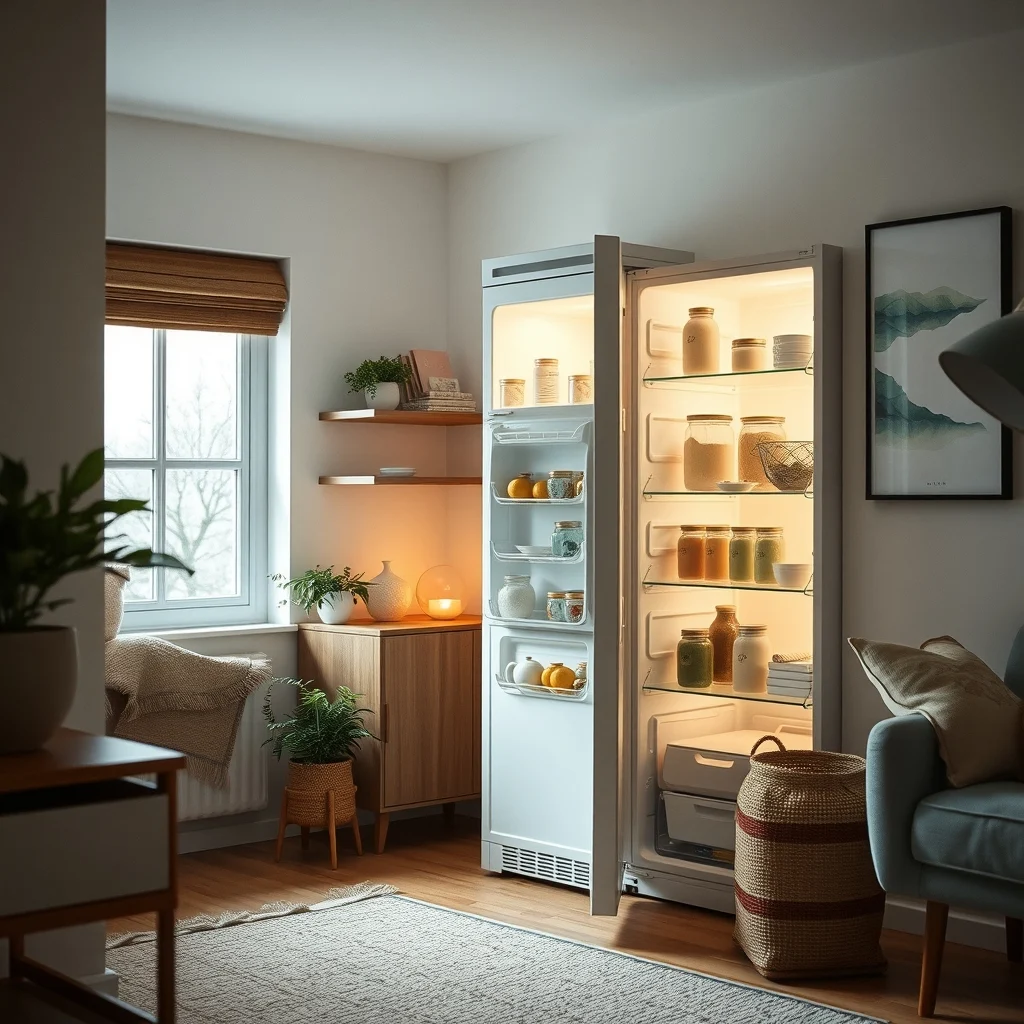
The door is the most accessible area, but its shelves are shallow and prone to sagging under heavy bottles. Replacing the factory‑mounted shelves with a set of modular inserts—often made from lightweight polymer or bamboo—creates a sturdier framework that can hold a greater number of items without bending. Some inserts feature adjustable compartments, letting you fit a tall juice bottle in one slot while dedicating another to smaller condiment jars. By customizing the layout, you eliminate wasted space caused by mismatched bottle shapes. Keep in mind that the door’s temperature fluctuates more than the interior, so reserve it for foods that tolerate a milder chill, such as condiments, drinks, and pre‑sliced cheese.
7. Keep the exterior tidy and consider lighting upgrades
This image is by AI for inspiration only.
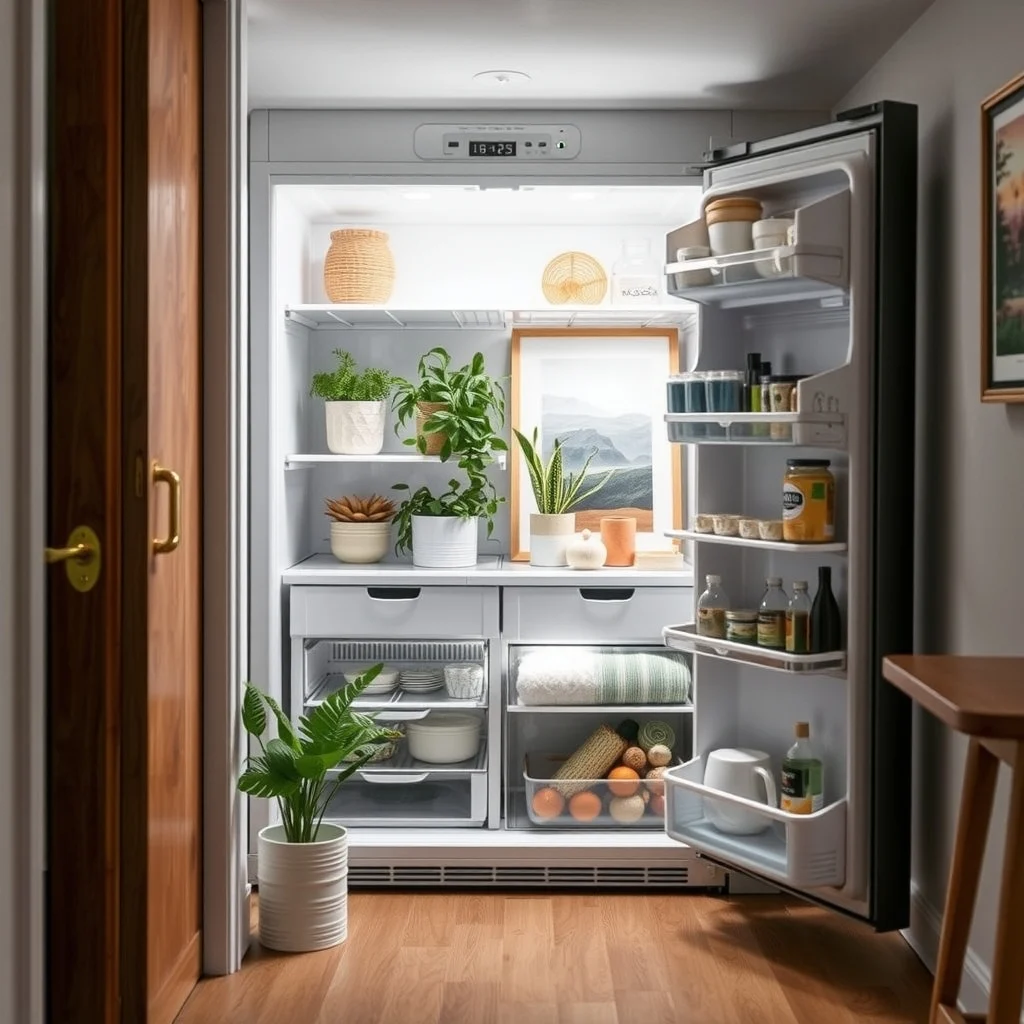
A tidy exterior contributes to the perception of interior order. Wipe the door’s surface regularly with a soft cloth and a gentle cleaner to prevent fingerprints from obscuring the view of your organized interior. If the fridge lacks interior lighting, installing a thin LED strip along the top edge can dramatically improve visibility, especially in low‑light kitchens. The LEDs draw minimal power and often come with a magnetic backing for easy placement. Better illumination helps you locate items quickly, reducing the temptation to shuffle everything around in search of a specific product. The only downside is the initial cost and the need to ensure the strip is rated for refrigerator temperatures.
FAQ
This image is by AI for inspiration only.
How often should I reorganize my tiny fridge?
Revisiting the layout once a month keeps the system from slipping back into chaos. A quick sweep to discard expired items and a brief check of shelf organization are enough to maintain efficiency.
Can I use glass containers in a small fridge?
Glass containers are fine as long as they fit the shelf dimensions and are not too heavy for the door shelves. Choose tempered glass with a slim profile to maximize space while providing a clear view of the contents.
What’s the best way to store fresh herbs?
Place herbs in a small, breathable container with a damp paper towel at the bottom, then set the container on the middle shelf where the temperature is steady. This method extends freshness without taking up excessive space.
Is it safe to add a drawer to any fridge model?
Most compact refrigerators can accommodate a shallow, custom‑cut drawer as long as the interior dimensions allow for it. Always verify that the drawer does not interfere with the door’s seal, and use non‑abrasive materials to avoid damaging the interior coating.
Do LED lights affect the fridge’s energy use?
LED strips consume very little electricity—typically a fraction of a watt—so the impact on your utility bill is negligible. Choose a strip designed for low temperatures to ensure reliable performance.
Final Thoughts
This image is by AI for inspiration only.
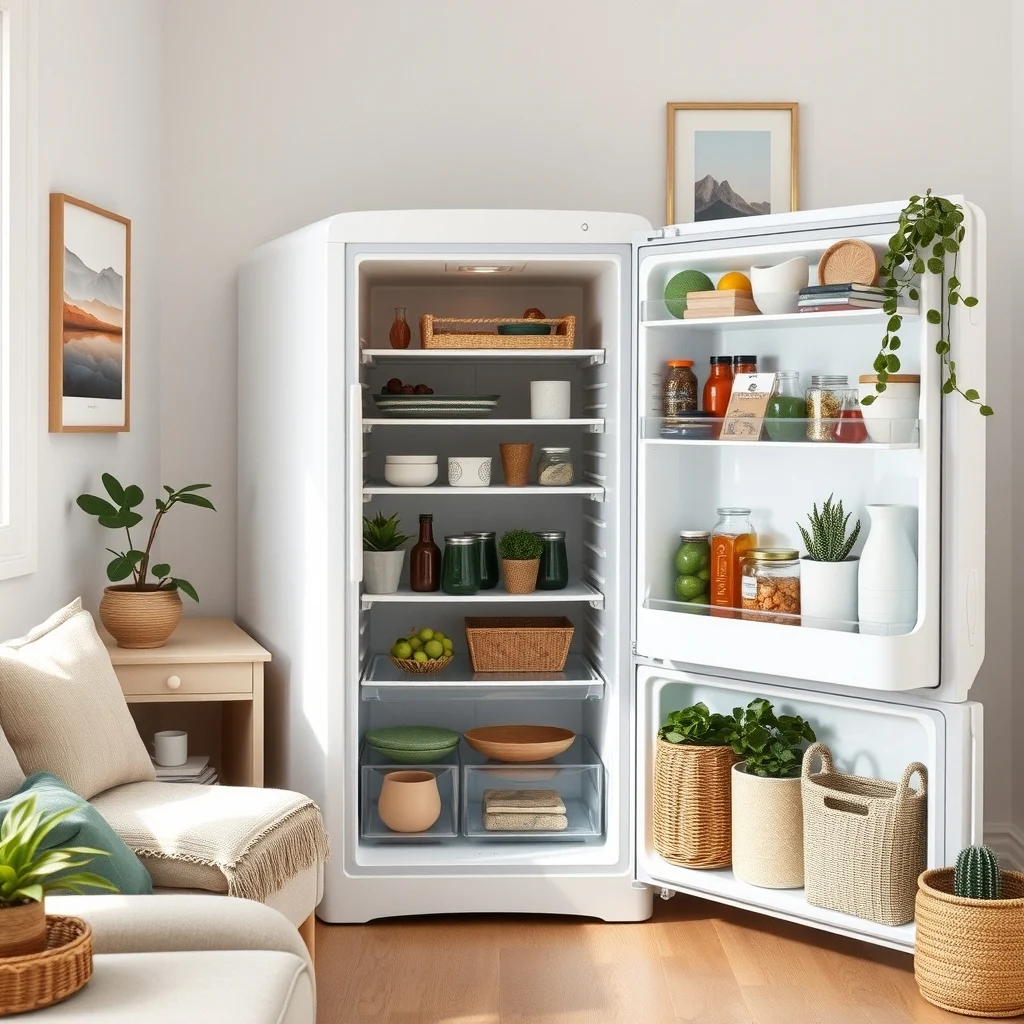
Organizing a tiny fridge is less about squeezing every last inch and more about creating a logical flow that respects temperature zones, accessibility, and the visual rhythm of the interior. By clearing out the unnecessary, grouping items thoughtfully, choosing the right containers, and adding subtle upgrades like a pull‑out drawer or interior lighting, you can reclaim usable space without sacrificing style. The effort you put into these adjustments pays off in quicker meal preparation, less food waste, and a kitchen that feels more spacious than its dimensions suggest. With a little planning and the right accessories, even the most modest refrigerator can become a well‑ordered, pleasant part of your daily routine.