
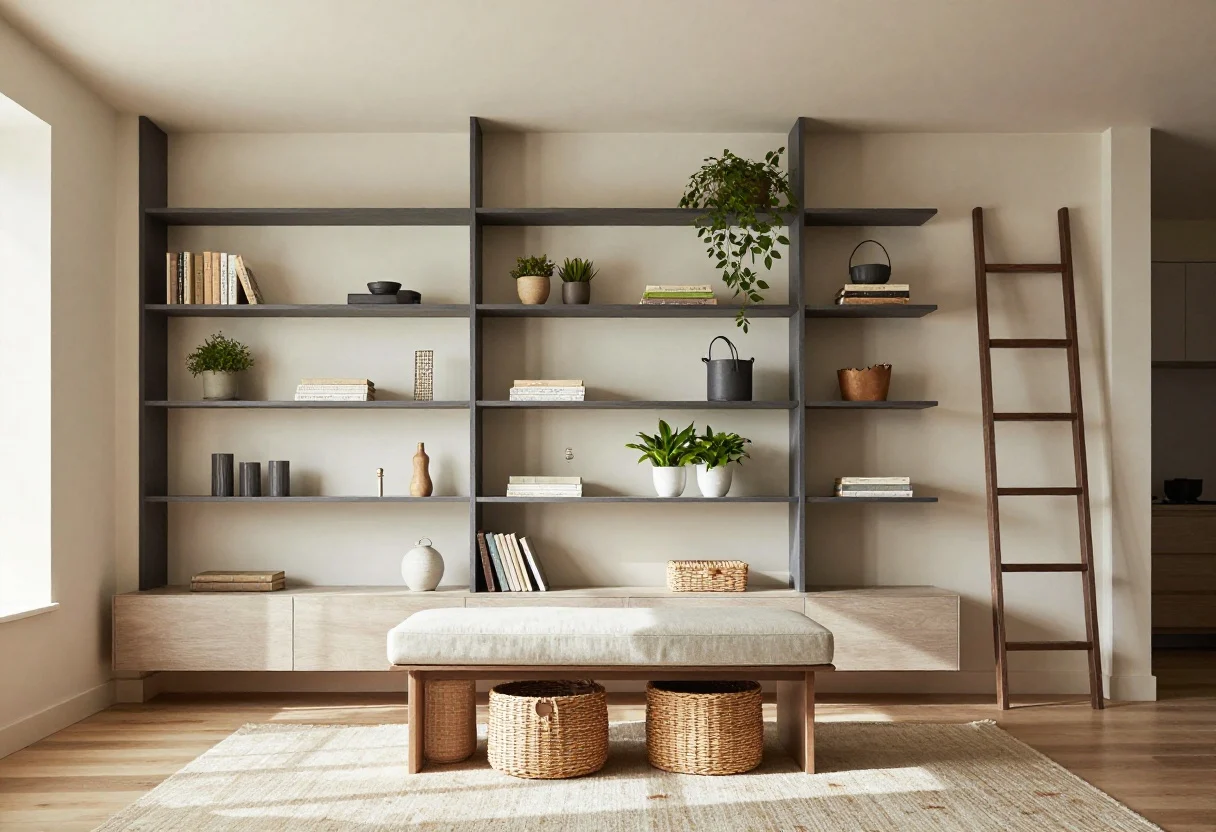
How I Added Storage to My Living Room Without Cabinets (and Kept It Chic)

I had a living room that looked like a Pinterest board collided with a toy store. Cute? Sure. Functional? Not even a little. I wanted storage without slapping a wall of cabinets in my space—because nothing kills vibe faster than a bland boxy unit. So I got sneaky. Here’s exactly how I pulled off serious storage, zero cabinets required.
1. Double-Duty Seating: Benches, Ottomans, And Sofas That Hide Stuff
This image is by AI for inspiration only.
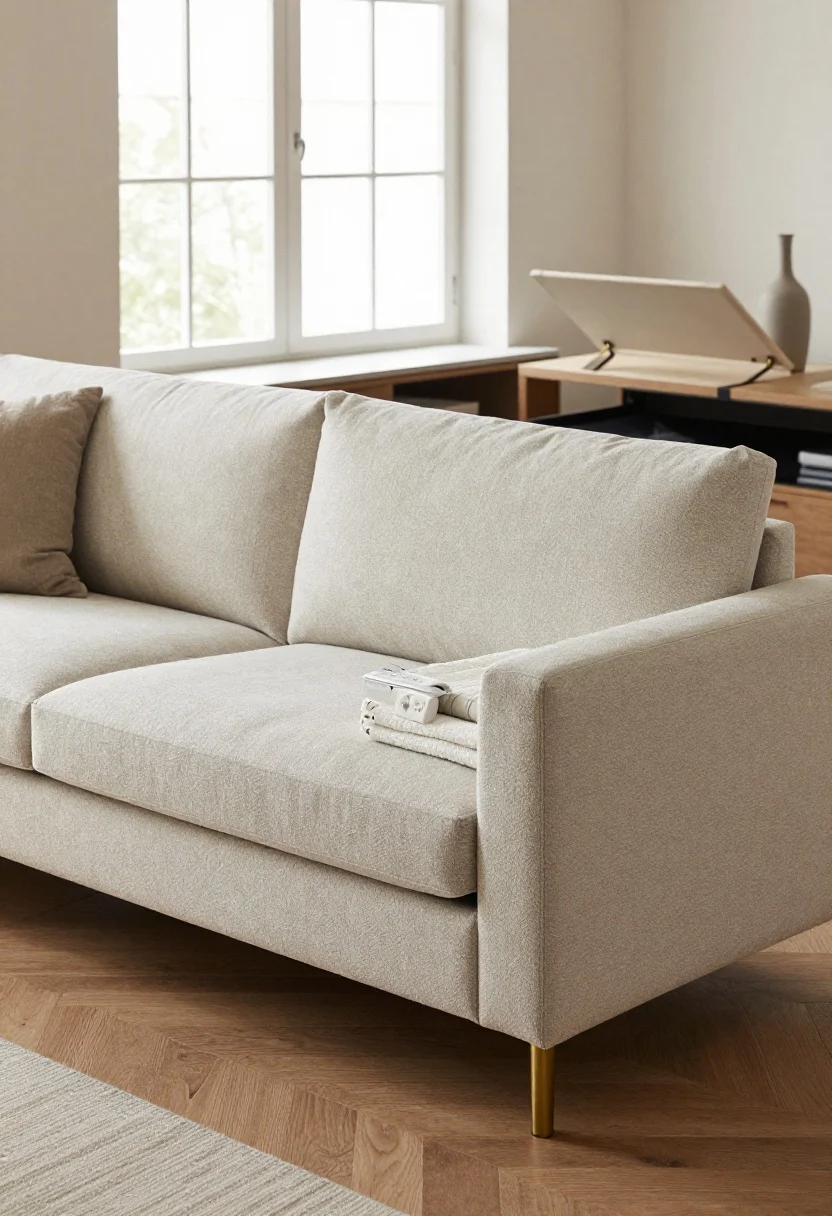
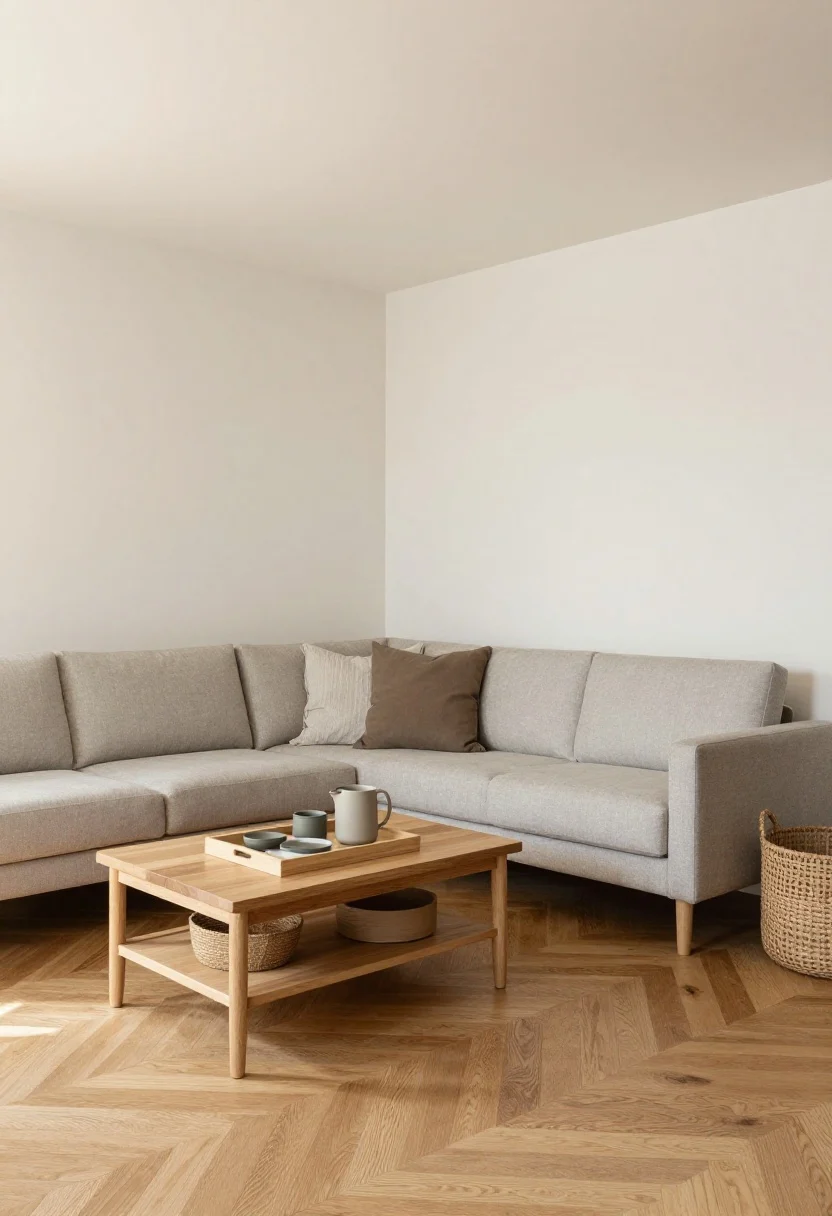
Let’s start with the MVP: storage seating. My sofa sits on discreet legs, but the magic is in the lift-top ottoman and a slim storage bench under the window. Blankets, remotes, stray chargers—gone in 10 seconds.
Pro tip: Go for ottomans with hinged tops (so you’re not juggling a lid) and benches with soft-close mechanisms. Bonus if your sofa has under-seat drawers or a chaise that lifts. It’s basically a secret closet you can sit on.
What to shop for
- Storage ottomans
- Window benches with lift-top
- Sofas with built-in drawers or chaises with compartments
- Choose performance fabric so your “storage throne” survives snacks and pets.
- Match legs or hardware to your room’s finishes for a custom look.
2. Ladder Shelves And Leaning Racks: Vertical, Airy, And Zero Drill Drama
This image is by AI for inspiration only.
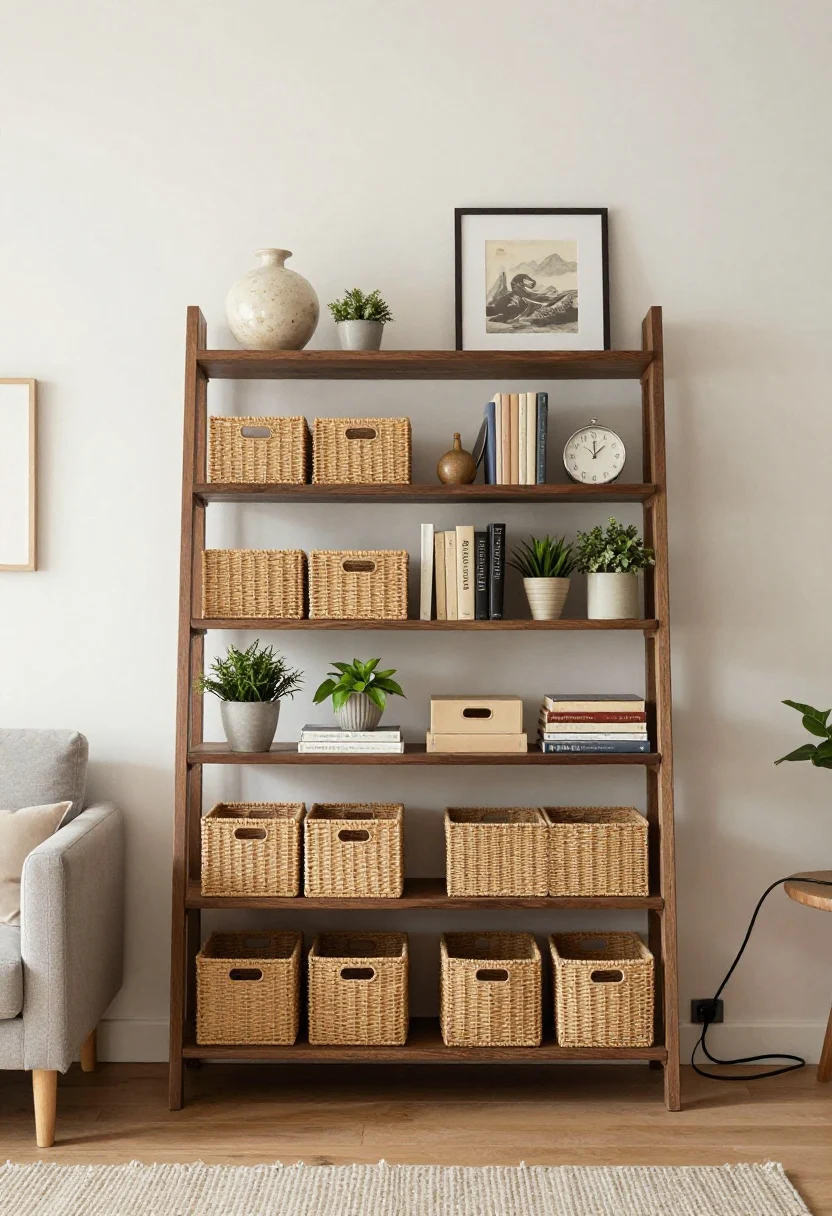
If you’re allergic to heavy cabinetry, ladder shelves are your friend. They lean, look sculptural, and store books, baskets, and plants without swallowing the room. Mine sits behind the sofa so the wall still feels open.
Leaning media racks also tame wires and game controllers. Add lidded baskets on lower rungs for the “no one needs to see this” category. The top rungs get styled with vases and art so it still reads curated, not cluttered.
What to shop for
- Ladder bookshelves
- Leaning media organizers
- Woven or felt storage baskets
- Keep heavy items low for stability.
- Stick to two or three basket finishes for cohesion, not chaos.
3. Coffee Tables With Hidden Depths: Drawers, Nests, And Slides
This image is by AI for inspiration only.
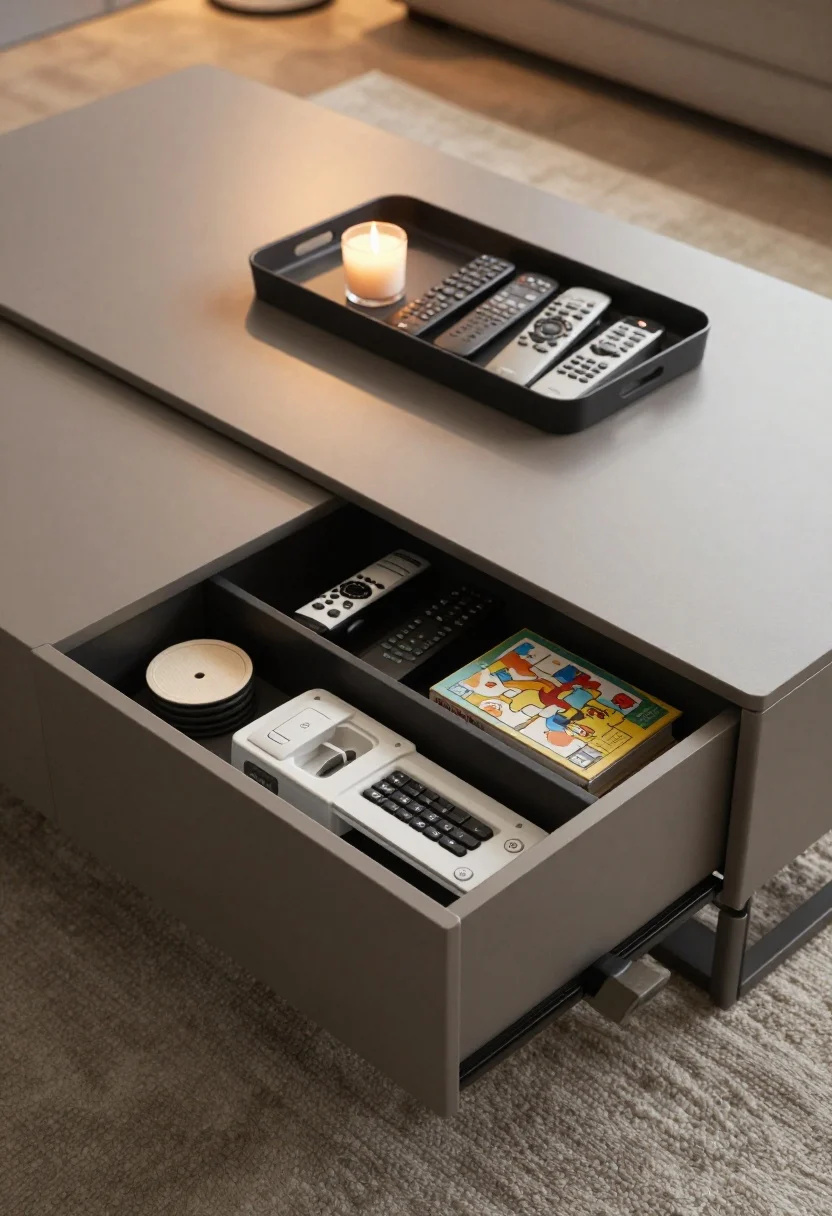
My previous coffee table had one personality: flat. Now I’ve got a drawer-front coffee table that hides coasters, candles, and all 47 remotes (why are there always 47?). For small spaces, consider a nesting coffee table: the smaller one tucks in with board games or throws beneath.
Sliding-top designs are clutch for tiny rooms. A top that glides open gives you a secret bin for puzzles or chargers and doubles as a laptop spot. FYI, matte finishes hide fingerprints better than uber-glossy ones.
What to shop for
- Coffee tables with drawers or sliding tops
- Nesting coffee tables
- Low-profile trays to corral remotes
- Measure sofa seat height; aim for a coffee table within 2 inches of it.
- Choose soft-close runners so late-night snacks don’t become jump scares.
4. Under-The-Sofa And Under-The-Rug: The Secret Real Estate
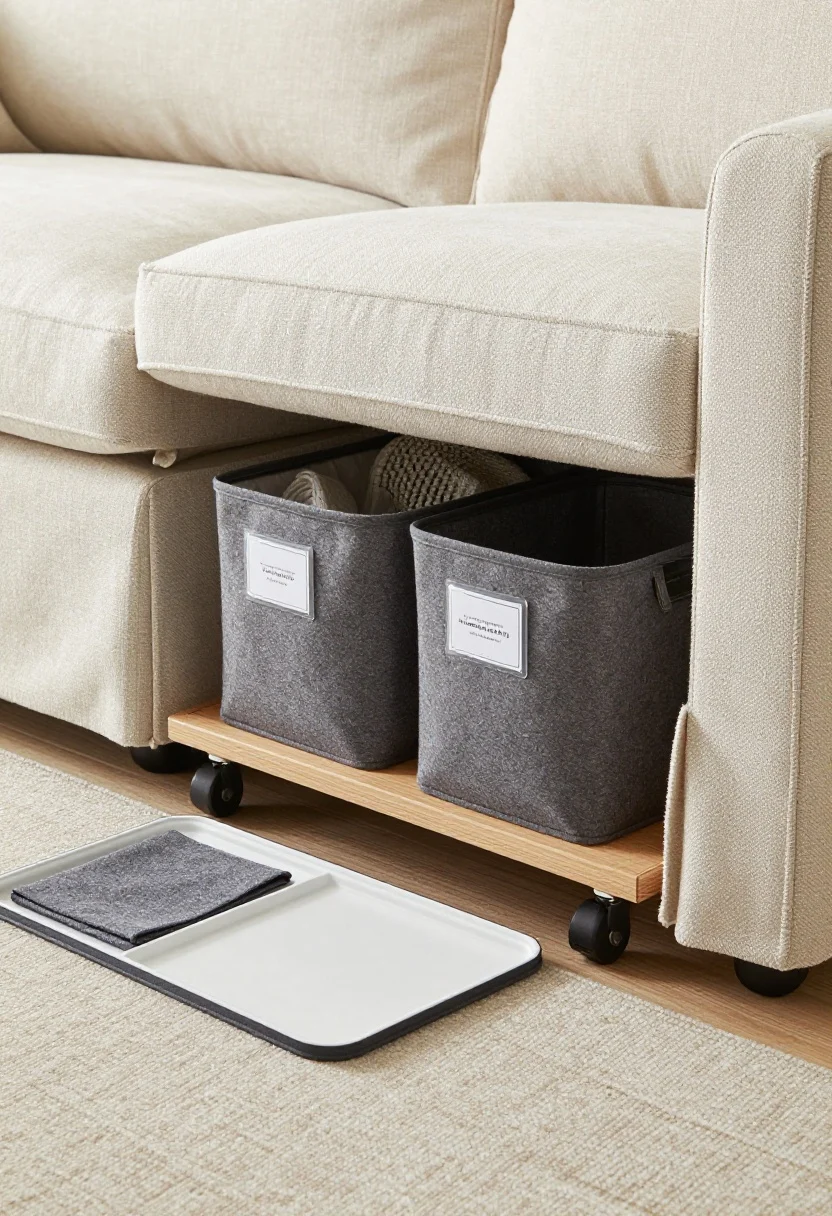
This image is by AI for inspiration only.
Yes, there’s gold under there—aka slim rolling bins. I use low-profile trays on casters under my sofa for off-season decor and spare throws. If your sofa is skirted or has a generous lift, you just unlocked a sneaky storage wing.
And under the rug? Layer a rug pad with pockets or stash flat items (think spare floor cushions or folded play mats). No, don’t put anything precious under heavy traffic, but honestly, for occasional-use items, it’s prime space.
- Label the underside of bins so you don’t forget what’s where.
- Stick felt pads on casters to protect floors and minimize noise.
5. Built-In Vibes Without Built-Ins: Picture Ledges, Peg Rails, And Slim Consoles
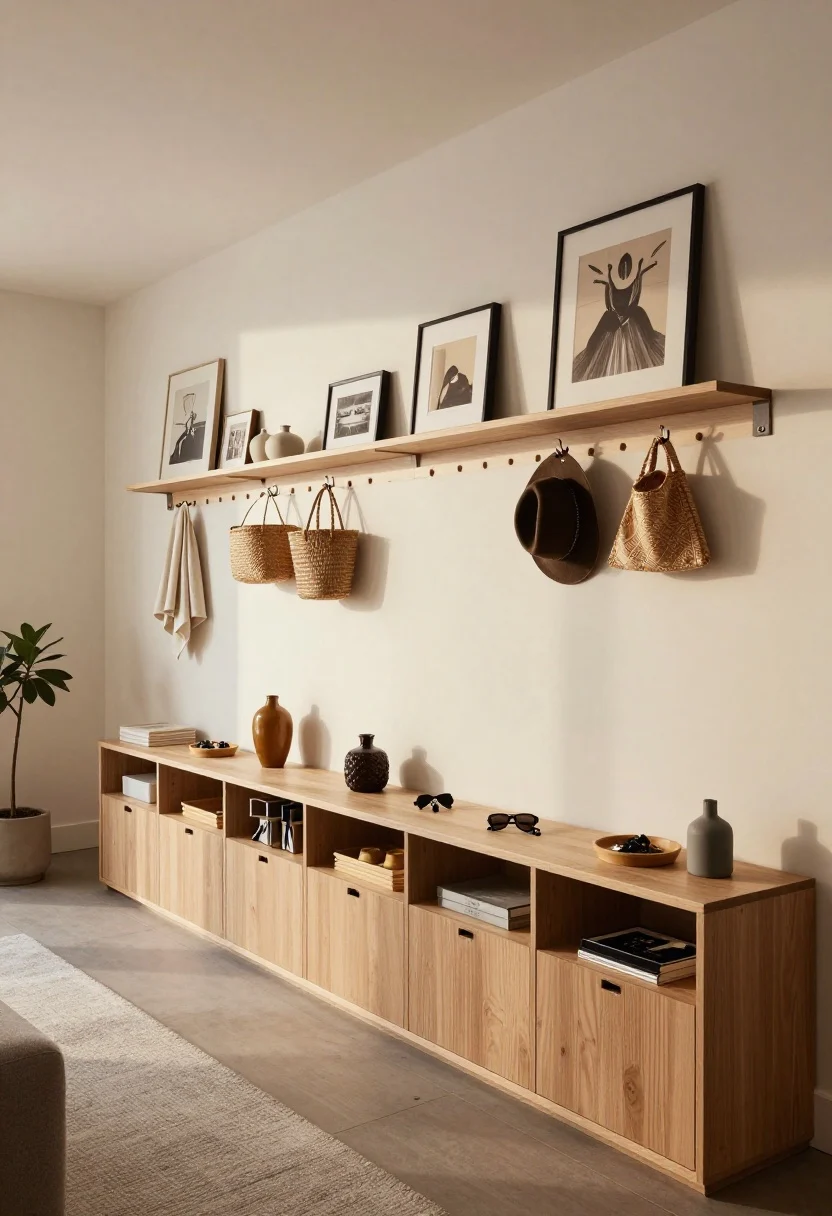
This image is by AI for inspiration only.
Here’s where we fake a custom look. A long picture ledge behind my sofa layers art and tiny trays for keys and sunglasses. It feels like gallery wall meets catchall—without a clunky cabinet.
Across the room, a Shaker-style peg rail runs the length of the wall. I hang baskets, hats, and even a folded throw on S-hooks. Below that, a slim console table (12 inches deep) holds bins for mail, dog leashes, and chargers, but doesn’t hog floor space.
What to shop for
- Picture ledges
- Peg rails and S-hooks
- Extra-slim console tables
- Match peg rail height to door hardware lines for a cohesive sightline.
- Mix closed storage (bins) with display (art/books) to avoid a utility-room vibe.
6. Art That Works Overtime: Hidden Storage Mirrors And Wall-Mounted Boxes
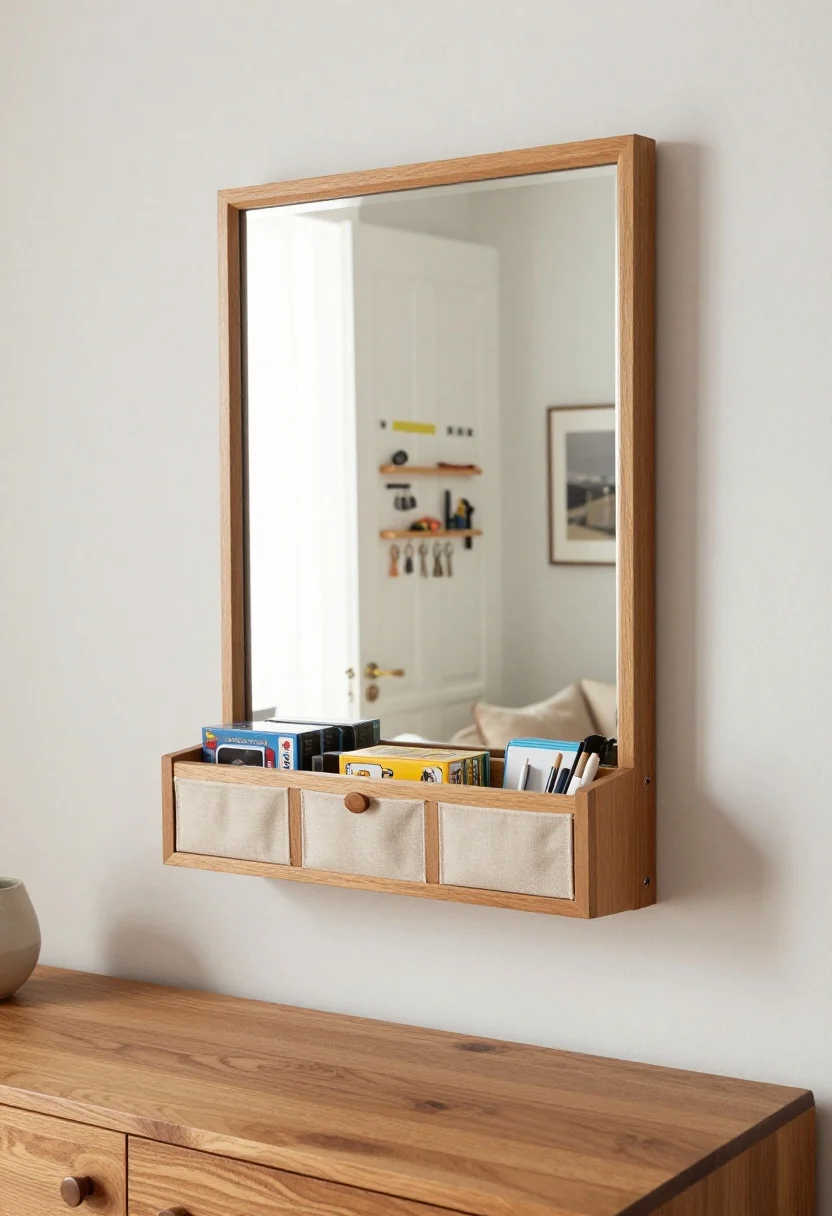
This image is by AI for inspiration only.
Walls can hold more than vibes. I swapped a standard mirror for a medicine-cabinet-style mirror (yes, in the living room) and filled it with tiny things that love to vanish: spare keys, tiny tools, command strips. It looks like decor, functions like a mini utility closet.
Then I added two shallow wall-mounted boxes with doors that double as framed panels. Inside: board games and stationery. Outside: simple wood fronts that read as art. If that’s too extra, try fabric wall pockets—a little softer but still super practical.
What to shop for
- Storage mirrors
- Shallow wall cabinets/boxes
- Fabric wall pockets
- Install at eye level so you actually use them.
- Choose finishes that echo your coffee table or frames for a built-in feel.
7. Style The Clutter: Trays, Baskets, And Color Coding That Looks Intentional
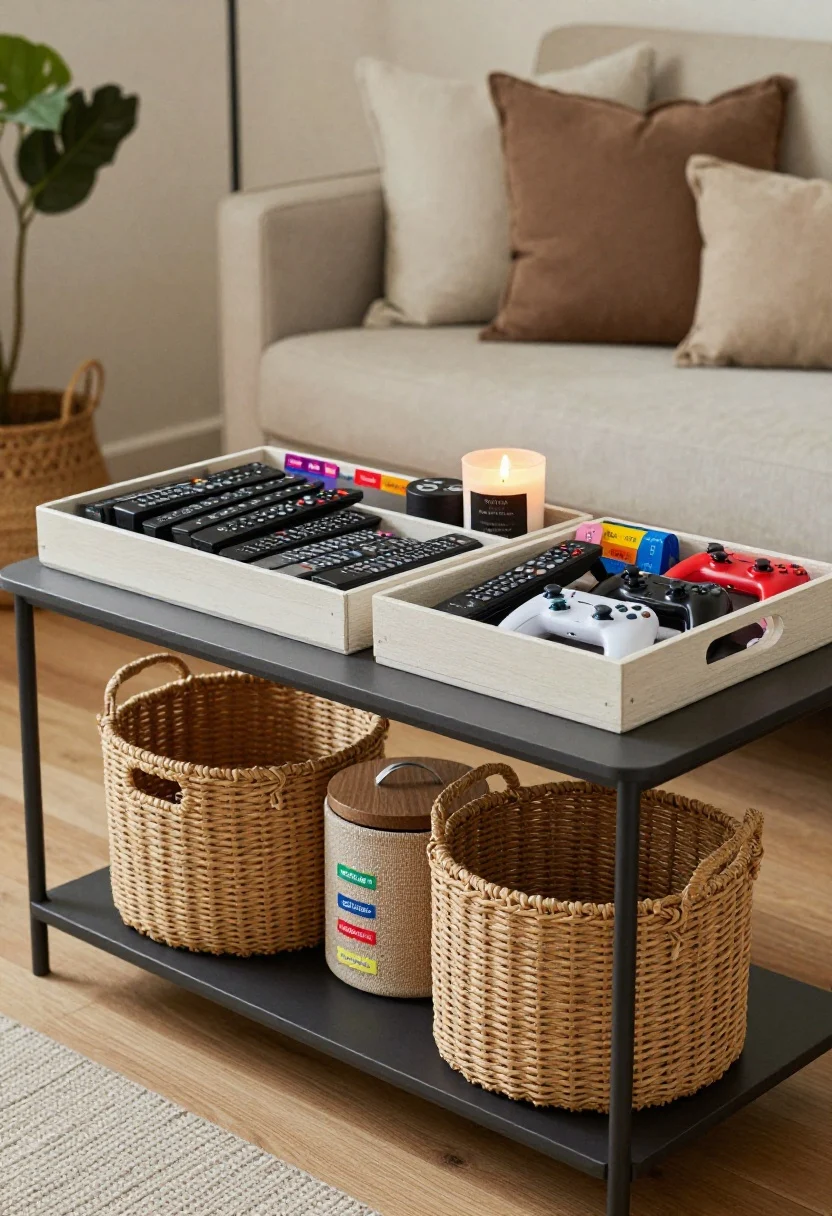
This image is by AI for inspiration only.
Once the big pieces are placed, styling is your secret weapon. Corral everything on trays—one for remotes, one for candles, one for gaming bits. Trays make messes look curated, and cleaning becomes “lift and dust.” Delightful.
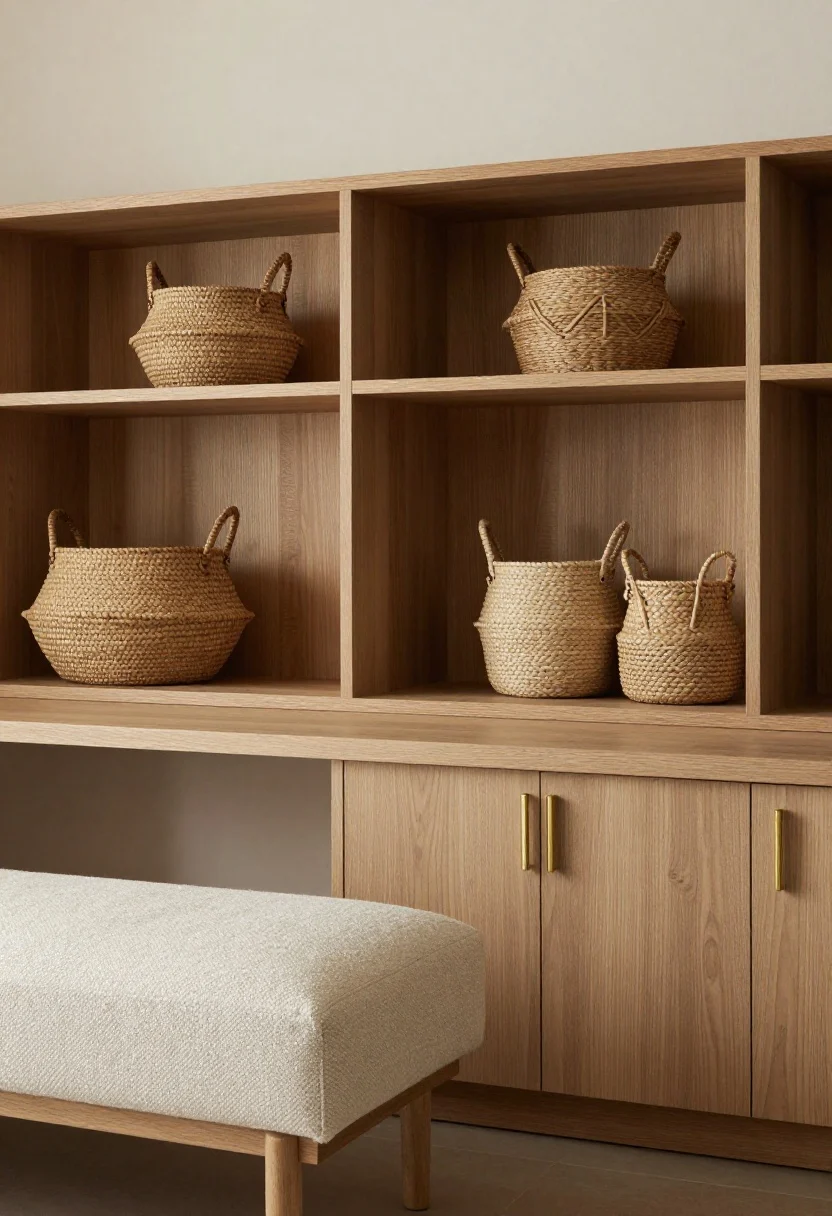
Go hard on baskets, but choose a consistent palette so the room looks designed, not dorm-y. I group items by activity—movie night, work-from-sofa, pet supplies—and color-code labels so I can find things fast. Because the only thing worse than clutter is organized clutter you can’t decode.
- Use lidded baskets for visual calm; open bins for grab-and-go items.
- Stick to two materials max (e.g., seagrass + canvas) for a unified look.
- Rotate what lives on open shelves seasonally to prevent “stuff creep.”
Room Flow Check: The 3-Point Test
- Can you walk a clean path from door to sofa without side-stepping baskets?
- Can you reach the most-used items within two steps of where you use them?
- Does at least 30% of your surfaces remain clear? Keep some breathing room.
Design Tweaks That Made A Big Difference
- Scale: I chose lower-profile pieces so the room didn’t feel crowded.
- Repetition: Matching wood tones across ledge, console, and boxes made it feel custom.
- Texture: Woven baskets + boucle bench = cozy without visual noise.
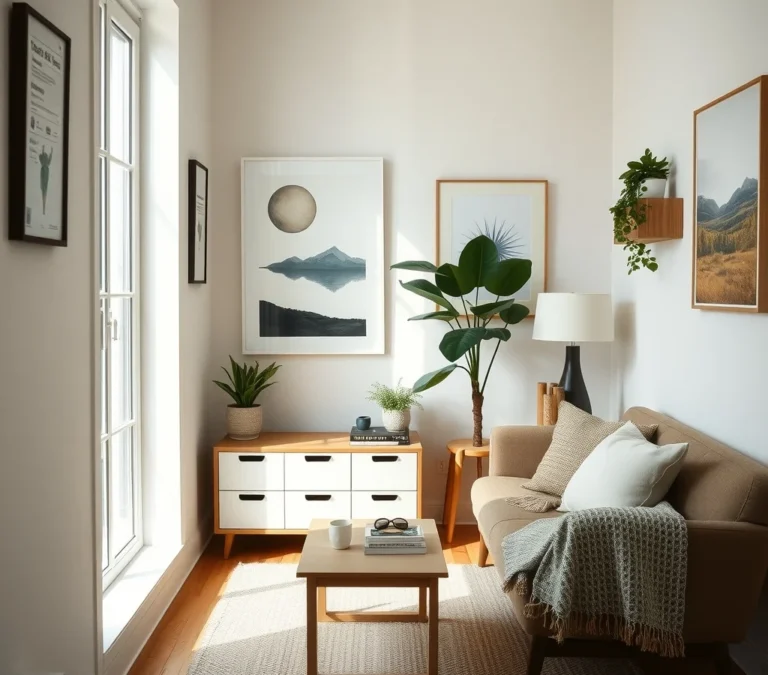
Conclusion
This image is by AI for inspiration only.
I didn’t add a single cabinet, and yet my living room now hides more stuff than a mom bag. The space feels lighter, smarter, and honestly more “me.” Try one idea or stack a few—just keep storage where you actually live, not where you think it should live. Your future self (and your floor) will thank you.
FAQ
This image is by AI for inspiration only.
How do I keep open storage from looking messy?
Use matching baskets and limit visible categories. Style the top shelf with decor, keep the bottom two shelves mostly lidded bins, and repeat colors and textures for cohesion.
What’s the best storage upgrade for a tiny living room?
A lift-top storage ottoman. It doubles as a coffee table, footrest, and hidden bin without adding visual weight. Pair it with a narrow ladder shelf for vertical gains.
Can I mix different wood tones and still look polished?
Yes—stick to one dominant tone and repeat it at least three times. Use the others as accents, and bridge them with a neutral (black, white, or brass) in hardware or frames. IMO, repetition is what makes it feel intentional.
Shop the Look on Amazon
Disclosure: As an Amazon Associate, this site may earn from qualifying purchases.
These product categories fit this article and give readers an easy next step when they are ready to shop.
- Hidden seating — Conceal blankets and remotes while doubling as a table.
- Airy vertical — Leaning design adds storage without heavy cabinetry.
- Center stash — Hide remotes and coasters in a sleek centerpiece.
- Under-sofa — Use low clearance space for seasonal items.
- Wall organizers — Create built-in vibes for keys, art, and baskets.

2 Comments