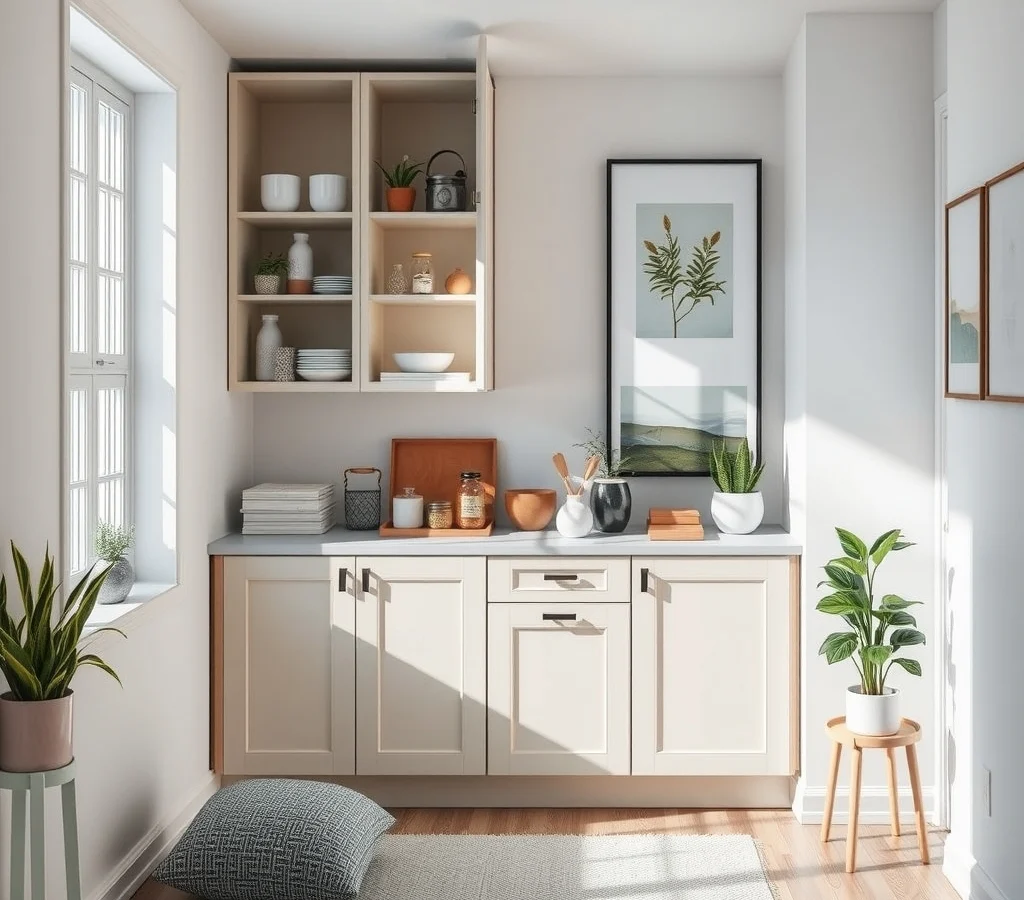
Space‑saving Food Container Storage for Small Cabinets

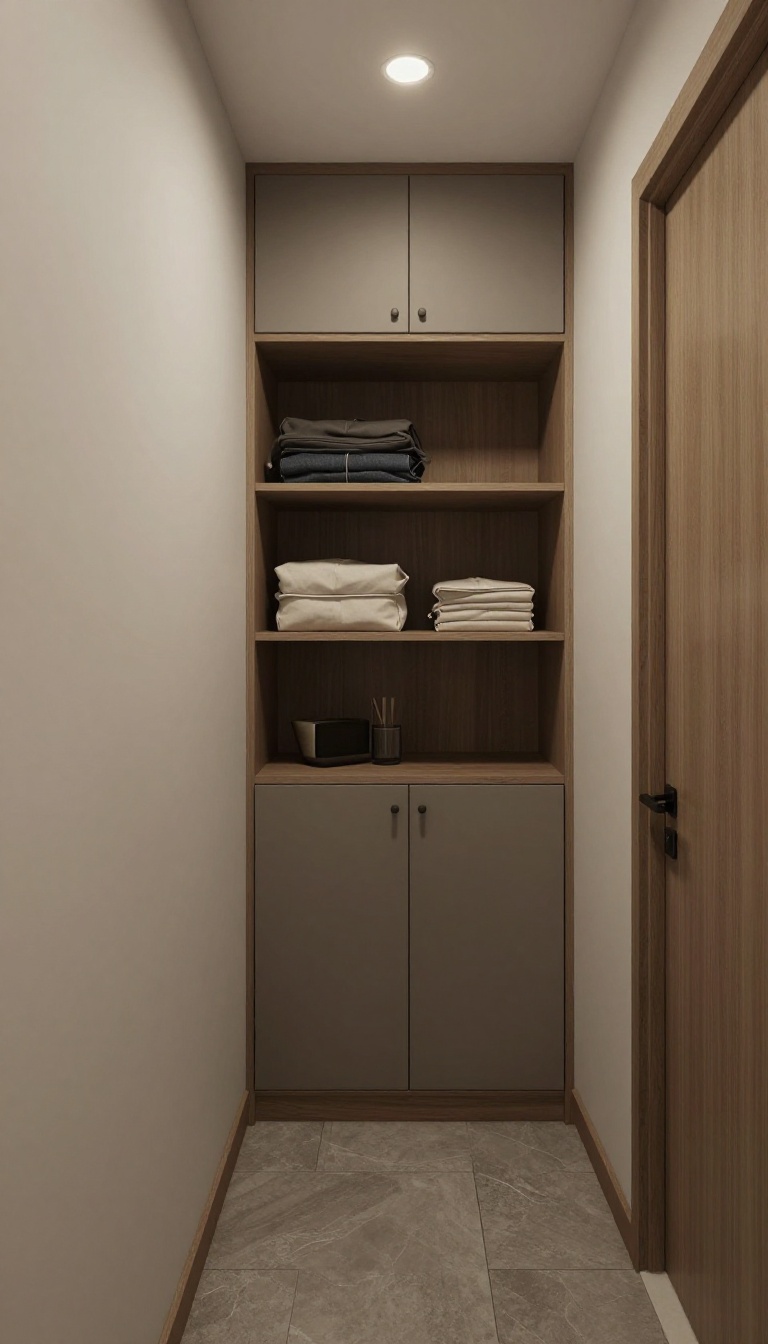
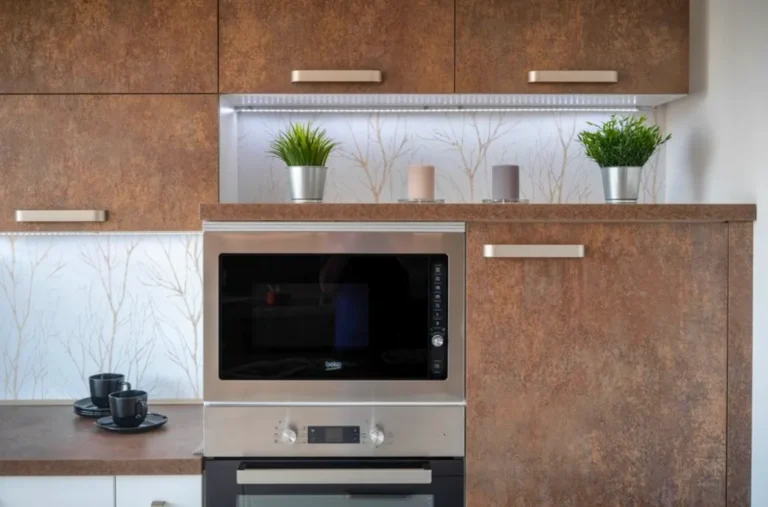
When a kitchen’s pantry is reduced to a few shallow cabinets, the everyday ritual of finding a spot for cereal boxes, pasta jars, or leftovers can feel like a puzzle. The key isn’t to cram more items in, but to let each piece of food storage earn its place through shape, visibility, and easy access. In the sections that follow, you’ll discover practical ways to turn cramped cabinet interiors into orderly, functional displays—whether you’re working with a vintage oak sideboard or a sleek, powder‑coated pantry unit.
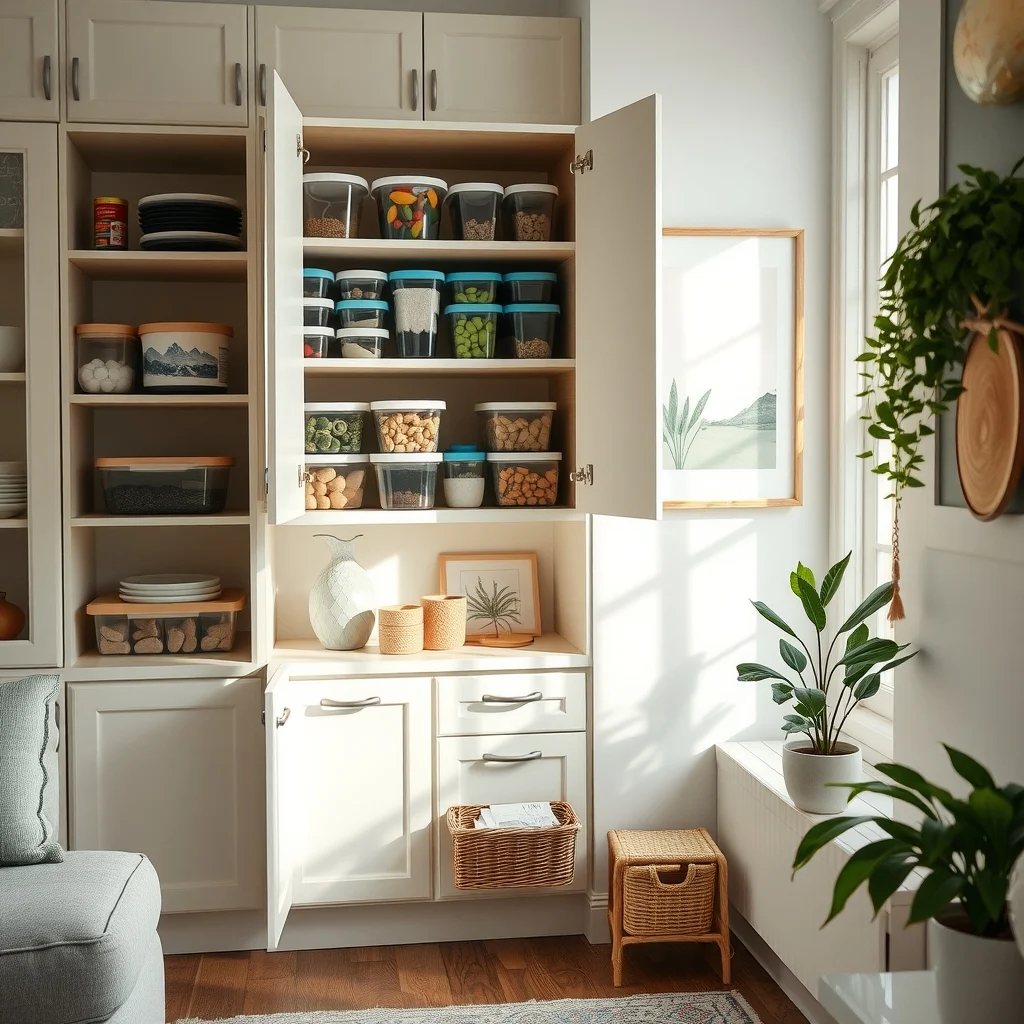
1. Choose Uniform, Stackable Containers that Match the Cabinet Depth
This image is by AI for inspiration only.
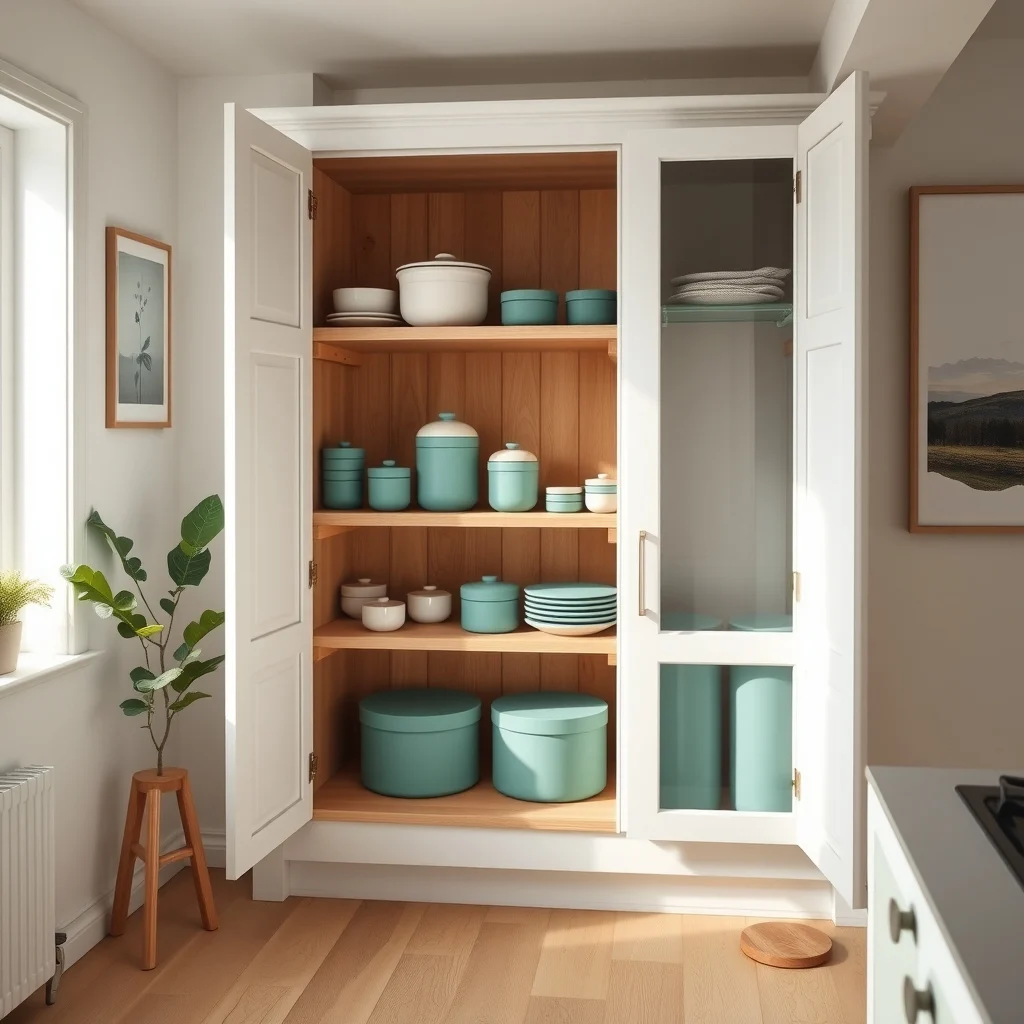
Most small cabinets have a depth of 12 to 14 inches, leaving little room for irregularly shaped jars. Selecting containers that share the same width and height allows you to create tidy columns that sit flush against the back wall, minimizing wasted space. Clear acrylic or tempered glass options let you see contents at a glance, reducing the need to pull everything out for inventory. A slight trade‑off is that glass can be heavier than plastic, so be mindful of the cabinet’s shelf brackets and avoid overloading them. Pairing these containers with a soft‑close hinge on the cabinet door preserves the quiet aesthetic of a modern kitchen while still offering the practicality of a well‑organized pantry.
2. Install a Tiered Pull‑Out Shelf to Add Height Without Adding Bulk
This image is by AI for inspiration only.
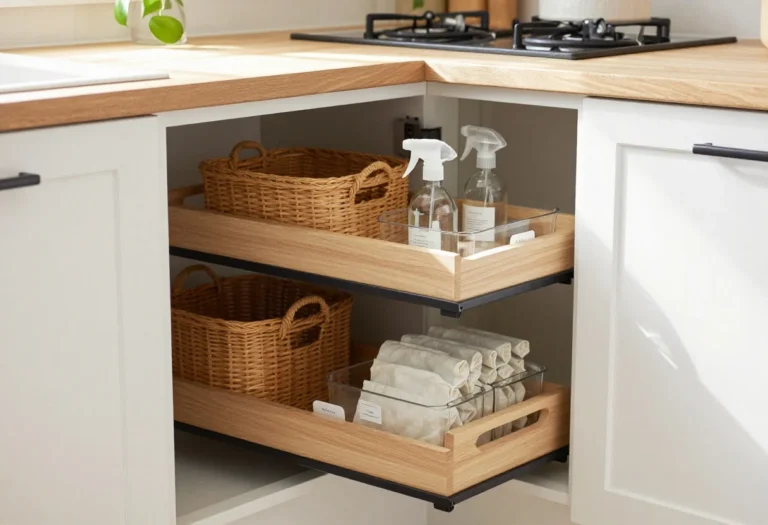
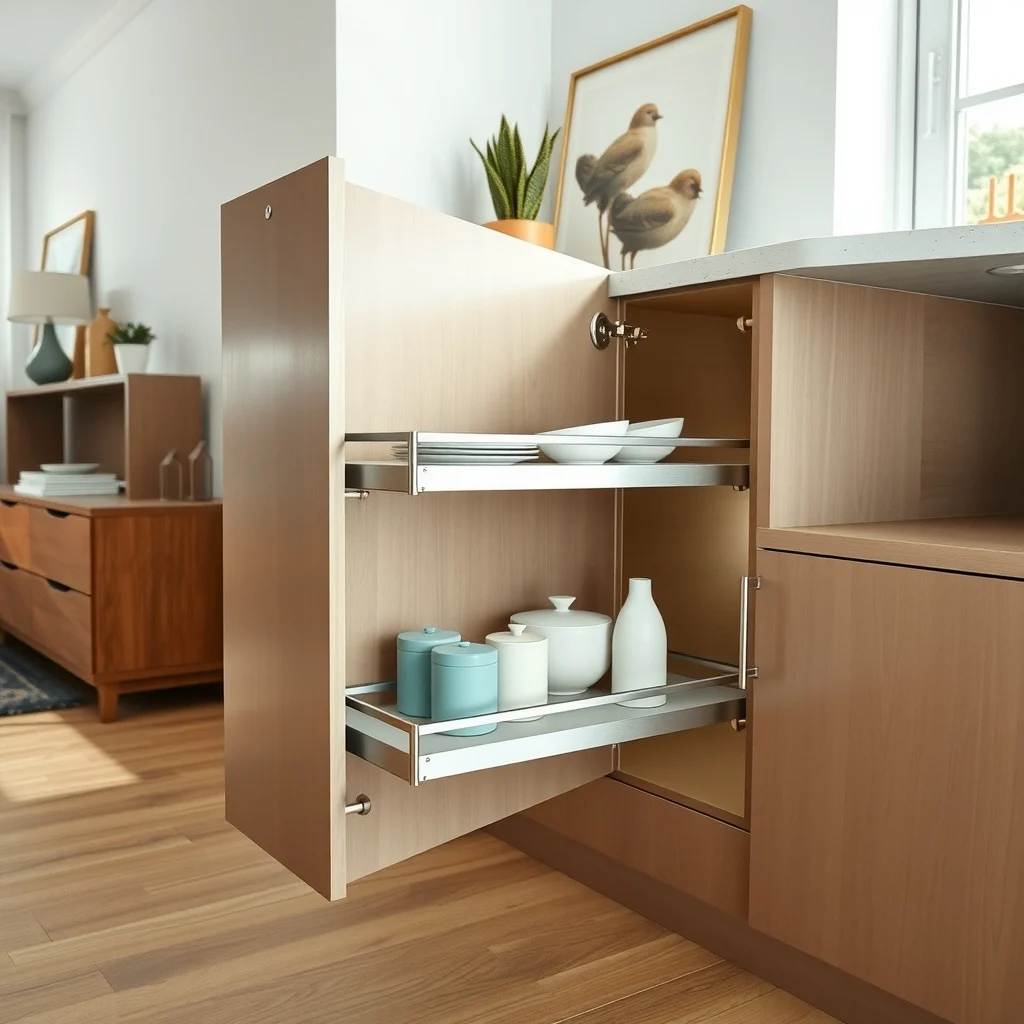
A thin, tiered shelf—often made of brushed stainless steel or powder‑coated aluminum—slides out on rollers, giving you two or three levels of storage in the same vertical footprint. By placing the lower tier just above the cabinet floor, you can store taller items like flour canisters, while the upper tier holds shorter containers such as spice jars. The sliding mechanism keeps the shelf hidden when not in use, preserving the clean lines of the cabinet façade. One limitation to consider is the need for a minimum interior width of about 10 inches; narrower cabinets may require a custom‑cut shelf or an alternative solution.
3. Repurpose Magnetic Spice Jars on the Inside of Cabinet Doors
This image is by AI for inspiration only.
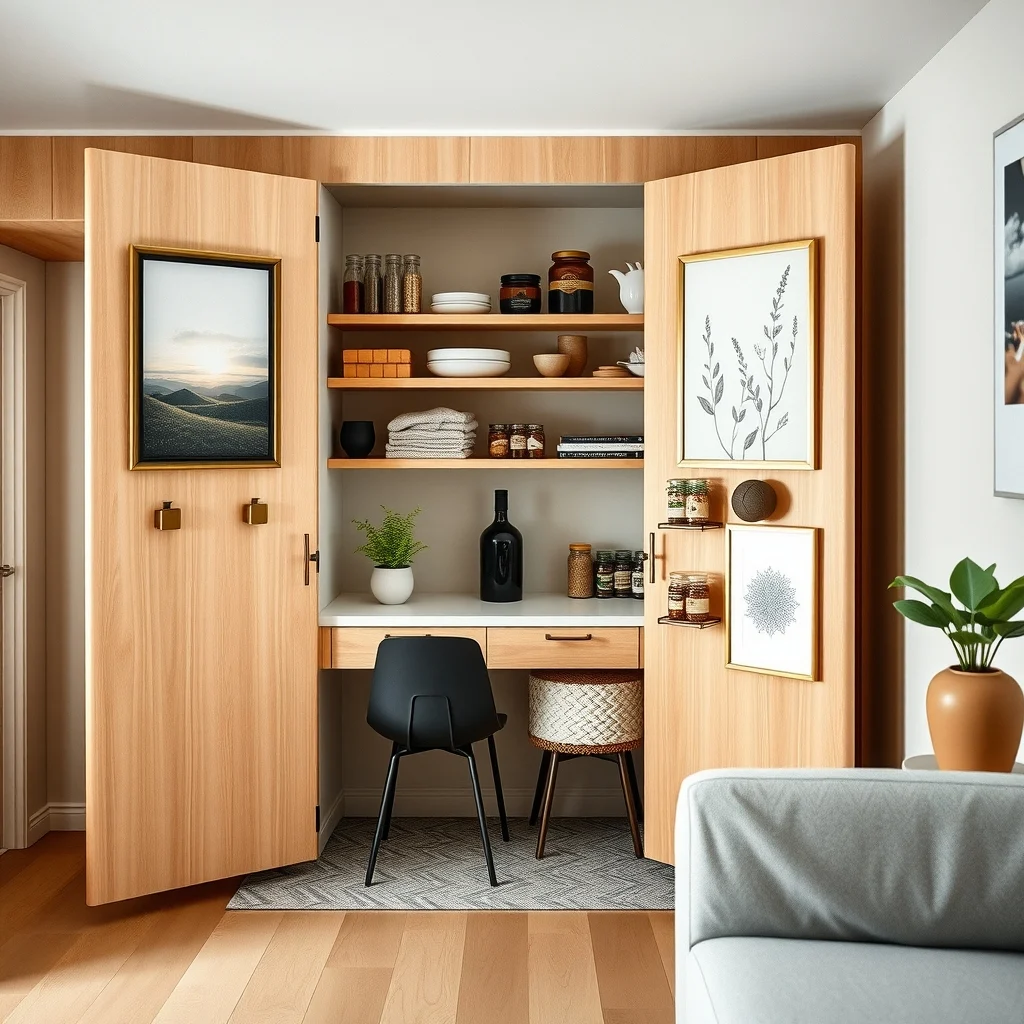
Many cabinet doors feature a metal back panel or can be fitted with a thin magnetic strip. Small, magnetic spice jars—often finished in matte black or brushed brass—adhere directly to this surface, turning the door into a miniature herb garden. This approach frees up interior shelf space for larger containers while keeping the most frequently used seasonings within arm’s reach. The main drawback is that magnetic strips can lose their grip over time, especially in humid kitchens, so checking the attachment periodically prevents accidental drops.
4. Use Modular Drawer Inserts to Create Custom Compartments
This image is by AI for inspiration only.
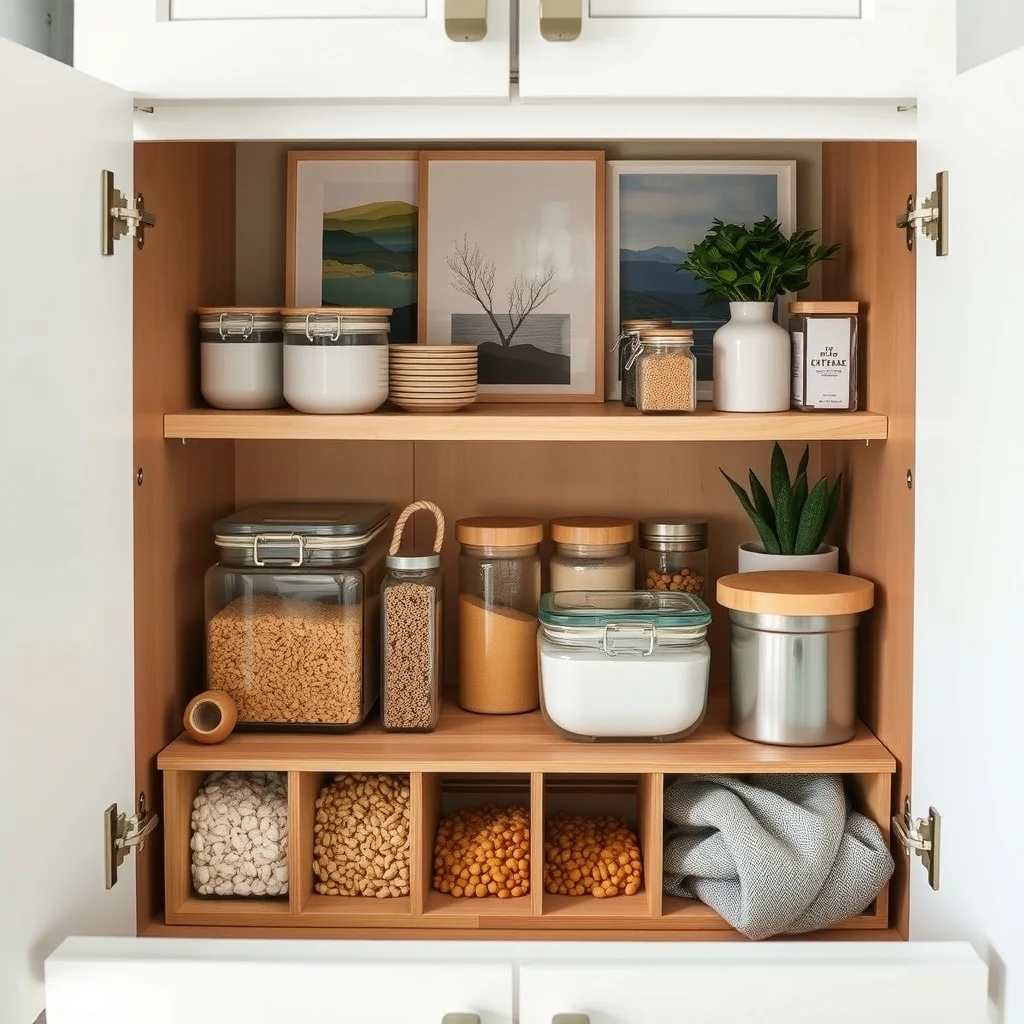
If your small cabinet includes a drawer, a modular insert made from bamboo or high‑density polymer can divide the space into uniform cubes. Each cube can hold a specific type of food—rice, beans, or snacks—while the natural grain of bamboo adds a warm visual contrast against a painted cabinet interior. These inserts are removable, allowing you to reconfigure them for larger items during holidays or when you’re restocking. However, the added wood may expand slightly with moisture, so it’s wise to dry any wet containers before placing them inside.
5. Hang a Door‑Mounted Organizer for Bags and Wraps
This image is by AI for inspiration only.
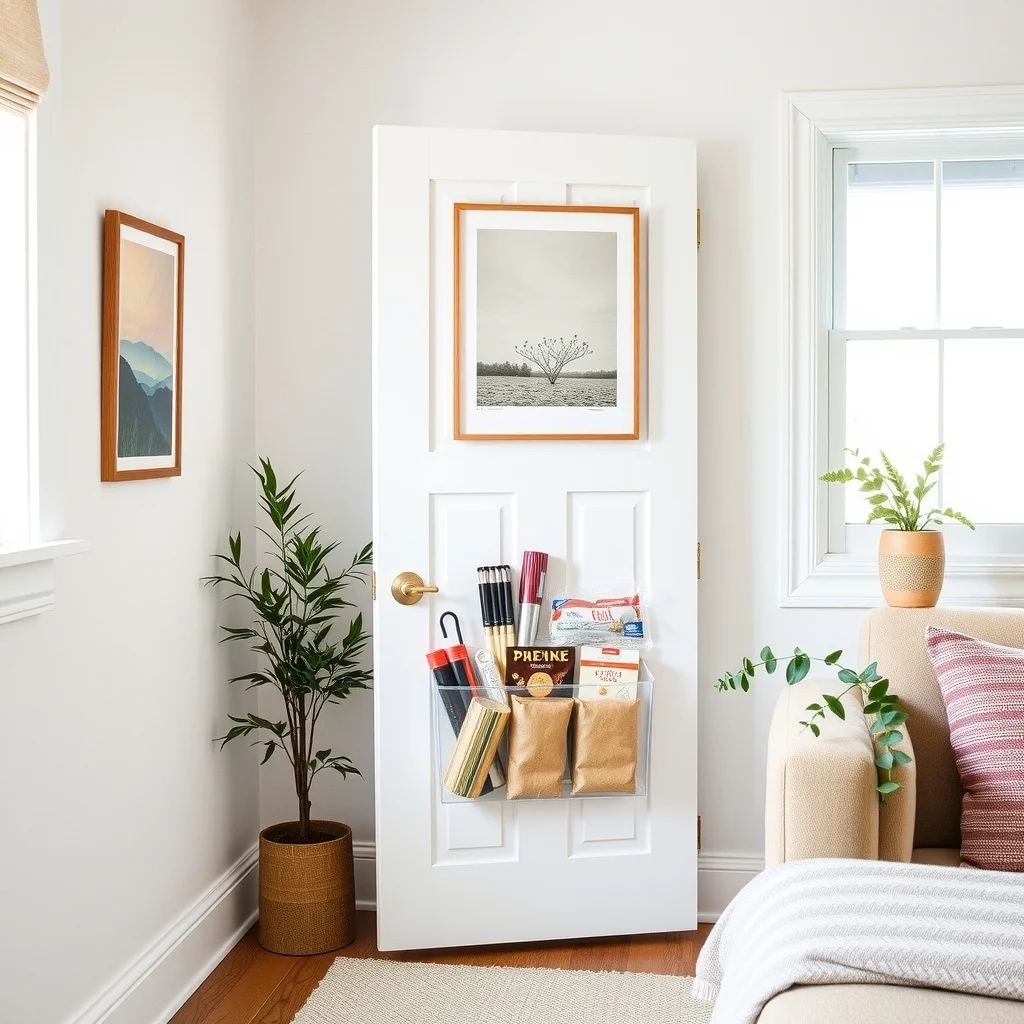
Clear, zip‑top bags, aluminum foil, and cling film often end up tangled on countertops. A slim organizer that clips onto the inside of a cabinet door provides dedicated pockets for each type of wrap, keeping them tidy and visible. The organizer’s acrylic panels reflect kitchen lighting, making the contents easy to locate even in low‑light evenings. The trade‑off is that the door must open fully to access the pockets, which can be inconvenient in cramped walkways; positioning the organizer on a side door rather than a central one can mitigate this issue.
6. Slide a Narrow Rolling Cart Under the Cabinet for Bulk Items
This image is by AI for inspiration only.
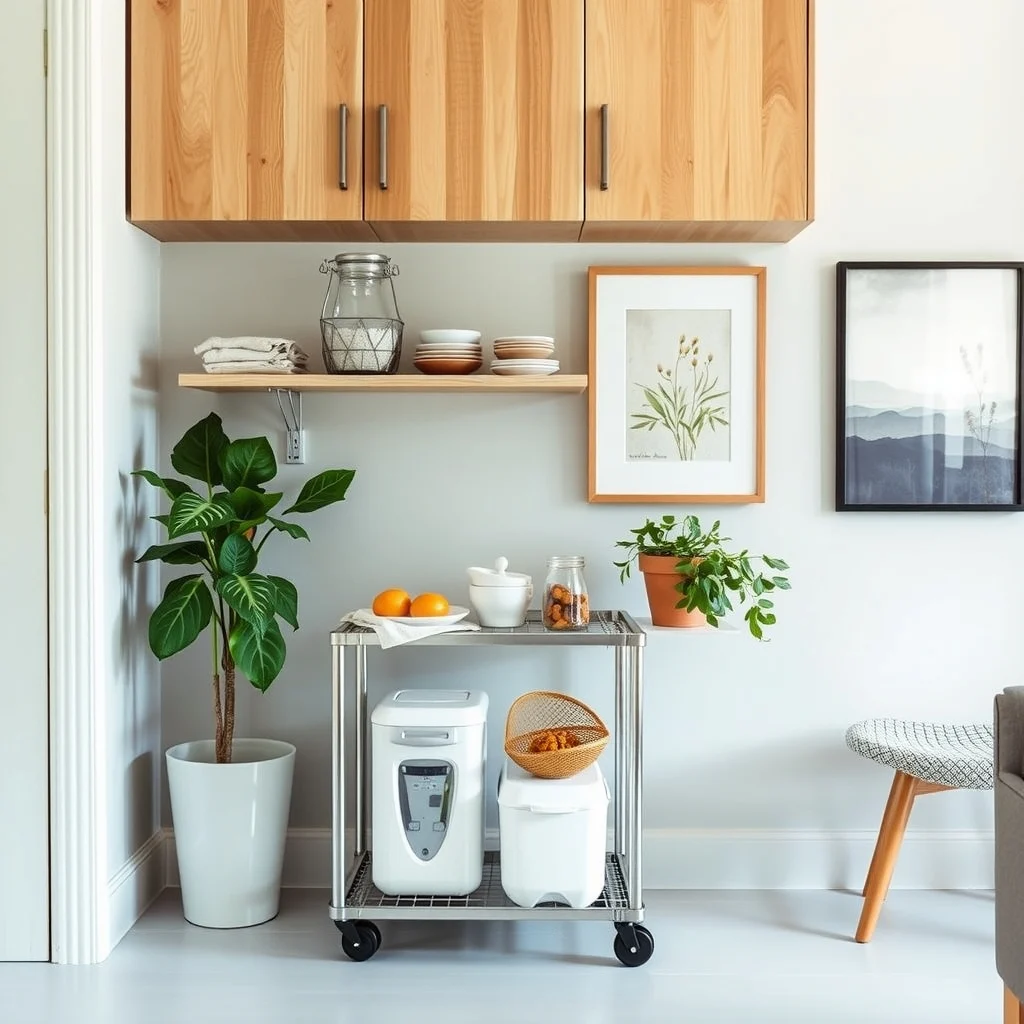
A low‑profile rolling cart, finished in brushed steel or powder‑coated black, can nestle beneath the cabinet when not in use and glide out when you need extra storage for bulk purchases like large bags of rice or cereal boxes. The wheels allow you to pull the cart toward you, reducing the need to lift heavy items up into the cabinet. Because the cart rests on the floor, it does not interfere with the cabinet’s structural integrity. The main consideration is ensuring the floor surface is level; uneven flooring can cause the cart to wobble, making it harder to push smoothly.
7. Adopt a Simple Labeling System with Color‑Coded Lids
This image is by AI for inspiration only.
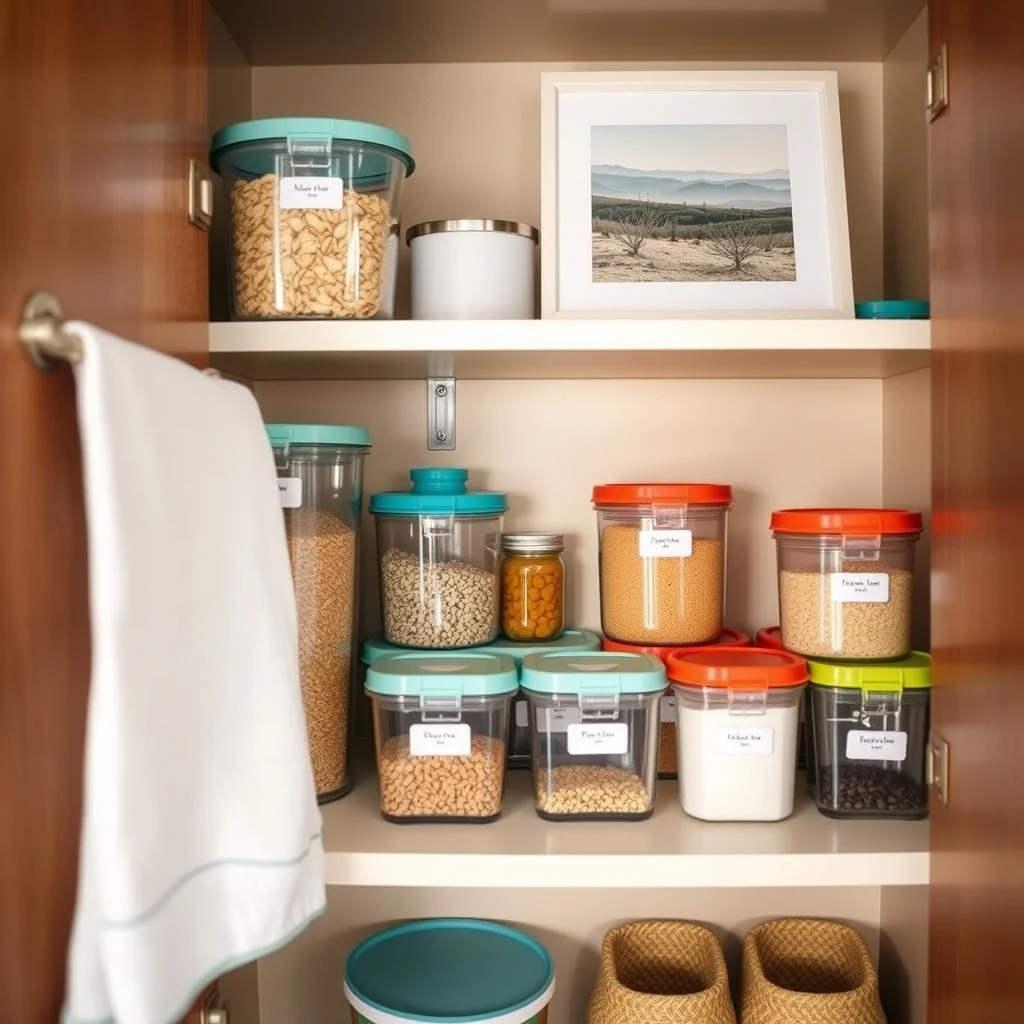
Even the most thoughtfully arranged cabinet can become confusing without clear identification. Using waterproof labels that match the hue of each container’s lid—soft teal for grains, warm amber for canned goods—creates a visual cue that speeds up retrieval. Labels can be applied with a permanent‑marker pen or a small label maker, and the color palette can be coordinated with the kitchen’s overall scheme, such as sage green accents in a farmhouse setting. The downside is the need to replace labels when lids are swapped or containers are retired, so keeping a few extra labels on hand is advisable.
FAQ

This image is by AI for inspiration only.
How do I measure my cabinet to buy the right containers?
Measure the interior width, depth, and height of the cabinet, then subtract about half an inch for clearance. Use these dimensions to select containers that fit snugly without pressing against the doors.
Can I use plastic containers in a cabinet that gets warm?
Yes, but choose BPA‑free, heat‑resistant plastics that can tolerate temperatures up to 120°F. Avoid placing them near the stove or dishwasher where heat spikes are common.
What is the best way to keep glass containers from breaking inside a cabinet?
Place a thin silicone mat on the shelf before arranging the glass containers. The mat cushions the containers and reduces noise when you open the cabinet.
Are magnetic spice jars safe for metal cabinets?
They are safe as long as the magnetic strip is rated for the weight of the jars. Periodically test the pull strength, especially after cleaning the cabinet door.
How often should I reorganize my cabinet storage?
Reorganizing every three to four months helps you stay aware of what you have, prevents expired items from lingering, and lets you adjust the layout for seasonal cooking needs.
Final Thoughts
This image is by AI for inspiration only.
Small cabinets need not be a source of frustration; with a few strategic choices—uniform containers, pull‑out tiers, magnetic doors, modular inserts, door organizers, rolling carts, and thoughtful labeling—you can transform limited space into a well‑ordered pantry that supports daily cooking. By considering the material, size, and visual harmony of each element, you’ll create a storage system that feels both functional and inviting, letting you focus on the joy of preparing meals rather than hunting for ingredients.