Small Kitchen Storage Ideas When You Have No Pantry

Living in a compact apartment or a historic cottage often means the kitchen lacks a dedicated pantry. Without that extra wall of shelves, everyday items—canned goods, dry pasta, spices, and snacks—can quickly turn countertops into a chaotic landscape. The good news is that clever storage doesn’t require a built‑in room; it just needs a little imagination and an eye for the spaces that are already there. In the following sections you’ll discover seven distinct strategies that turn under‑used nooks, walls, and furniture into functional storage zones. Each idea is described with practical steps, material suggestions, and a note on when the solution might fall short, so you can decide which fits your kitchen’s layout, style, and daily rhythm.
1. Install Pull‑Out Tall Cabinets Where a Pantry Would Go
This image is by AI for inspiration only.
Even without a full‑size pantry, a narrow, floor‑to‑ceiling cabinet can provide a surprising amount of hidden space. Choose a cabinet that’s only 12‑14 inches wide and let it stretch from the floor to the ceiling, leaving a small gap at the top for a decorative crown molding. Inside, add pull‑out shelves or sliding baskets that glide on soft‑close runners; this turns a deep cavity into a series of shallow, easily reachable layers. When you open the cabinet, the shelves glide out like a miniature library, revealing canned tomatoes, grain bags, and baking sheets without you having to bend down.
The advantage of a pull‑out system is that it maximizes vertical storage while keeping items visible. Opt for brushed nickel hardware for a subtle modern touch, and consider a light‑colored interior finish—such as a soft white laminate—to reflect light and make the interior feel larger. One limitation is that the cabinet occupies wall space that could otherwise host a window or a piece of art, so it works best on a solid wall that currently holds no windows or major fixtures.
2. Embrace Open Shelving Paired With Coordinated Baskets
This image is by AI for inspiration only.
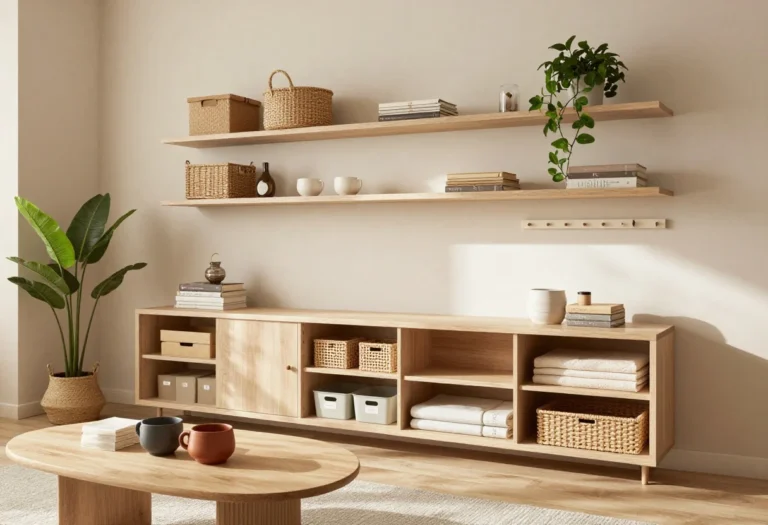
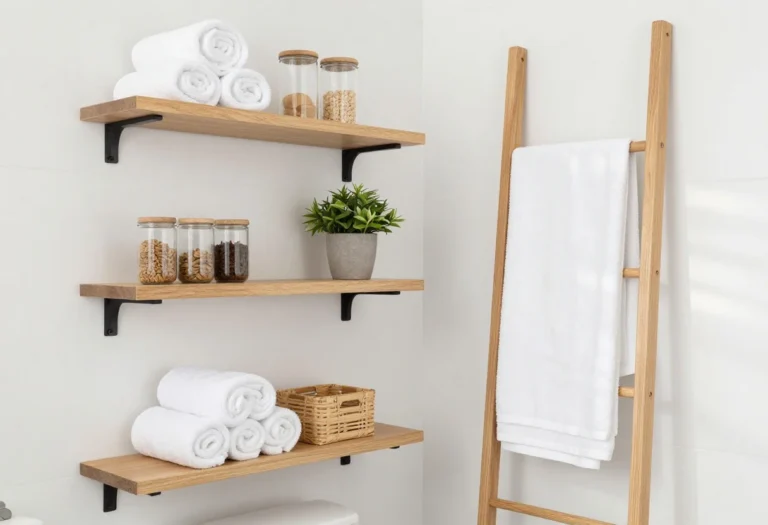
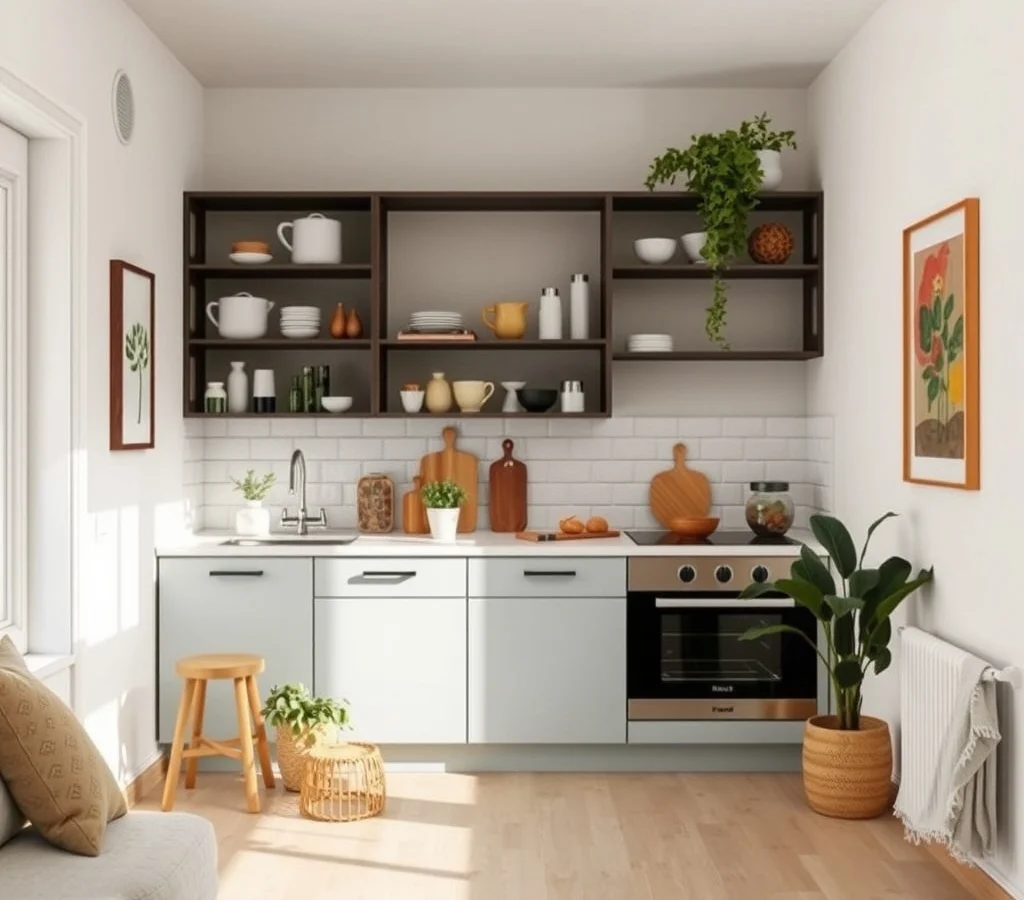
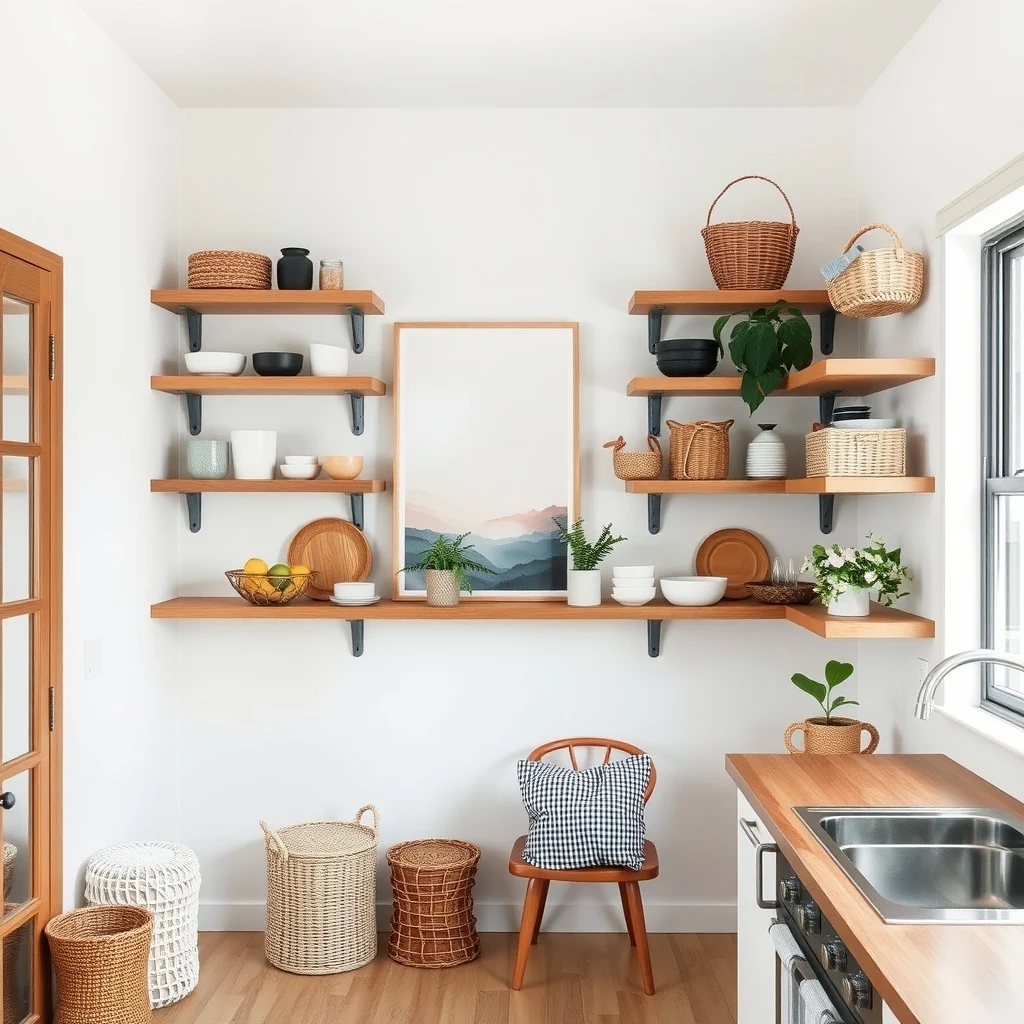
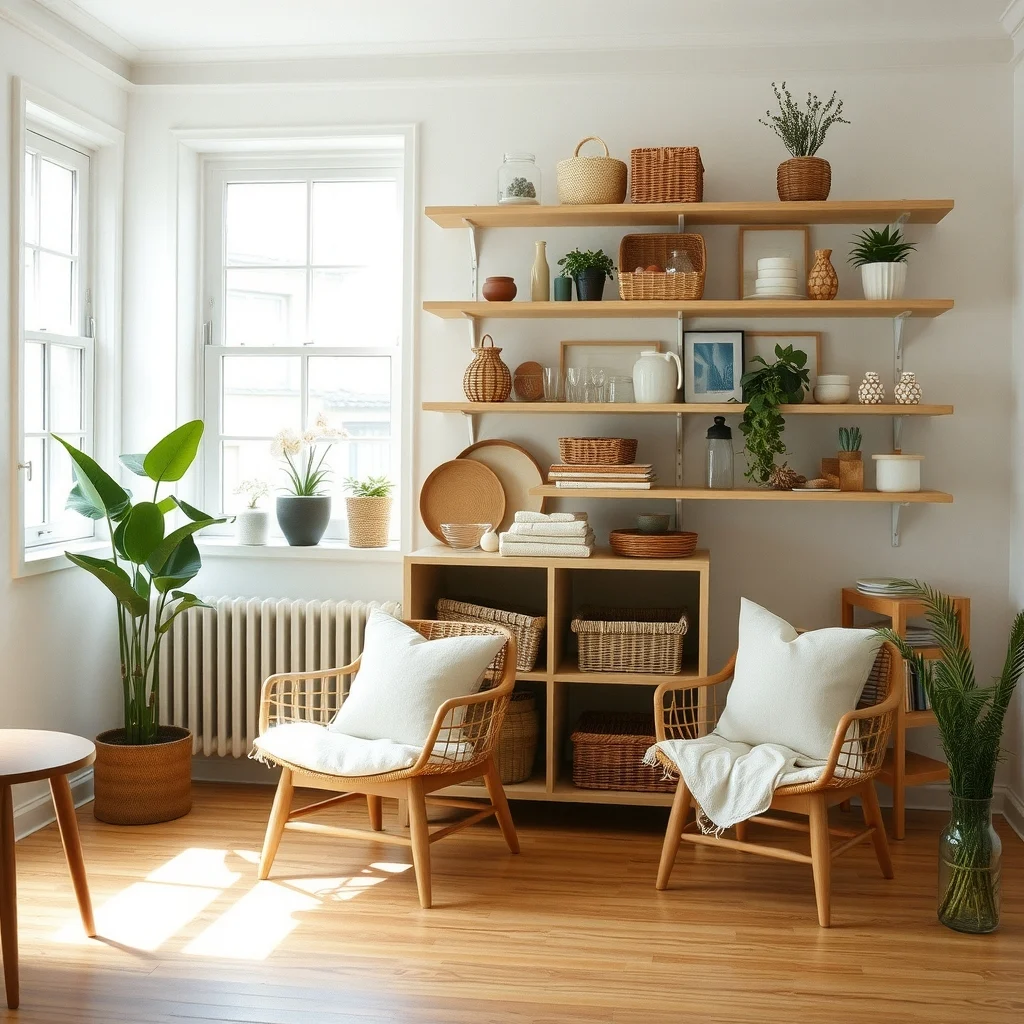
Open shelving has become a staple in contemporary kitchens because it turns storage into a display. When you lack a pantry, line a wall with a series of 12‑inch floating shelves in a warm oak finish, then use woven baskets and clear glass jars to corral similar items. A set of medium‑sized wicker baskets can hold potatoes, onions, and other produce, while matching glass jars keep flour, sugar, and coffee beans within easy sight.
This approach works especially well in kitchens with natural light, as the shelves become a visual anchor that brightens the room. The baskets add texture and soften the hard lines of the wood, while the glass jars give a sense of order without hiding the contents. A potential drawback is that open shelves expose items to dust, so you’ll need to dust the jars and baskets regularly. If you prefer a cleaner look, choose low‑profile shelves that sit just above countertop height, keeping the visual line tidy.
3. Utilize the Space Above Upper Cabinets
This image is by AI for inspiration only.
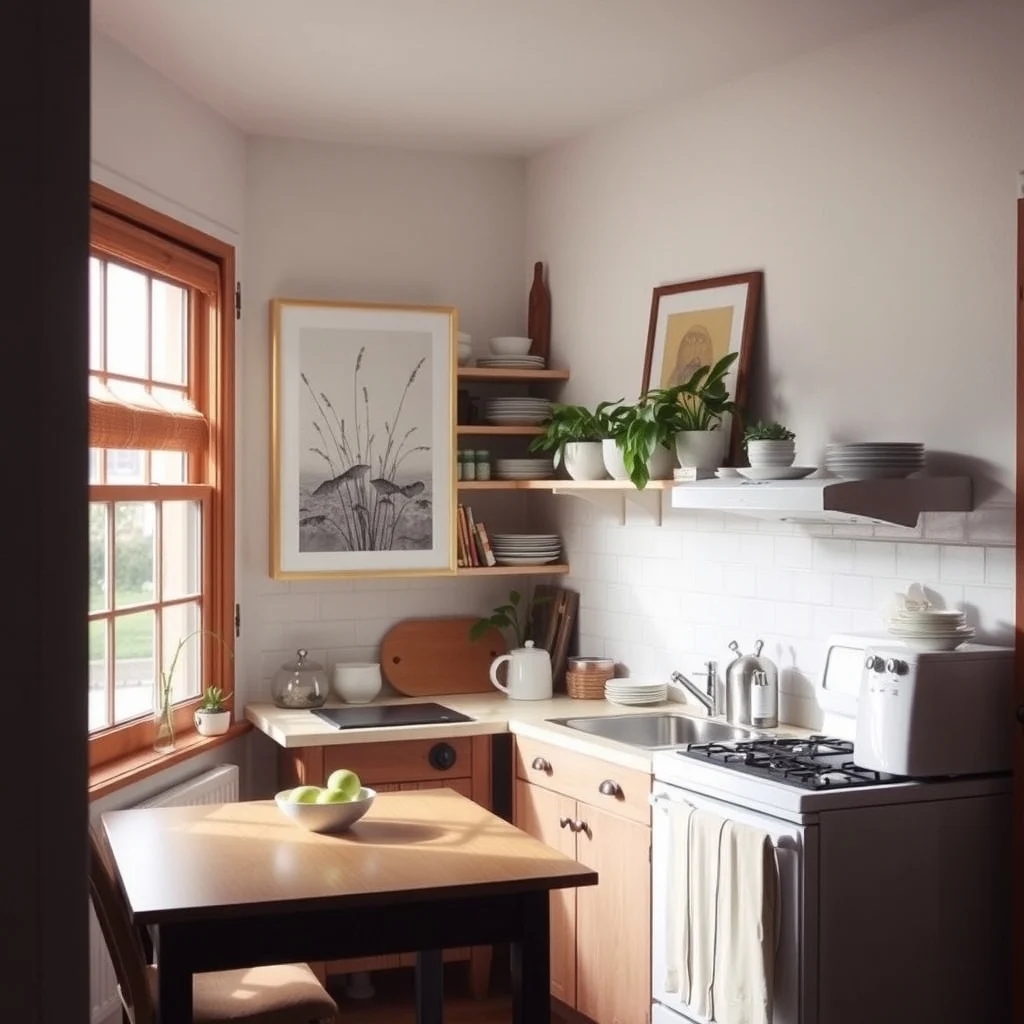
Most kitchens have a narrow strip of wall space between the top of the upper cabinets and the ceiling. This “dead zone” is perfect for storing items you rarely need, such as holiday serving platters, large serving bowls, or a spare set of glassware. Install a simple L‑shaped shelf that extends just a few inches beyond the cabinet depth, or use a set of slim, metal brackets to support a single row of lightweight trays.
Because the area sits high, you’ll want to choose sturdy, non‑slipping brackets and avoid storing heavy cast‑iron pans up there. A small step stool with a rubber foot can provide safe access without cluttering the floor. The trade‑off is that you must be comfortable reaching upward; if you have limited mobility, keep the heaviest items on lower shelves and reserve the high zone for decorative pieces that add personality without needing frequent handling.
4. Add Magnetic Strips and Wall‑Mounted Racks for Small Tools
This image is by AI for inspiration only.
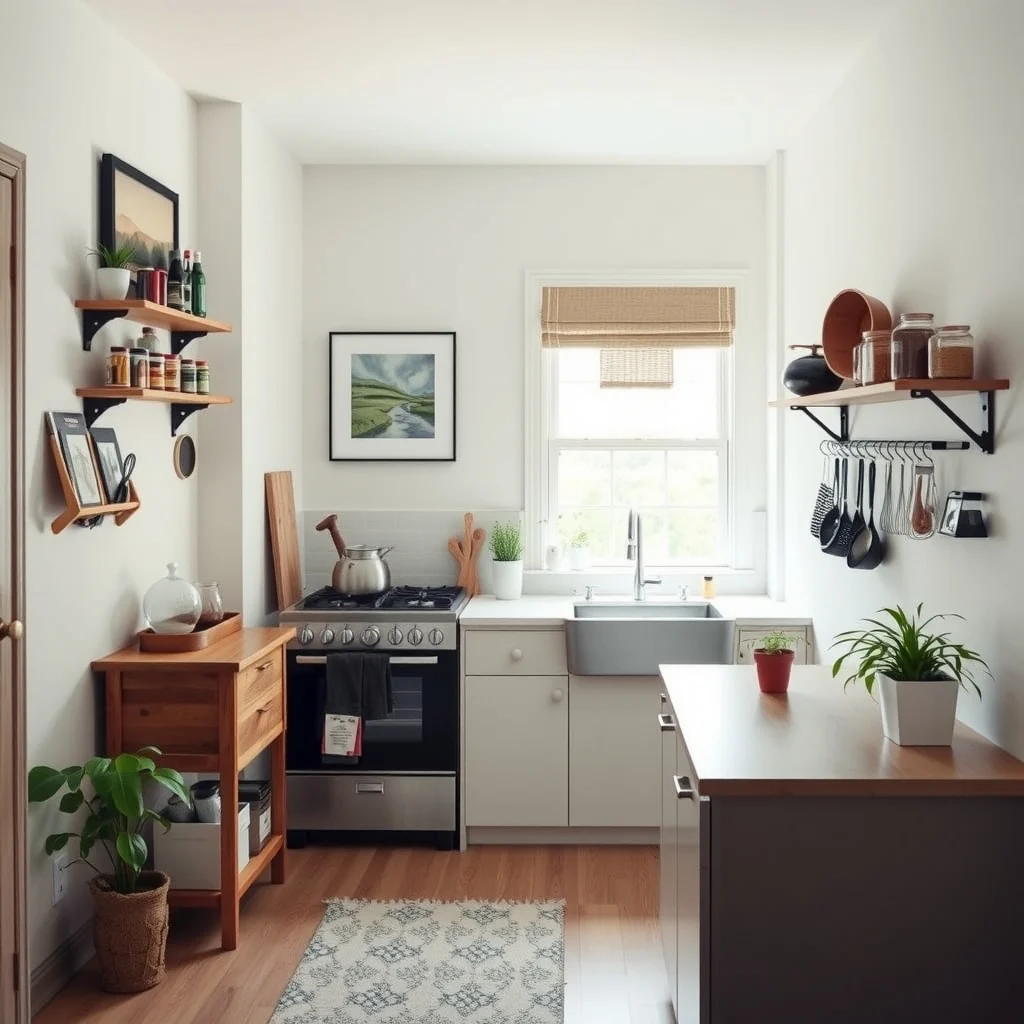
Spices, knives, and metal kitchen tools are often scattered across drawers, creating a visual mess and making it hard to locate what you need while cooking. A stainless‑steel magnetic strip mounted on the backsplash or the side of a cabinet can hold knife blades securely, while a series of small metal hooks or a pegboard can suspend spice jars, measuring spoons, and even a copper pot lid.
The magnetic strip not only frees drawer space but also adds a sleek, industrial accent that complements both modern and farmhouse aesthetics. Choose a strip with a brushed finish to avoid glare, and anchor it with wall plugs that match the tile or paint color. Keep in mind that magnetic storage works only for ferrous items; wooden utensils or ceramic containers will need a different solution, such as a simple floating shelf nearby.
5. Deploy a Rolling Cart Under the Counter
This image is by AI for inspiration only.
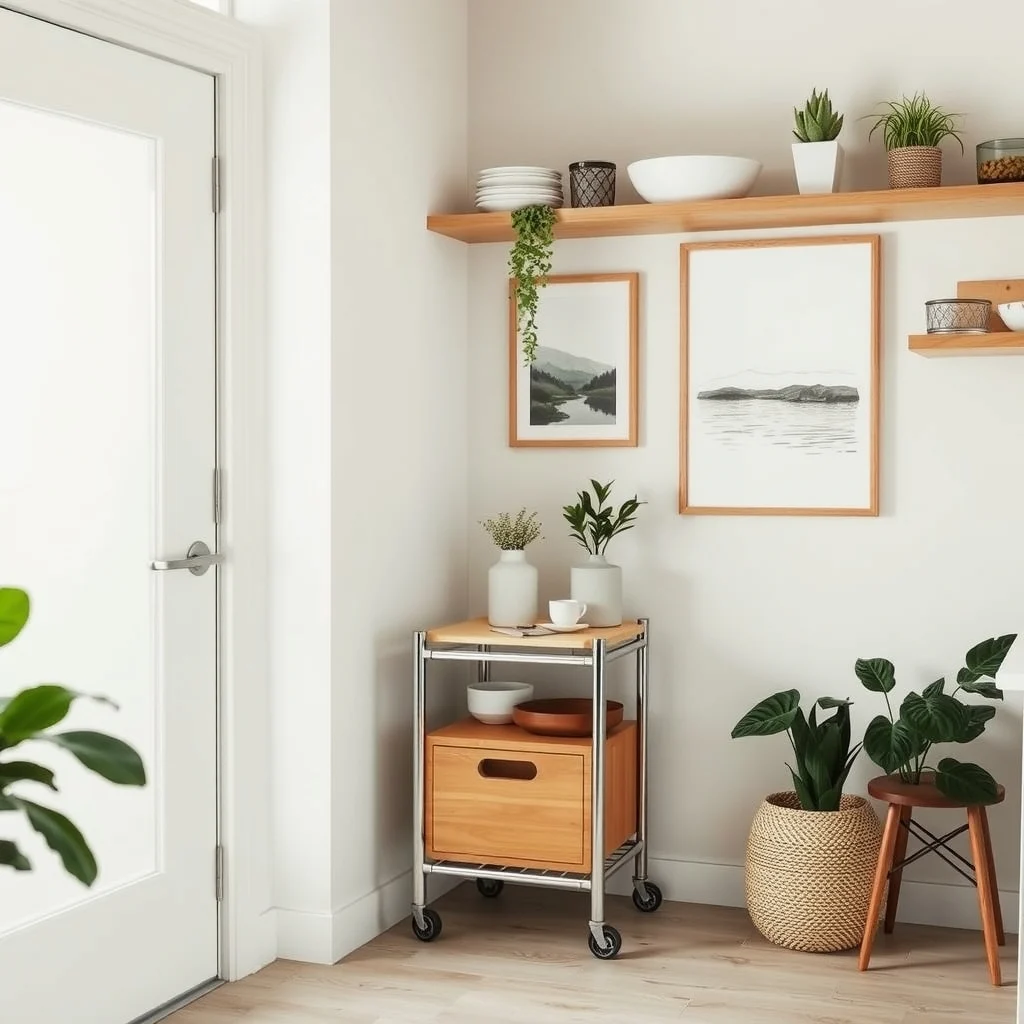
A narrow rolling cart that slides beneath the base cabinets can serve as a mobile pantry extension. Look for a cart with a sturdy metal frame, a couple of shallow drawers, and a small top shelf. When tucked under the counter, the cart remains out of sight, but when you need extra workspace, you can pull it forward and use the top as a prep surface.
This flexibility is especially valuable in kitchens with limited countertop real estate. The drawers are ideal for storing snack packs, cereal boxes, or a selection of oils, while the top shelf can hold a small fruit bowl that adds a splash of color. The main compromise is that the cart occupies the space needed for a deep pull‑out trash bin, so you’ll need to plan your waste management accordingly—perhaps by using a slim, wall‑mounted bin instead.
6. Hang Organizers Inside Cabinet Doors
This image is by AI for inspiration only.
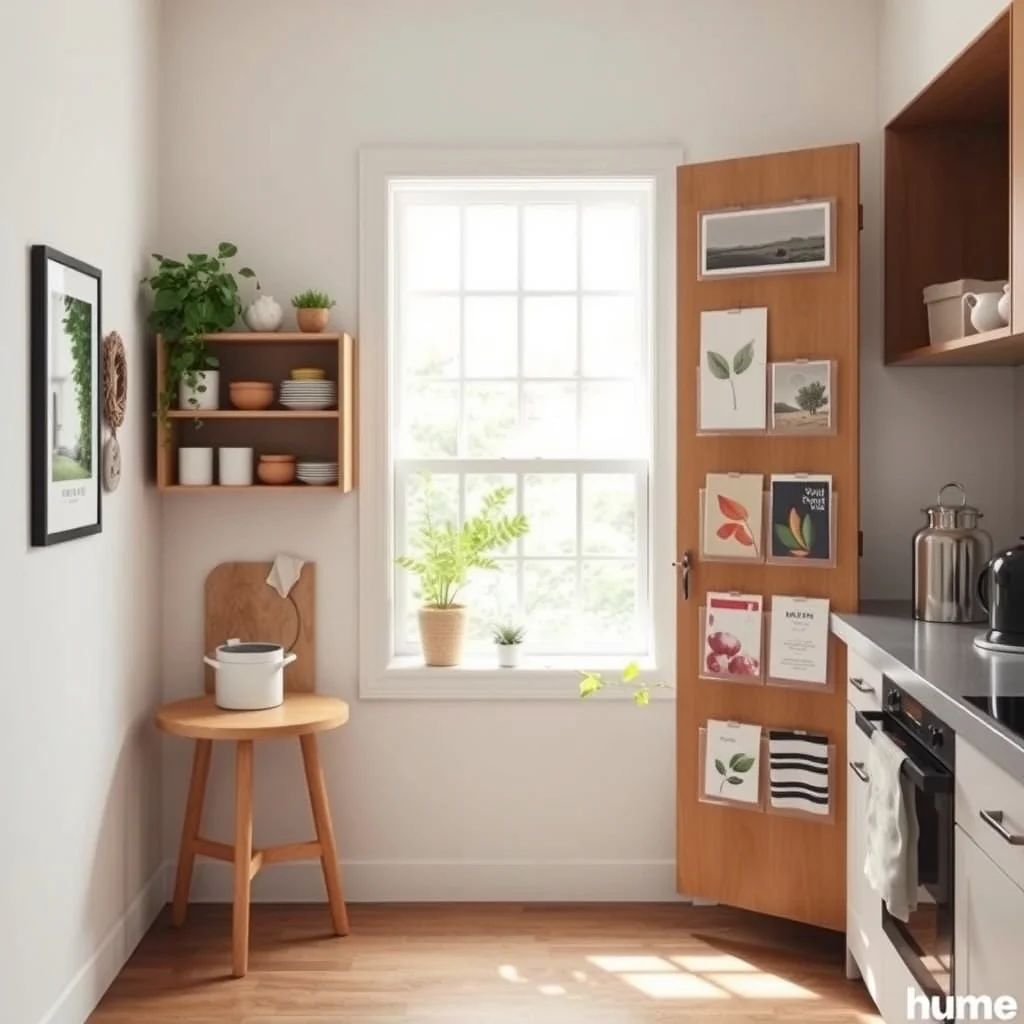
The interior of cabinet doors often goes unused, yet it offers a perfect canvas for thin, adhesive organizers. A set of clear acrylic pockets can be affixed to the inside of a pantry door, providing a place to store spice packets, tea bags, and small condiment bottles. Because the pockets are transparent, you can quickly scan the contents without pulling the door open.
This solution works best on cabinets with a smooth, painted surface; textured wood may require a stronger adhesive or a small screw‑in bracket. The pockets add only a few millimeters of thickness, preserving the door’s swing. However, they are not suited for heavy items—if you need to store a large jar of olive oil, a traditional shelf or a pull‑out basket would be safer.
7. Choose a Multi‑Purpose Island with Built‑In Storage
This image is by AI for inspiration only.
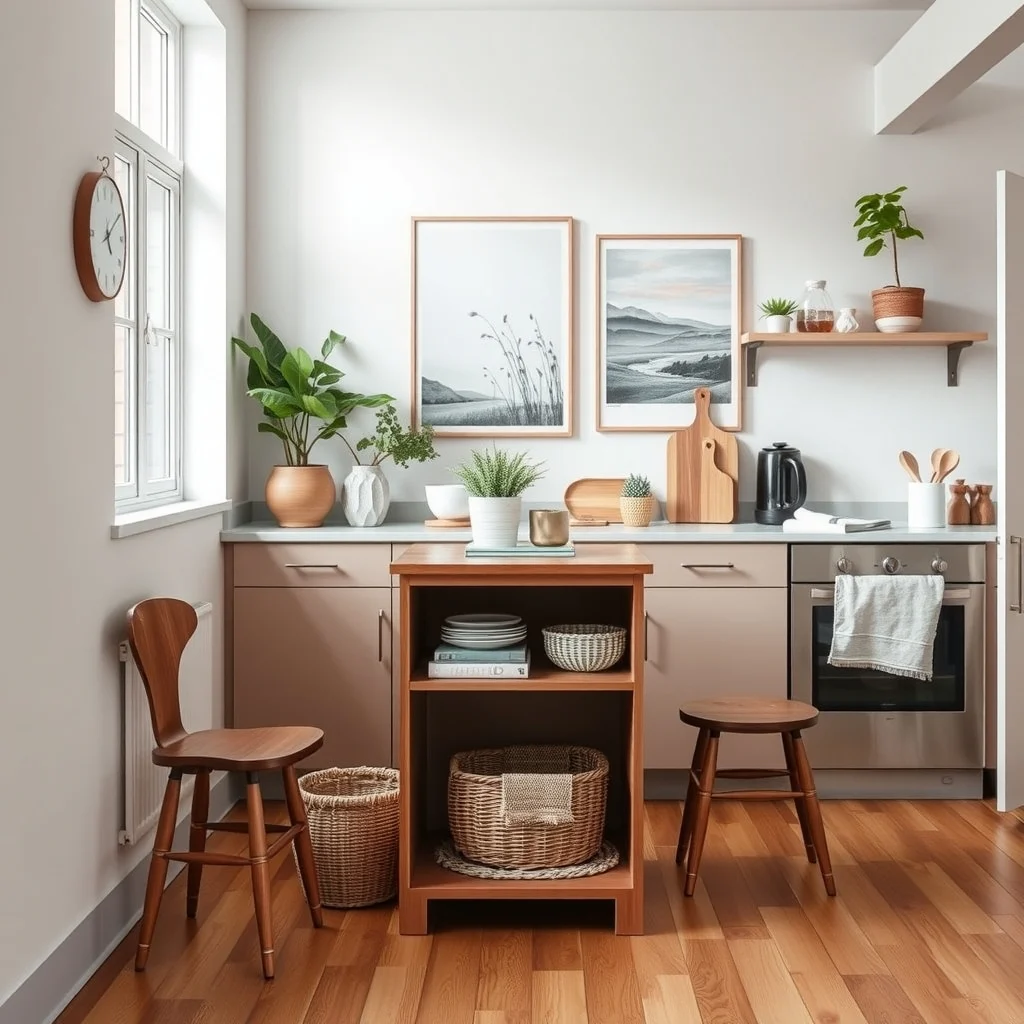
If your kitchen layout permits a small island, select one that doubles as a storage unit. A compact island with a hollow core can hide a pantry basket, a set of cutting boards, and a row of glass jars. Opt for an island finished in a muted greige laminate that coordinates with your cabinets, and add a pair of slim, metal legs to keep the footprint minimal.
The island’s top can serve as a prep area, while the lower compartment acts as a concealed pantry. Because the island is mobile, you can reposition it to accommodate a larger gathering or to free up floor space when needed. The primary limitation is that a small island may reduce the amount of floor clearance around the cooking zone, so be sure to leave at least 36 inches of walking space on all sides to maintain a comfortable workflow.
FAQ
This image is by AI for inspiration only.
How can I keep items on open shelves from getting dusty?
Dust can be managed by choosing woven baskets with tight weaves and glass jars with screw‑on lids; both act as barriers while still allowing you to see the contents. Wipe the baskets and jars with a damp cloth weekly, and consider a low‑speed ceiling fan to circulate air and reduce settled particles.
Is it safe to store knives on a magnetic strip?
Yes, a properly installed magnetic strip holds knife blades securely, keeping them out of the drawer where they can cause accidents. Ensure the strip is rated for the weight of the knives you own, and keep the strip away from the stove to avoid heat exposure.
What height should a rolling cart be for comfortable use?
A rolling cart that sits just under the countertop—typically 32 to 34 inches high—allows you to pull it forward and work without bending. Measure the distance from the floor to your countertop and choose a cart that leaves a 1‑inch clearance to maintain smooth sliding.
Can I paint magnetic strips to match my backsplash?
Most magnetic strips are finished in stainless steel or brushed nickel, which are designed to resist corrosion. Painting them can compromise their magnetic strength and durability, so it’s better to select a strip whose finish already complements your backsplash.
Do under‑cabinet doors work with heavy pots?
Door‑mounted organizers are best for lightweight items; heavy pots can pull the door open and strain the hinges. Reserve the door pockets for spices, packets, and small containers, and store larger cookware on a dedicated shelf or in a pull‑out drawer.
Final Thoughts
This image is by AI for inspiration only.
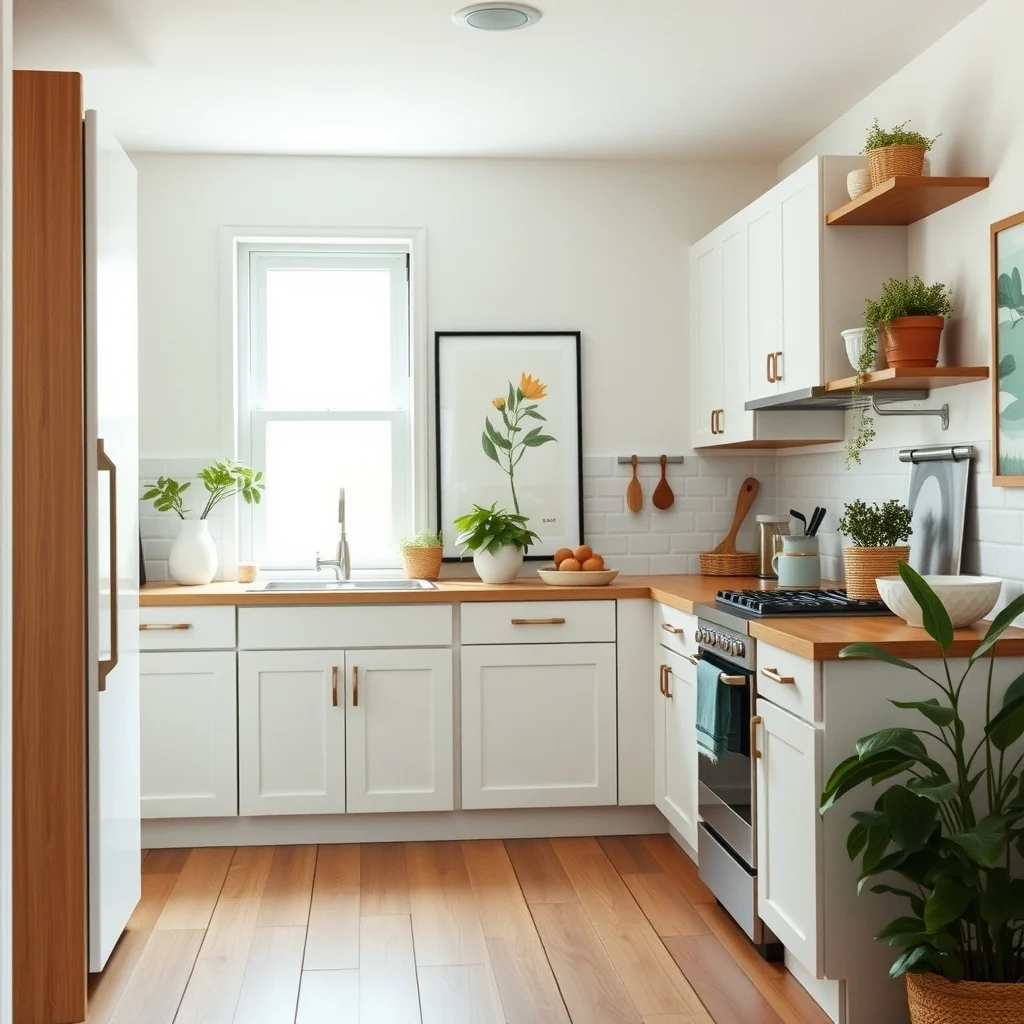
When a pantry is absent, the kitchen’s character often lies in how creatively you use the spaces that remain. From tall pull‑out cabinets that mimic a pantry’s depth to magnetic strips that turn a backsplash into a functional wall, each of the seven ideas presented here offers a way to reclaim order without sacrificing style. Consider the flow of your daily routine, the materials that already dominate your kitchen, and the visual balance you desire. By selecting the solutions that align with your habits and aesthetic, you’ll turn a cramped cooking area into a well‑organized hub that feels both spacious and welcoming.