How to Organize a Tiny Closet With Double‑hanging Space

When the closet you inherit is barely larger than a coat rack, every inch feels like a premium. Yet the clever use of a double‑hanging system can turn that cramped alcove into a surprisingly functional wardrobe. In the following sections you’ll find a step‑by‑step walk‑through that starts with honest measurements, moves through hardware choices, and finishes with habits that keep the space tidy for the long haul.
1. Measure, Divide, and Visualize the Vertical Real Estate
This image is by AI for inspiration only.
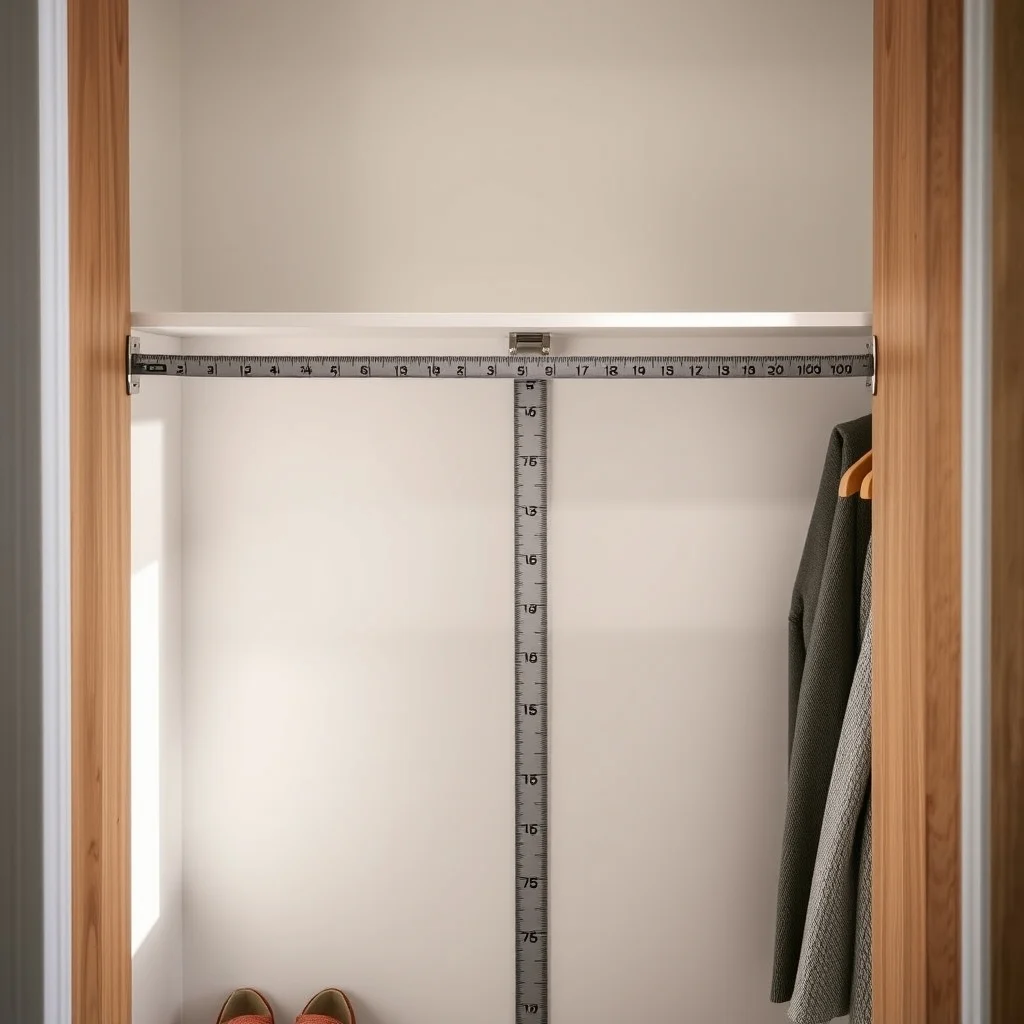
Before any rod is installed, pull a tape measure across the interior width and note the total height from floor to ceiling. Most standard closets offer between 72 and 84 inches, which is enough room for two rows of garments when you split the space roughly at the one‑third mark. By allocating the lower third for shirts and the upper two‑thirds for longer pieces, you create a natural hierarchy that mirrors how you dress each day. Sketching a quick diagram on graph paper helps you see the proportions before you drill, and it also reveals any obstacles such as a recessed light or uneven wall that might require a slight adjustment. Remember, a well‑planned layout prevents the need for later re‑positioning, which can damage the wall finish.
2. Choose the Right Rod and Mounting System for the Upper Tier
This image is by AI for inspiration only.
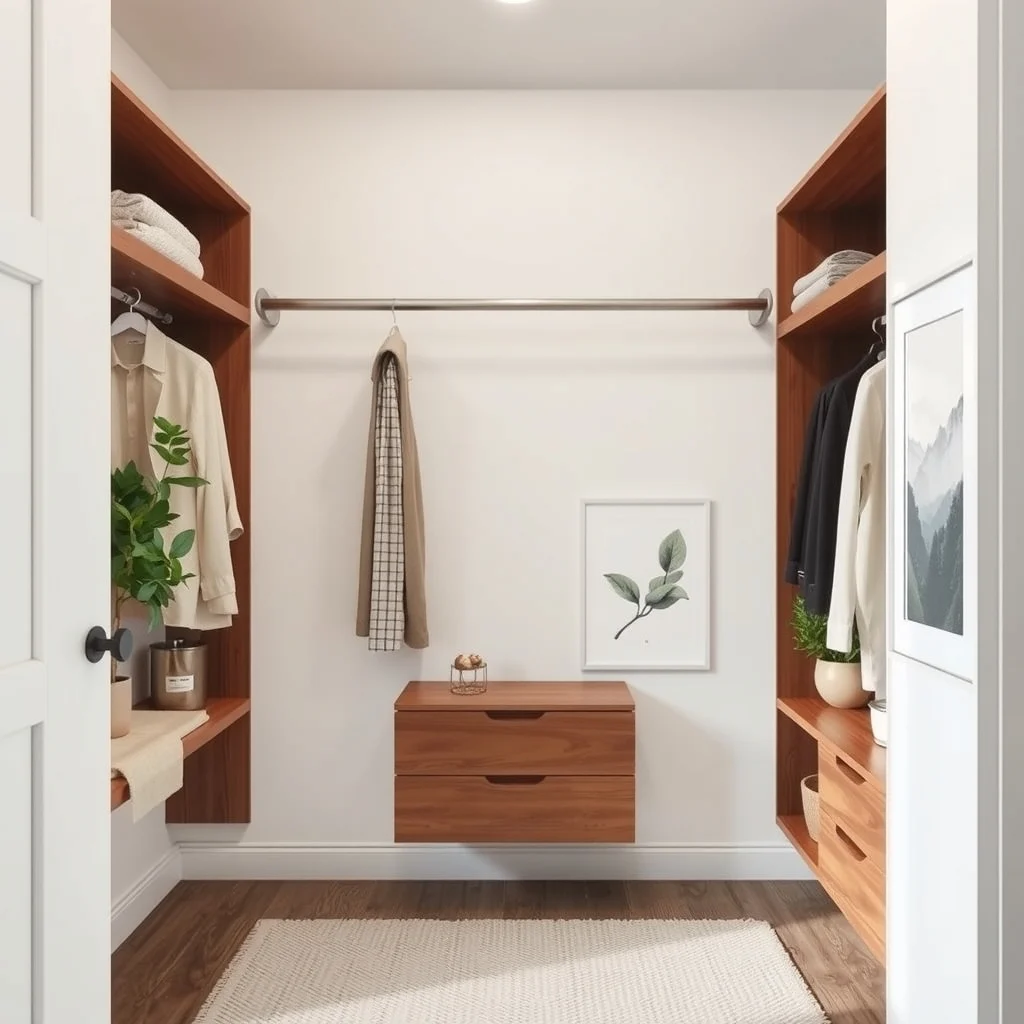
The upper rod bears the weight of coats, dresses, or trousers, so selecting a sturdy material matters. Brushed‑nickel steel rods combine durability with a low‑profile look that doesn’t compete with the closet’s paint color. When mounting, use wall anchors that match the stud spacing; a missed stud can cause the rod to sag under a heavy coat. Brackets that extend just enough to keep hangers clear of the lower line ensure smooth sliding without catching. If the ceiling is low, a slightly lower placement—around 55 inches from the floor—still provides enough clearance for most blouses while preserving the double‑hang benefit. The trade‑off is that very long dresses may need to be folded, but the overall capacity gain outweighs that limitation.
3. Standardize Garment Lengths and Adopt Tiered Hangers
This image is by AI for inspiration only.
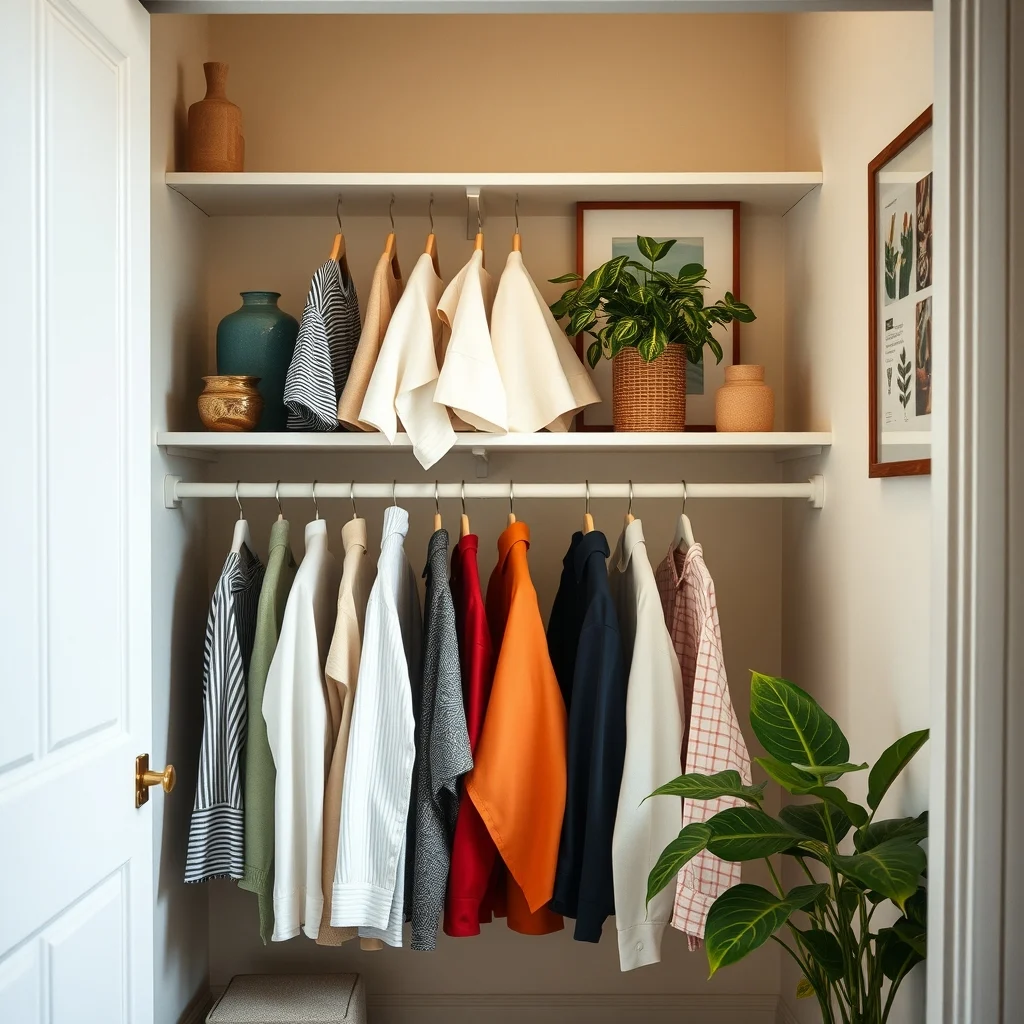
Uniformity is a silent organizer. When shirts are all roughly the same length, they line up neatly on the lower rod, creating a clean visual line that makes choosing an outfit faster. Investing in slim, non‑slip wooden hangers reduces bulk, allowing more pieces per foot of rod. For pants, consider a tiered hanger that holds two pairs back‑to‑back, effectively doubling the vertical capacity without adding extra rods. This approach works especially well with fabrics such as cotton twill or lightweight wool that maintain shape when folded. The downside is that delicate fabrics may develop creases if packed too tightly, so reserve the tiered system for sturdier items.
4. Add a Shallow Shelf or Cubby Above the Upper Rod
This image is by AI for inspiration only.
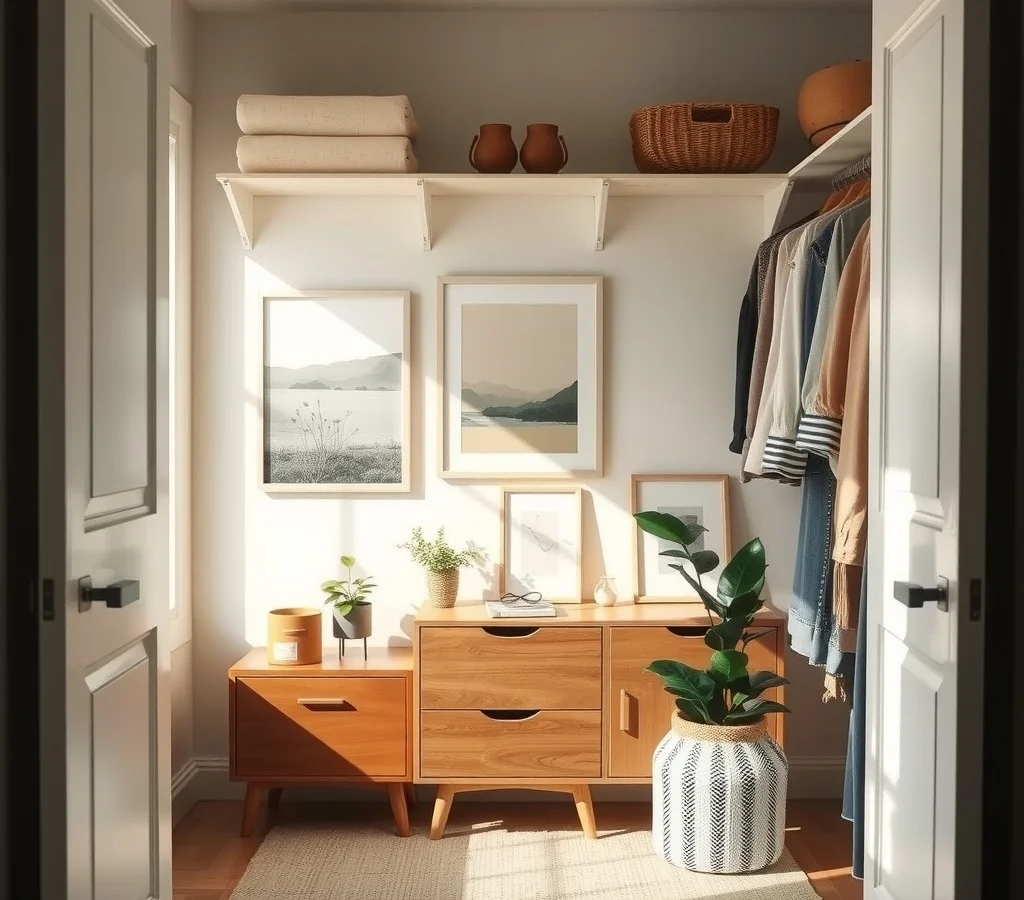
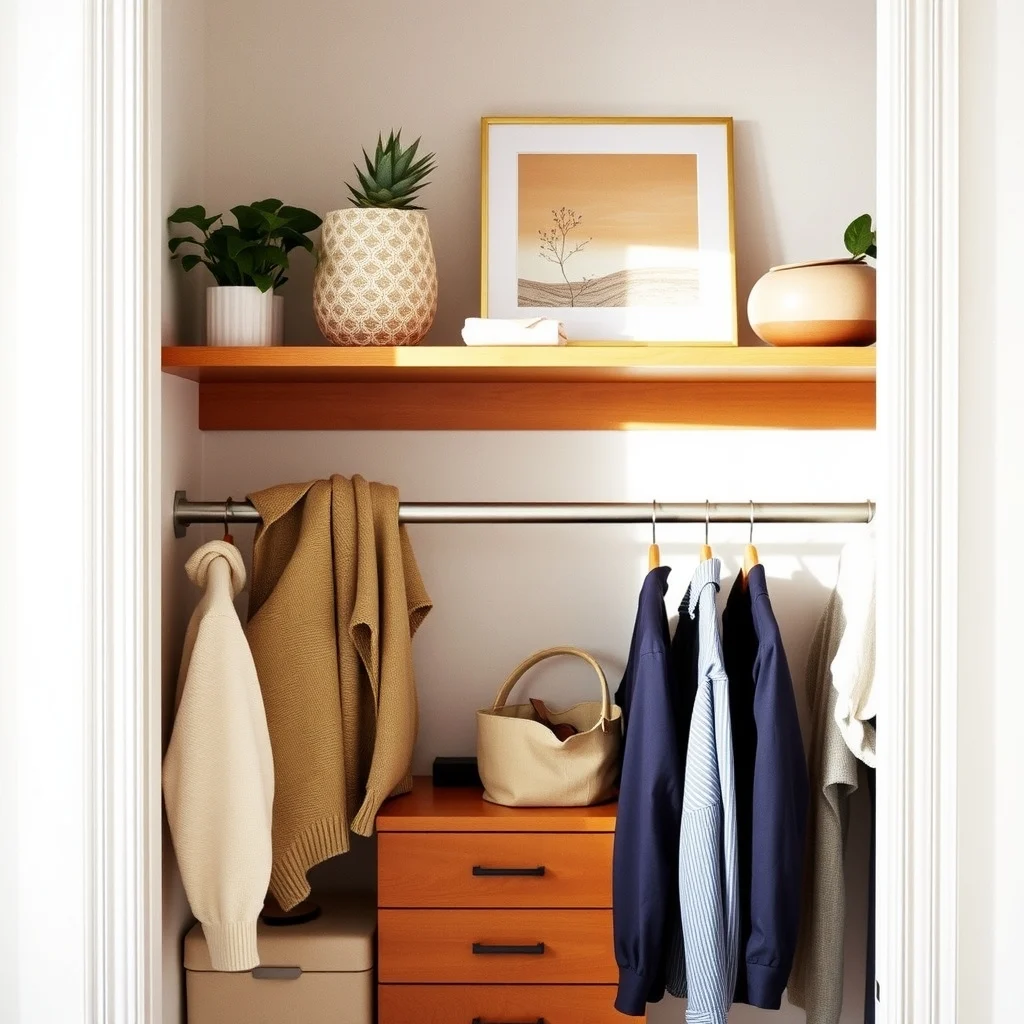
A narrow shelf—about six inches deep—installed just above the upper rod offers a discreet landing spot for accessories, folded sweaters, or a small basket of scarves. Choosing a shelf finished in the same wood tone as the closet’s trim creates continuity, while a matte white surface reflects light, making the interior feel brighter. If you prefer a more flexible solution, a floating cubby with metal brackets can be adjusted later as storage needs evolve. Keep the load light; heavy boxes can warp the shelf over time, but a few neatly arranged items add both function and visual balance.
5. Incorporate a Pull‑Out or Tension Rod for Seasonal Rotation
This image is by AI for inspiration only.
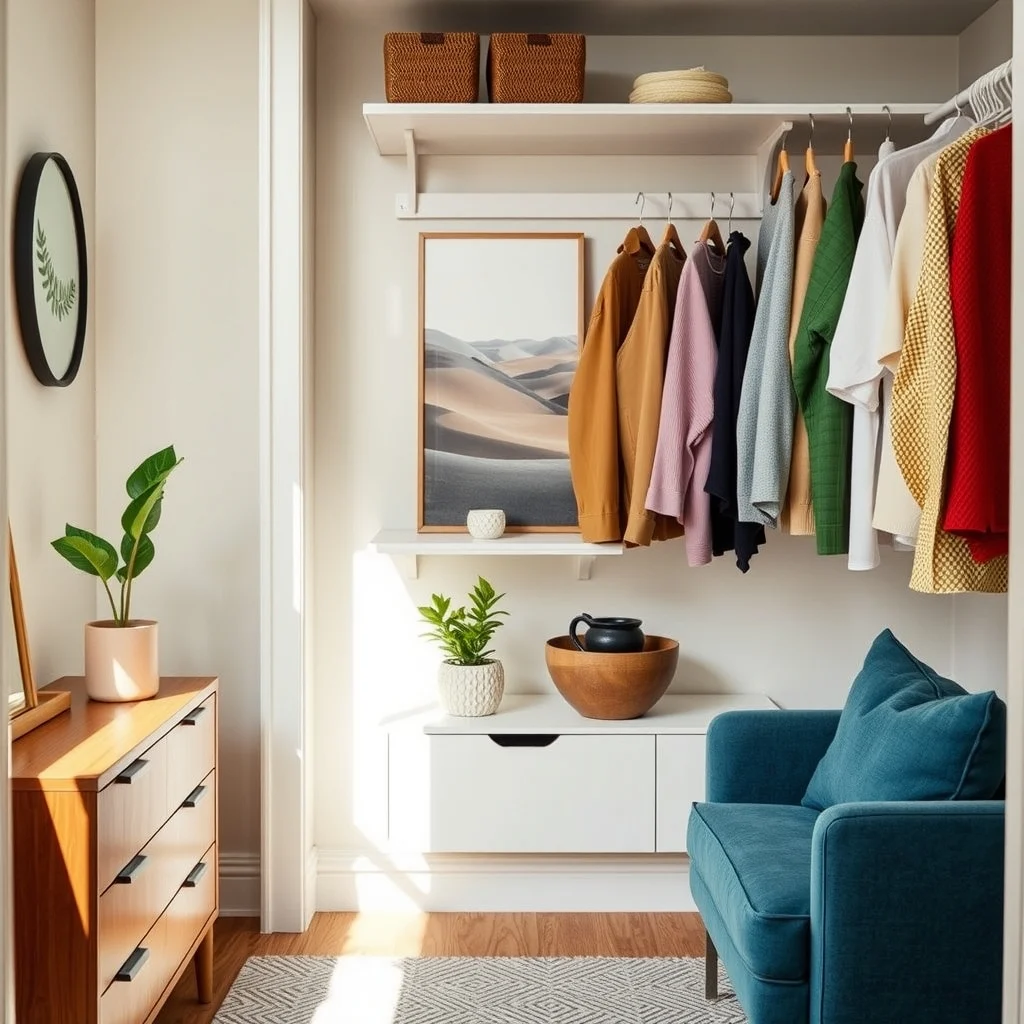
Seasonal wardrobes often crowd a tiny closet, and a removable rod provides a simple way to rotate pieces without permanent alteration. A tension rod slides in and out of the lower space, allowing you to hang off‑season coats or holiday dresses temporarily. Because it relies on spring pressure rather than screws, installation is tool‑free and reversible—perfect for renters. The only caution is to stay within the manufacturer’s weight limit; overloading can cause the rod to slip, but for light jackets or scarves it works flawlessly.
6. Maximize Floor Space with Slim Shoe Organizers and Baskets
This image is by AI for inspiration only.
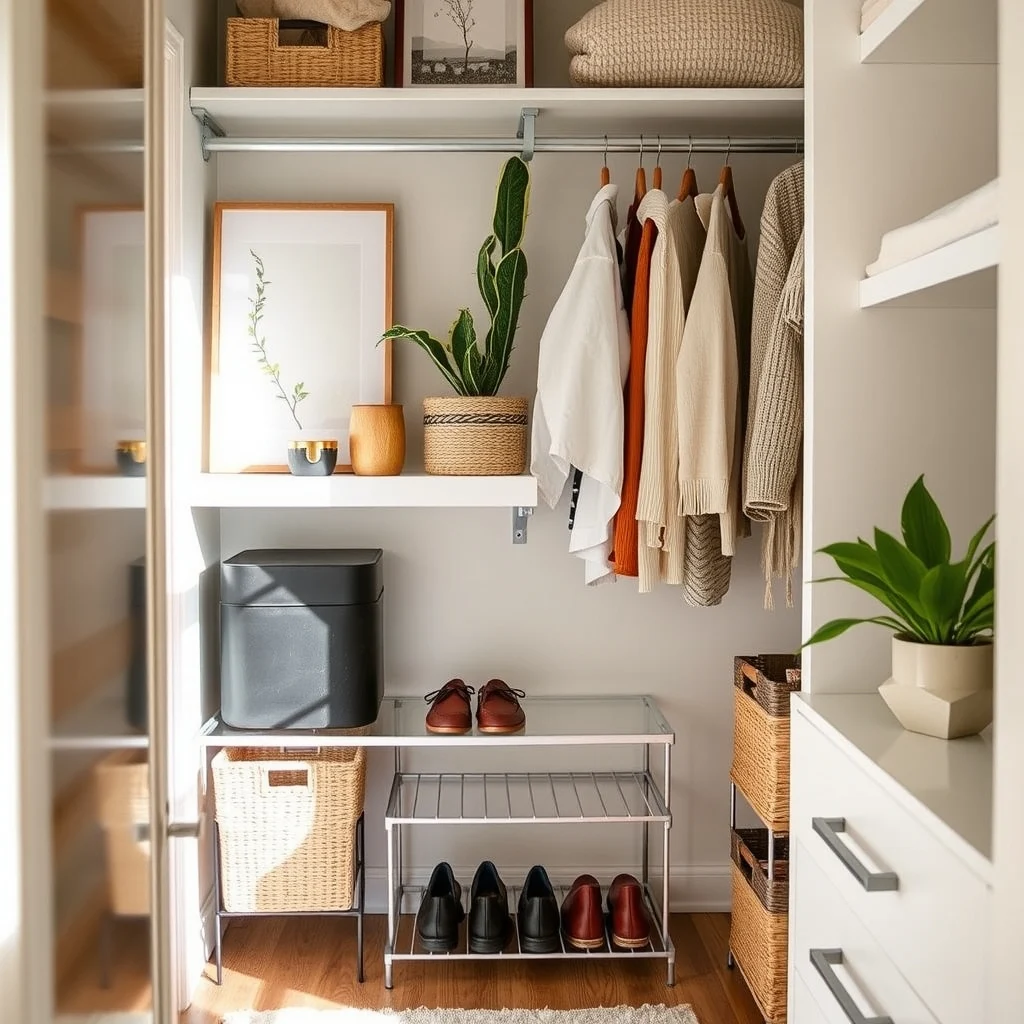
Even a narrow closet floor can serve a purpose when you choose low‑profile shoe racks made of brushed aluminum or bamboo. A single‑tier rack that holds three pairs side‑by‑side keeps shoes upright and visible, preventing the dreaded “shoe mountain” that often spills onto the carpet. For items like socks or small accessories, a set of clear acrylic bins with rounded corners fits neatly against the wall, allowing you to see contents at a glance. These materials are easy to wipe down, which helps maintain a fresh scent in a space that rarely sees sunlight.
7. Light the Interior and Establish a Decluttering Routine
This image is by AI for inspiration only.
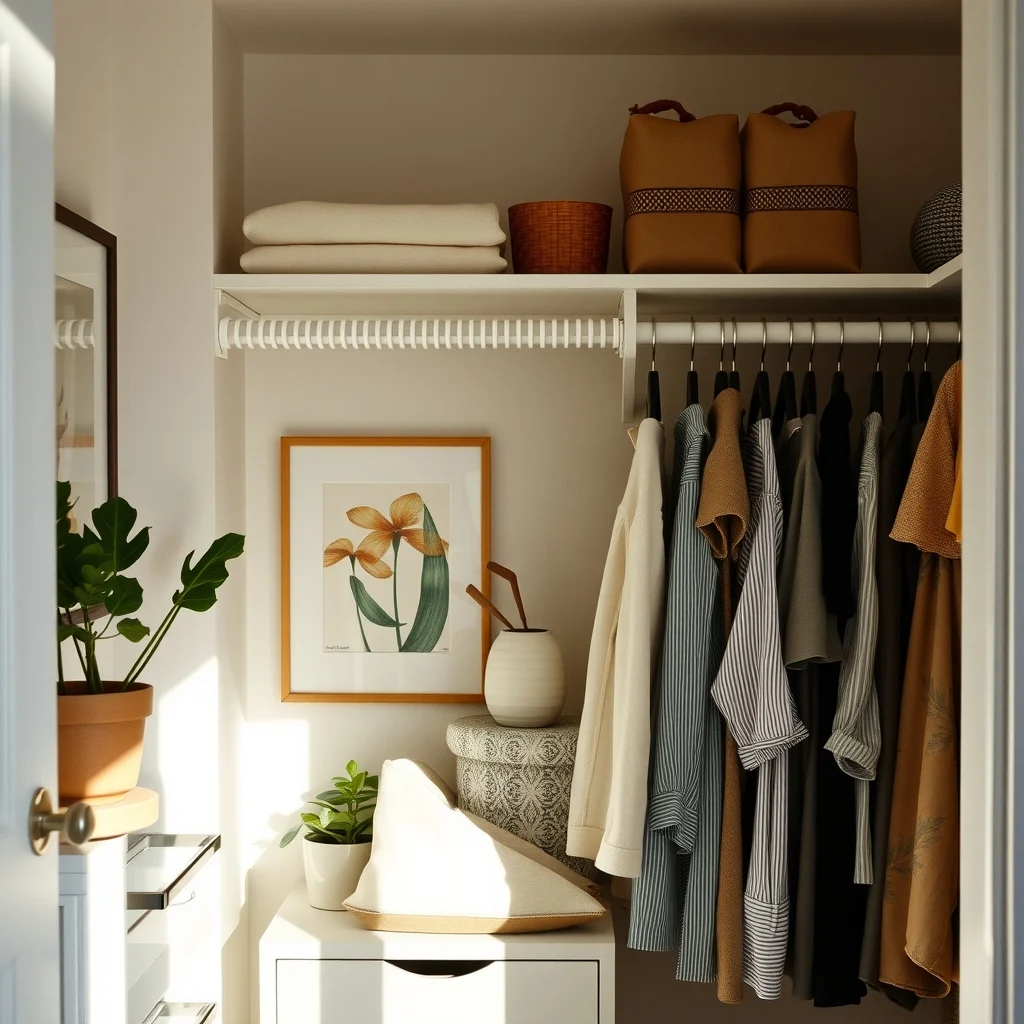
Good lighting reveals both the beauty of your clothes and the hidden corners where dust gathers. A battery‑operated LED strip affixed to the upper rod casts a soft glow without adding wiring complexity. The gentle illumination encourages you to keep the area tidy, because you can spot stray threads or misplaced items instantly. Pair this with a weekly habit of pulling out items that no longer fit or that you haven’t worn in the past year. A simple “one‑in, one‑out” rule prevents the closet from reverting to chaos, ensuring the double‑hanging system remains effective year after year.
FAQ
This image is by AI for inspiration only.
How high should the lower rod be placed?
The lower rod works well at about 38 inches from the floor, which accommodates most shirts and jackets without them touching the ground. This height also leaves enough room for a short shelf beneath if you need additional storage.
Can I use a double‑hanging system in a closet with sloped ceilings?
Yes, but you may need to adjust the upper rod height to follow the slope, ensuring there is still clearance for longer garments. Custom brackets that follow the angle can be fabricated, though they may increase the project cost.
What type of hangers are best for a tiny double‑hanging closet?
Thin, non‑slip wooden or coated metal hangers maximize space because they occupy less width than traditional plastic styles. They also provide a gentle grip that reduces garment stretching.
Is it safe to install a tension rod without anchoring it to studs?
A tension rod relies on pressure between two surfaces, so it is safe for light loads such as scarves or thin jackets. For heavier coats, a permanently mounted rod with brackets into studs is recommended to avoid slipping.
How often should I clean a small closet with double‑hanging rods?
Wiping down the interior with a microfiber cloth and a mild cleaner once a month keeps dust and odors at bay. If you notice a buildup of lint from fabrics, a quick vacuum using the brush attachment helps maintain a fresh environment.
Final Thoughts
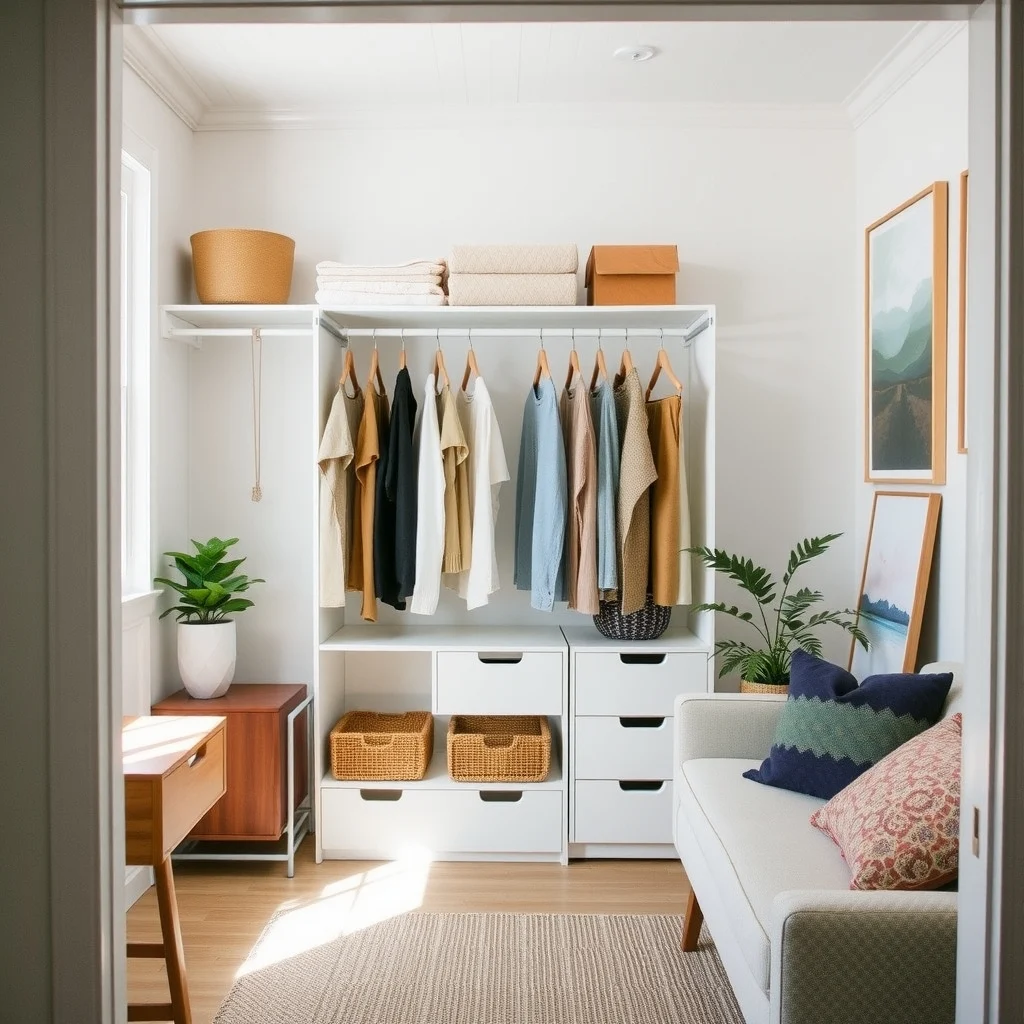
This image is by AI for inspiration only.
Transforming a cramped closet into a double‑hanging haven is less about expensive remodels and more about thoughtful arrangement. By measuring accurately, selecting sturdy hardware, and embracing uniform hanging practices, you create a space that feels larger than its dimensions. Adding a modest shelf, flexible rods, and purposeful lighting rounds out the system, while a regular decluttering rhythm keeps it functional for years to come. With these steps, even the tiniest closet can become a reliable partner in your daily routine.