
How to Store Blankets and Seasonal Bedding in a Studio
Living in a studio means every square foot matters, and the temptation to let blankets and extra bedding pile up in corners is strong. Yet those soft pieces are worth keeping accessible and tidy, especially when the temperature shifts from summer breezes to winter chills. This guide walks you through seven practical ways to organize blankets and seasonal bedding without sacrificing style or comfort. You’ll learn how to blend storage with décor, protect fabrics from dust, and keep the space feeling airy even when the closets are full.
1. Choose a Low‑Profile Storage Ottoman for Everyday Throws

This image is by AI for inspiration only.
© 2026 AI Illustrator — Inspiration Only
A storage ottoman that sits at ankle height can double as a seat and a hidden bin for the blankets you reach for most often. Because the piece sits on the floor, it doesn’t compete with the limited wall space that a studio relies on for shelving or artwork. Selecting an ottoman upholstered in a neutral linen or soft boucle adds a tactile layer that invites you to rest your feet while keeping the fabrics out of sight. When you need a warm layer, simply lift the lid, pull out the folded throw, and return it after use. The trade‑off is that the interior volume is modest, so it works best for lighter blankets rather than bulky winter quilts.
Love Your Home.
Enjoy a Little More Order.
Not sure how to decorate your space or organize your home? Discover practical digital guides, planners and ideas designed to make everyday living easier.
Your first purchase at Livana Studio
2. Hang a Slim Ladder Shelf Against a Free Wall

This image is by AI for inspiration only.
A narrow wooden ladder, finished in a warm oak or matte white, can serve as a vertical rack for folded blankets. By leaning it against a wall that isn’t already occupied by a desk or shelving unit, you create a display that feels intentional rather than cluttered. The ladder’s rungs provide natural divisions, allowing each blanket to breathe and stay visible, which reduces the temptation to over‑stack and squash the fibers. This method also adds a subtle architectural accent that echoes the studio’s compact aesthetic. The main limitation is that the ladder occupies floor space, so it should be placed where traffic flow is minimal, such as near a window or behind a low couch.
3. Invest in a Set of Fabric Bins That Match Your Color Palette

This image is by AI for inspiration only.
Fabric storage bins in muted greige, soft sage, or deep navy can be stacked neatly under a bed or beside a dresser. Because they are made of breathable canvas or woven cotton, the blankets stay fresh and are less prone to mildew than plastic containers. Choosing bins with subtle handles lets you slide them in and out without disturbing nearby furniture. When the season changes, you simply rotate the bins, pulling the appropriate set of blankets to the front. The downside is that fabric bins can attract dust if left uncovered for long periods, so a quick shake or a light vacuum before use helps maintain cleanliness.
4. Use the Inside of Closet Doors for Pocket‑Style Organizers

This image is by AI for inspiration only.
If your studio includes a built‑in closet, the interior of the door offers a hidden surface perfect for a pocket organizer made of clear acrylic or sturdy felt. Each pocket can hold a rolled blanket, keeping the shape intact and preventing creases that develop when blankets are folded flat. The clear material lets you see the contents at a glance, reducing the time spent rummaging. Installing the organizer with adhesive strips avoids drilling into the door, preserving the original finish. One consideration is that the pockets add a slight visual weight to the door, so selecting a design with a slim profile maintains a clean look.
5. Create a Seasonal “Bedding Box” Under the Sofa
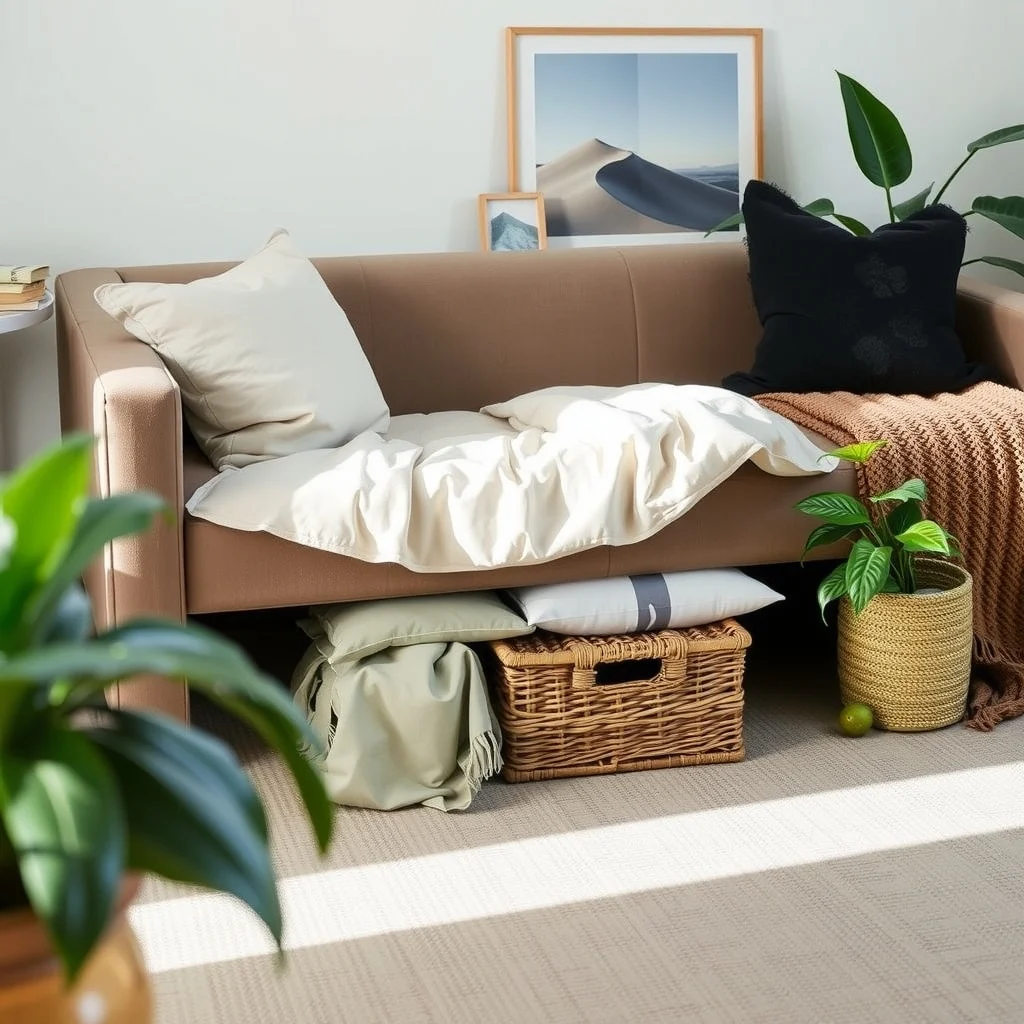
This image is by AI for inspiration only.
Many studio sofas sit on a raised platform with space underneath. By placing a sturdy wooden box or a decorative wicker basket in that cavity, you can store the set of sheets, pillowcases, and heavier blankets designated for the colder months. The box’s lid can be left slightly ajar, allowing air to circulate and preventing a stale odor. Because the sofa is a central piece, the box remains accessible without demanding extra floor area. However, if the sofa’s legs are short, the box height may need to be limited to avoid creating a tripping hazard.
6. Fold and Stack Blankets Inside a Decorative Trunk
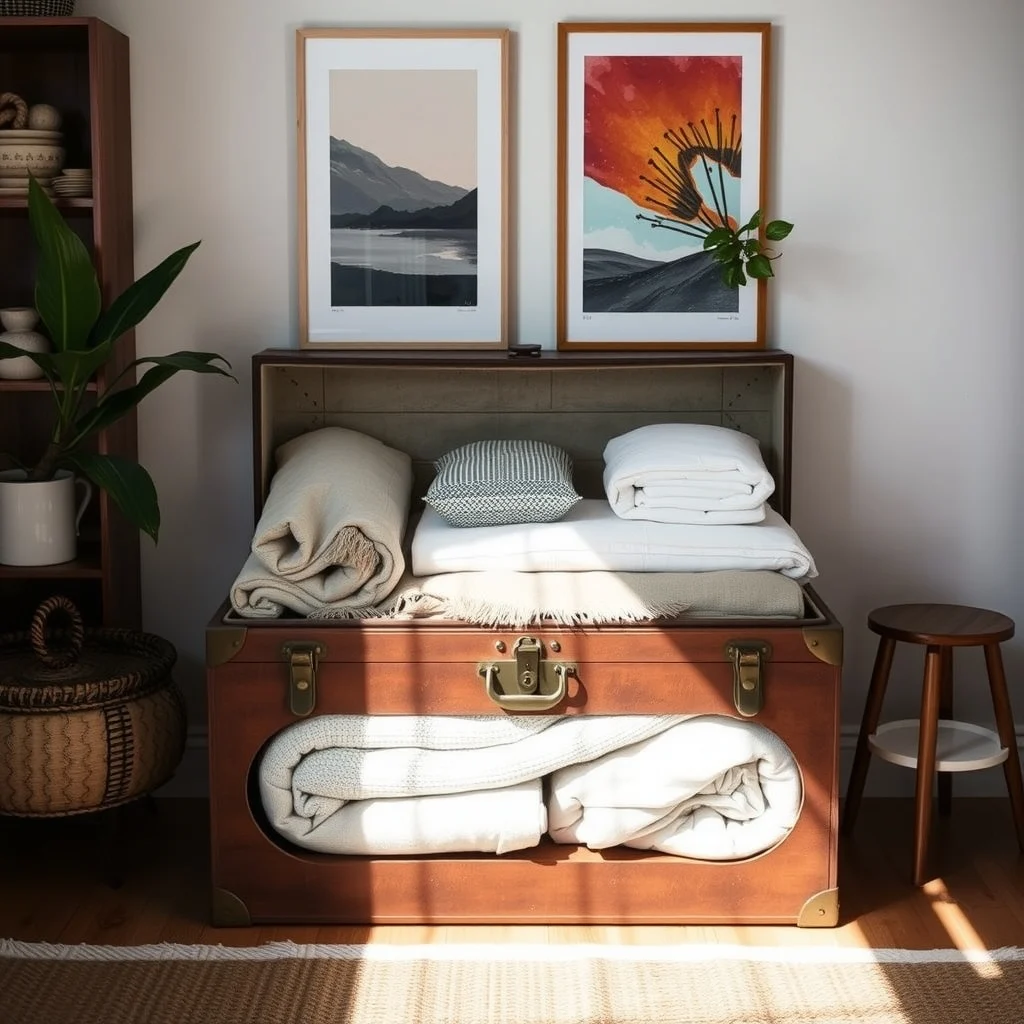
This image is by AI for inspiration only.
A vintage leather or reclaimed wood trunk adds personality to a studio while offering a concealed compartment for larger blankets. When you fold each blanket in thirds and then roll it, the stack fits neatly inside, and the rolling technique reduces the likelihood of permanent folds. The trunk’s solid lid also protects the fabrics from dust and sunlight, extending their lifespan. A potential drawback is the weight of a full trunk, which can make moving it difficult if you ever need to rearrange the room. Placing the trunk near a wall where it won’t need frequent relocation mitigates this issue.
7. Rotate Bedding on a Low Shelving Unit with Adjustable Dividers
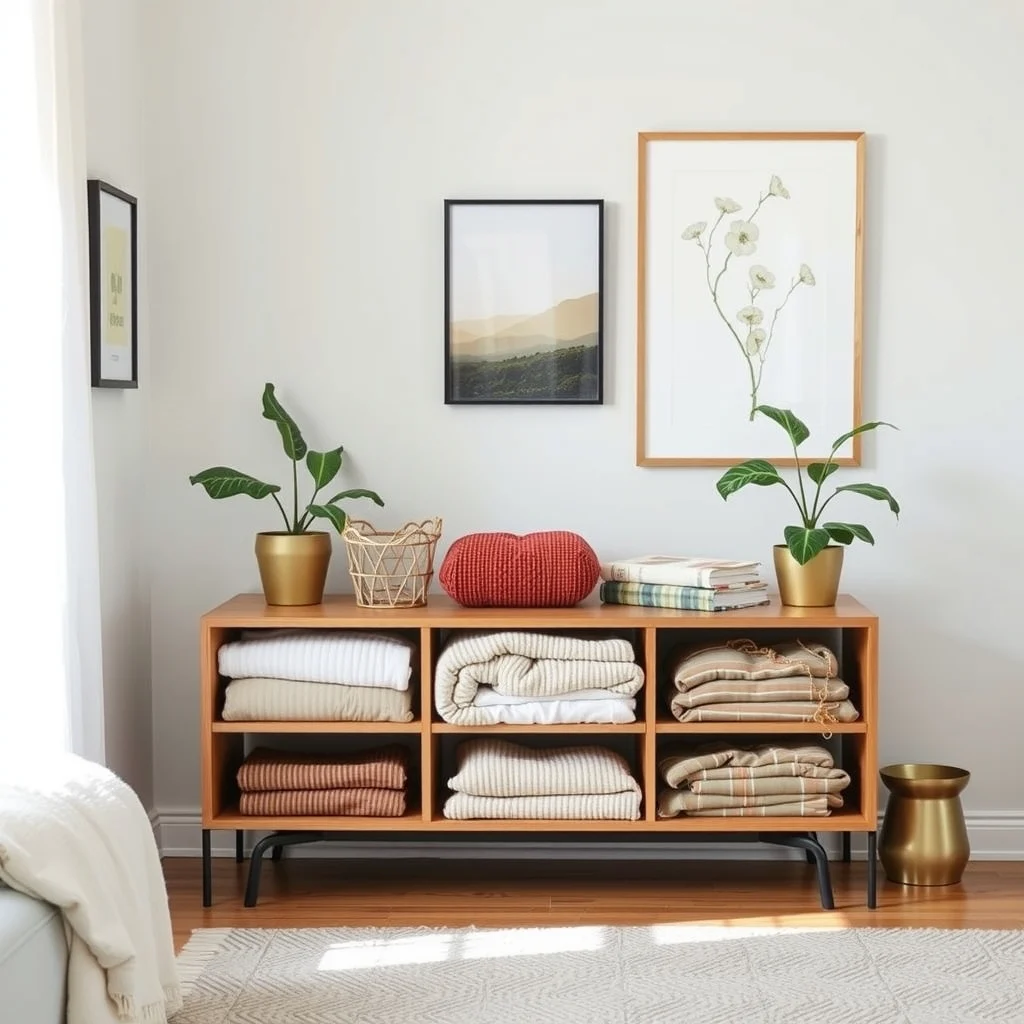
This image is by AI for inspiration only.
A low bookshelf or media console equipped with adjustable dividers can become a flexible storage zone. By allocating each shelf to a specific season, you keep the appropriate blankets and duvet covers within arm’s reach. The dividers allow you to customize the height of each compartment, accommodating anything from thin summer throws to thick winter quilts. This arrangement also encourages a visual rhythm, as the neatly aligned stacks create a sense of order that complements the studio’s minimal vibe. The main limitation is that the shelving unit must be sturdy enough to support the weight of multiple blankets without sagging.
How can I keep my blankets smelling fresh while stored?
A quick airing of blankets on a sunny day or a gentle tumble in the dryer on a low‑heat, no‑dry cycle helps refresh them. Adding a few dryer sheets or a light sachet of lavender inside storage containers can maintain a pleasant scent without overwhelming the fabric.
What is the best way to protect blankets from dust?
Using breathable fabric bins, clear acrylic organizers, or a closed trunk limits dust exposure while still allowing the fibers to breathe. Regularly wiping the exterior of storage pieces with a dry microfiber cloth also reduces dust buildup.
Can I store blankets in a bathroom if space is limited?
A bathroom is typically humid, which can encourage mildew on blankets. If you must use that space, choose a well‑ventilated area, keep the blankets in a sealed container, and ensure the bathroom fan runs after showers.
Is it okay to stack heavy blankets on top of lighter ones?
Stacking heavy blankets over lighter ones can compress the softer pieces, leading to permanent creases. It’s better to place the heavier items at the bottom of the stack or store them separately to preserve the shape of delicate fabrics.
Final Thoughts

This image is by AI for inspiration only.
Storing blankets and seasonal bedding in a studio is less about cramming items away and more about integrating storage into the room’s visual language. By selecting pieces that serve dual purposes—such as an ottoman that seats and hides, or a ladder that displays and organizes—you keep the space feeling open while ensuring comfort is always within reach. Consider the material of each storage solution, the amount of air the fabrics receive, and the balance between accessibility and aesthetics. With these seven strategies, your studio can stay uncluttered, stylish, and ready for any season.