Smart Small Living Room Storage for Extra Blankets and Throws
When a cozy throw or a soft blanket is left draped over the back of a chair, the living room can quickly feel cluttered, especially in a space that already feels tight. Finding room for these essentials without sacrificing style is a common challenge for anyone living in an apartment or a modest‑sized home. In this article you’ll discover seven practical storage ideas that blend seamlessly with a small living room’s aesthetic while keeping your blankets and throws within easy reach. Each suggestion includes details on material choices, placement, and the small compromises you might need to consider, so you can decide which solution fits your layout and lifestyle best.
1. Window‑seat hideaway with a pull‑out bin
This image is by AI for inspiration only.
© 2026 AI Illustrator — Inspiration Only
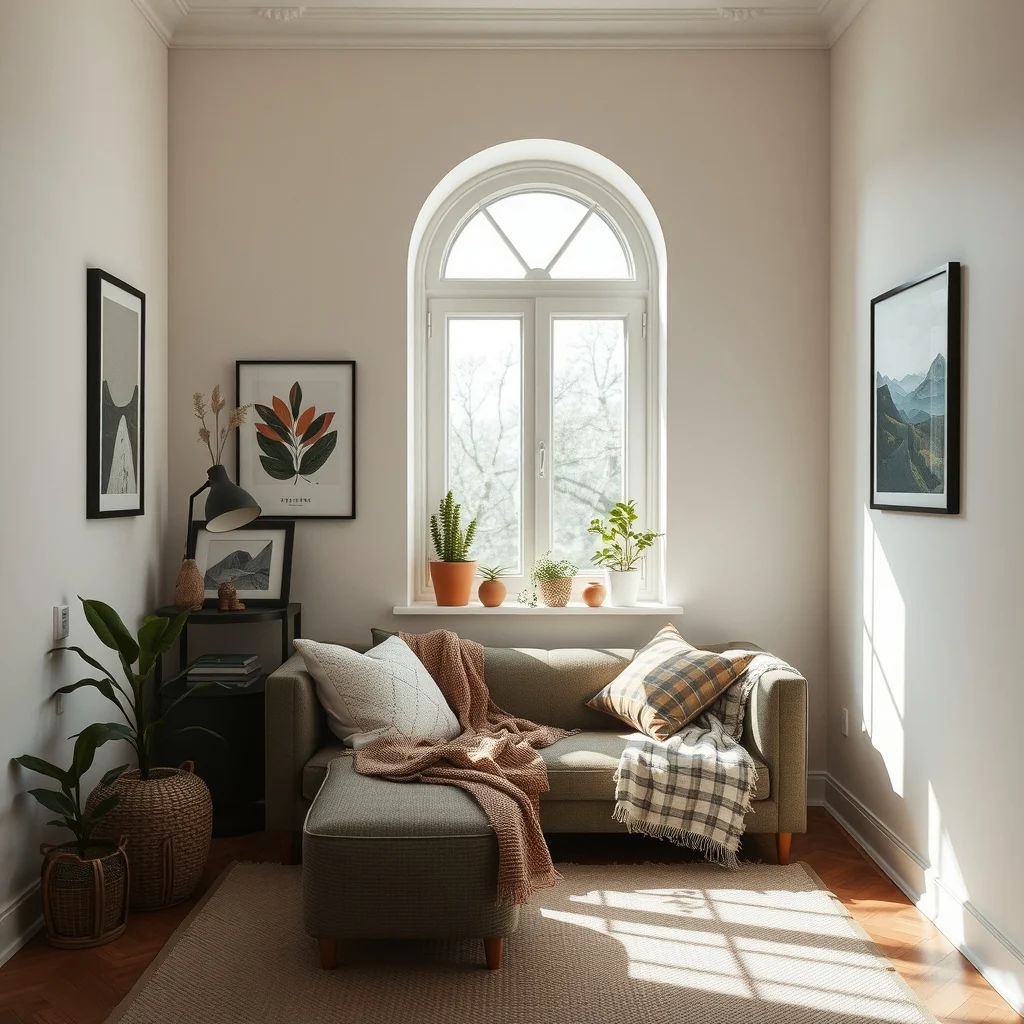
Turning a sunny window nook into a seating area creates a welcoming spot for reading, and the space beneath the seat can double as a discreet storage bin. A low‑profile cushion in a neutral linen fabric invites you to sit, while a shallow wooden or upholstered box slides out when you need to retrieve a blanket. The height of the seat should be no higher than 18 inches to maintain a comfortable sitting position and to keep the bin easily reachable for all ages. Because the bin is hidden, the room retains a clean look; the only visible element is the cushion, which can be swapped seasonally to match a new color palette. The trade‑off is that the window seat occupies floor space that could otherwise be used for a small side table, so it works best when the window is a focal point rather than a traffic corridor.
2. Low‑profile ottoman that opens
This image is by AI for inspiration only.
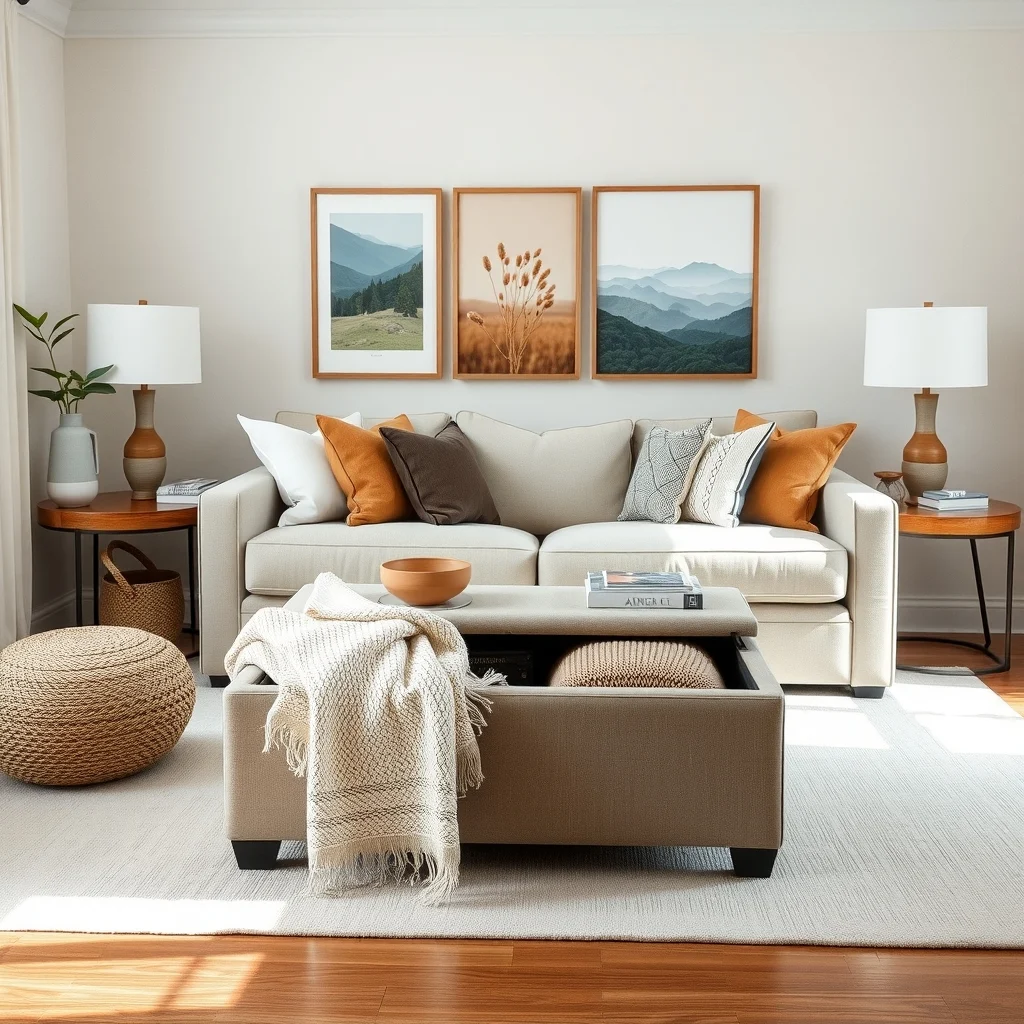
An ottoman placed in front of the sofa serves as a footrest, extra seating, and a storage compartment in one piece. Selecting a model with a hinged lid and a soft, durable upholstery—such as a brushed cotton in a muted sage—allows you to lift the top and slide blankets inside without disturbing the room’s flow. Because the ottoman sits at floor level, it does not interfere with sightlines, and its soft edges keep the space feeling inviting. When closed, the ottoman blends with the sofa’s color scheme, and when open, the interior can be lined with a lightweight fabric that protects the textiles from dust. The main limitation is weight capacity; heavy blankets should be folded loosely to avoid stressing the hinges.
3. Ladder shelf paired with woven baskets
This image is by AI for inspiration only.
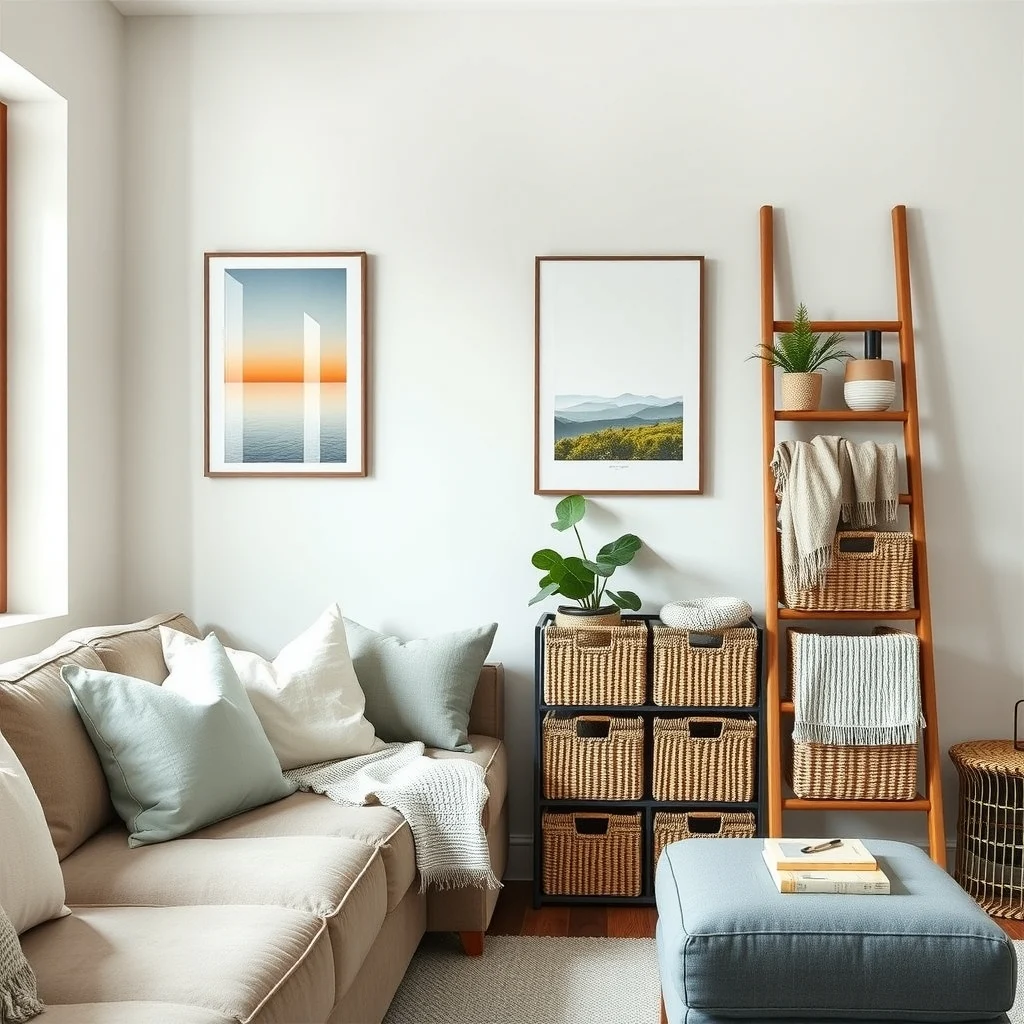
A narrow wooden ladder positioned against a wall offers vertical storage that does not dominate a small room. By placing medium‑sized woven baskets on each rung, you create individual compartments for throws, blankets, and even magazines. The natural texture of the baskets adds visual interest, while the ladder’s open design allows light to pass through, preventing the area from feeling cramped. Choosing a ladder finished in a light oak tone keeps the look airy, and selecting baskets in complementary neutral shades ensures the ensemble remains cohesive. One consideration is stability; the ladder should be secured to the wall or chosen with a wide base to prevent tipping, especially in homes with children or pets.
4. Slim console with sliding doors
This image is by AI for inspiration only.
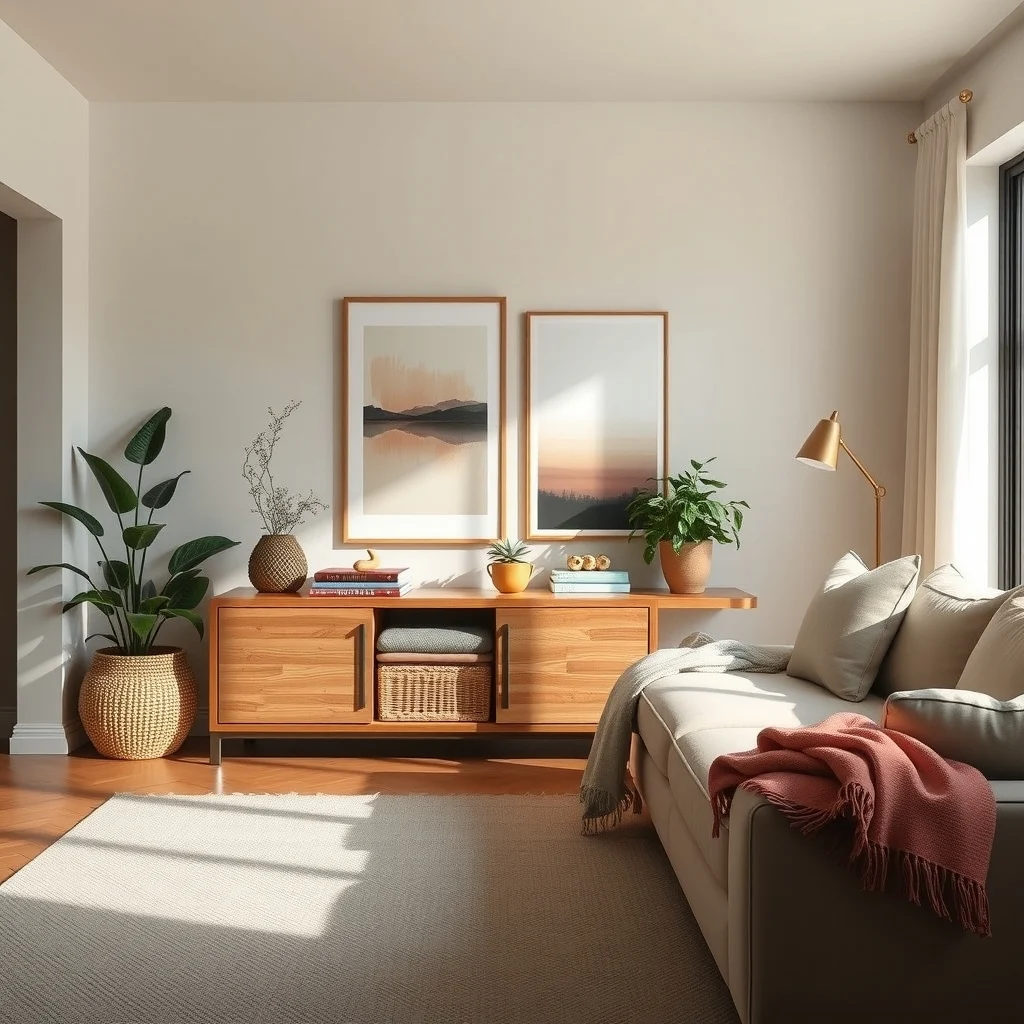
A console table that runs parallel to the sofa can hide blankets behind sleek sliding panels. Opt for a piece crafted from reclaimed pine or a matte metal frame, with doors that glide on concealed tracks. When the doors are closed, the console appears as a simple surface for a decorative lamp or a small stack of books; when opened, a shallow compartment reveals neatly folded blankets. The slim depth—typically around 12 inches—means the console does not intrude on the room’s walking path, and the sliding mechanism eliminates the need for a hinge that would otherwise protrude. The main drawback is that the storage depth limits the size of blankets you can store; larger, bulky throws may need to be folded more tightly.
5. Bench that fits under the coffee table
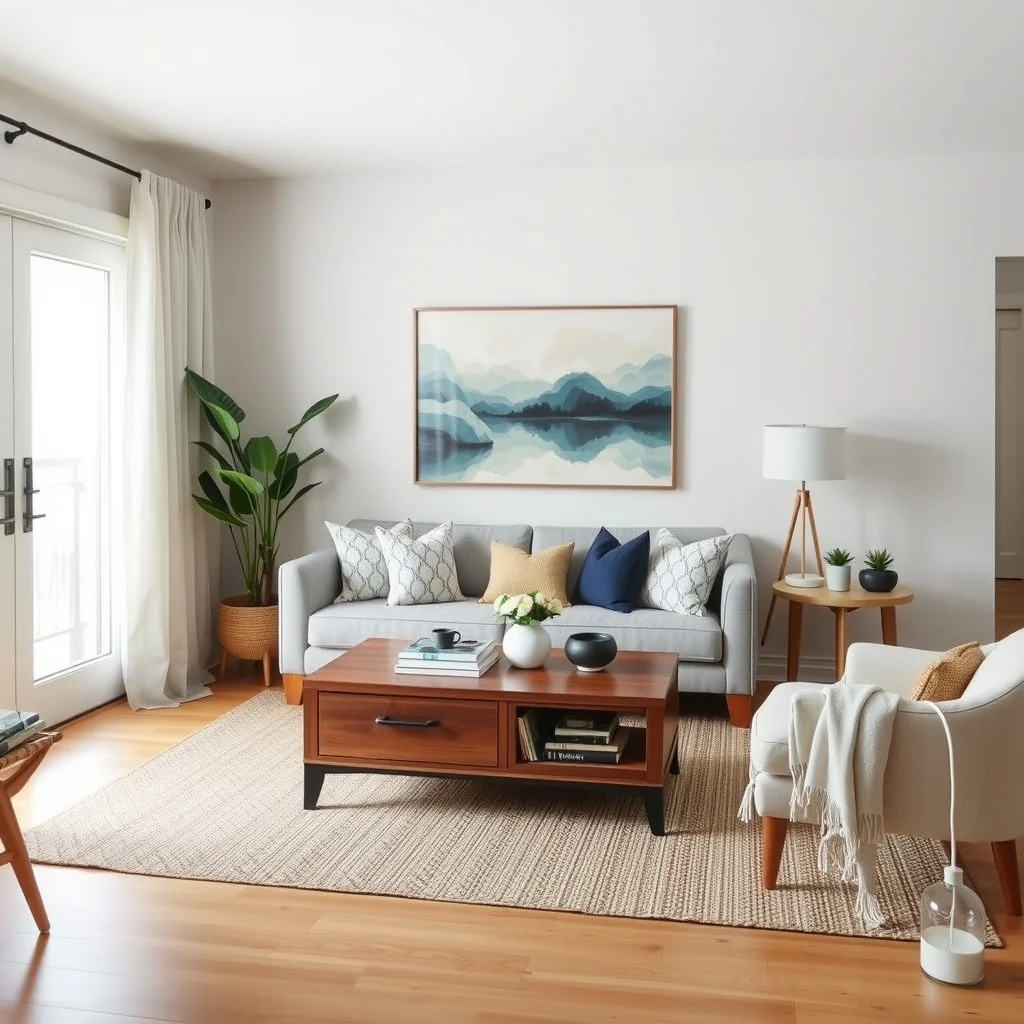
This image is by AI for inspiration only.
Many small living rooms feature a coffee table with a modest clearance underneath. Adding a low bench that slides into this space provides a dual purpose: extra seating for guests and a hidden drawer for blankets. A bench upholstered in a durable fabric, such as a soft boucle in warm greige, offers comfort while the internal drawer can be divided with a thin fabric divider to keep different textures separate. Because the bench occupies the same footprint as the coffee table, it does not add to the room’s footprint. The trade‑off is that the bench height must be carefully measured—usually no higher than 14 inches—to ensure it sits flush with the table without raising the seating level too much.
6. Wall‑mounted pocket system
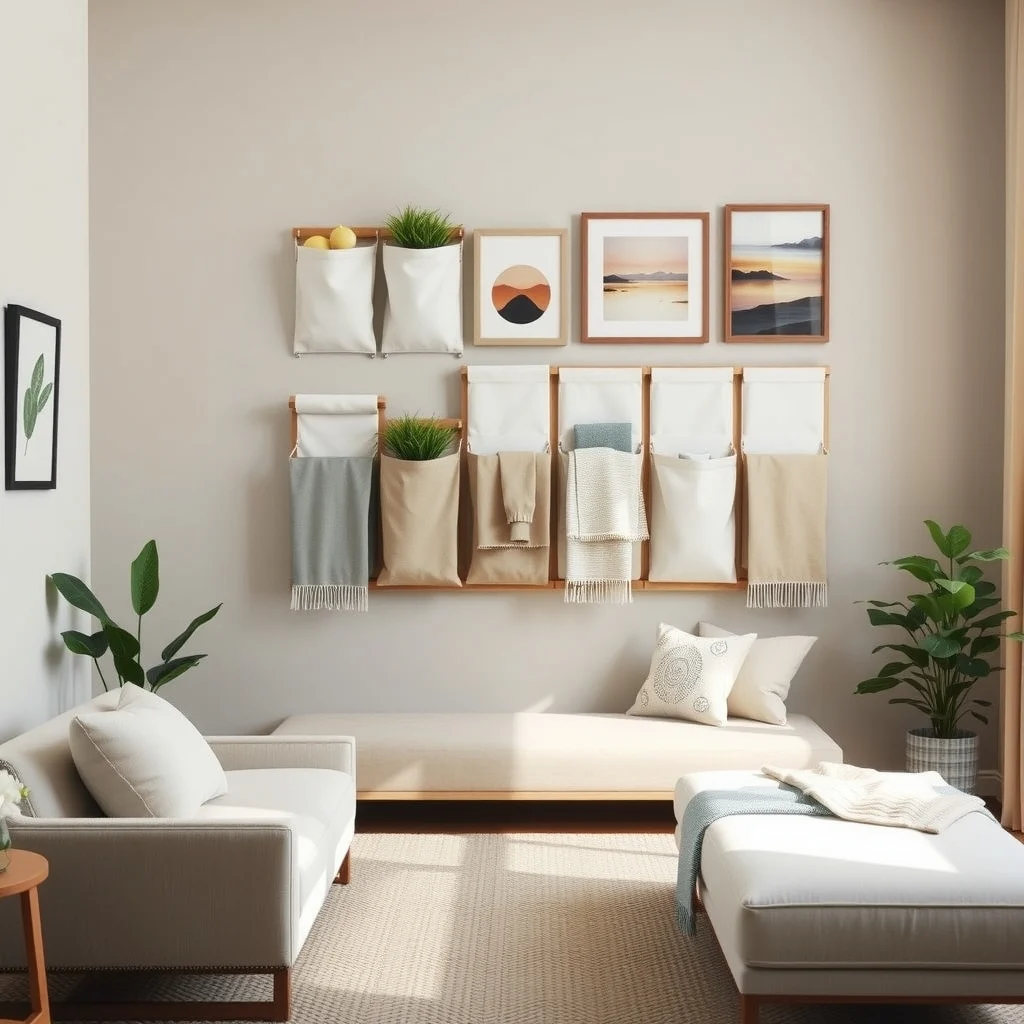
This image is by AI for inspiration only.
Floating pocket organizers mounted on an accent wall create storage that lives above eye level, preserving floor space. Selecting a system made from sturdy canvas or linen in a muted hue lets you slide blankets in and out without pulling on a cord or opening a door. The pockets can be arranged in a staggered pattern to break up the visual monotony, and the open design encourages you to keep the contents tidy. Installation requires a few screws, but the process is straightforward and does not involve major alterations. A limitation is that the pockets are best suited for lighter throws; a heavyweight blanket might sag the fabric over time.
7. Coffee table with a lift‑top
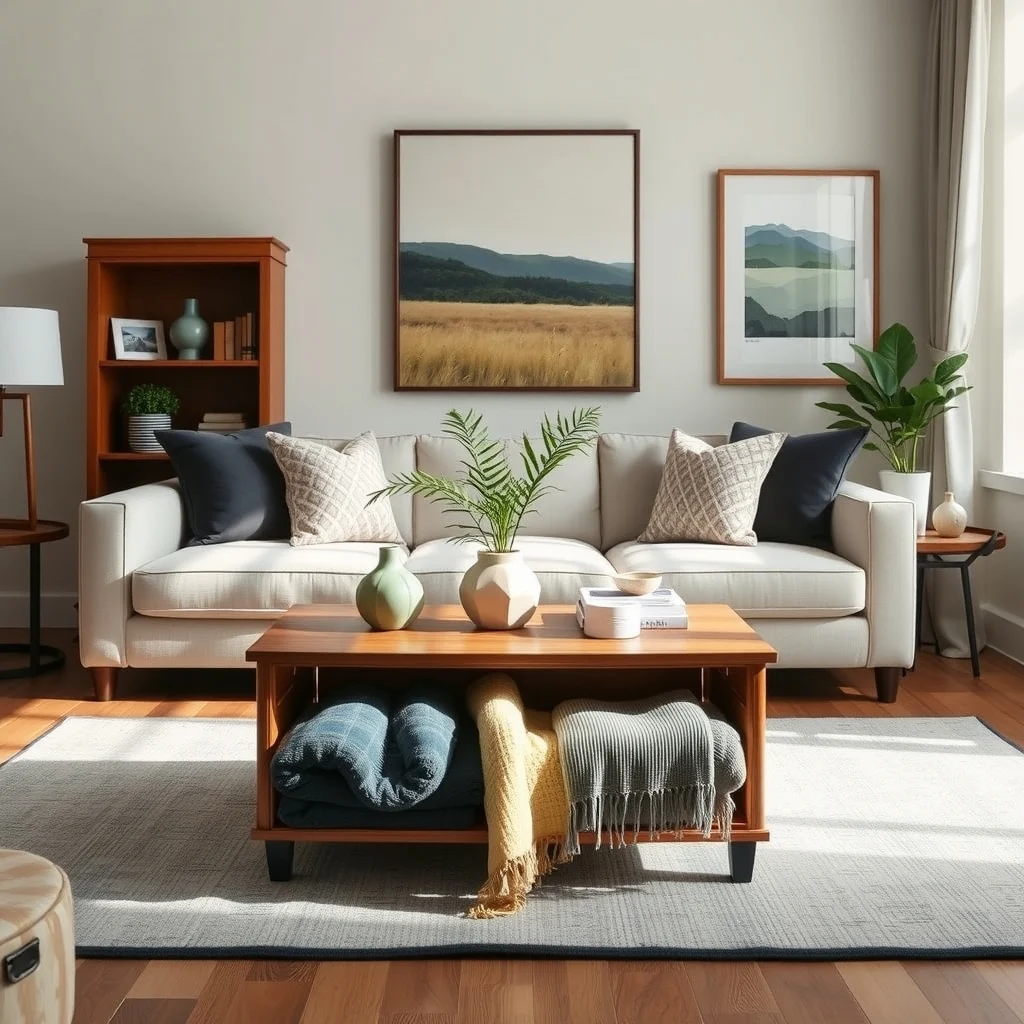
This image is by AI for inspiration only.
A coffee table that lifts to reveal an interior compartment offers a polished solution for blanket storage. When the top is raised—often with a simple lever or a gentle push—the hidden space becomes accessible, allowing you to place folded blankets inside while keeping the surface clear for drinks or décor. Choosing a table with a solid wood top in a natural finish complements a range of interior styles, and the lift mechanism can be engineered to operate smoothly without noisy clicks. Because the storage is integrated into a central piece of furniture, the room maintains a cohesive look. The primary consideration is weight; the lift‑top mechanism may have a limit, so very thick blankets should be folded loosely or stored elsewhere.
FAQ

This image is by AI for inspiration only.
How can I keep blankets from smelling musty when stored in a living room?
Store them in breathable containers such as cotton baskets or linen bags rather than plastic boxes. This allows air to circulate, reducing the chance of mildew. Adding a small sachet of dried lavender or cedar chips can also keep the fibers fresh.
What is the best way to fold a blanket for compact storage?
Lay the blanket flat, fold it in thirds lengthwise, then roll it gently from one short edge to the other. Rolling prevents sharp creases and makes the bundle easier to slide into narrow compartments.
Can I use a decorative rug as a hidden storage area for throws?
A rug itself cannot hold items, but placing a low storage box underneath a rug can create a hidden compartment. Choose a box with a smooth lid that won’t snag the rug’s fibers, and ensure the box is not too high, so the rug lies flat.
Is it safe to store blankets near a heat source?
Keep blankets at least two feet away from radiators or space heaters. Excessive heat can weaken fibers over time and increase the risk of accidental ignition.
Do I need to match the storage piece’s color to my existing décor?
Matching isn’t required; a contrasting texture can add visual interest. However, if you prefer a uniform look, choose a neutral shade that blends with the room’s palette, such as soft greige, muted sage, or warm oak.
Final Thoughts
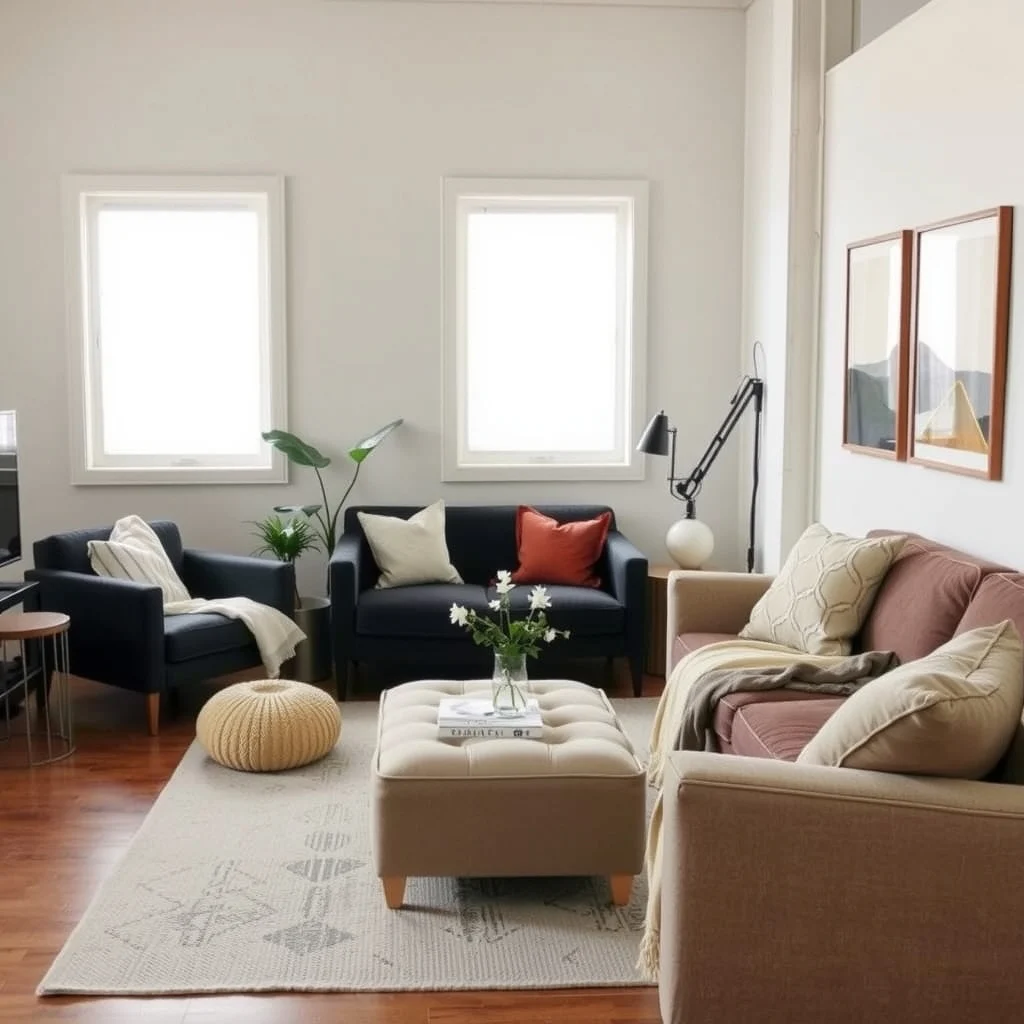
This image is by AI for inspiration only.
Integrating storage for blankets and throws into a small living room is less about finding extra space and more about rethinking the furniture you already have. By selecting pieces that serve dual purposes—like an ottoman that opens, a ladder with baskets, or a lift‑top coffee table—you preserve the room’s openness while keeping cozy textiles within reach. Consider the material durability, the height of each storage solution, and any weight limits before committing. With thoughtful choices, your living room can stay tidy, welcoming, and ready for any season’s comfort without feeling cramped.