How to Organize a Minimal Bedside Area in a Tiny Room

Living in a compact space forces every square inch to earn its place, and the bedside is often the most contested zone. A cluttered nightstand can make a room feel cramped, while a thoughtfully arranged surface can add calm and function without crowding the floor. Below you’ll find seven detailed approaches that turn a narrow bedside into a clean, purposeful corner. Each idea balances aesthetics with practicality, so you can keep the space feeling airy while still having everything you need at arm’s reach.
1. Choose a streamlined nightstand that fits the scale of the room
This image is by AI for inspiration only.
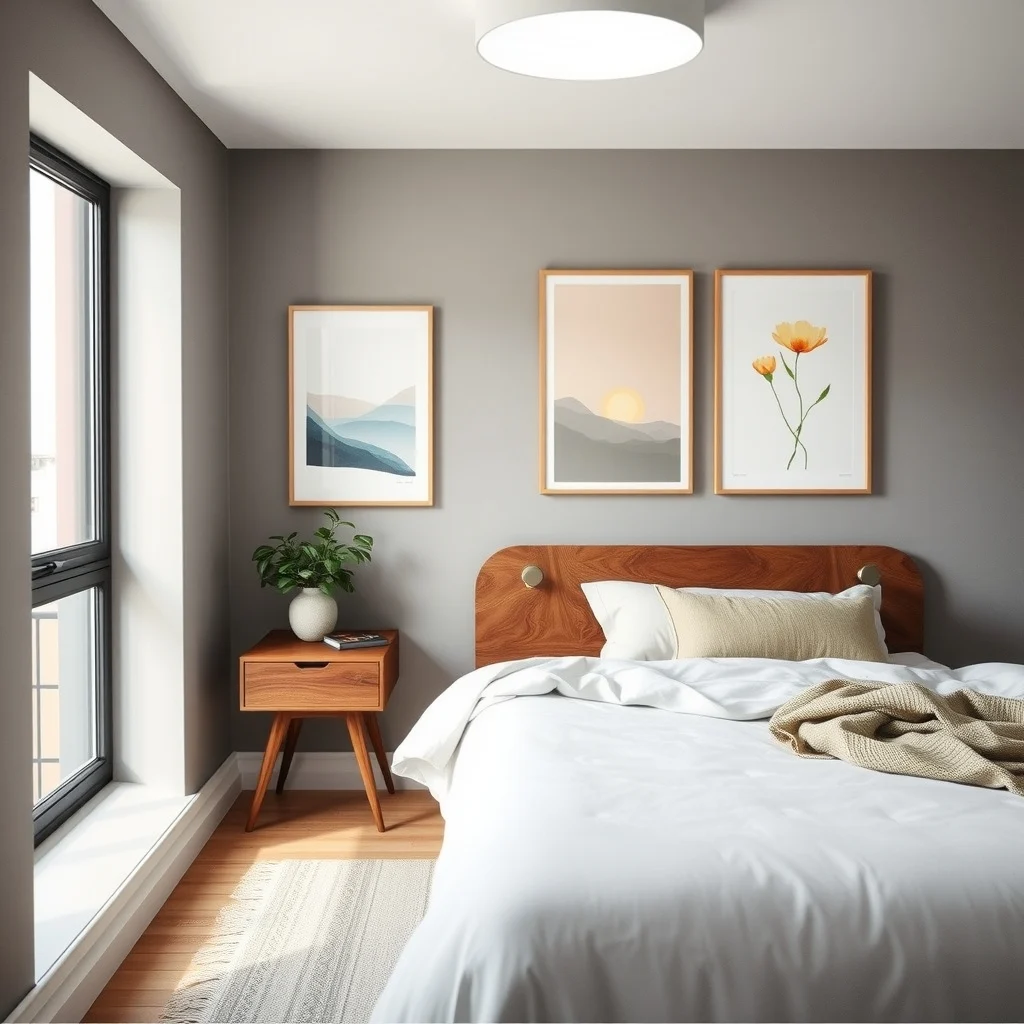
The first piece you place beside the bed sets the tone for the entire area. In a tiny room, a nightstand that is too bulky will dominate the visual field and limit floor space for movement. Look for a piece with a narrow profile—ideally no wider than the mattress itself—and a height that aligns with the top of the mattress for easy reach. Materials such as light‑finished oak or matte white lacquer help reflect natural light, making the wall feel wider. A single drawer or an open shelf can hold a lamp, a book, and a phone charger without the need for a larger cabinet. If you prefer a floating option, wall‑mounted shelves eliminate the leg space entirely, but be sure the brackets are securely anchored to support daily use.
When selecting a nightstand, consider the trade‑off between storage and footprint. A piece with multiple drawers offers more hidden space but may be deeper than necessary, while a simple shelf provides a lighter look but requires you to be more deliberate about what stays on display. Choose the style that matches your willingness to keep surfaces tidy.
2. Integrate a slim, adjustable lamp that doubles as a reading light
This image is by AI for inspiration only.
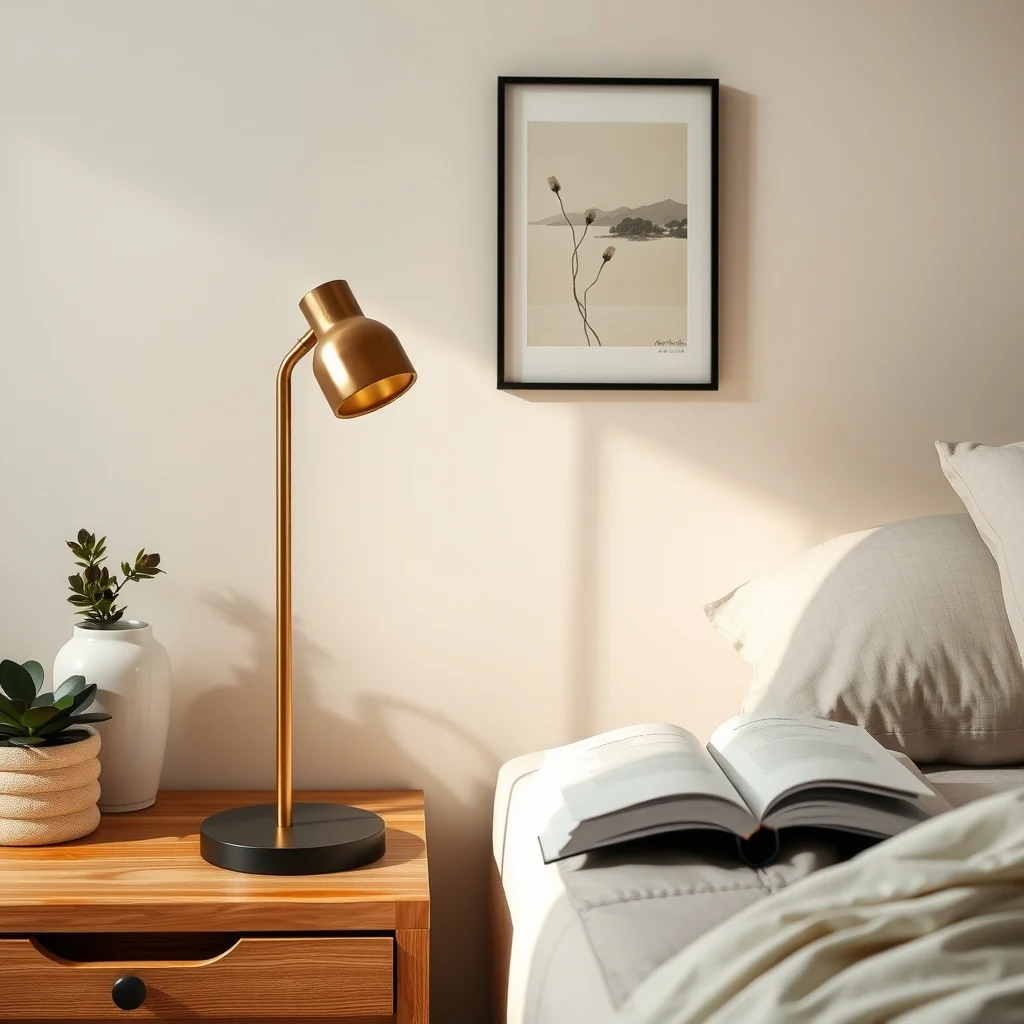
Lighting is essential for a functional bedside, yet a tall floor lamp can dominate a small room. A slim, adjustable table lamp with a brushed brass or matte black finish adds a touch of elegance without overwhelming the space. Position the lamp so the shade directs light toward the headboard, creating a gentle pool for evening reading while keeping the rest of the room softly illuminated.
LED bulbs with a warm color temperature reduce eye strain and consume little energy, which is a practical benefit for any bedroom. If the nightstand lacks a built-in outlet, a short power strip with a cord management sleeve can keep cables neat. The downside of a single lamp is limited flexibility; should you need brighter ambient light later, consider adding a recessed ceiling fixture that can be dimmed to complement the bedside lamp.
3. Use a vertical storage solution to keep essentials off the surface
This image is by AI for inspiration only.
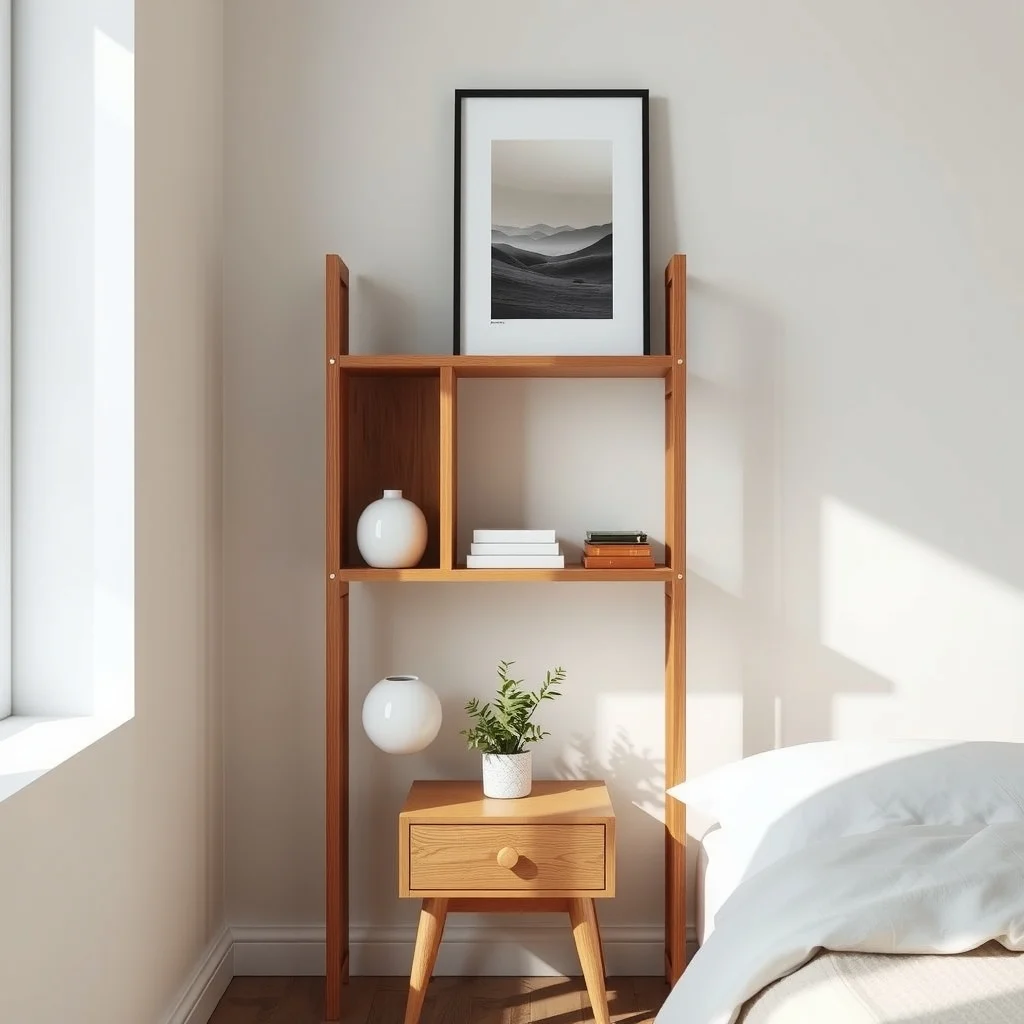
When floor space is at a premium, turning the wall into storage is a natural next step. A narrow, tall metal or wooden rack placed directly behind the nightstand can hold a few decorative boxes, a small plant, and a stack of books. The vertical orientation draws the eye upward, which subtly expands the perception of height in the room.
Choosing open shelving rather than closed cabinets encourages you to curate what stays visible, preventing the accumulation of forgotten items. A couple of woven baskets in neutral tones can hide smaller pieces like headphones or spare chargers, offering a tidy look while still keeping them accessible. Keep in mind that a very tall rack may cast shadows over the bedside, so aim for a height that aligns with the top of the nightstand or is slightly lower.
4. Add a soft, low‑profile rug to define the bedside zone
This image is by AI for inspiration only.
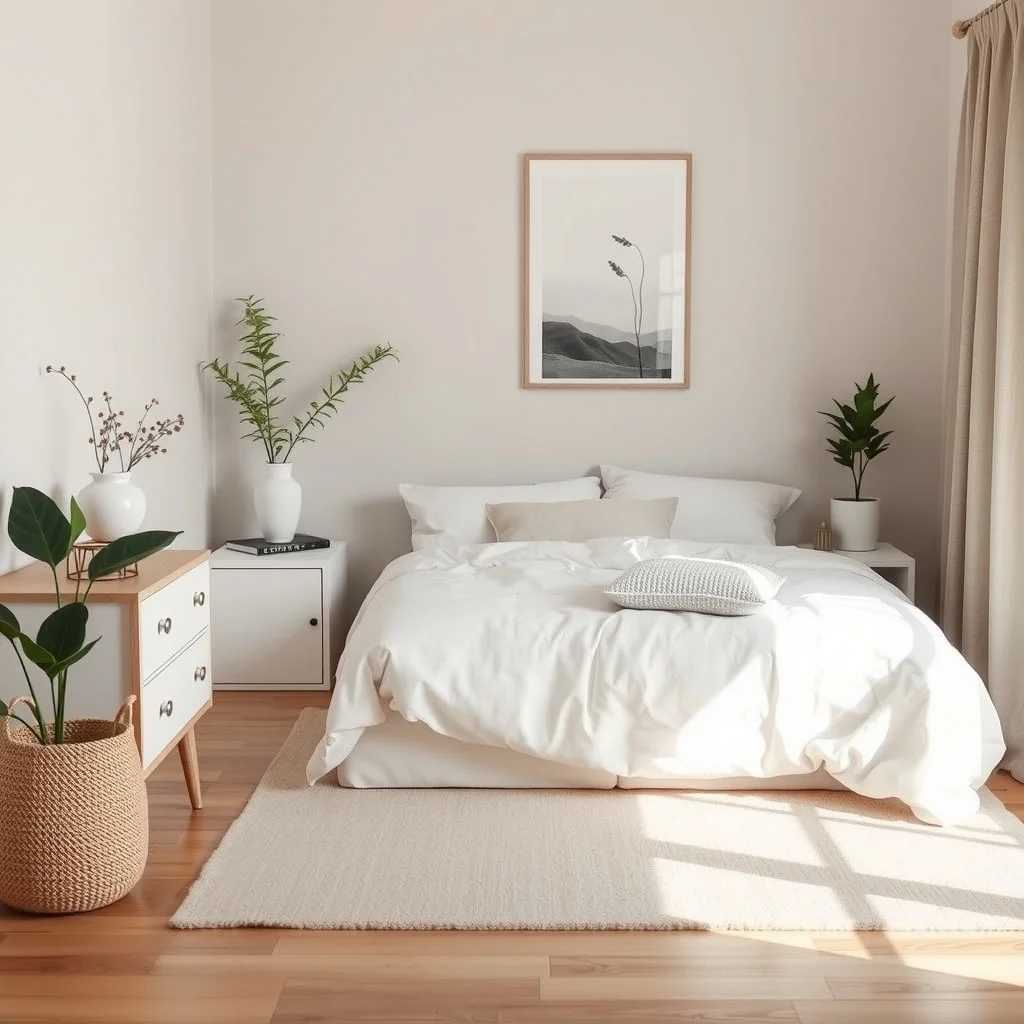
A rug anchored at the foot of the bed can also serve the bedside area by providing a tactile boundary without consuming floor space. Opt for a low‑pile rug in a muted shade such as greige or soft sage; these colors blend with most palettes and help the room feel cohesive. A rug measuring about 60 by 90 centimeters is sufficient to step onto when getting out of bed, while still leaving ample room for the rest of the floor plan.
The texture of a natural fiber like jute or a tightly woven cotton adds subtle comfort underfoot, which is especially pleasant on colder mornings. Because rugs can collect dust, choose a material that is easy to vacuum and spot‑clean. If you later decide the rug feels too heavy visually, a thinner runner can replace it without losing the defined area.
5. Incorporate a small, decorative tray for nightly necessities
This image is by AI for inspiration only.
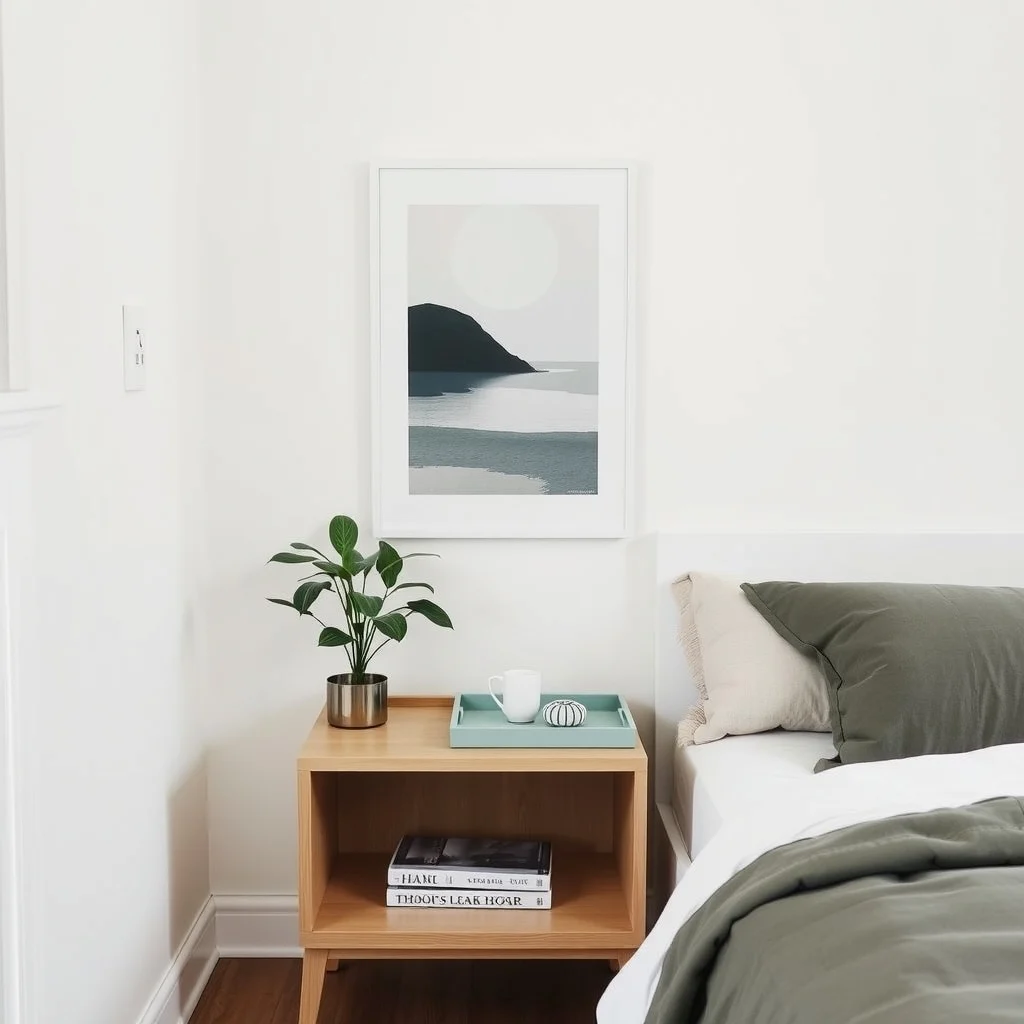
Even the most minimal nightstand can benefit from a designated spot for items you use each night. A shallow tray in a material that complements the nightstand—such as a matte ceramic in a muted teal or a brushed steel rectangle—creates a visual anchor that prevents objects from scattering. Place your glasses, a notebook, and a soothing candle (or an electric aromatherapy diffuser) within the tray, keeping the rest of the surface clear.
The tray’s flat surface also makes it easy to wipe down, which is a practical advantage in a bedroom where dust tends to settle. One limitation is that a tray adds an extra layer to the visual hierarchy; if the nightstand is already very small, choose a tray with thin edges to avoid a cramped appearance.
6. Choose a compact, multi‑functional storage box for linens
This image is by AI for inspiration only.
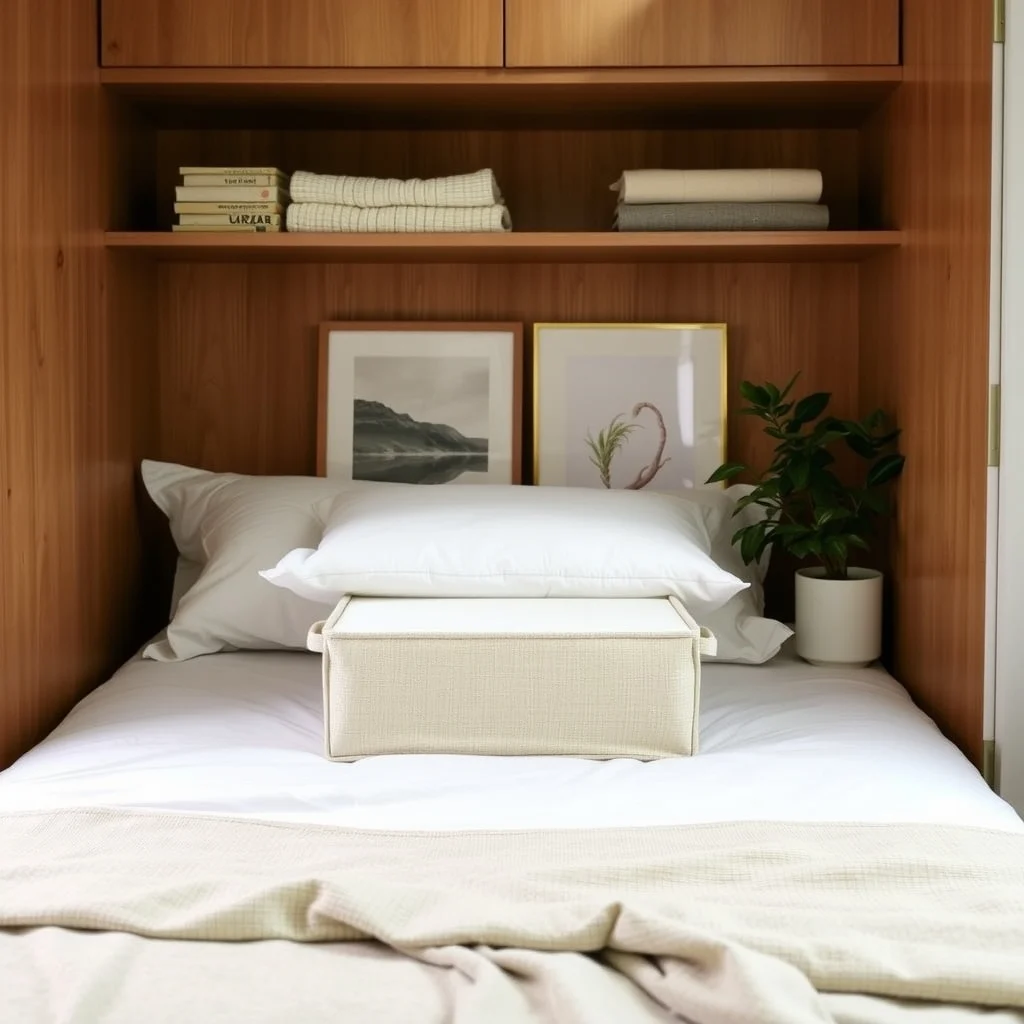
Many tiny rooms lack a dedicated closet, so storing an extra set of sheets or a folded blanket near the bed is common. A fabric storage box that slides under the mattress or sits neatly on the lower shelf of the nightstand can solve this problem without adding a bulky chest. Look for boxes made from linen or canvas in a neutral hue that blends with the bedding, and ensure the lid closes securely to keep dust out.
These boxes are lightweight, making them easy to move when you need to change the arrangement. However, because they sit low, they may limit legroom if the nightstand is already shallow. If leg clearance becomes an issue, consider a slimmer, taller box that fits behind the nightstand instead.
7. Keep the wall behind the bed simple and reflective
This image is by AI for inspiration only.
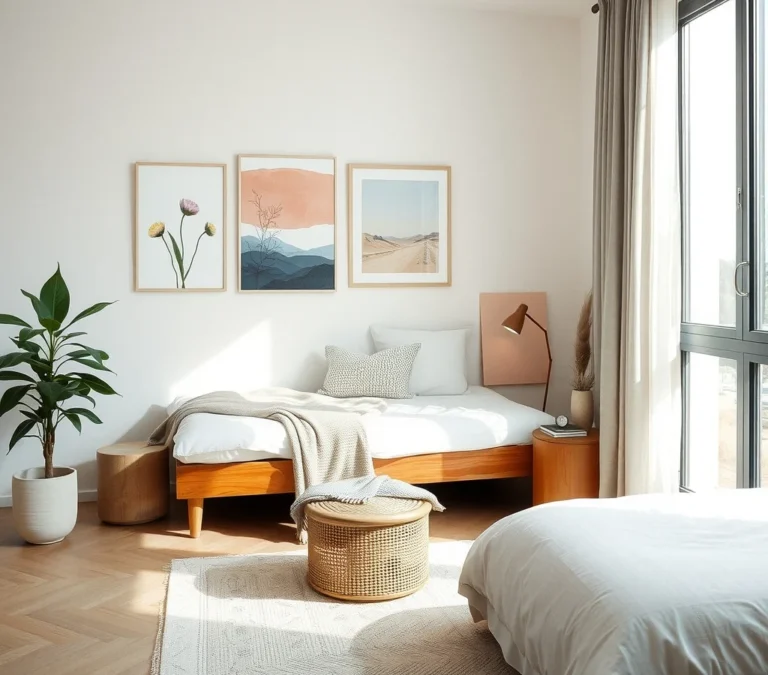
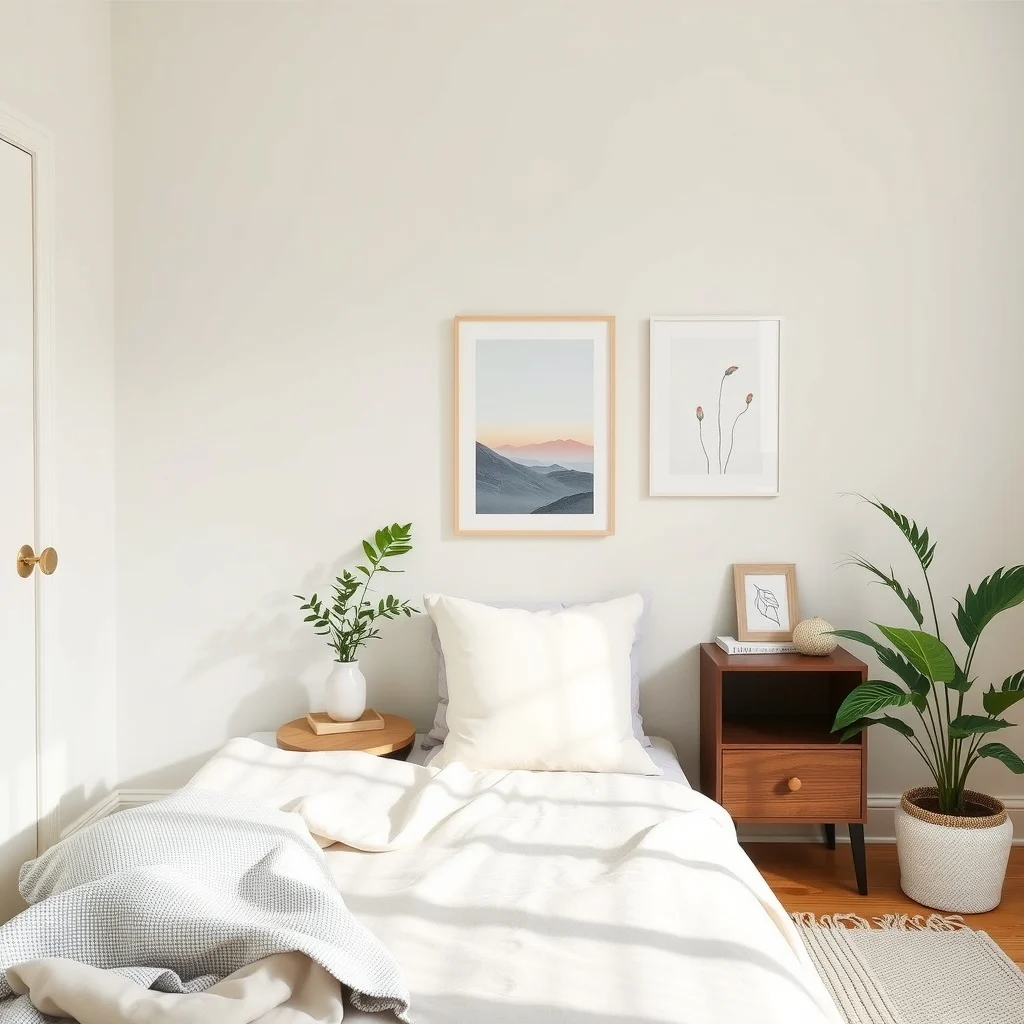
The backdrop of the bedside influences how spacious the area feels. A smooth, light‑colored wall—such as a soft ivory or pale sky blue—reflects both natural and artificial light, preventing the space from feeling closed in. If the wall already has a bold pattern, a narrow, floating shelf painted the same color can break up the visual weight while still providing a place for a small plant or a piece of abstract art.
Mirrored panels or a thin metallic accent strip can also add a subtle sheen that bounces light across the room, but be cautious not to overdo reflective surfaces, as they can create glare at night. The key is to maintain a calm backdrop that allows the bedside accessories to stand out without competing for attention.
Frequently Asked Questions
This image is by AI for inspiration only.
How can I hide cords on a tiny bedside?
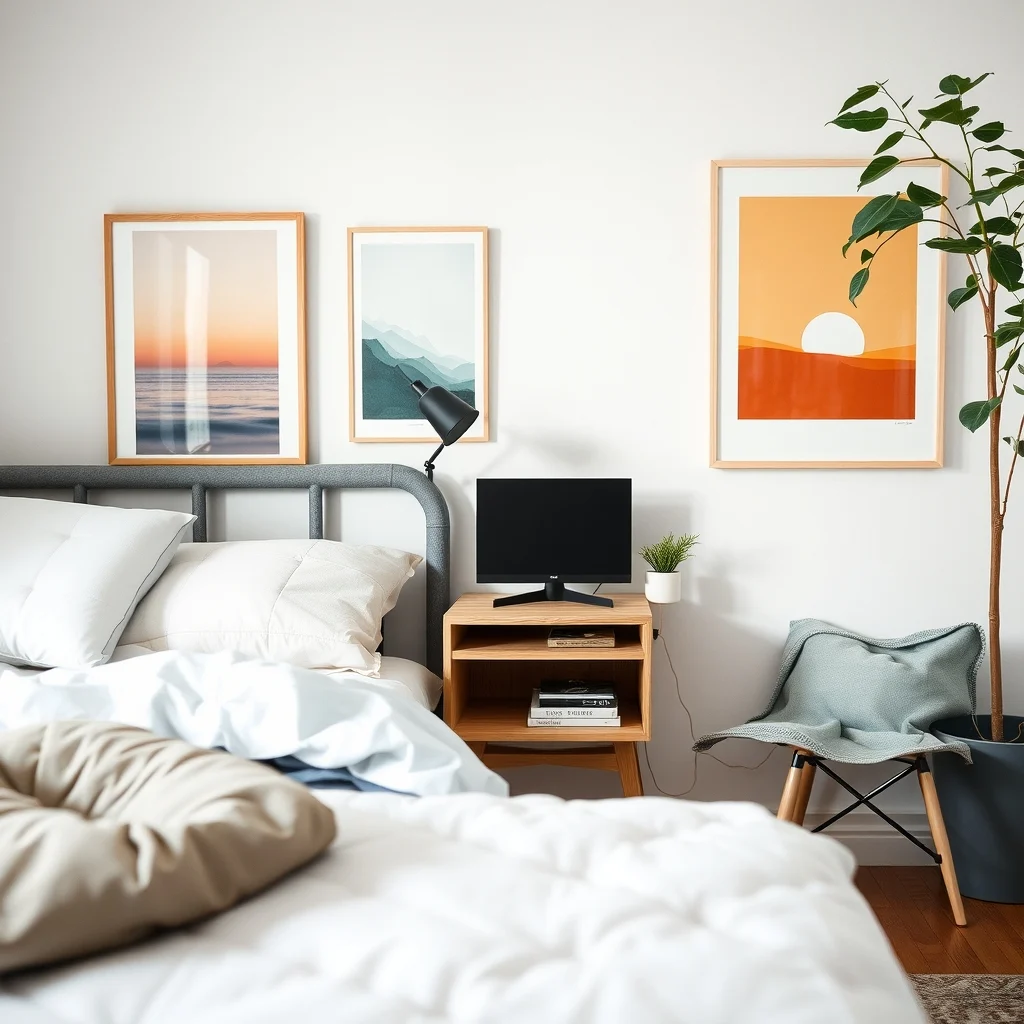
Use a short power strip with built-in cord organizers and route the cables behind the nightstand or along the wall with a decorative cable cover. This keeps the surface tidy and reduces tripping hazards.
Is a floating nightstand suitable for a heavy lamp?
A floating nightstand can support a lamp if the mounting brackets are rated for the combined weight of the shelf and the lamp. Choose sturdy hardware and verify the wall type—drywall alone may need anchors or studs for safety.
What type of lighting is best for reading in a small bedroom?
A warm LED table lamp with an adjustable arm provides focused light without brightening the whole room. Pair it with a dimmable ceiling fixture to create a layered lighting scheme that can be softened for bedtime.
Can I use a plant on the bedside without taking up too much space?
A small, low‑maintenance plant such as a snake plant or a pothos in a slim pot fits well on a nightstand or a narrow shelf. It adds a touch of greenery without overwhelming the area, and the plant’s vertical growth keeps the floor clear.
How do I choose the right size rug for a tiny bedroom?
Select a rug that extends just beyond the bed’s footprint, typically around 60 by 90 centimeters. This size defines the sleeping zone while preserving floor space for movement and other furniture.
Final Thoughts
This image is by AI for inspiration only.
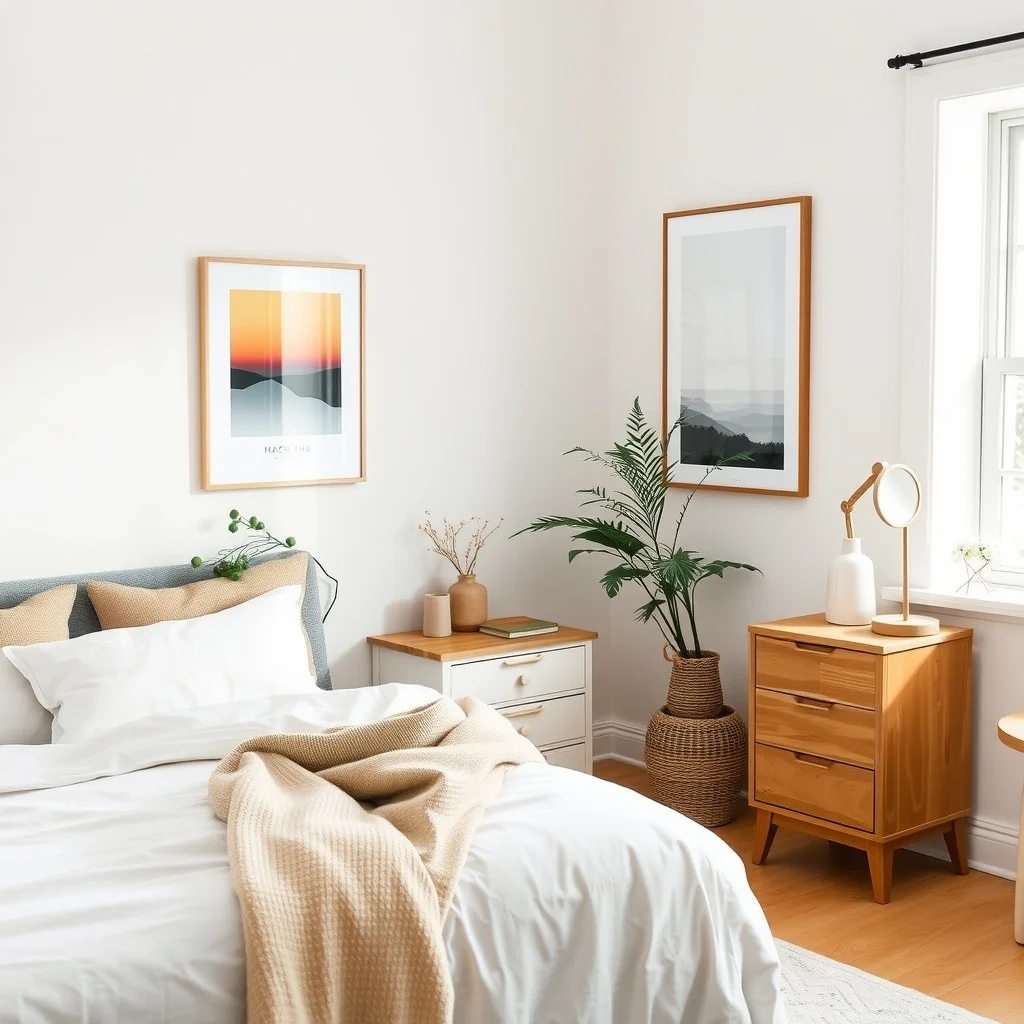
Organizing a minimal bedside in a tiny room is less about eliminating items and more about choosing pieces that serve multiple purposes while maintaining visual lightness. By selecting a scaled nightstand, integrating purposeful lighting, embracing vertical storage, and using subtle textures, you can create a serene corner that feels both functional and spacious. Remember that each element should complement the others—nothing works in isolation. With thoughtful selection and a bit of discipline, the bedside can become a calm, organized retreat that enhances the overall feel of your compact living space.