How to Store Bags and Backpacks Near the Front Door

Every time you step through the entryway, a stray tote or a forgotten backpack can turn a welcoming foyer into a visual obstacle. The challenge is to keep those everyday carriers accessible without sacrificing style. Below you’ll find seven distinct approaches that blend function with design, allowing you to greet guests and yourself with a tidy, inviting space.
1. A Low‑Profile Bench with Hidden Storage
This image is by AI for inspiration only.
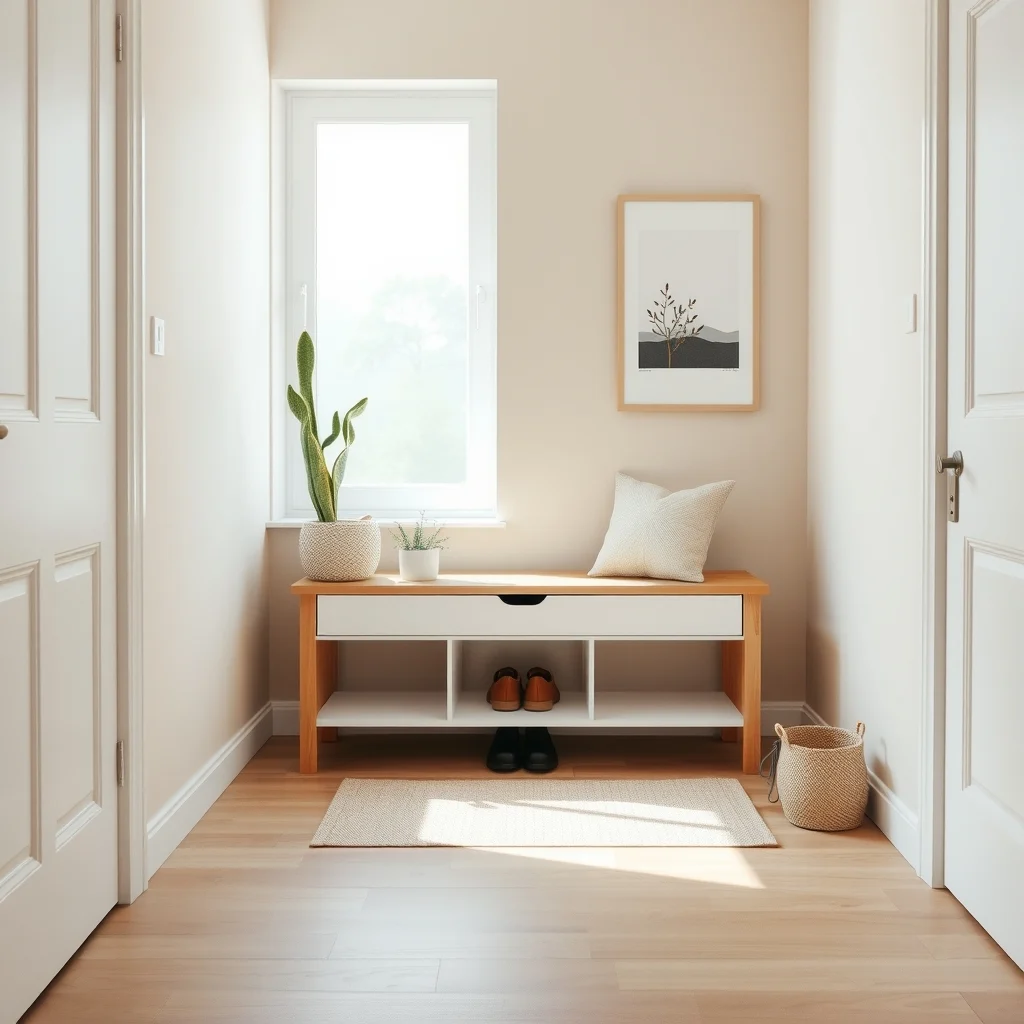
A bench placed against the wall offers a natural landing spot for shoes, mail, and the occasional pair of keys. When the seat doubles as a pull‑out drawer or a hinged lid, the same piece becomes a discreet home for bags and backpacks. The height of a typical bench—about 16 to 18 inches—matches the average shoulder line, making it easy to set a tote down without bending. Choose a frame in solid oak or brushed metal, and pair it with a cushion in a muted linen that echoes the hallway’s wall color.
The hidden compartment protects fabrics from dust while keeping the exterior sleek. A soft fabric liner prevents scuffs, and a simple latch keeps the lid from swinging open in high‑traffic moments. Because the bench sits at floor level, it does not interfere with lighting fixtures or wall art, preserving the visual flow of the entryway.
If space is limited, a bench no deeper than 14 inches still provides enough room for a medium‑sized backpack. The trade‑off is a slightly smaller storage volume, but the added seating often outweighs the loss, especially in homes where family members pause to tie shoes before heading out.
2. Wall‑Mounted Cubby System with Mixed Materials
This image is by AI for inspiration only.
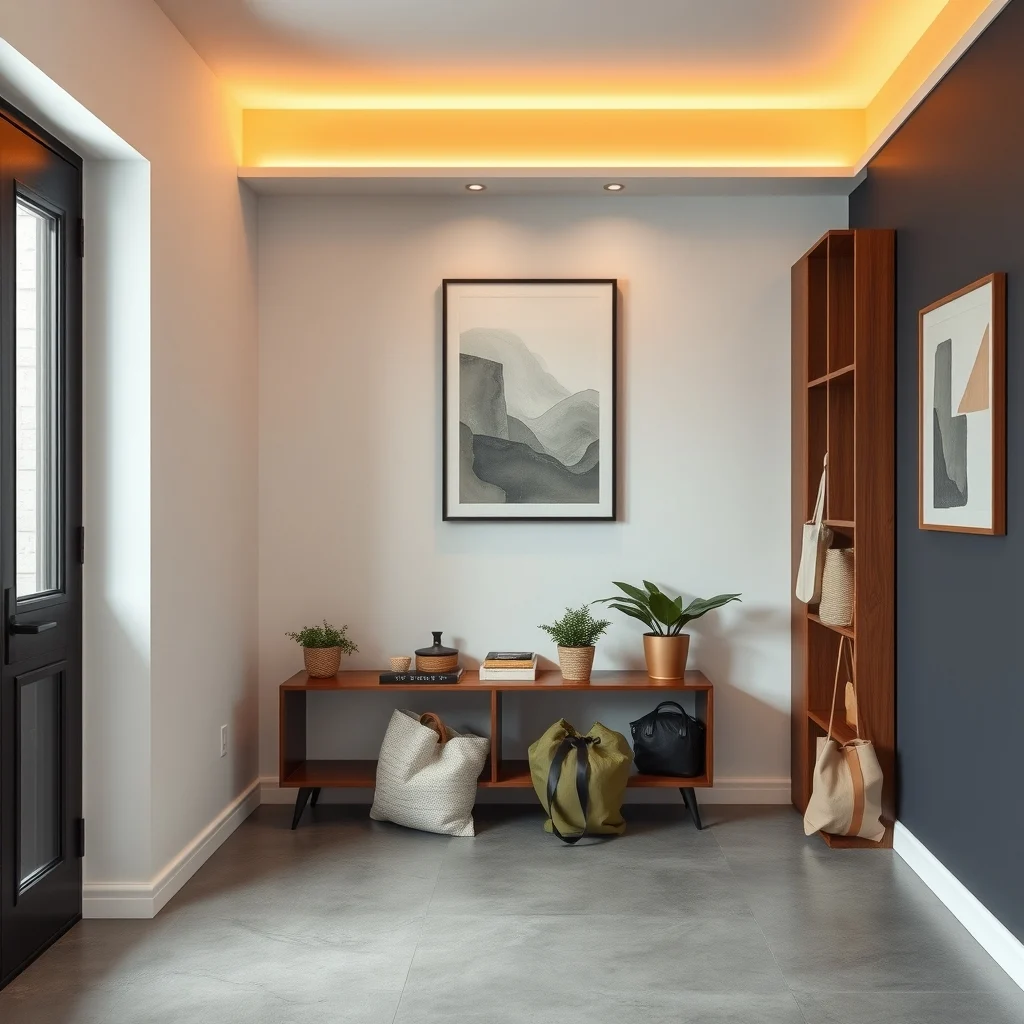
When floor space is at a premium, vertical storage becomes the most efficient solution. A series of open cubbies anchored to the wall can hold bags of varying sizes while acting as a decorative element. Combining reclaimed wood panels with matte black metal brackets creates a modern contrast that fits both rustic and contemporary interiors.
The open design invites you to see each bag at a glance, reducing the time spent searching for the right one. To prevent dust buildup, line each cubby with a thin felt pad; the material is gentle on leather straps and canvas fabrics alike. Because the system is mounted, you can adjust the height of each compartment to match the tallest backpack, ensuring nothing hangs awkwardly.
One limitation of this approach is the need for sturdy wall anchoring, especially if you plan to store heavier duffel bags. Stud finders and appropriate hardware are essential, and if you’re renting, a removable adhesive system can provide a compromise without damaging the wall.
3. A Set of Woven Baskets on a Console Table
This image is by AI for inspiration only.
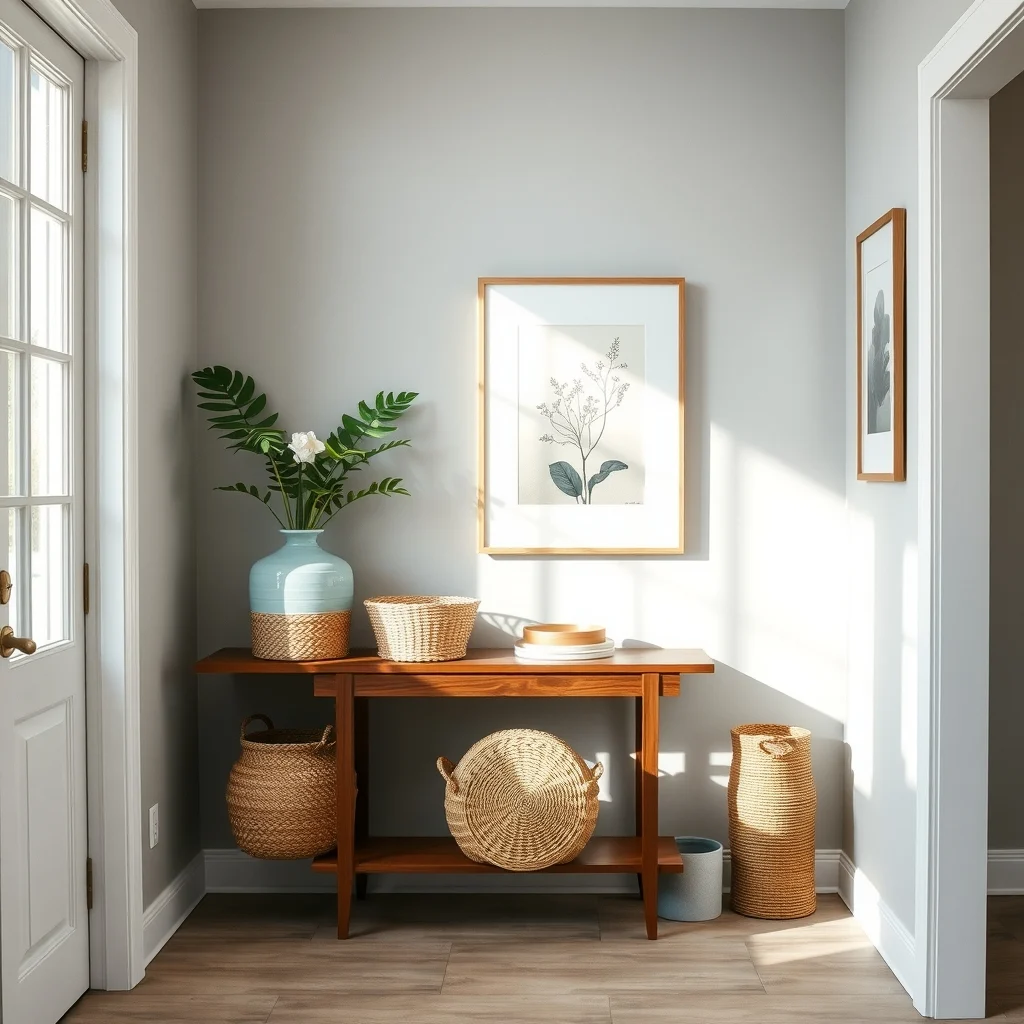
Natural fibers such as seagrass or rattan bring a touch of warmth to an entryway, and when paired with a narrow console table, they become an elegant storage trio. Each basket can be dedicated to a specific type of carrier—tote, messenger bag, or small backpack—making organization intuitive. The baskets’ open weave allows air to circulate, which is especially useful for damp weather gear.
The console itself should be low enough to keep sight lines clear, typically around 30 inches high. A tabletop finished in a soft walnut or painted a muted teal adds visual interest without overwhelming the space. When not in use, the baskets can hold decorative objects like a vase of fresh branches or a stack of seasonal magazines.
Because woven baskets are lightweight, they are easy to move if you rearrange furniture, but they offer less protection against accidental spills. A quick wipe with a damp cloth is all that’s needed to keep them looking fresh, though a protective liner can be added for extra durability.
4. A Decorative Coat Rack with Integrated Hooks for Bags
This image is by AI for inspiration only.
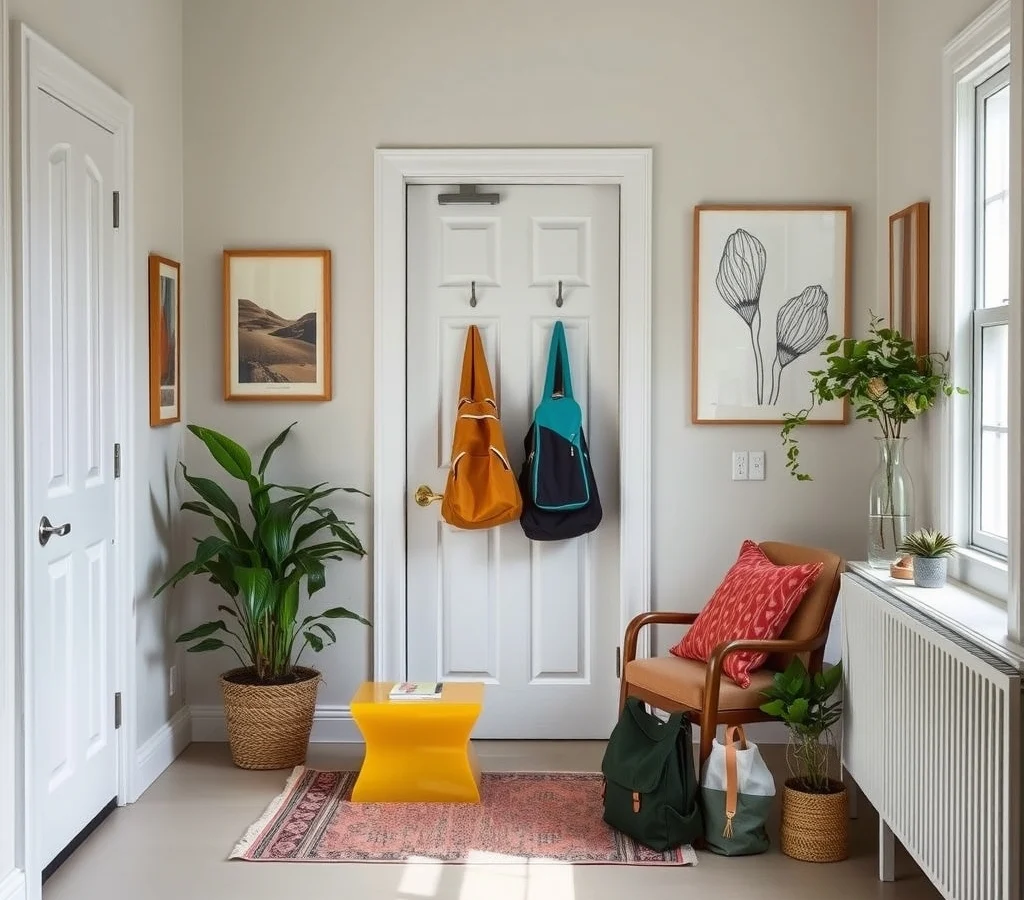
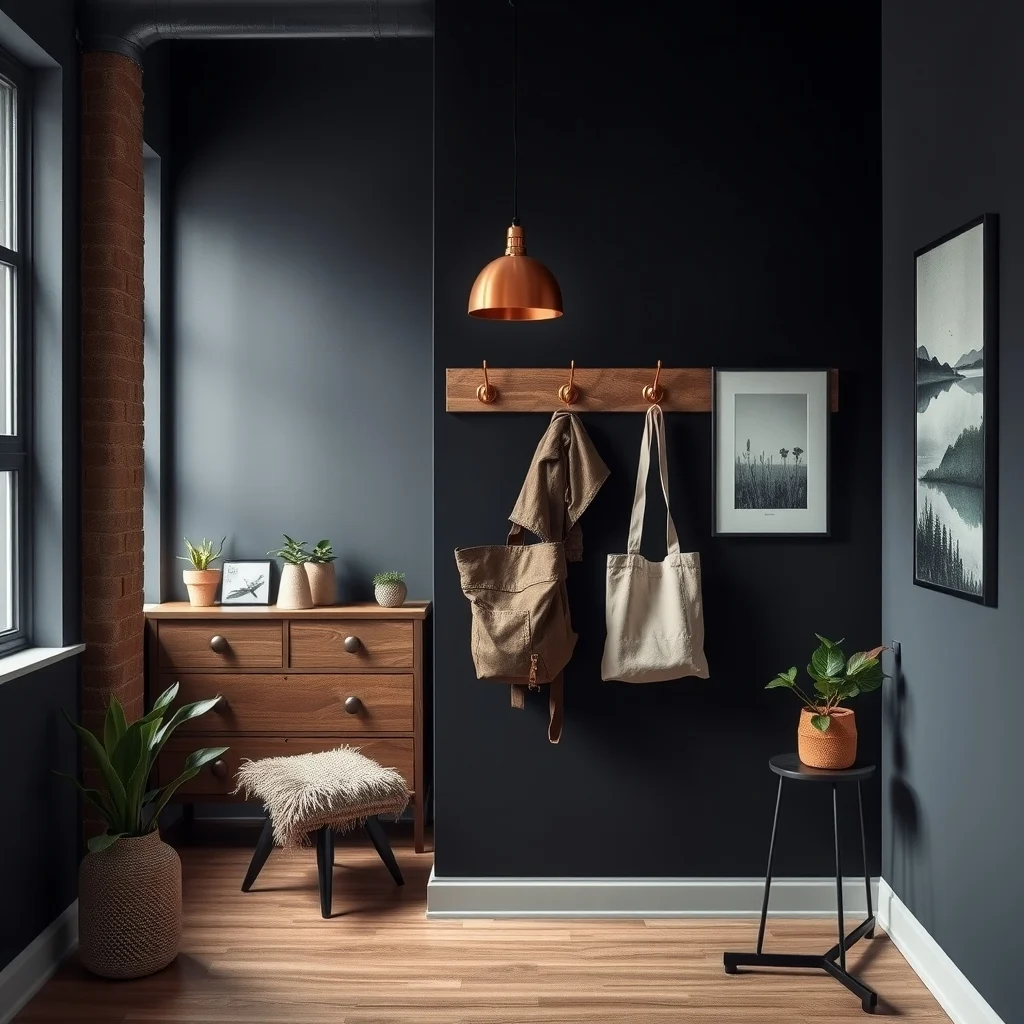
Coat racks are a staple of many foyers, yet most feature only a few hooks that are too low for larger backpacks. By selecting a rack that incorporates a mix of high and low hooks, you create a tiered system that accommodates everything from slim leather satchels to bulky gym bags. Brass or oil‑rubbed bronze finishes add a hint of elegance, while a sleek wooden back panel grounds the piece.
The upper row of hooks, positioned at about 60 inches, is perfect for backpacks that need to hang freely. The lower row, around 40 inches, works well for tote bags that benefit from a slight dip, allowing the straps to rest comfortably. Adding a small shelf beneath the hooks provides a flat surface for keys, a wallet, or a decorative tray.
One consideration is that a rack with many hooks can dominate a small entryway if not balanced with other elements. Pairing it with a narrow runner rug and a simple wall mirror helps keep the space feeling open while reflecting light onto the hooks.
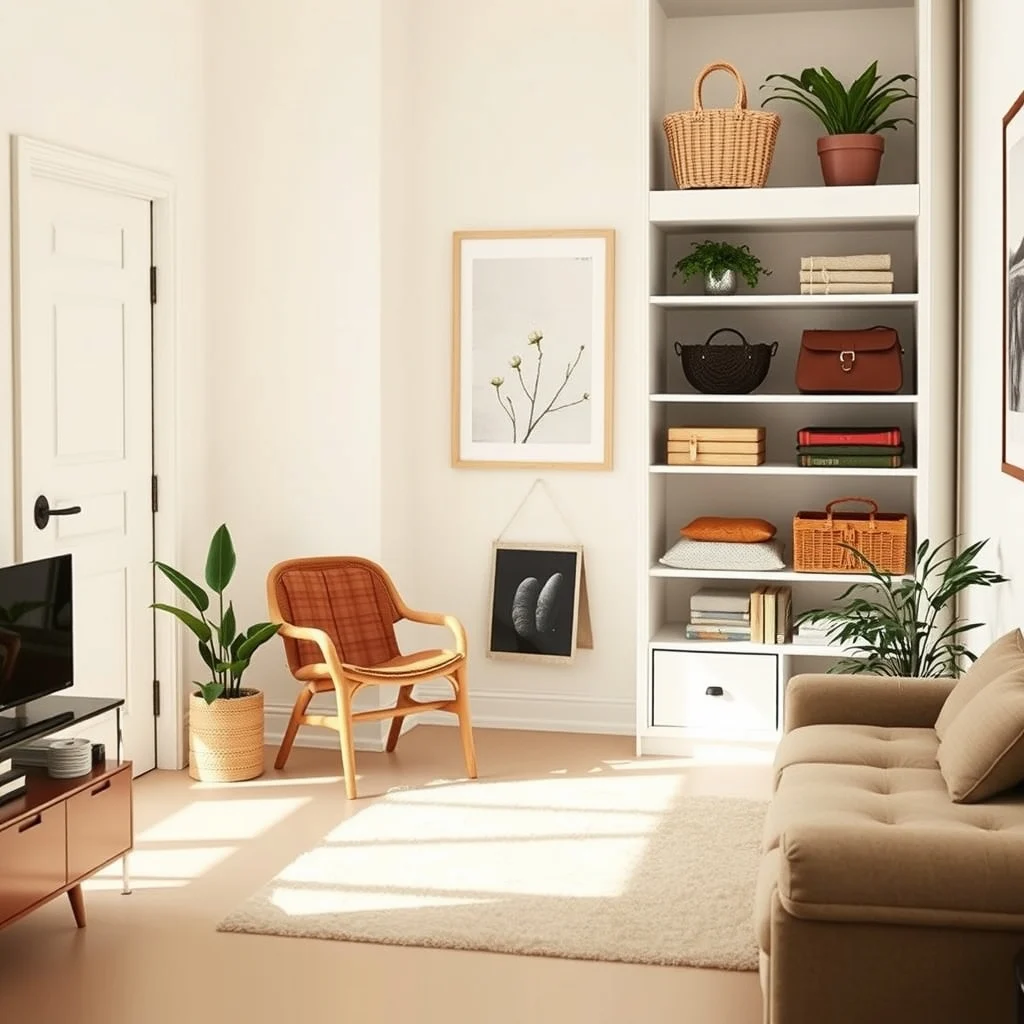
5. A Built‑In Niche or Alcove with Custom Shelving
This image is by AI for inspiration only.
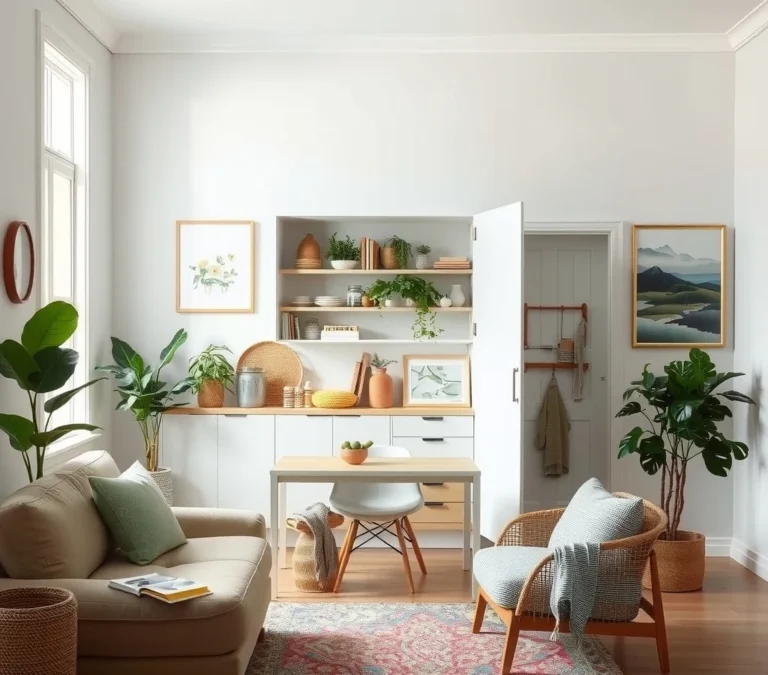
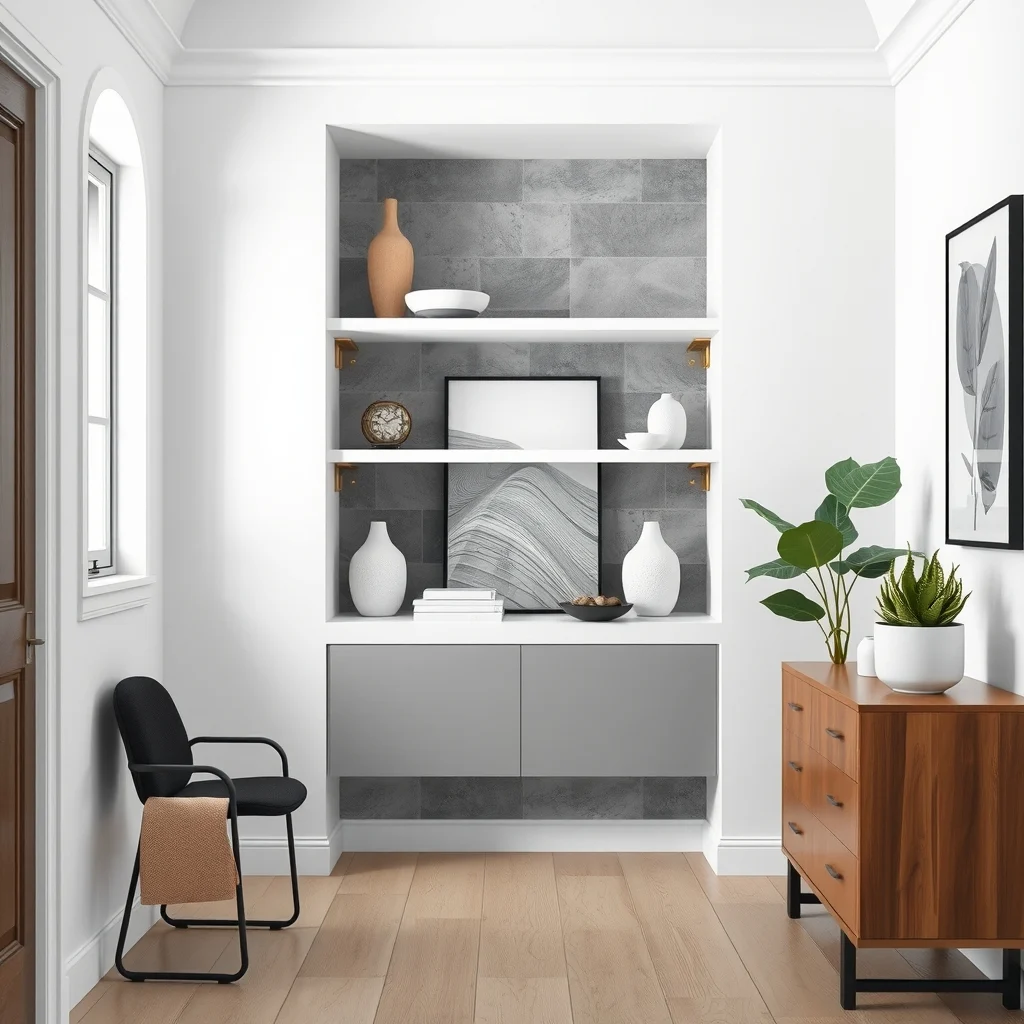
When you have the opportunity to remodel or add a small architectural feature, a built‑in niche becomes a seamless storage solution. Framed by the surrounding wall, the niche can be fitted with floating shelves that hold bags upright, keeping their shapes intact and their handles visible. Finishing the interior with a light‑colored paint or a subtle wallpaper adds depth without making the area feel cramped.
Because the niche is recessed, it does not interfere with foot traffic, and it can be illuminated with a recessed LED strip that highlights the contents without creating glare. The shelves can be spaced at 10‑inch intervals, allowing you to store a slim laptop bag on the top shelf and a larger duffel on the bottom.
The main drawback is the commitment of wall space; once installed, the niche cannot be easily moved. If you anticipate frequent changes in layout, consider a freestanding shelving unit that mimics the look of a built‑in without the permanence.
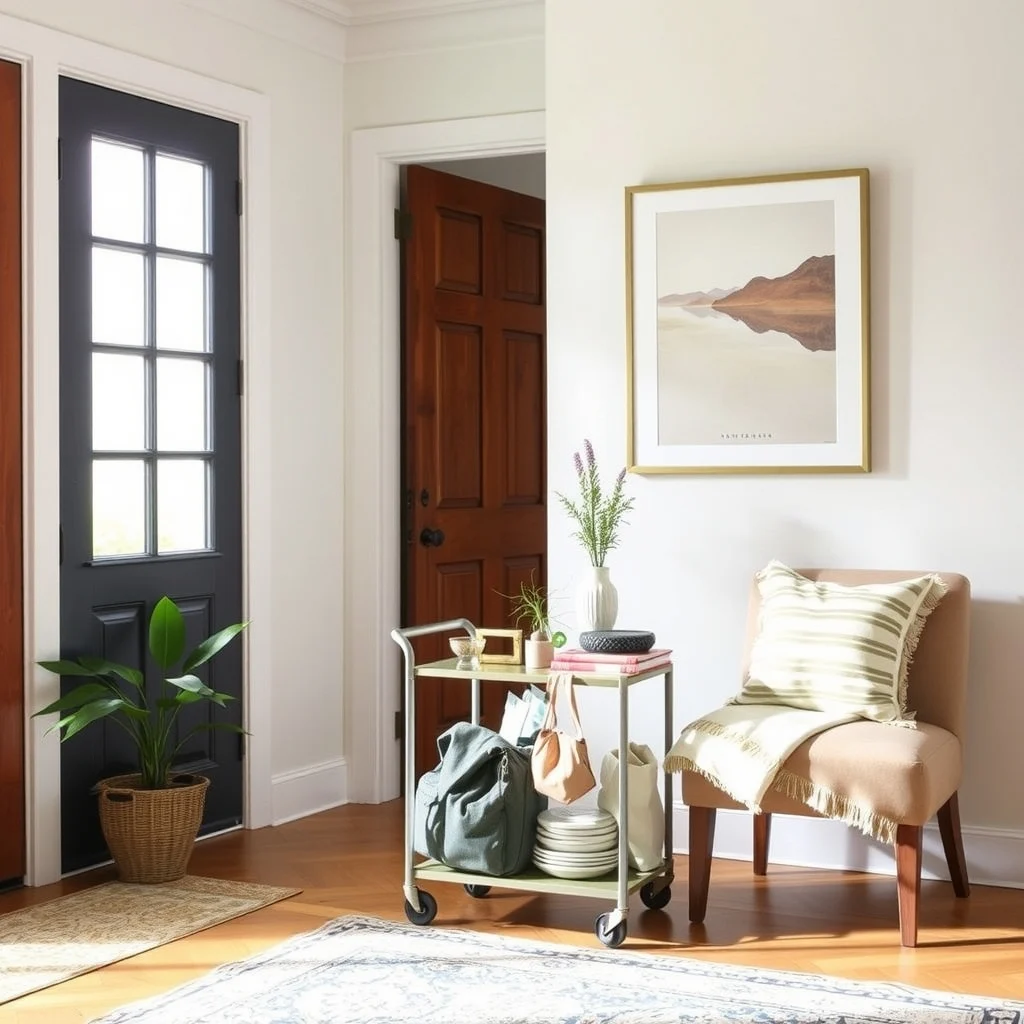
6. A Rolling Cart That Doubles as a Side Table
This image is by AI for inspiration only.
A slim rolling cart on wheels offers mobility and flexibility, especially in homes where the entryway doubles as a multi‑purpose zone. Choose a cart with a top surface of tempered glass or a polished metal slab; this creates a sturdy platform for a coffee mug, a decorative bowl, or a small plant. Below the tabletop, two or three shallow drawers can house backpacks, while a lower shelf accommodates larger tote bags.
The cart’s height—usually around 28 inches—places bags at an ergonomic level for quick grab‑and‑go. When you need more floor space, simply push the cart against a wall or tuck it into a corner. The wheels should have soft rubber treads to avoid scratching hardwood floors, and a brake lock ensures the cart stays put when you’re loading or unloading.
Because the cart is free‑standing, it can become a focal point if you select a finish that complements your entryway’s palette. However, the moving parts require occasional maintenance; checking the wheel bearings and tightening any loose screws will keep the cart gliding smoothly for years.
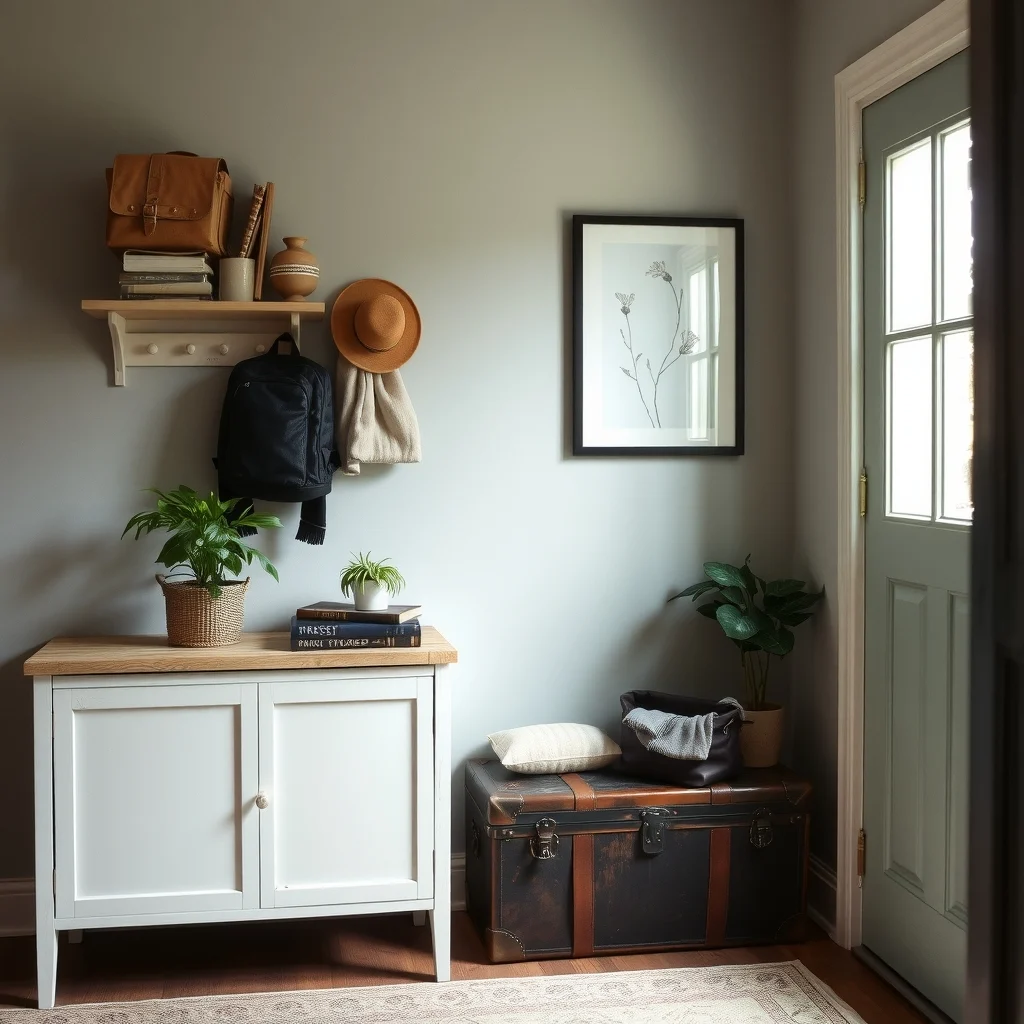
7. Repurposing a Vintage Trunk or Chest as a Statement Piece
This image is by AI for inspiration only.
An antique leather trunk or a weathered wooden chest instantly adds character to a hallway while providing ample hidden storage. The interior can be lined with a soft fabric to protect delicate fabrics, and a simple interior compartment can be divided with a removable divider for organizing smaller bags. Placing the trunk against the wall creates a natural barrier that defines the entryway without blocking natural light.
The exterior can be left in its original patina, or you can apply a fresh coat of chalk paint in a muted sage or dusty rose, allowing the piece to blend with contemporary decor. A pair of brass handles or a vintage lock adds visual intrigue, and the lid can serve as a display surface for a decorative bowl of pine cones or a stack of travel guides.
The primary consideration is the trunk’s weight; a solid wood piece can be difficult to move, so plan its location carefully before setting it down. If you need occasional access to the other side, consider a hinged lid that opens fully without requiring a second person.
FAQ
This image is by AI for inspiration only.
How can I keep my bags from getting dusty near the front door?
Store them in closed compartments or line open shelves with a thin felt pad. The pad catches dust while allowing the bag’s shape to breathe.
What material works best for a bench that will hold heavy backpacks?
Solid hardwood or metal frames provide the strength needed for weight. Pair them with a sturdy cushion that has a removable cover for easy cleaning.
Is it okay to hang leather bags on metal hooks?
Yes, as long as the hooks have a smooth finish. A soft rubber or felt washer between the hook and strap prevents scratches.
Can I use a rolling cart in a narrow hallway?
A slim cart with a width of 12 to 14 inches fits most narrow spaces. Choose a model with a low profile to avoid obstructing foot traffic.
How do I protect a wooden niche from humidity?
Apply a clear sealant to the interior wood and ensure the area has adequate ventilation. A small dehumidifier nearby can help in damp climates.
Final Thoughts
This image is by AI for inspiration only.
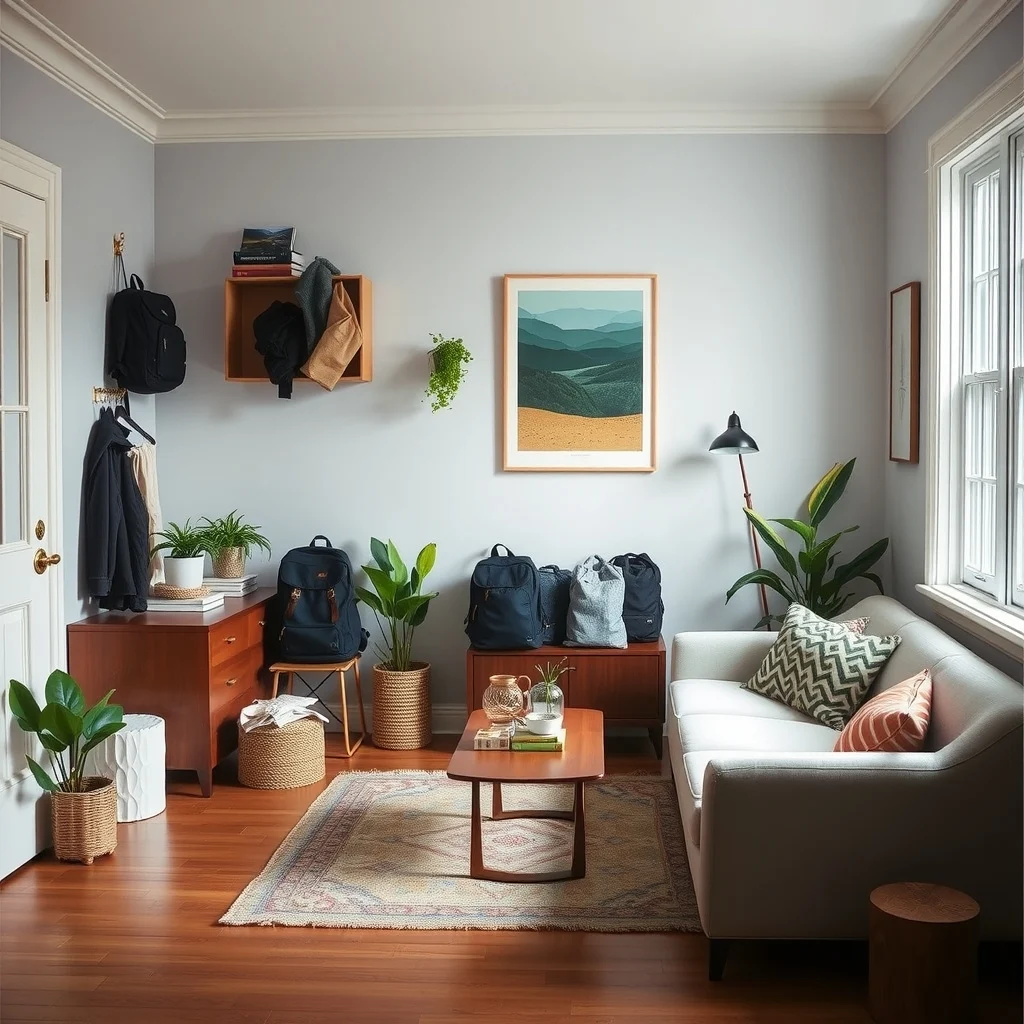
Storing bags and backpacks near the front door doesn’t have to mean sacrificing aesthetics. By thinking vertically, using multipurpose furniture, and choosing materials that complement your existing décor, you can create a functional zone that welcomes both residents and guests. Each of the seven ideas presented offers a different balance of style, convenience, and durability, so you can select the solution that best fits your space and lifestyle. A tidy entryway sets the tone for the rest of the home—start with a thoughtful storage plan and watch the everyday routine become smoother and more pleasant.