How to Store Pots and Pans in a Kitchen With Few Cabinets

When the cabinet doors are already crowded with dishes, glasses, and pantry items, finding a place for the bulky pots and pans can feel like solving a puzzle without enough pieces. The good news is that a kitchen doesn’t need a wall of custom cabinetry to keep cookware organized, accessible, and still look polished. Below are seven ideas that turn the constraints of a small cabinet count into opportunities for style, convenience, and a little extra breathing room.
1. Hang Them on a Wall‑Mounted Pot Rack
This image is by AI for inspiration only.
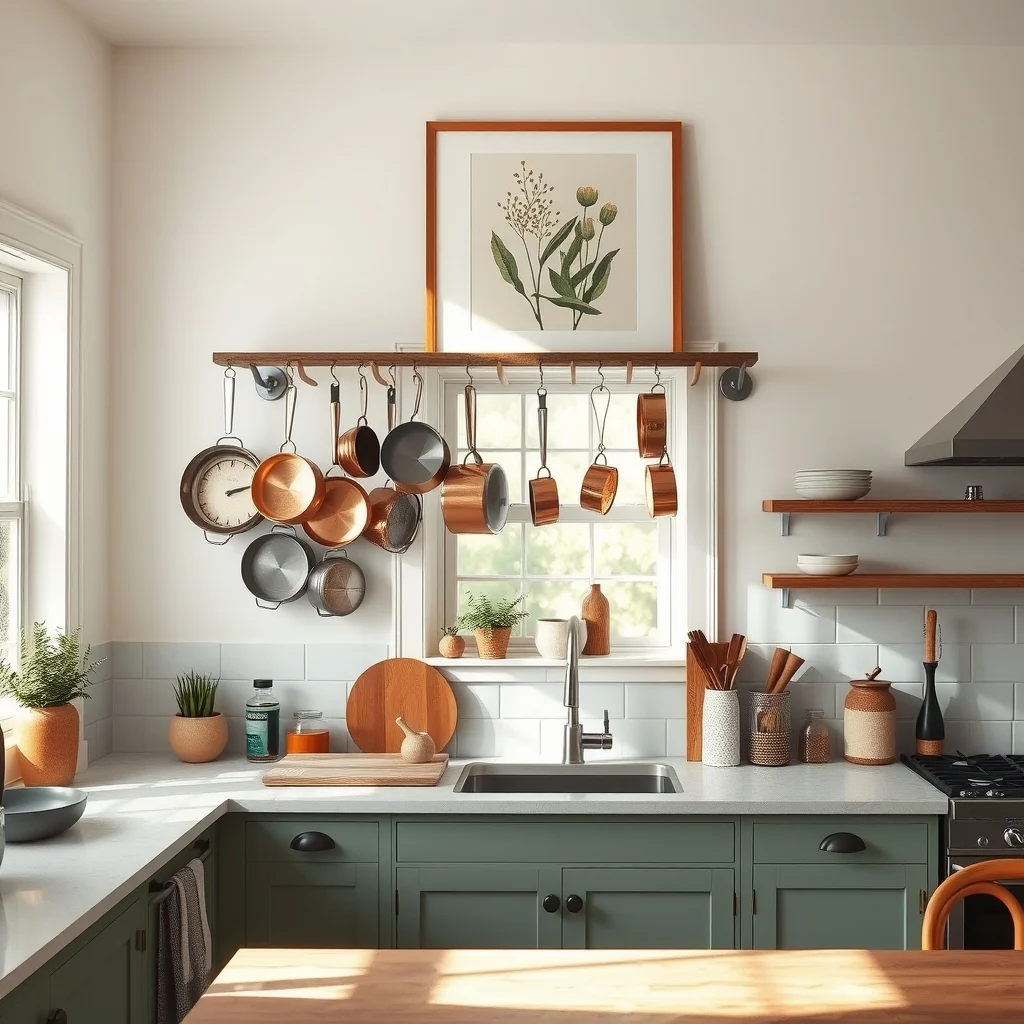
A sturdy wall‑mounted rack made of brushed nickel or reclaimed wood instantly frees floor and cabinet space while turning cookware into a decorative statement. The visual rhythm of hanging pans, especially those with copper or matte black finishes, adds texture that catches the soft glow of under‑cabinet lighting. Installation is straightforward: locate studs, attach the mounting brackets, and slide the hooks on. The main trade‑off is that the rack claims a vertical inch of wall, so it works best on a backsplash or a blank section near the stove where splatters are already expected. When you need a pan, you reach up, pull it down, and the weight of the metal keeps it stable, reducing the chance of accidental drops.
2. Use a Pull‑Out Drawer Inside Existing Cabinets
This image is by AI for inspiration only.
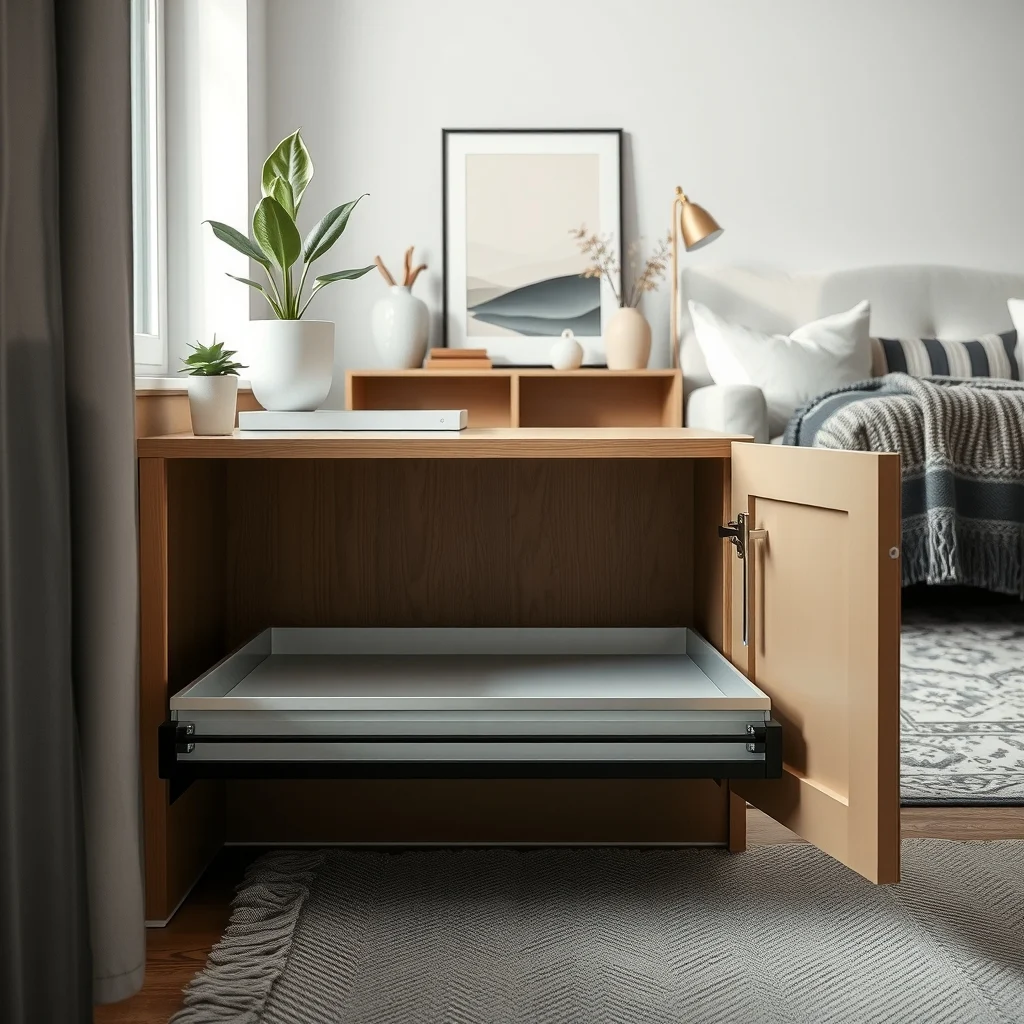
If you have a deeper base cabinet, consider inserting a shallow pull‑out drawer that slides on low‑friction rollers. The drawer’s interior can be lined with a non‑slip silicone mat, keeping lids and smaller skillets from sliding around while you close the cabinet. By placing the drawer at the front of the cabinet, you avoid the “dig‑through” feeling that comes with stacked pots. The downside is that the drawer reduces the overall depth for other items, so it’s ideal when the cabinet already houses only a few plates or bowls. Choosing a drawer that matches the cabinet’s finish—whether it’s a soft gray laminate or warm oak—helps it blend seamlessly into the surrounding cabinetry.
3. Repurpose a Freestanding Kitchen Cart
This image is by AI for inspiration only.
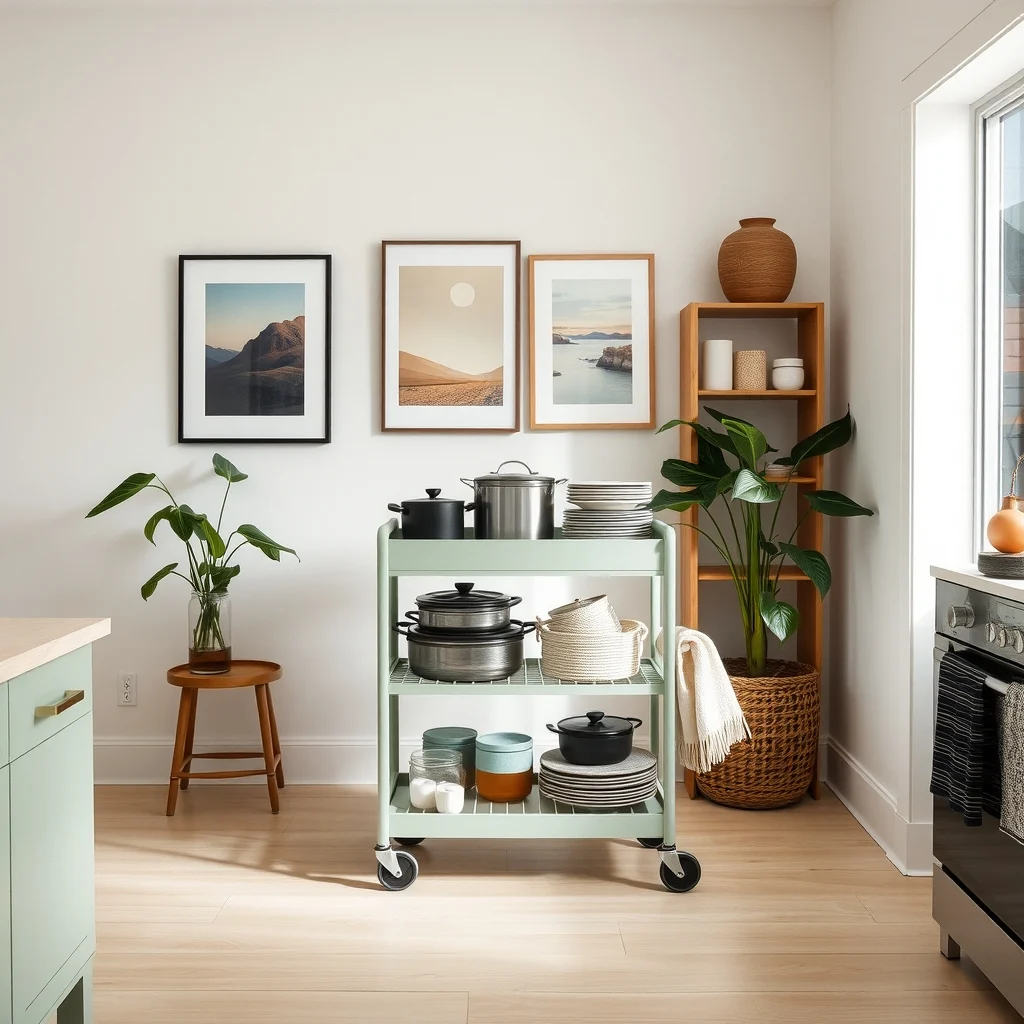
A compact, three‑tier cart on casters can act as a mobile storage hub, especially when the cart’s top shelf is painted a muted sage or deep charcoal that complements the kitchen palette. You can store larger stockpots on the bottom tier, medium skillets on the middle, and lids on the top, keeping everything within arm’s reach of the cooking zone. The wheels let you slide the cart away when you need more floor space for prep work. The main limitation is that a cart occupies floor area, so it’s best suited to kitchens with a narrow aisle rather than a cramped galley. Selecting a cart with a metal frame and a wood top adds visual interest without overwhelming the room.
4. Install a Ceiling‑Mounted Pot Hoist
This image is by AI for inspiration only.
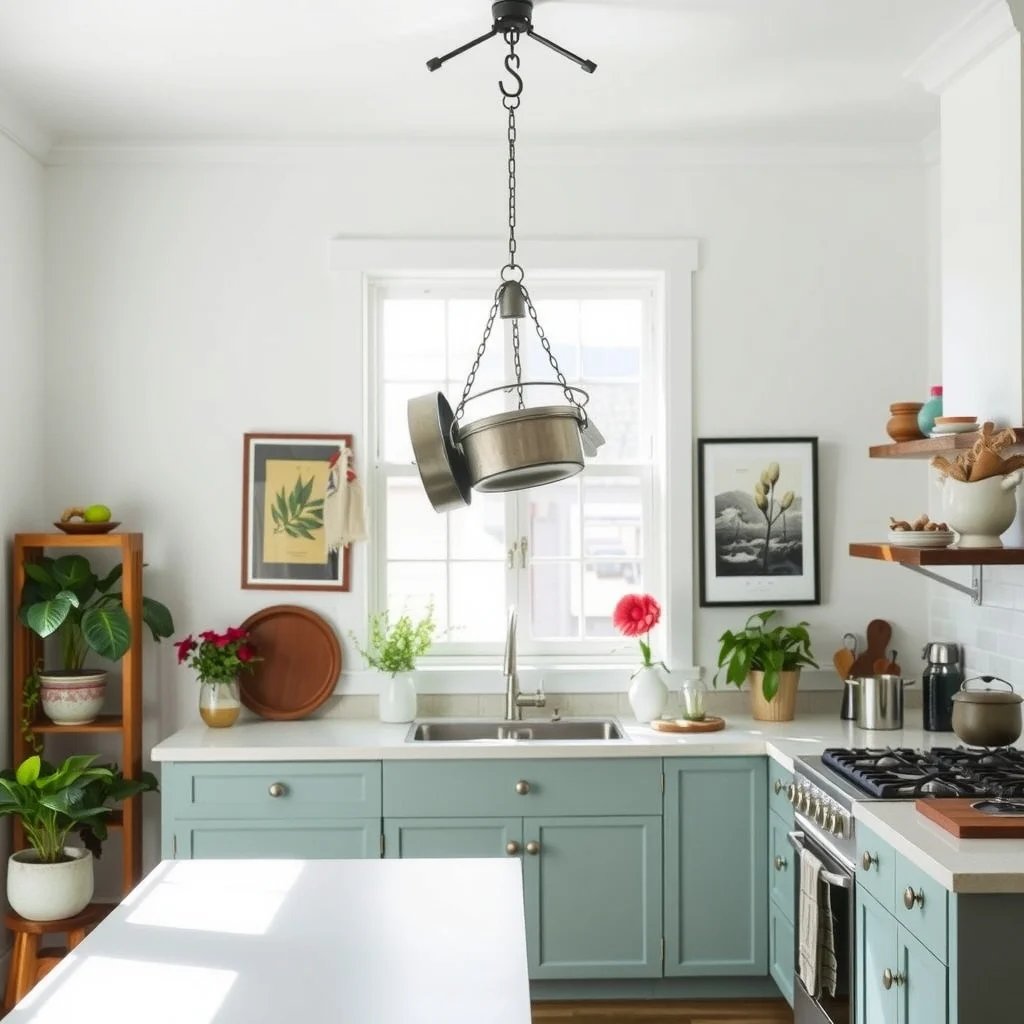
For those who love a rustic touch, a ceiling‑mounted pot hoist—similar to a pot rack but suspended from a single hook—creates a striking focal point above the island or range. Heavy‑duty steel chains support the weight of cast‑iron Dutch ovens and large sauté pans, while the open design prevents steam from collecting. Because the hoist hangs from the ceiling, it doesn’t compete with wall space, making it perfect for narrow kitchens where every inch counts. The trade‑off is the need for a secure mounting point in the ceiling joist, which may require a drill and a bit of DIY confidence. Once installed, the visual of pots swinging gently as you work adds a kinetic element that feels both functional and decorative.
5. Convert an Open Shelf into a Cookware Gallery
This image is by AI for inspiration only.
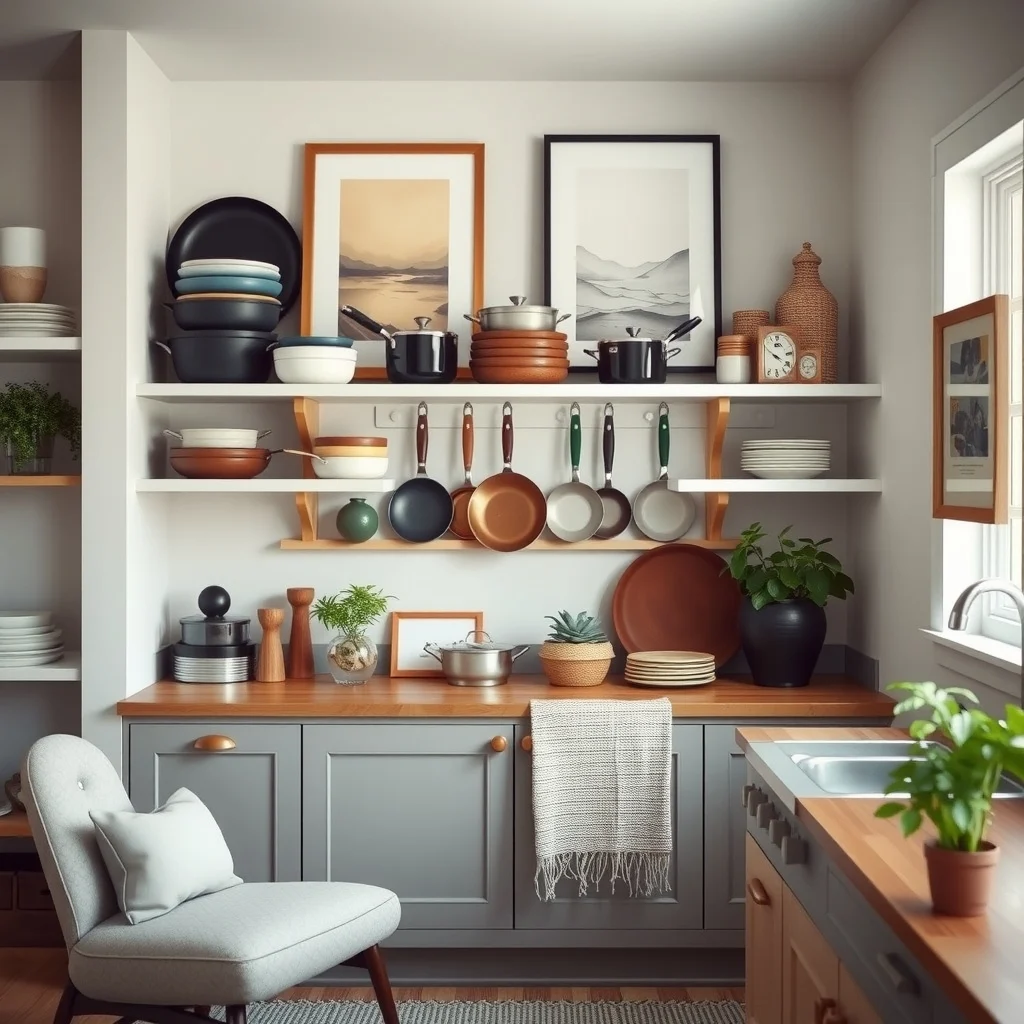
Open shelving—whether floating or part of a pantry wall—offers a gallery‑like setting for pots and pans. By arranging items in order of size, you create a tidy cascade that doubles as a visual cue for which pan to grab. A matte white or warm sand finish on the shelf keeps the look light, while a few decorative brass hooks can hold lids that would otherwise clutter drawer handles. The open nature means dust can settle, so a regular wipe‑down with a damp cloth is necessary. This approach works best when the shelf is placed away from direct stovetop heat, preserving the finish of the metal cookware.
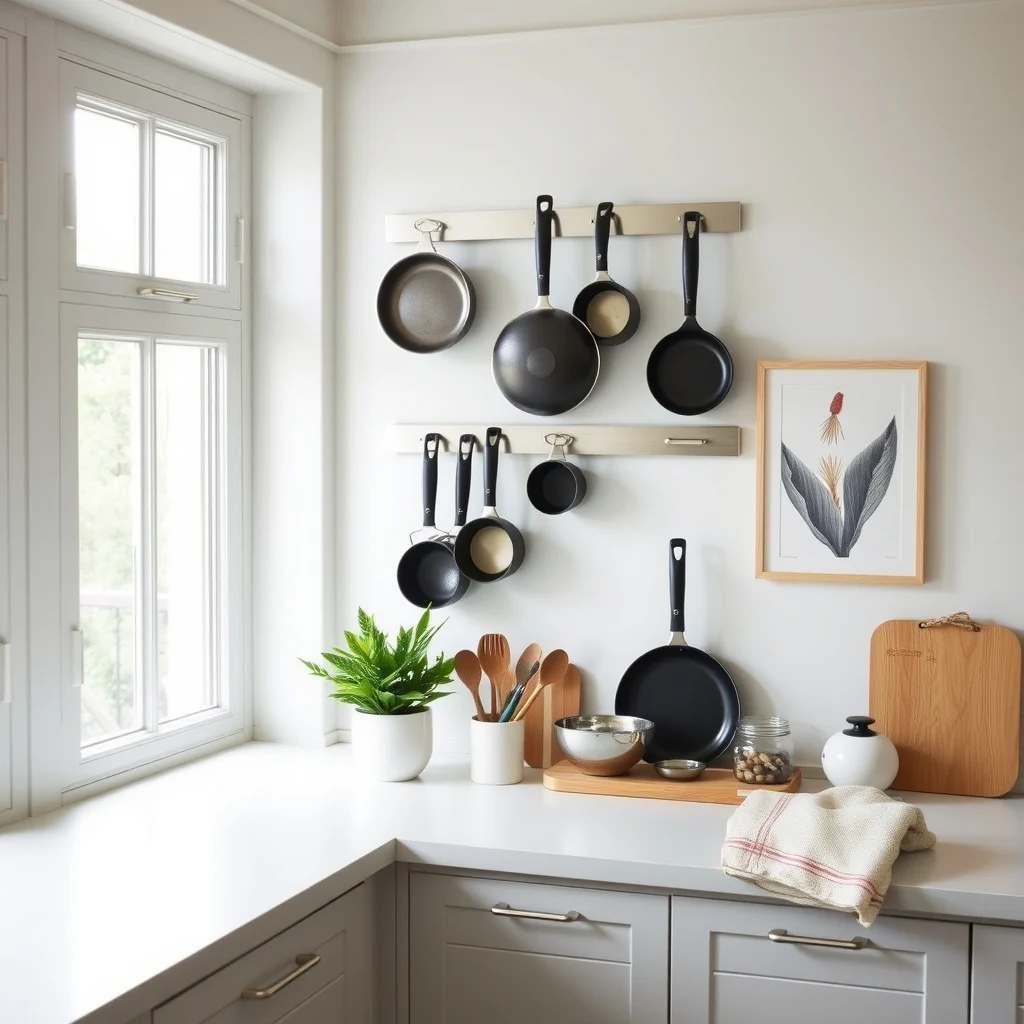
6. Use a Magnetic Strip for Small Frying Pans
This image is by AI for inspiration only.
For lightweight, magnetic‑compatible skillets, a stainless‑steel strip mounted on the backsplash provides a sleek, invisible storage solution. The strip can be painted to match the wall hue—perhaps a soft dove gray—so it blends in when not in use. You simply slide the pan’s base onto the magnet, and the pan stays securely in place even when the kitchen is bustling. The limitation is that only pans with a ferrous base can be stored this way, so you’ll still need another method for copper or aluminum pieces. Nevertheless, the strip frees a drawer and adds a subtle, modern accent that reflects the kitchen’s lighting.
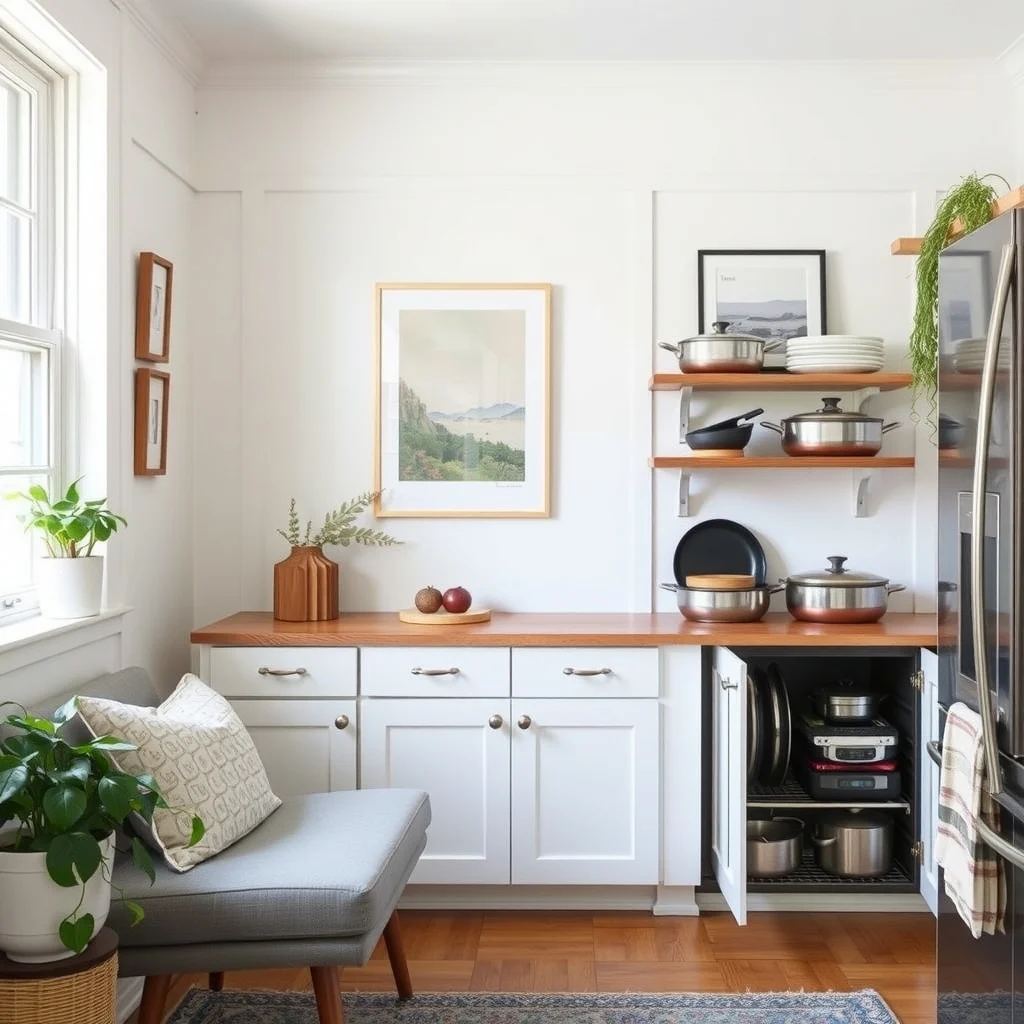
7. Store Lids Separately in a Pull‑Out Organizer
This image is by AI for inspiration only.
Often the most frustrating part of cookware storage is the collection of mismatched lids that compete for space. A narrow, pull‑out organizer—think of a slim vertical rack that fits into a pantry door or a shallow cabinet—keeps lids upright and visible. By grouping lids by diameter and material (glass, stainless, silicone), you can quickly locate the right cover without rummaging through a drawer. The organizer can be finished in a matte black or brushed bronze to echo other hardware in the kitchen. The only compromise is that the organizer occupies a vertical slice of a cabinet, so it works best when the cabinet isn’t already filled with plates.
FAQ
This image is by AI for inspiration only.
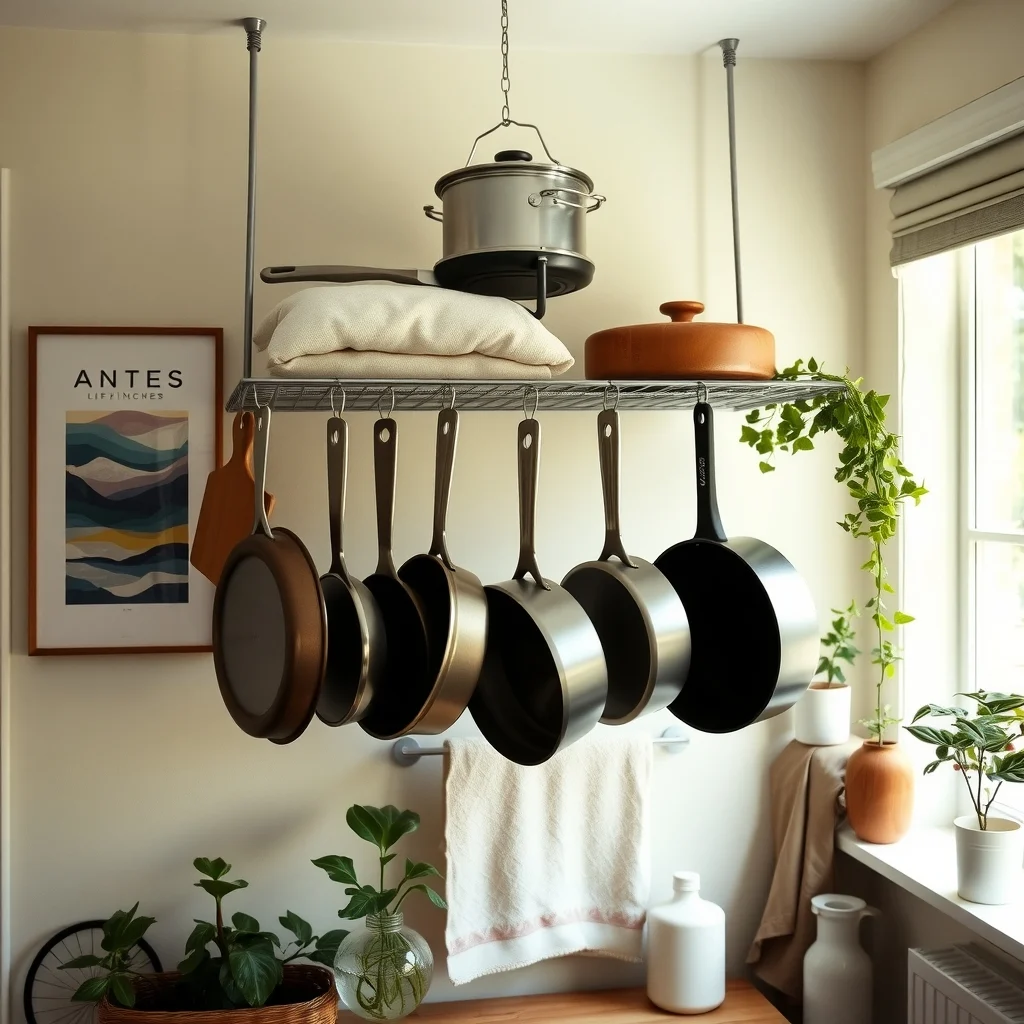
How can I keep hanging pots from getting greasy?
Place a thin silicone mat or a piece of parchment paper on the rack; it catches splatters and is easy to wash. The mat also prevents pots from sliding when you reach for them.
Is it safe to hang heavy cast‑iron pans from a wall rack?
Yes, as long as you locate studs and use heavy‑duty brackets rated for the weight. Cast iron can weigh up to 15 lb per piece, so the hardware must be able to support the cumulative load.
What’s the best material for a pull‑out drawer that holds pots?
A drawer with a laminated wood body and a smooth, non‑slip interior mat works well; the laminate resists moisture while the mat keeps cookware from shifting.
Can I use a pot rack in a kitchen with a glass backsplash?
It’s possible, but choose a rack with a protective rubber or silicone base to prevent scratches. Keep the rack a few inches away from the glass to avoid heat transfer.
Do magnetic strips damage the finish on my pans?
Generally no; the magnets are gentle and the contact area is small. However, avoid using the strip with pans that have a non‑stick coating, as the magnet can occasionally scratch the surface.
Final Thoughts
This image is by AI for inspiration only.
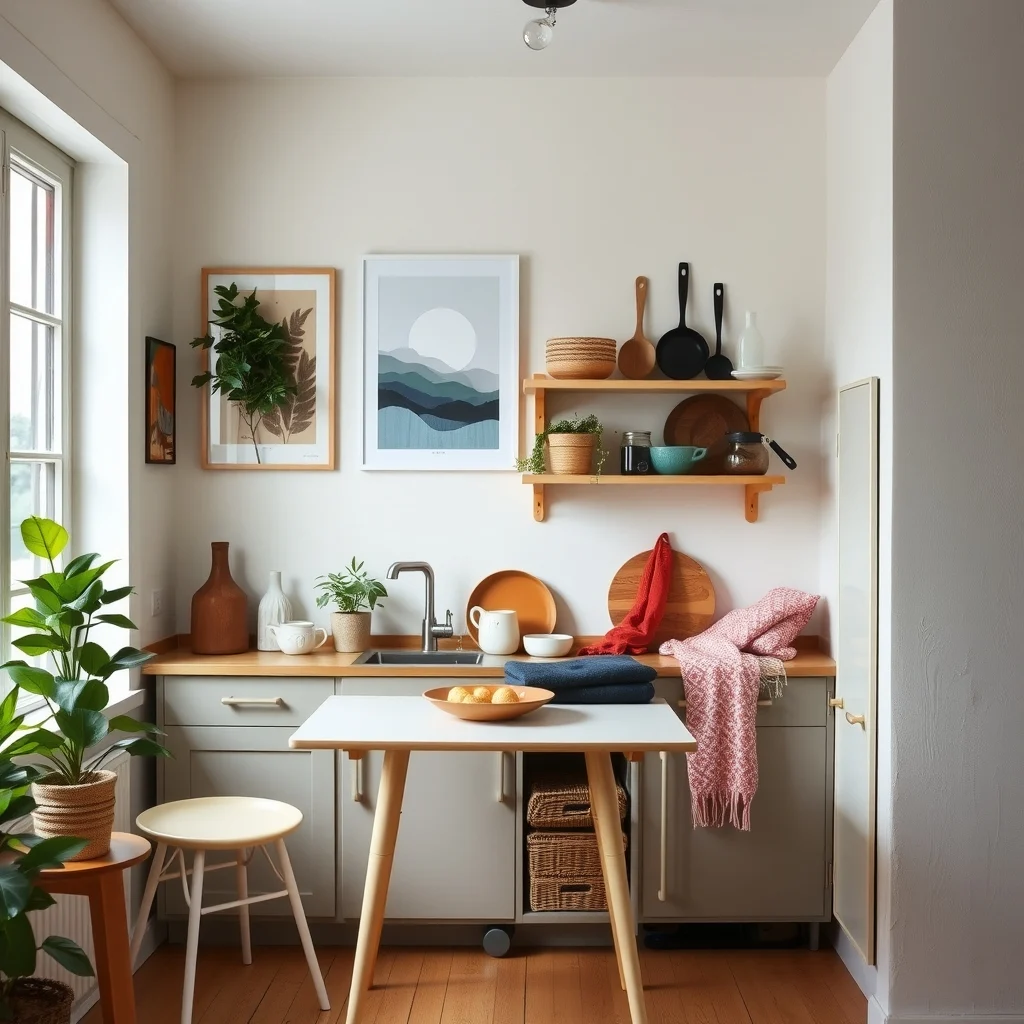
Limited cabinet space doesn’t have to mean a cluttered cooking area. By thinking vertically, using mobile units, and repurposing existing surfaces, you can create a storage system that feels intentional rather than improvised. Each of the seven ideas above offers a different balance of accessibility, aesthetics, and practicality, allowing you to choose the solution that matches your kitchen’s layout and style. With a little planning, those pots and pans will find their place—and your kitchen will breathe a little easier.