Small Kitchen Shelf Ideas That Keep Counters Clear

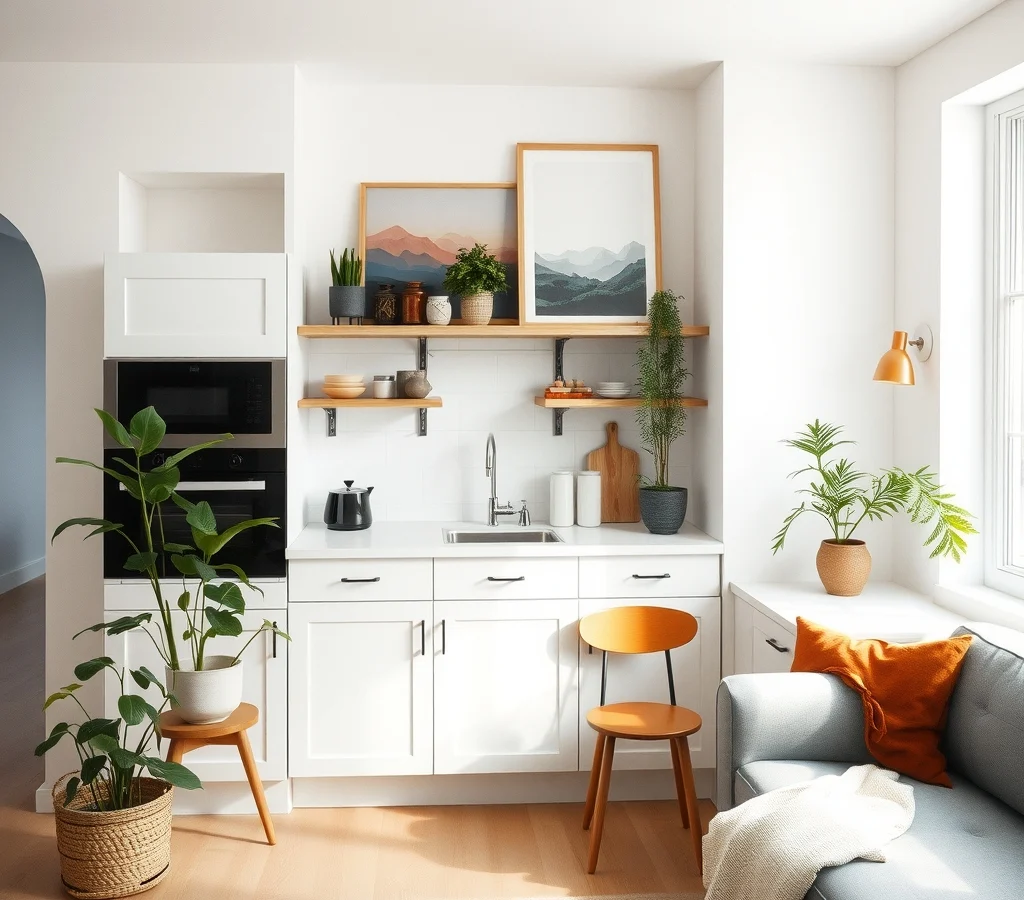
When the morning rush turns the countertop into a staging area for coffee makers, cereal boxes, and a handful of utensils, the kitchen can feel cramped before you’ve even started cooking. The challenge isn’t just finding a place for everything; it’s doing so without sacrificing the room’s sense of openness. Below are seven shelf concepts that blend function with style, giving you room to breathe while keeping the most‑used items within easy reach.
1. Floating Shelf with Open Back
This image is by AI for inspiration only.
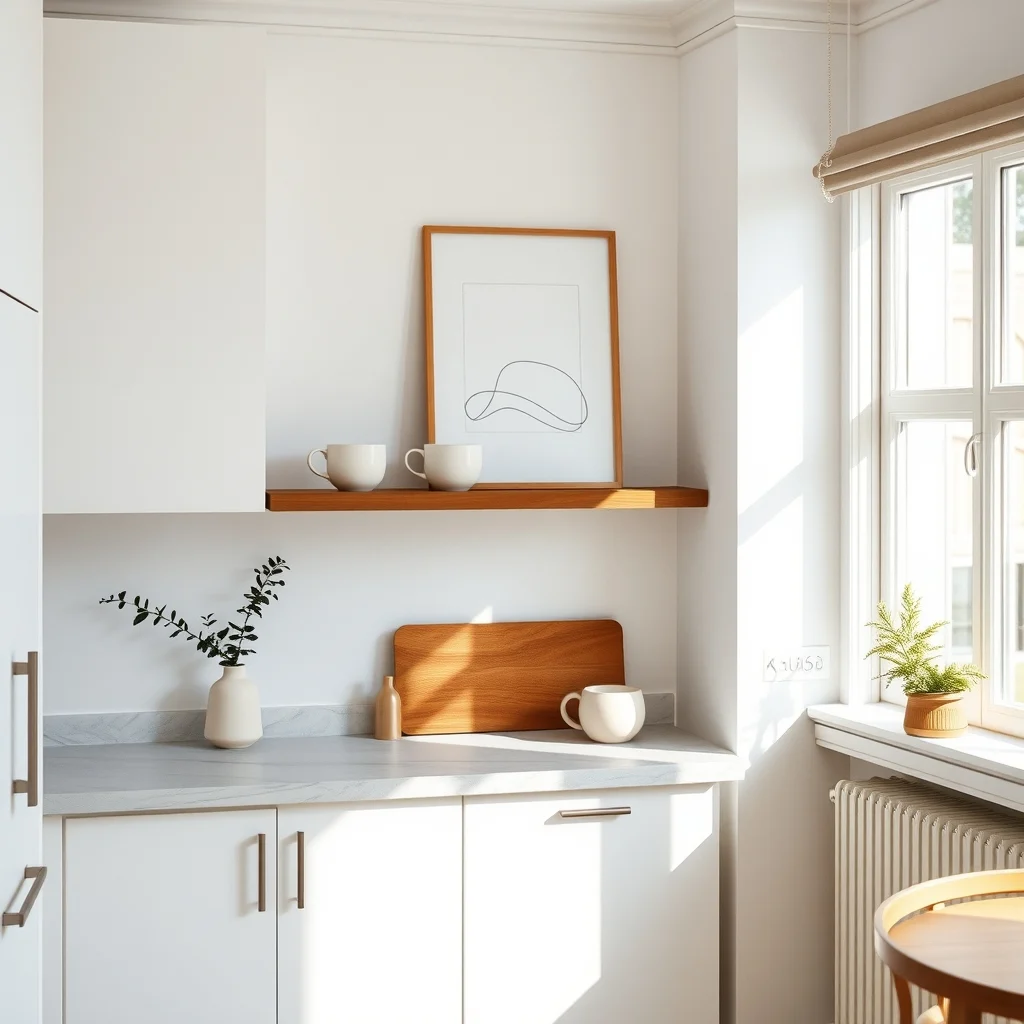
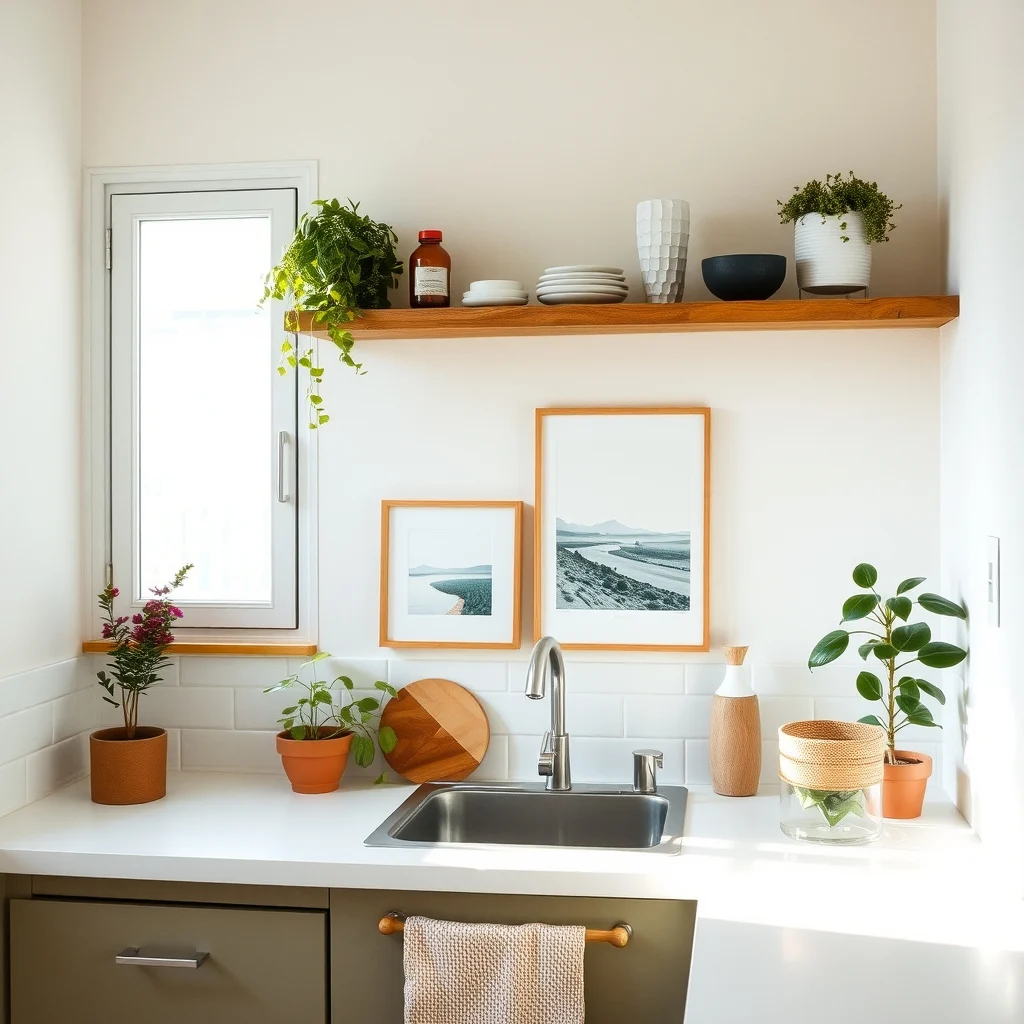
A narrow floating shelf installed just above the countertop creates a visual break without blocking light. Because the back is left open, the shelf feels lighter than a solid wall unit, and the space beneath remains visible, which helps the kitchen appear larger. Mount the bracket at a height that allows you to slide a mug or a small bowl onto the shelf without bending too low, typically three to four inches above the work surface. Use a brushed‑nickel or matte black finish to echo the hardware on your cabinets, and choose a reclaimed pine board for a warm, natural texture. The open design works best for items you want to display—like a favorite spice jar or a sleek ceramic mug—while still keeping the bulk of your prep area free.
2. Tiered Corner Shelf
This image is by AI for inspiration only.
Corner space is often underutilized, yet a compact tiered shelf can turn that awkward angle into a functional nook. The stepped configuration lets you place taller items on the back tier and smaller accessories on the front, creating a mini‑gallery that stays out of the way of the main work zone. Opt for metal brackets painted in a soft greige to blend with most kitchen palettes, and use a thin, laminated wood board that resists moisture. Because the shelf leans into the corner, it doesn’t intrude on the flow between sink and stove, making it ideal for a small stack of plates, a decorative plant, or a set of copper measuring spoons.
3. Slim Pull‑Out Shelf Inside a Cabinet
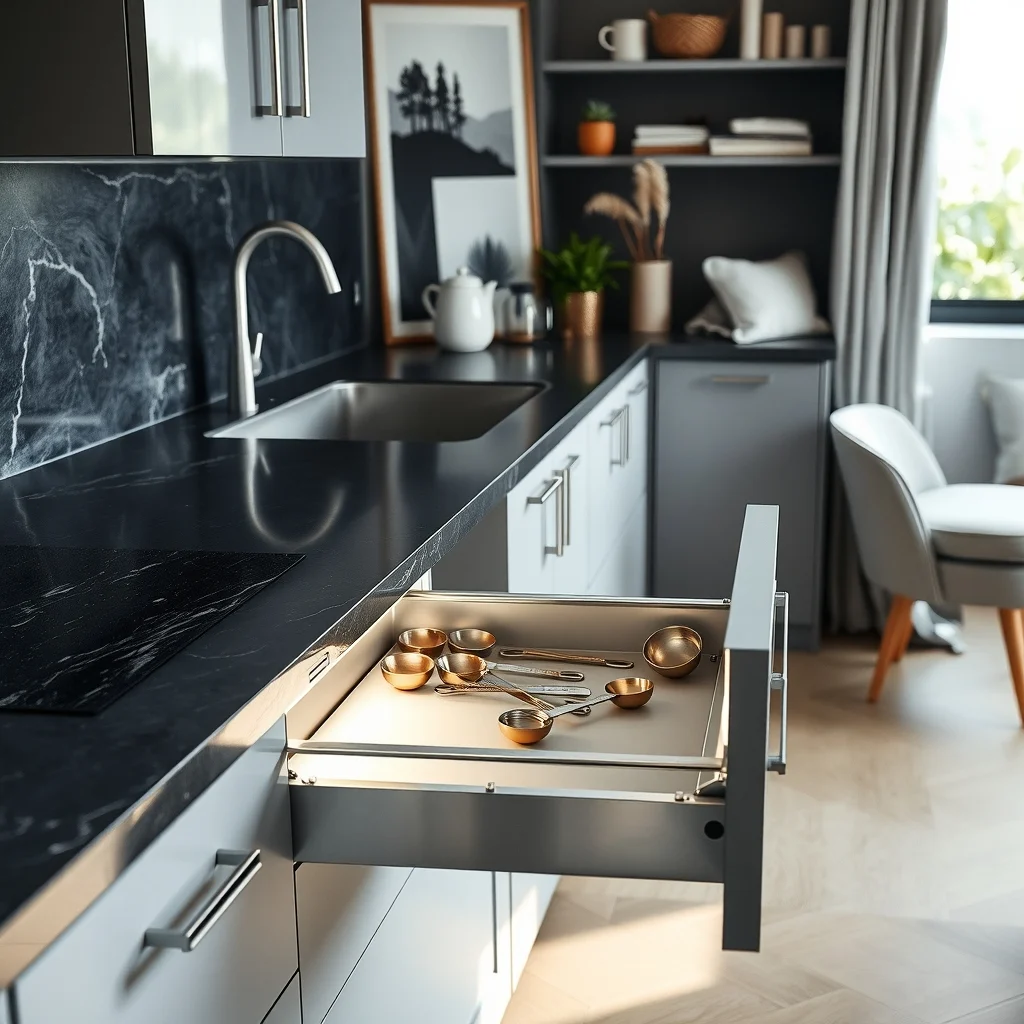
This image is by AI for inspiration only.
When you prefer to keep the visual clutter completely hidden, a slim pull‑out shelf installed inside a shallow cabinet can be a game‑changing solution. The shelf slides out on low‑friction runners, giving you a temporary countertop for a cutting board or a small appliance that you can tuck away after use. Choose a shelf depth of six inches to accommodate most items without requiring a deep cabinet remodel. A clear acrylic guide helps you see the shelf’s position, while a soft‑close mechanism prevents slamming. This approach keeps the countertop clear while still providing a surface that appears only when you need it.
4. Open‑Back Ladder Shelf Against a Wall
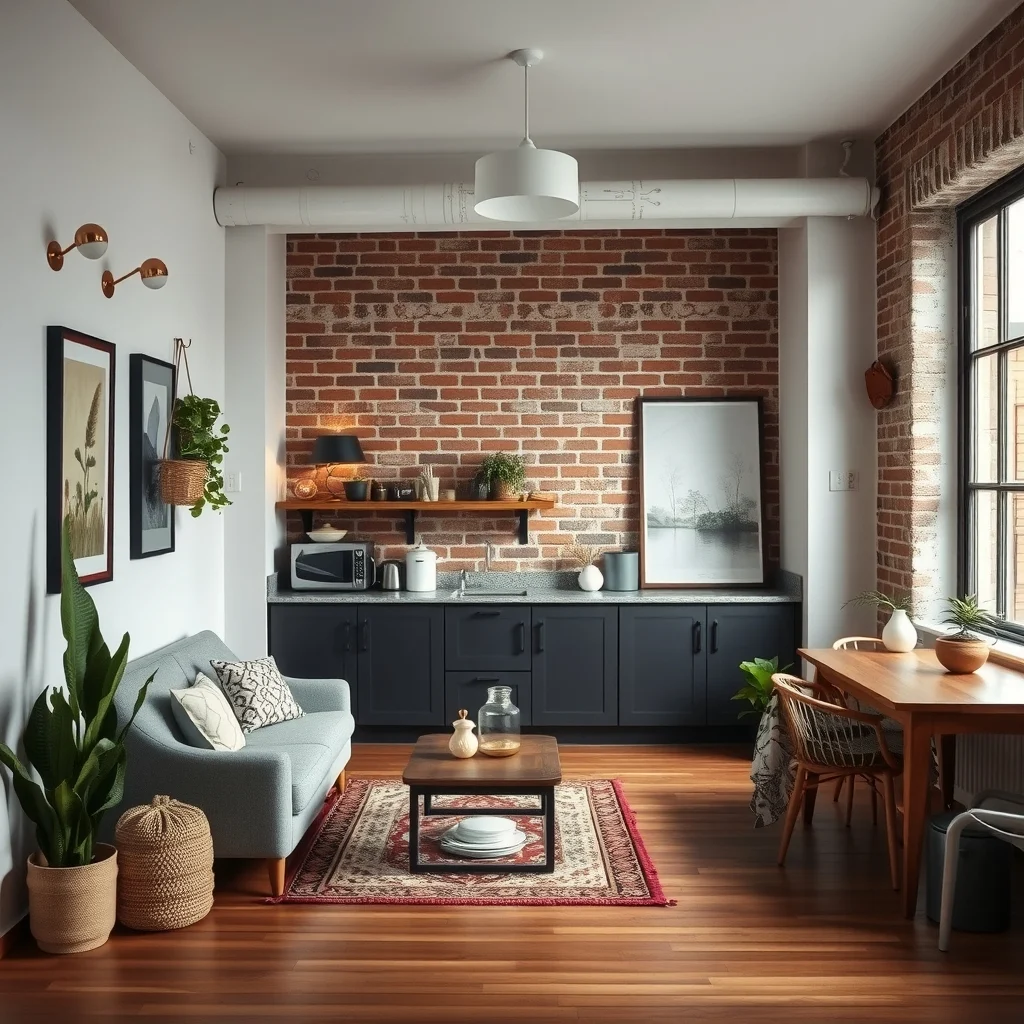
This image is by AI for inspiration only.
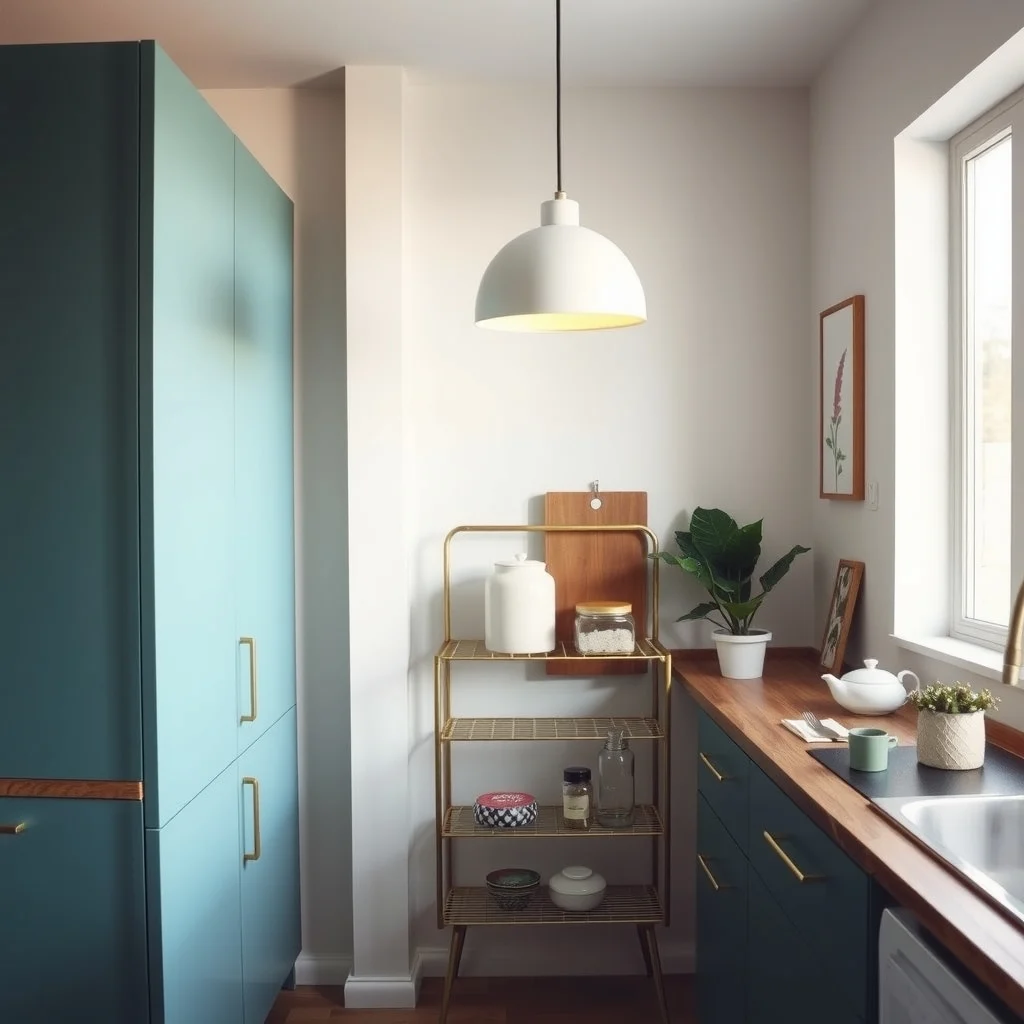
A ladder‑style shelf leans against the wall, offering multiple levels without the need for permanent mounting. The open back on each rung allows light to pass through, preserving the airy feel of a small kitchen. Select a lightweight metal frame finished in oil‑rubbed bronze and pair it with reclaimed barn wood shelves for a rustic‑modern contrast. Because the unit rests on the floor, you can relocate it if you rearrange the layout, and the lower rung can hold a small basket for fruit, while the upper ones showcase attractive jars or a decorative bowl.
5. Under‑Cabinet Rail Shelf
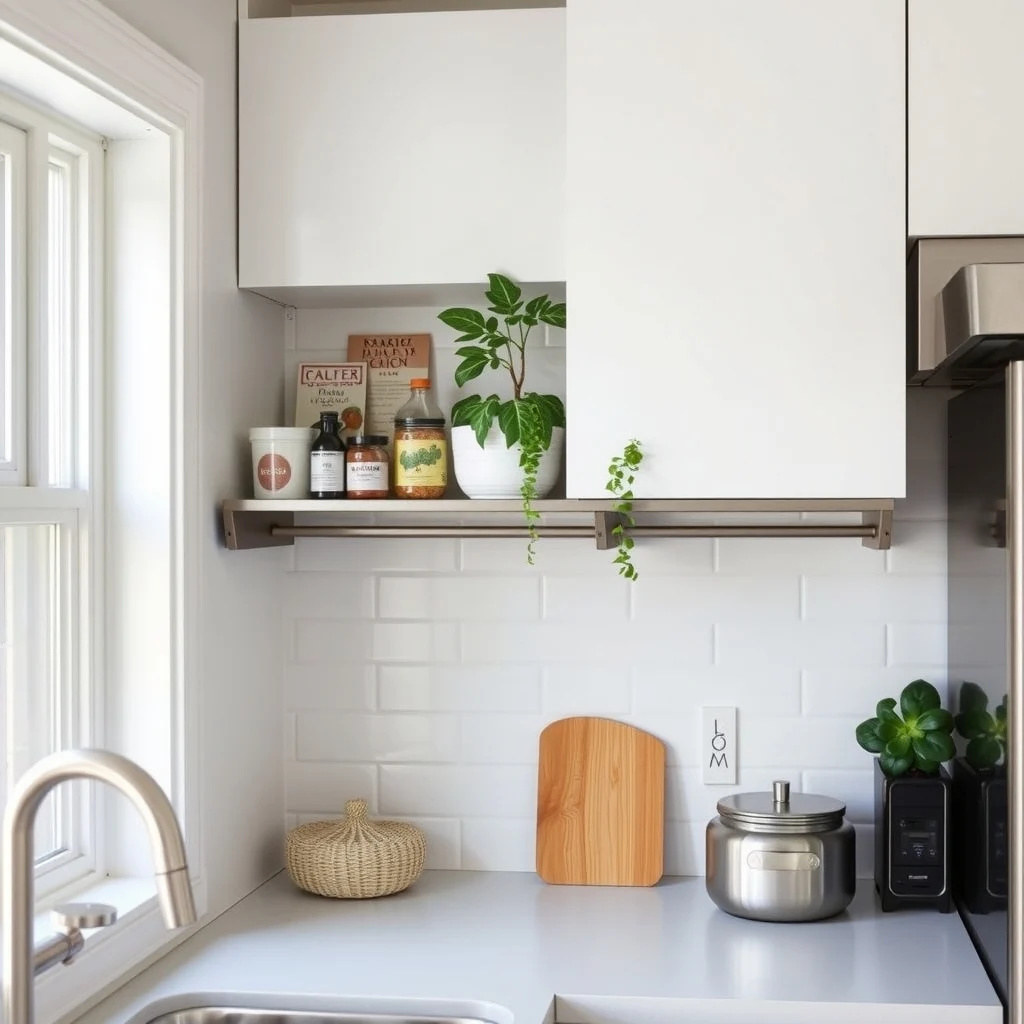
This image is by AI for inspiration only.
Installing a thin rail shelf directly beneath an upper cabinet makes use of the vertical gap that often goes unnoticed. A stainless‑steel or powder‑coated aluminum rail can support a single row of spice jars, a small herb planter, or a narrow cutting board. The key is to keep the rail no more than two inches deep, ensuring it doesn’t interfere with the cabinet doors. By positioning the shelf just a few inches below the cabinet, you create a secondary work surface that stays out of the main line of sight, preserving the clean look of the countertop.
6. Magnetic Strip Shelf for Metal Tools
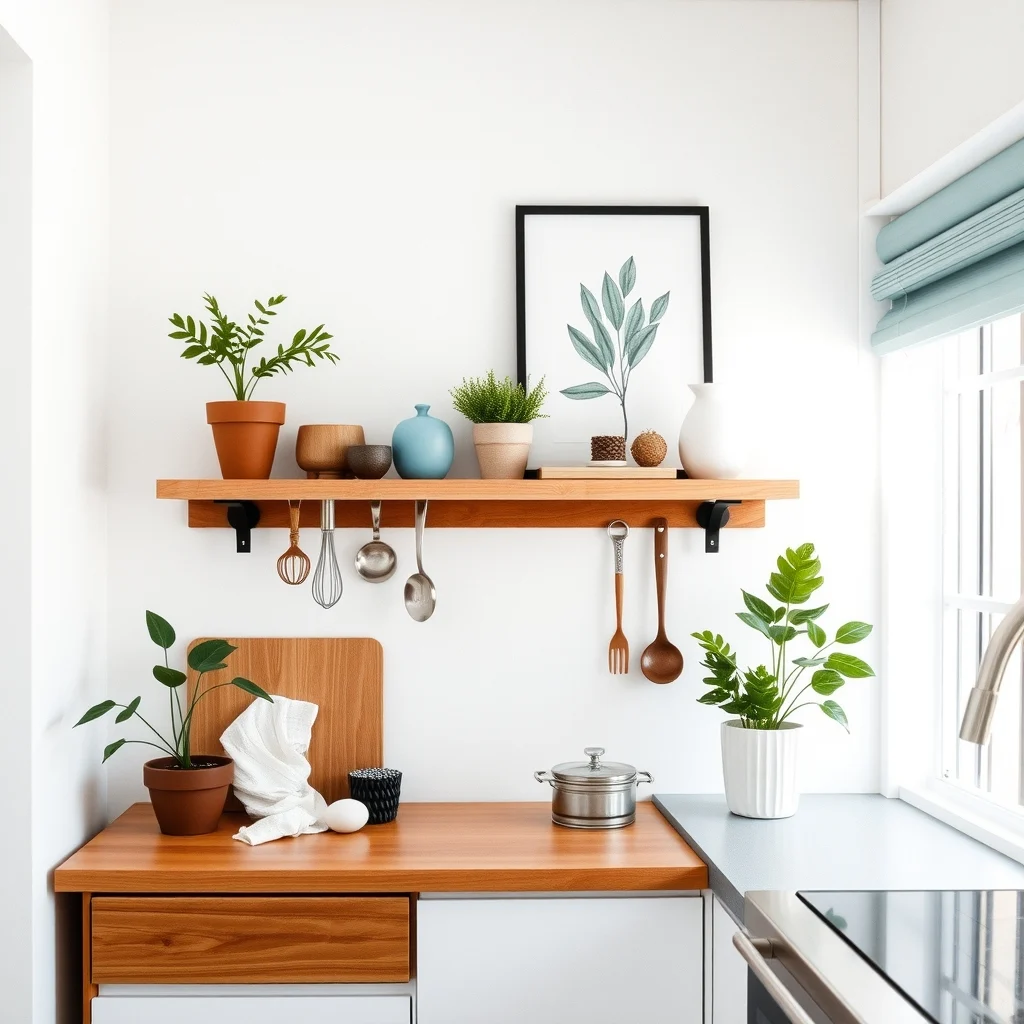
This image is by AI for inspiration only.
For kitchens that rely on metal utensils—think of a set of stainless steel whisks, a ladle, or a butter cutter—a magnetic strip mounted on the wall can replace a traditional shelf entirely. The strip holds the tools securely while keeping them upright, freeing up drawer space and eliminating the need for a flat surface. Choose a strip with a brushed finish that matches other metal accents, and position it near the stove where you most often reach for tools. The magnetic solution works best for items with a flat metal back; wooden handles will need a separate holder.
7. Built‑In Niche Shelf with Integrated Lighting
This image is by AI for inspiration only.
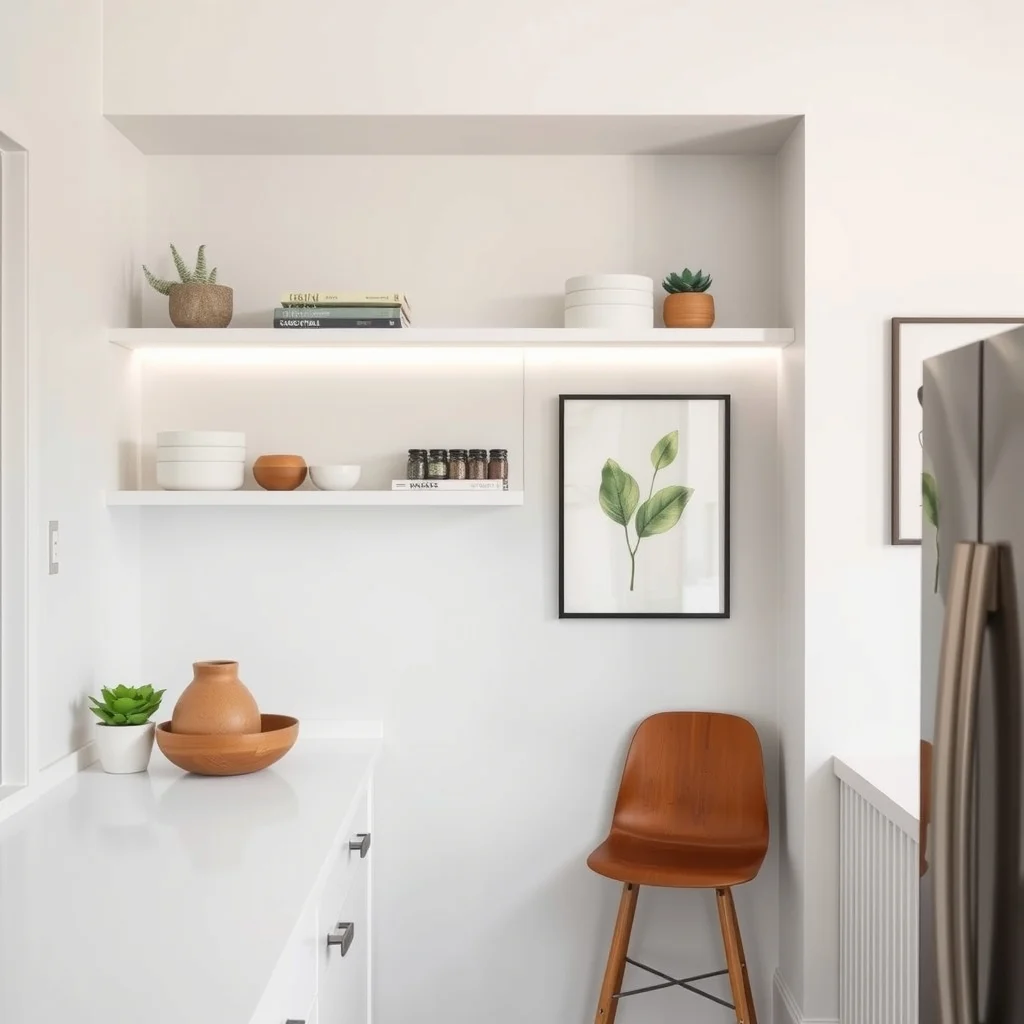
A recessed niche cut into the wall, topped with a thin LED strip, provides a sleek shelf that feels part of the architecture. The lighting highlights the items placed inside—whether a collection of ceramic spice containers or a small glass jar of fresh herbs—while the shallow depth (about four inches) ensures the niche does not protrude into the kitchen’s walking path. Using a moisture‑resistant drywall compound and a low‑profile LED eliminates the need for additional fixtures, and the subtle glow adds a quiet visual cue that draws the eye without overwhelming the space.
Frequently Asked Questions
This image is by AI for inspiration only.
How do I choose the right height for a floating shelf?
The shelf should be high enough to avoid interfering with daily tasks but low enough to reach without stretching. Position it roughly three to four inches above the countertop, adjusting for the height of the items you plan to display.
Can I install a pull‑out shelf in a cabinet that already has shelves?
Yes, you can replace one of the existing shelves with a pull‑out unit as long as the cabinet depth accommodates the slide mechanism. Measure the interior width and depth before purchasing to ensure a proper fit.
Is a metal ladder shelf safe for a family with small children?
The ladder shelf is stable when placed against a solid wall, but it can tip if leaned too far. Secure the top of the ladder to the wall with a discreet bracket if you have active children, or choose a heavier base to increase stability.
What maintenance does a magnetic strip require?
Simply wipe the strip with a damp cloth to remove dust and food particles. Avoid using abrasive cleaners, as they can reduce the magnetic strength over time.
Do recessed niche shelves need professional installation?
Cutting into a wall and installing electrical components is best handled by a qualified contractor, especially if the wall contains studs or wiring. The finish work can be done by a confident DIYer once the niche is framed.
Final Thoughts
This image is by AI for inspiration only.
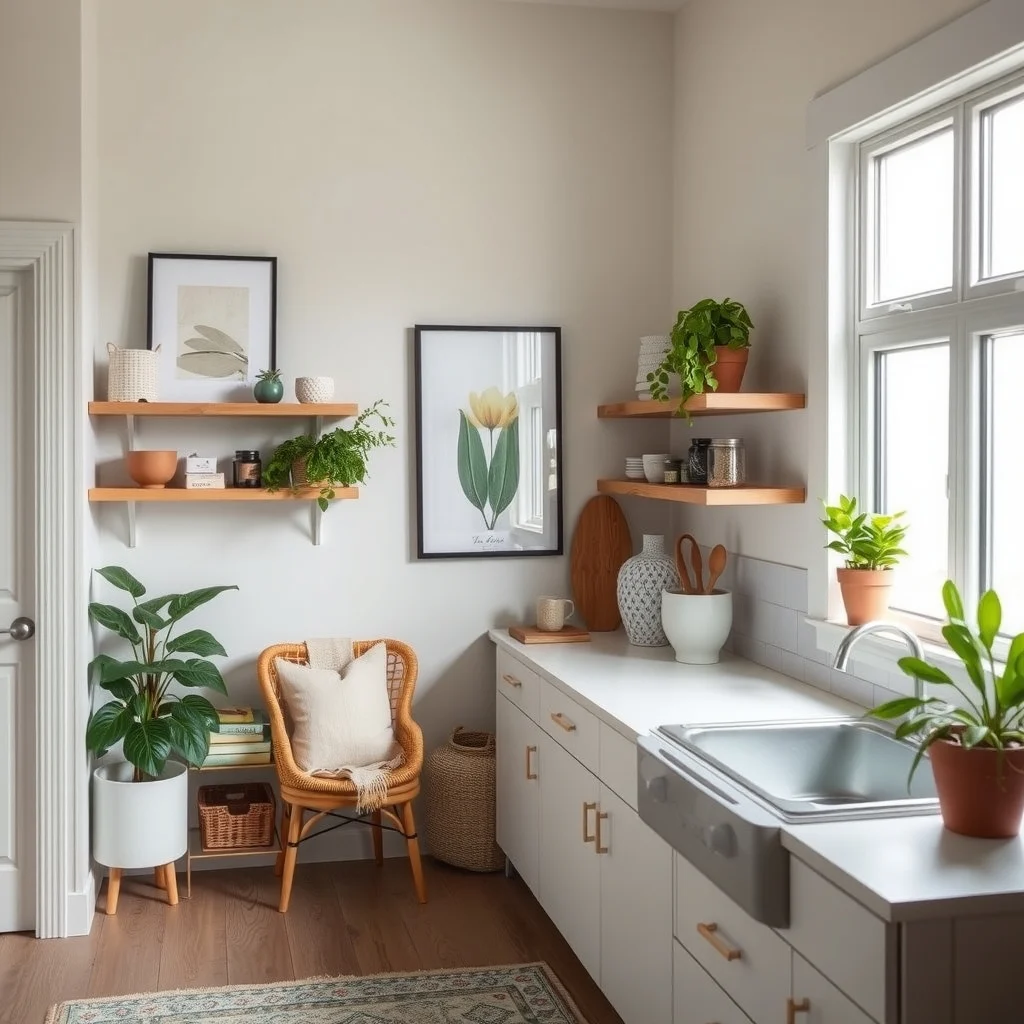
Keeping a small kitchen’s counters clear is less about removing items and more about rethinking where they live. By selecting shelves that blend into the architecture, make use of corners, or hide in plain sight, you create storage that feels natural rather than forced. Each of the seven ideas above offers a distinct way to reclaim surface area while adding a touch of personality. Choose the approach that aligns with your cooking habits, aesthetic preferences, and the amount of effort you’re ready to invest, and watch the workspace become both more functional and more inviting.