
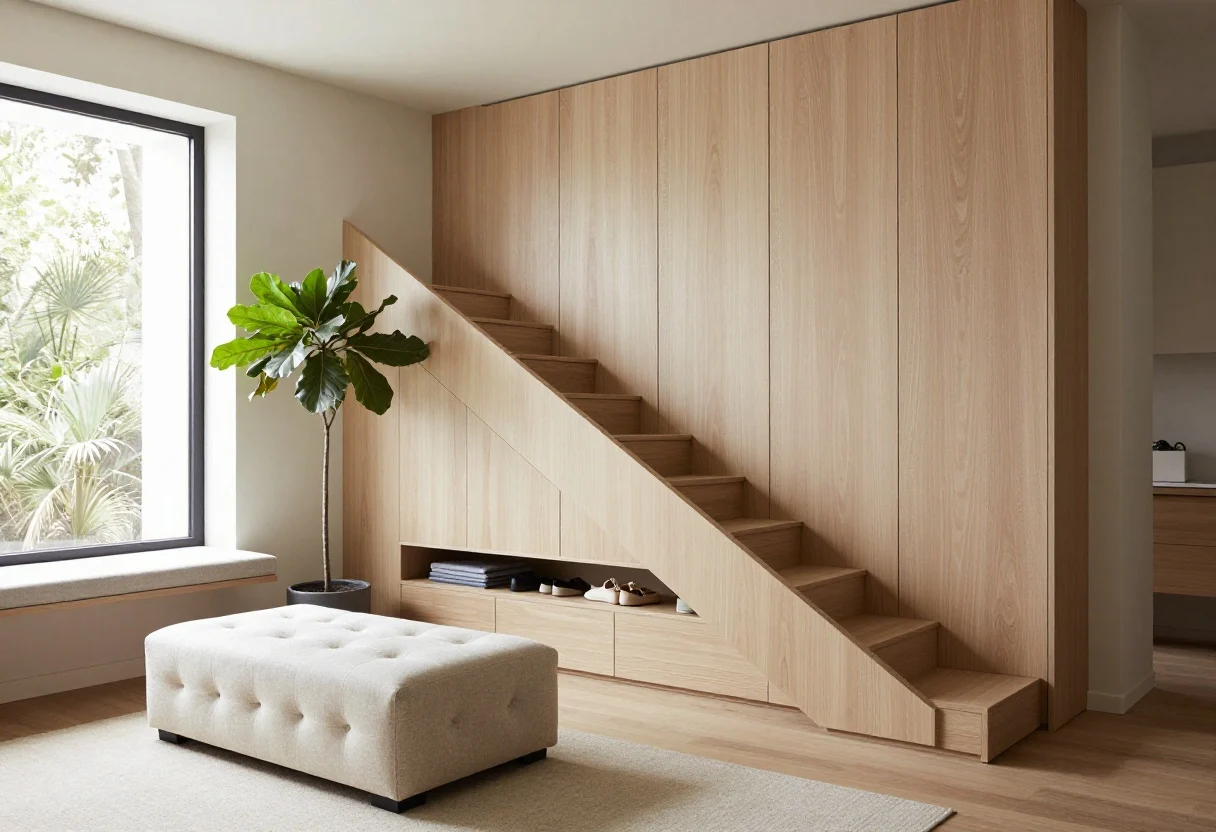
Brilliant Hidden Storage Ideas for Every Room That Actually Look Good

You’re not searching “hidden storage” because you love plastic bins. You want your rooms to look better—cleaner lines, calmer surfaces—without wasting money, choosing the wrong finishes, or copying a Pinterest photo that won’t work in your layout. The trick is to add storage that disappears into the design: benches that swallow clutter, headboards with secret compartments, niches that act like visual negative space, and furniture scaled to your room so it doesn’t feel crammed.
Below, you’ll find seven complete, room-by-room concepts that show you exactly what to buy, where to put it, and what to skip. The palettes skew warm and livable (think warm white walls, oak tones, linen textures) with lighting and hardware doing the quiet heavy lifting. Each concept includes budget notes, one mistake to avoid, and maintenance tips so you don’t end up with fussy storage you never use.
Quick Answer
If you need a fast win: add a lift-top storage bench in the entry (30–48 inches wide), swap your coffee table for one with concealed drawers, and use a bed with deep drawers (at least 9 inches clear height). Keep finishes consistent—warm white walls, matte black or brass hardware, and closed fronts—so the storage visually recedes. Spend on smooth, soft-close hardware and durable fabrics (washable slipcovers); save with IKEA frames + custom fronts, peel-and-stick panels, and plug-in lighting.
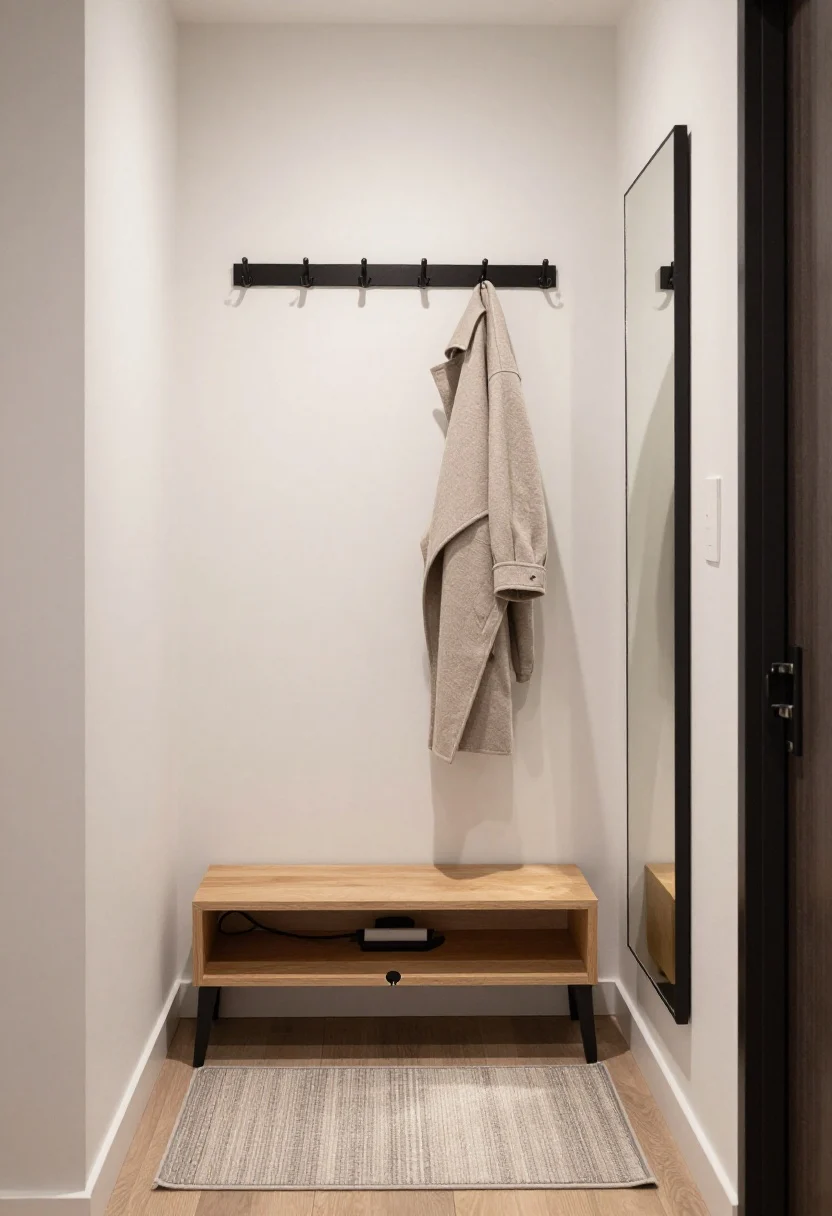
1) Entryway: Slim Bench Wall With Hidden Charging Cubby
This image is by AI for inspiration only.
You want a drop zone that doesn’t look like a pile of shoes and mail the second you walk in.
Why it works: In real homes, the entry is narrow. A shallow (12–14 inches deep) bench with flip-up lid provides concealed storage without blocking the door swing. A rail of wall hooks keeps jackets up high (visual lightness), while a hidden charging cubby inside the bench corrals cords and power bricks. The palette is simple: warm white walls, a pale oak bench top, matte black hooks, and a low-pile rug that doesn’t visually add bulk.
How to do it:
- Mount a 36–48 inch run of matte black metal hooks at 66–68 inches high so coats hang above the bench.
- Use a 12–14 inch deep flip-top bench with soft-close hinges; add a cable grommet to route a power strip inside a lidded corner compartment.
- Place a 2×3 or runner rug with a thin profile; choose washable or indoor/outdoor to handle wet shoes.
- Hang a narrow mirror (12–18 inches wide) vertically to draw the eye up and bounce light.
Budget and splurge: Save with an IKEA Besta frame (depth 15.75 inches) cut down or a ready-made flip-top shoe bench; splurge on soft-close hardware and a solid oak top that can take dings. Plug-in a small motion sensor LED strip inside the bench for visibility.
Best for: Small entryways, apartments, renters (no built-ins), families who need quick access.
Mistake to avoid: Overly deep furniture. Anything beyond 16 inches deep in a tight entry looks bulky and trips feet.
Next step: Once the entry is tamed, the living room is where open surfaces really matter.
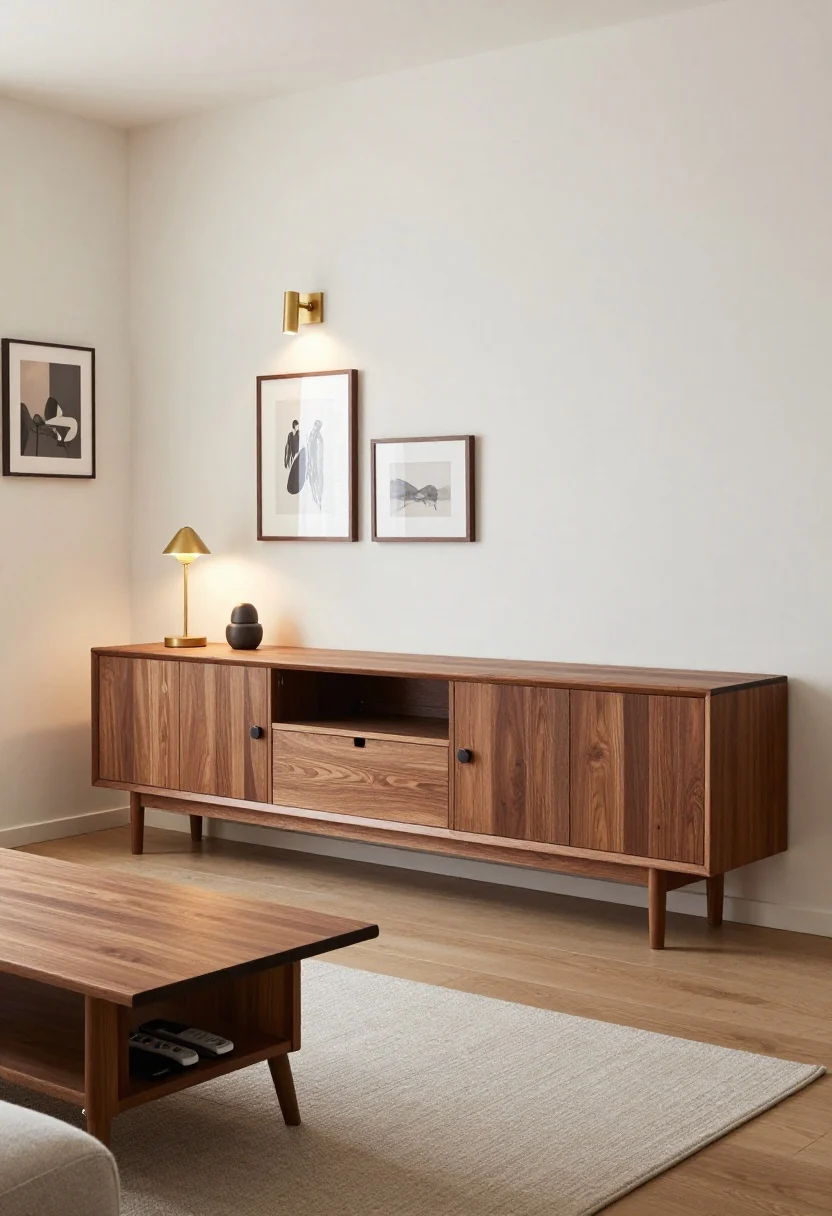
2) Living Room: Closed-Front Media Wall With Lift-Top Coffee Table
This image is by AI for inspiration only.
You need a place for remotes, kid toys, and cables without the room feeling like a playroom.
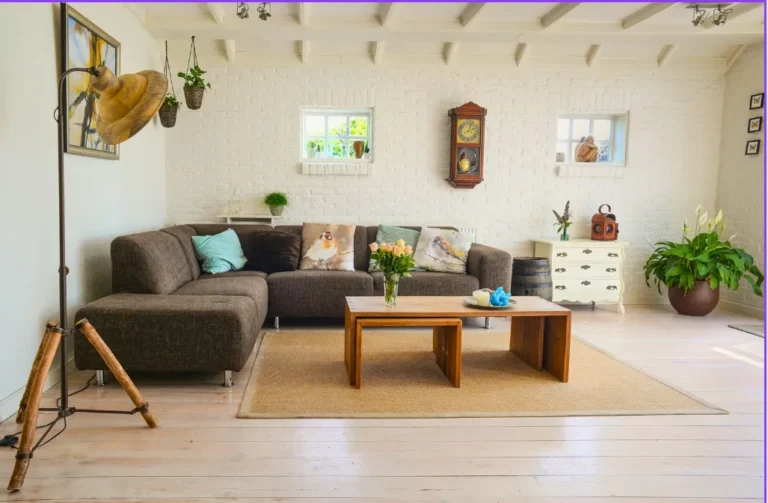
Why it works: A low, wall-to-wall media unit with closed fronts reads like a single line across the room—calming. Pair it with a lift-top coffee table: it hides clutter and doubles as a laptop perch. Keep the palette warm white walls, oak or walnut veneer, and brass picture lights. Scale matters: an 8×10 rug under the front sofa legs grounds the whole zone and makes closed storage look intentional, not piecemeal.
How to do it:
- Choose a media console 18–22 inches high, 16–20 inches deep, spanning at least 60% of the TV wall so it looks built-in.
- Pick slab doors with push-latch or matte black pulls; hide a cable box using IR repeater or streaming sticks.
- Buy a lift-top coffee table with soft-close hinges; check inner height clears 6 inches for remotes and chargers.
- Layer lighting: plug-in sconces or a floor lamp near the sofa, and a dimmable table lamp on the console.
Budget and splurge: Save with IKEA Besta + semihandmade-style doors; splurge on a solid, quiet lift-top mechanism. If you can, add a thin oak top to the media run so it looks custom.
Best for: Families, small rooms that need to hide toys, renters needing flexibility.
Mistake to avoid: Open cubbies under the TV. They collect dust and visual noise—choose closed doors or add fabric-front panels to mask speakers.
Next step: Kitchens carry the heaviest storage load—hidden doesn’t mean hard to reach.
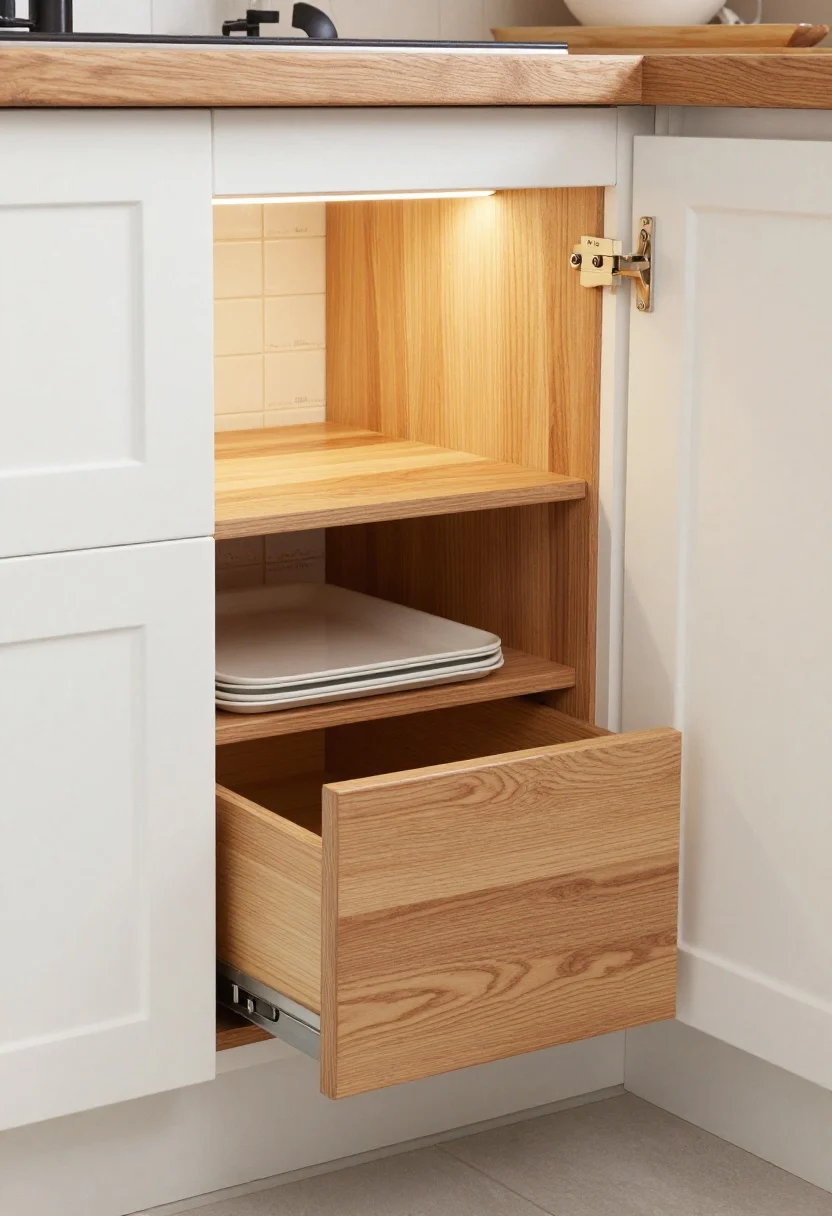
3) Kitchen: Toe-Kick Drawers and a Disguised Pantry Niche
This image is by AI for inspiration only.
You’re out of cabinet space, and counters are catching appliances, snacks, and paperwork.
Why it works: The toe-kick zone (that 4–5 inch strip under base cabinets) is wasted volume in most kitchens. Converting a few runs to shallow drawers swallows sheet pans, cutting boards, kids’ art supplies—everything flat. A disguised pantry niche behind a panel door (matching your cabinet fronts) keeps bulky items nearby without reading “pantry door.” The room still feels streamlined because all fronts are consistent.
How to do it:
- Install toe-kick drawers where you have straight cabinet runs; use full-extension slides. Ideal drawer interior: 3 inches clear height.
- Create a 12–18 inch deep pantry niche in a stud bay near the fridge; add adjustable shelves and a cabinet-matching panel door with hidden hinges.
- Use peel-and-stick tile inside the niche for wipeability; label shelf edges (baking, snacks, lunch).
- Mount under-cabinet LED strips to free counter space by moving chargers and small devices into a hidden charging cubby.
Budget and splurge: Save by retrofitting toe-kick drawers to a couple of cabinets where it’s easiest; splurge on quality slides (Blum/Tandem) and accurate carpentry for the niche door so gaps are tight. If custom panels are pricey, paint a flush MDF door to match cabinets and use a magnetic touch latch.
Best for: Small kitchens, homeowners, low-light rooms needing clean lines.
Mistake to avoid: Overfilling toe-kick drawers with heavy cast iron. They’re for flat, light-to-medium items to keep slides smooth long term.
Next step: Bedrooms are where bulk storage can either calm you or crowd you.
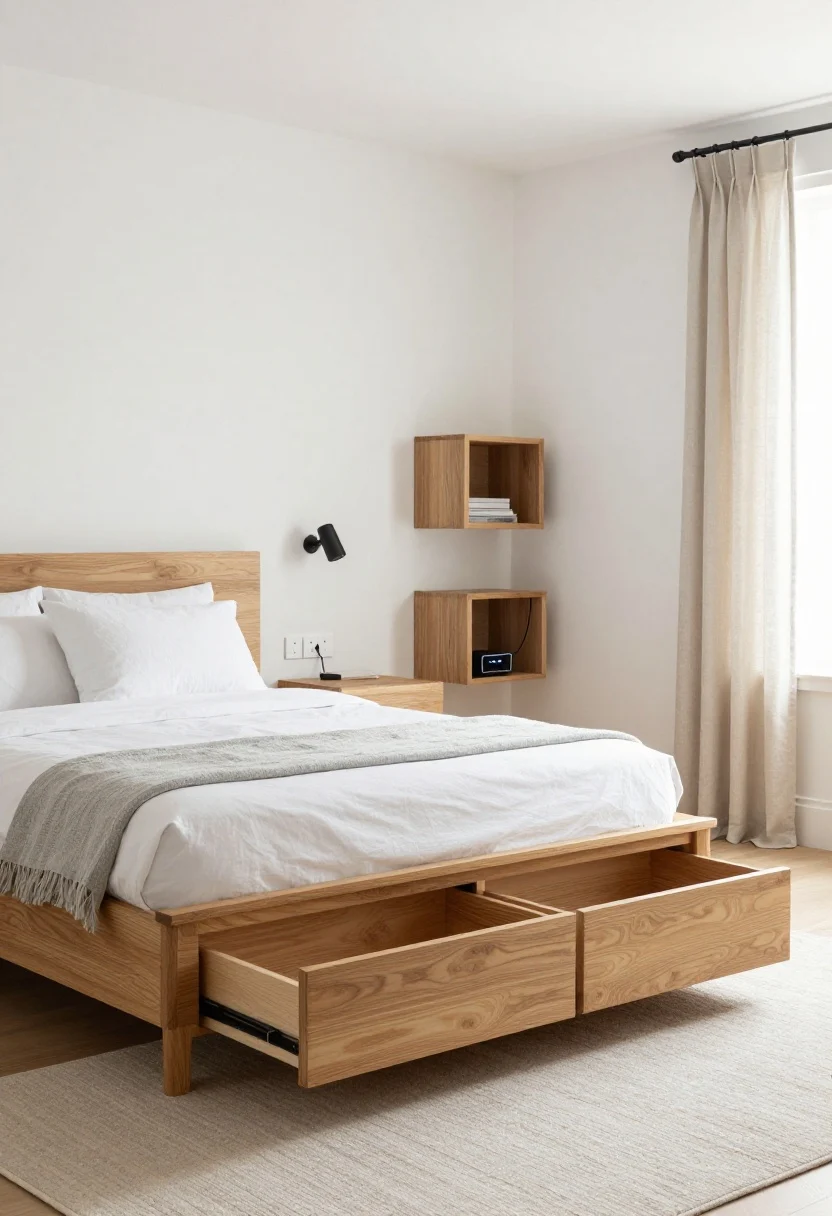
4) Bedroom: Drawer Bed With Headboard Cubbies and Floating Nightstands
This image is by AI for inspiration only.
You need clothing and book storage, but dressers make the room feel tight.
Why it works: A platform bed with deep drawers replaces a separate dresser, keeping floor area open. A headboard with concealed cubbies (flip-down panels) swallows chargers and nightly clutter. Floating nightstands keep the floor clear for a larger rug, which visually expands the room and quiets it acoustically.
How to do it:
- Select a bed with at least two 9–12 inch high drawers per side; confirm drawers clear your nightstands by leaving 3 inches between bed and wall or side furniture.
- Choose a flush-panel headboard with integrated cable channeling and flip-down doors. Add a small motion-sensor LED inside.
- Mount 12–16 inch wide floating nightstands at 24 inches high; install cord grommets and use plug-in sconces to free the top surface.
- Use linen curtains hung high (4–6 inches above the frame) to soften the elevation without adding bulk.
Budget and splurge: Save with a storage bed in veneer (oak/walnut look) and DIY the headboard cubbies using IKEA wall cabinets turned horizontal; splurge on sturdy drawer boxes and soft-close slides since they get daily use. Washable slipcovers for bedding are worth it in rooms with pets or kids.
Best for: Small rooms, apartments, renters who want wall-mounted nightstands via minimal anchors.
Mistake to avoid: Underestimating rug size. Use an 8×10 minimum for a queen—front two-thirds of the bed and nightstands on the rug—to anchor the furniture and prevent a choppy look.
Next step: Bathrooms benefit from thin, vertical storage that acts like trim, not bulk.
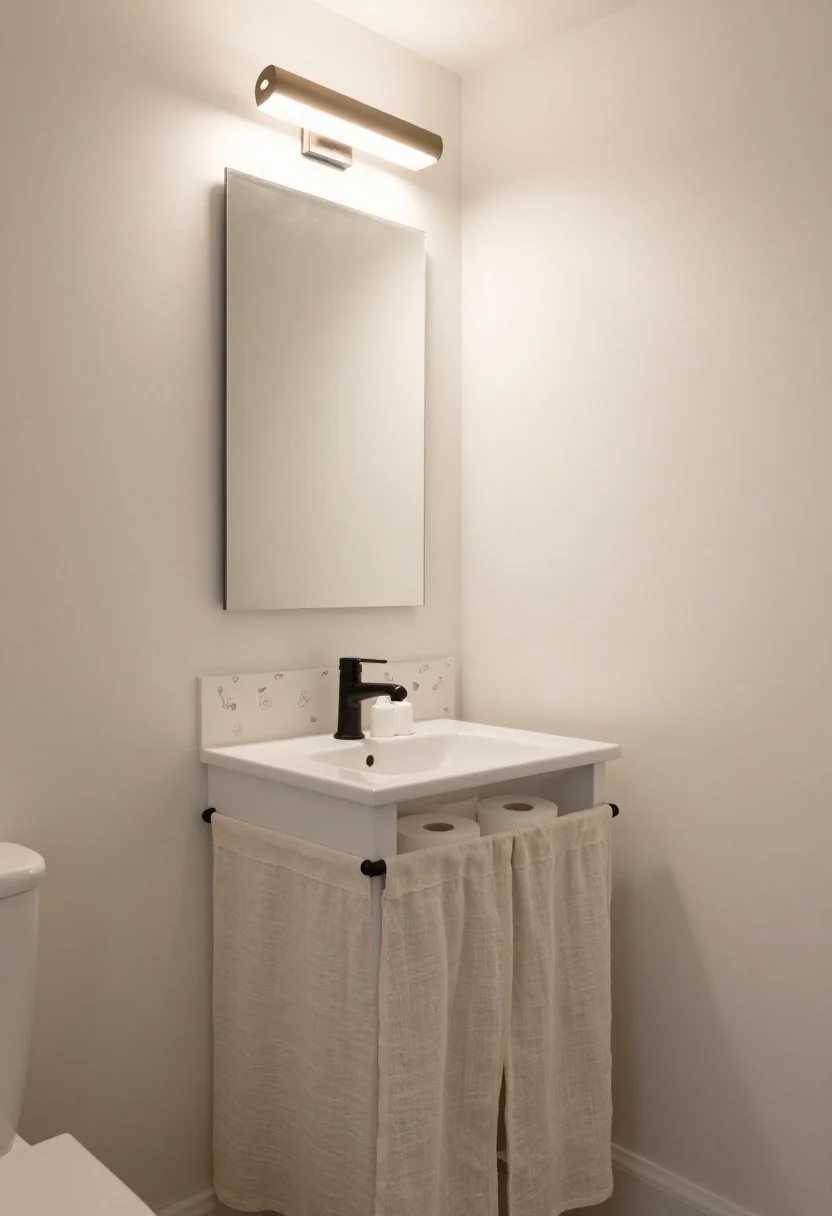
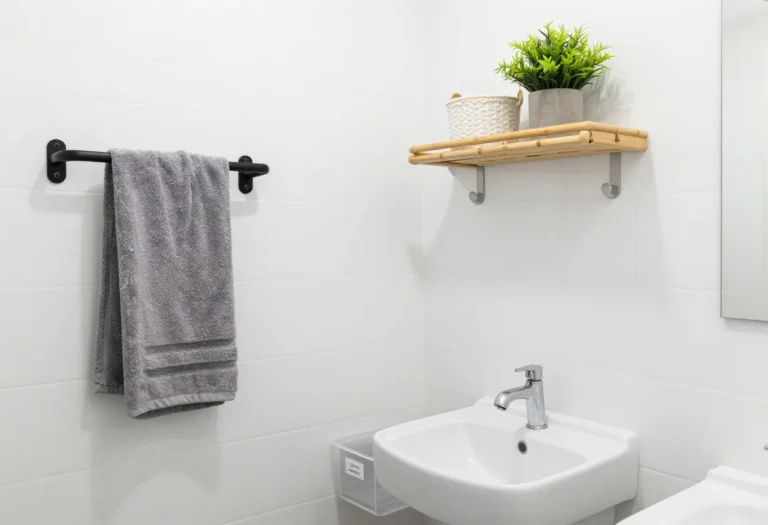
5) Bathroom: Recessed Medicine Wall and Skirted Vanity Storage
This image is by AI for inspiration only.
You’re low on counter space, and bottles are staging a coup.
Why it works: Recessed cabinets between studs give you 3.5 inches of hidden depth without protruding. Add a mirror-front for daily use. Pair with a vanity skirt over an open base to hide bins—soft fabric adds texture and warmth while maintaining airflow. The focal point becomes the mirror and lighting, not product clutter.
How to do it:
- Identify stud bays; install a 14-inch wide recessed cabinet with adjustable shelves and a mirrored door.
- Use brass or matte black picture lights above the mirror for flattering light; add a dimmer.
- Attach a tailored linen or performance-fabric skirt to the vanity with Velcro; hide lidded bins for TP and cleaning supplies underneath.
- Keep walls a warm white (not blue-leaning) to avoid a sterile cast; think Benjamin Moore White Dove or similar.
Budget and splurge: Save with ready-made recessed medicine cabinets and a DIY skirt; splurge on quality faucet and drain hardware—leaks ruin hidden storage fast. Use peel-and-stick backsplash behind the sink if tile budget is tight.
Best for: Small baths, low-light rooms, older homes with limited storage.
Mistake to avoid: Overly deep surface-mount cabinets that shadow the sink. Recessing keeps sightlines clean.
Next step: Home offices need storage you can reach without breaking flow on a call.
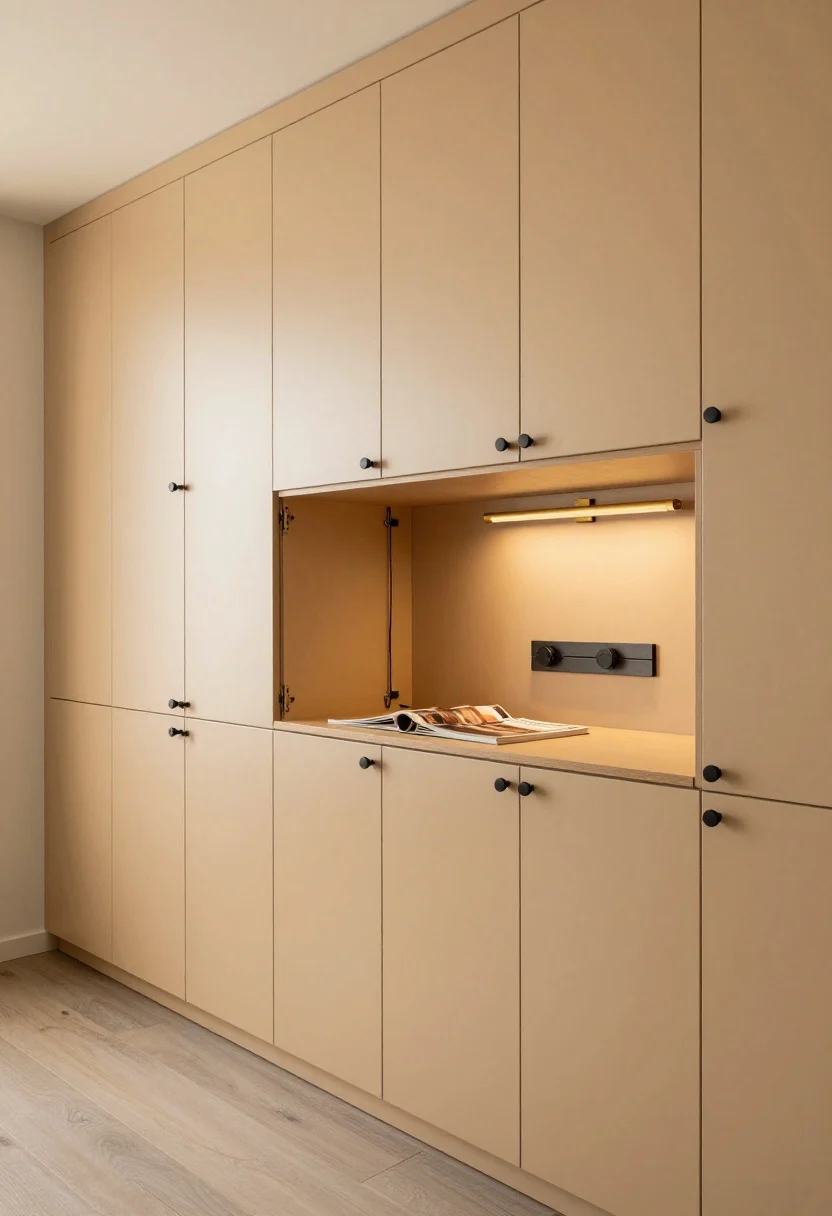
6) Home Office: Wall of Tall Cabinets With Fold-Down Work Hub
This image is by AI for inspiration only.
Your desk is buried in cables, printers, and binders you need but don’t want to see.
Why it works: A bank of tall cabinets (shallow—12–15 inches deep) reads like a clean backdrop and swallows everything. Add one fold-down door at seated height for an extra surface that closes when not in use. Use consistent slab doors with matte black pulls; finish in the wall color so it visually recedes. A plug-in task sconce and layered lamps keep the lighting warm and focused.
How to do it:
- Plan a 72–96 inch wide run of 12–15 inch deep cabinets. At 28–30 inches from the floor, include one section with a drop-down door using a piano hinge and stays.
- Route cable management vertically; install a power strip inside with a cable pass-through to your main desk.
- Use magazine files and labeled boxes behind closed doors to keep retrieval fast.
- Mount a brass picture light or plug-in sconce above the fold-down zone for quick task lighting.
Budget and splurge: Save with IKEA Pax or Billy + doors trimmed to look built-in; splurge on custom-width doors or paint-grade MDF fronts for a seamless wall-to-wall look. Spend on a good office chair; save on the secondary fold-down surface.
Best for: Open-plan homes (visual calm on camera), renters who can do modular, anyone with paper-heavy work.
Mistake to avoid: Deep cabinets (24 inches) you’ll overfill. Shallow storage forces editing and keeps the room breathable.
Next step: Kids’ spaces win or lose on whether storage is effortless to use daily.
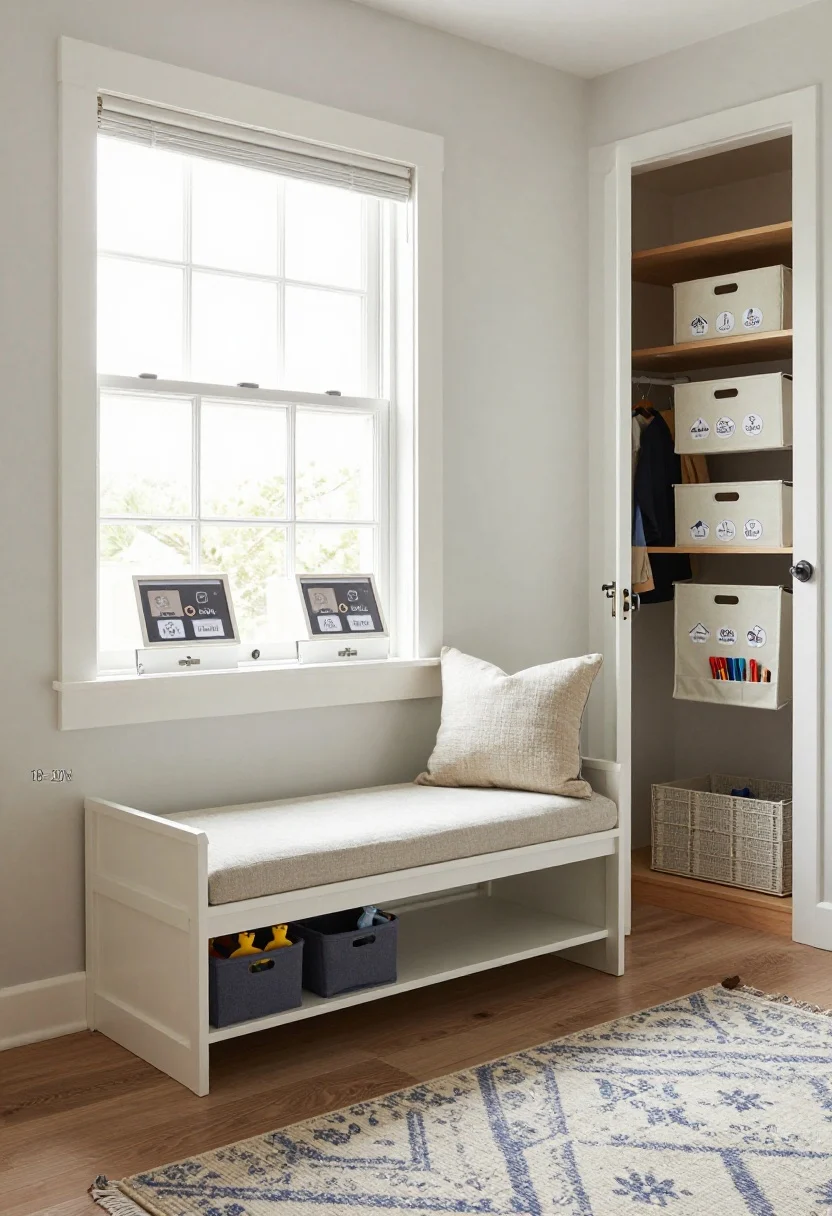
7) Kids’ Room or Play Space: Window Seat Toy Well and Label-First Closet
This image is by AI for inspiration only.
You’re tripping over blocks and stuffed animals, and nothing has a “home.”
Why it works: A window seat with a hinged top hides a deep toy well; it becomes the focal point, not the toy bins. Inside the closet, a first-glance label system (icons + words) on closed bins encourages cleanup. Keep fabrics washable and durable—performance linen or canvas—and add a boucle accent pillow on the seat for texture. Closed storage fronts prevent visual overload.
How to do it:
- Build or buy a 48–60 inch wide window bench, 18–20 inches high, 18–20 inches deep. Use soft-close lid stays for safety.
- Inside: two large bins for bulky items, smaller labeled boxes for sets. Use icon labels for non-readers.
- Closet: install a second low rod at 36 inches for kids’ reach, add closed-front baskets on shelves, and a door-mounted organizer for art supplies.
- Use a washable 5×7 rug with a low pile; choose patterns that hide crumbs and glitter.
Budget and splurge: Save with a ready-made storage bench and canvas bins; splurge on quality lid hardware and durable, stain-resistant fabric. If custom, add a hidden rear compartment for seasonal books.
Best for: Families, small rooms, renters (freestanding bench), shared rooms where clutter must vanish fast.
Mistake to avoid: Open cube storage everywhere. It looks busy; mix in closed lids and a single open shelf for display only.
What To Buy / What To Skip
- Buy: Soft-close hinges and drawer slides (quiet = premium), washable slipcovers, plug-in sconces, motion-sensor LED strips for dark cabinets, closed-front media units, storage beds with real wood drawer boxes, matte black pulls or unlacquered brass that patinas.
- Skip: Overly deep entry cabinets, glass-front media stands, flimsy lift-top tables that wobble, glossy white laminate in high-touch zones (shows scuffs), baskets without lids in kid zones, open shelves in grease-prone kitchens.
Common Designer Mistakes With Hidden Storage
- Ignoring furniture scale. Deep pieces in narrow halls look bulky and reduce passage to under 32 inches.
- Mismatched door gaps. Inconsistent reveals on “built-ins” make them scream DIY; use spacers and a jig.
- Too many finishes. Limit to two wood tones max per room; add black or brass as an accent, not a third wood.
- Buying bins before measuring. Shelf depth and door swing clearances matter; always measure interior clear heights.
- No lighting inside storage. Add $15 LED strips; otherwise, you won’t use the hidden spaces.
Budget-Friendly Alternatives That Still Look Custom
- Media wall: Besta frames + continuous plywood or oak top + semihandmade-style slab fronts + 1/2 inch scribe strips to the wall.
- Bedroom headboard cubbies: Horizontal wall cabinets (IKEA Metod/Sektion) hung low and faced with a single continuous slab panel using piano hinges.
- Office tall storage: Billy bookcases with Oxberg doors, topped with a painted MDF filler to reach the ceiling; add baseboard to unify.
- Bathroom recessed look: Surface-mount cabinet centered between studs, then frame with 1×2 trim painted wall color to fake a recess.
- Entry bench: Two shallow shoe cabinets side-by-side with a custom plywood top wrapped in foam and performance fabric for a flip-up seat look.
| Design | Best For | Key Feature | Budget Tip |
|---|---|---|---|
| Entry: Slim Bench Wall | Small entries, renters | Flip-top bench with hidden charging | Use ready-made bench + add cable grommet |
| Living: Closed Media + Lift-Top | Families, small rooms | Wall-to-wall closed fronts | IKEA frames + custom or DIY slab doors |
| Kitchen: Toe-Kick + Niche | Small kitchens | Under-cabinet toe-kick drawers | Retrofit only straight runs to save labor |
| Bedroom: Drawer Bed + Cubbies | Apartments, tight rooms | Deep under-bed drawers | Veneer frame; spend on slides |
| Bathroom: Recessed + Skirt | Older homes, low light | Stud-bay cabinets, vanity skirt | Ready-made cabinet + DIY skirt |
| Office: Tall Cabs + Fold-Down | Open-plan, paper-heavy work | Shallow wall of storage | Billy/Pax with painted trim |
| Kids: Window Seat + Closet Labels | Families, renters | Toy well under seat | Canvas bins with icon labels |
This image is by AI for inspiration only.
FAQ
1) How deep should hidden storage be to stay useful but not bulky?
For most rooms, 12–15 inches deep is the sweet spot for wall cabinets and media units; 18–20 inches for benches; toe-kick drawers at 3 inches interior height; under-bed drawers at 9–12 inches.
2) Which finishes hide wear best on closed storage?
Matte or satin paints, oak or walnut grain veneers, and textured performance fabrics. Avoid high-gloss white in high-touch areas; it shows every scuff.
3) How do I keep hidden storage from smelling musty?
Add ventilation gaps at the back, use cedar liners for drawers, and avoid overstuffing. In bathrooms, seal raw edges and use silicone at contact points to prevent moisture wicking.
4) What’s the cheapest way to fake built-ins?
Use modular IKEA units, add a continuous wood top, scribe to walls with painted MDF fillers, and install baseboard and a thin crown to integrate. Paint doors and fillers together for a single-surface look.
5) Is it worth paying for soft-close hardware?
Yes. It reduces slamming, minimizes wear, and makes budget pieces feel higher-end. Prioritize it on daily-use drawers and lift-tops.
Bringing brilliant hidden storage ideas for every room into your home isn’t about stuffing more things behind doors—it’s about cleaner lines, better lighting, and choosing materials that quietly work hard. Start with one zone (entry or living), keep finishes consistent, and spend where function matters most: smooth hardware, durable surfaces, and lighting inside the places you open every day. Done right, the storage disappears, and the room you see first is the calm one you’ve been aiming for.
Before You Start: Quick Decorating Checklist
- Measure the room before buying furniture or storage pieces.
- Choose one main focal point so the space does not feel busy.
- Repeat at least one finish, texture, or color to make the room feel intentional.
- Check lighting temperature, traffic flow, and cleaning needs before copying the look.
Helpful Product Ideas To Compare
Affiliate disclosure: Some links may be affiliate links. Compare size, material, reviews, and return policy before buying.
- Shop Brilliant Hidden Storage Every Decor — useful for checking price ranges, finishes, and real customer photos.
- Shop Brilliant Hidden Storage Every Storage — useful for checking price ranges, finishes, and real customer photos.
- Shop Brilliant Hidden Storage Every Lighting — useful for checking price ranges, finishes, and real customer photos.
Image Credits:All images are used for informational or inspiration purposes only. Some images used in this post are sourced from royalty-free websites like Pixabay or created using Canva Pro. If you are the copyright owner of any image used here and would like it removed or credited, please contact me.

2 Comments