
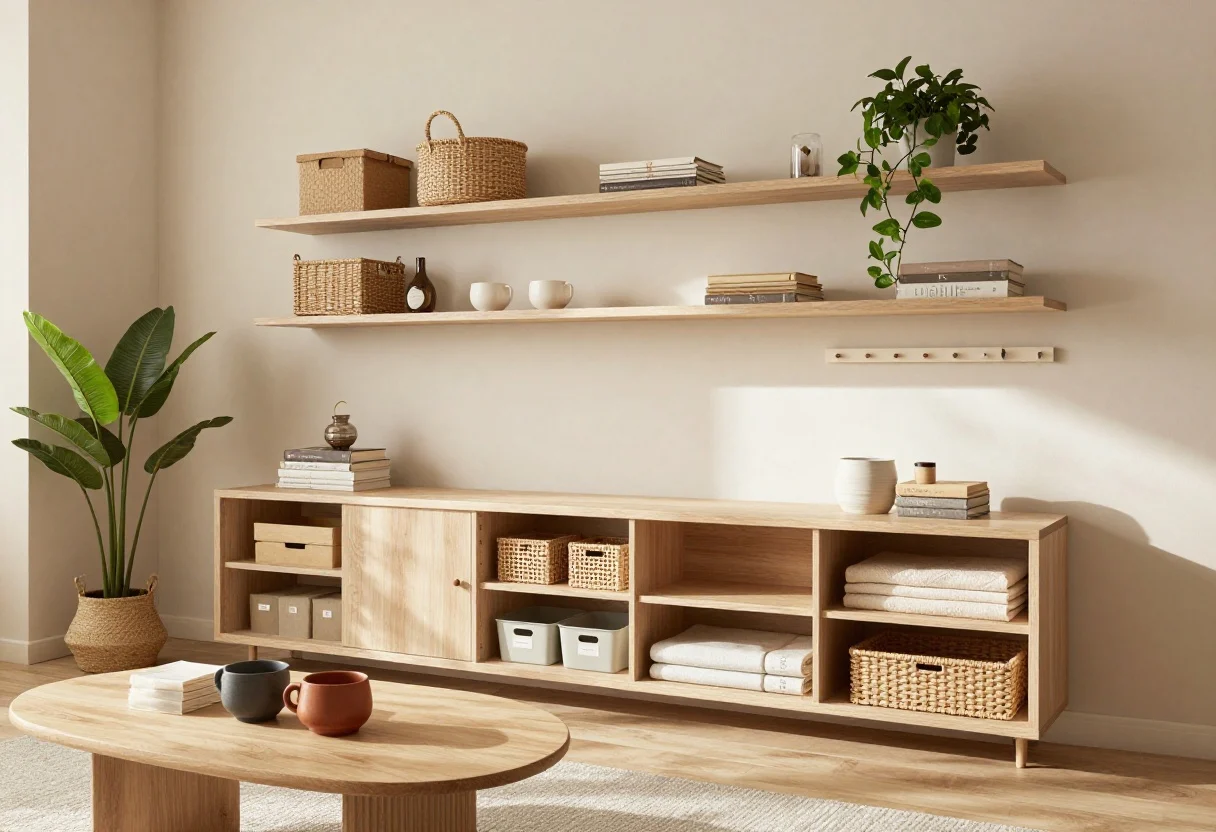
Storage Solutions for Small Spaces That Instantly Reduce Clutter

You’re not just searching for bins. You want your room to look better—fast—without wasting money on furniture that’s too big, colors that fight your light, or a “Pinterest-perfect” setup that doesn’t fit your square footage. The right storage can make a small room look designed, not crammed. Below are seven complete, distinct design directions with clear palettes, layouts, and practical shopping notes. You’ll see how to work with your light, scale furniture to your room, and choose finishes that feel intentional, not improvised.
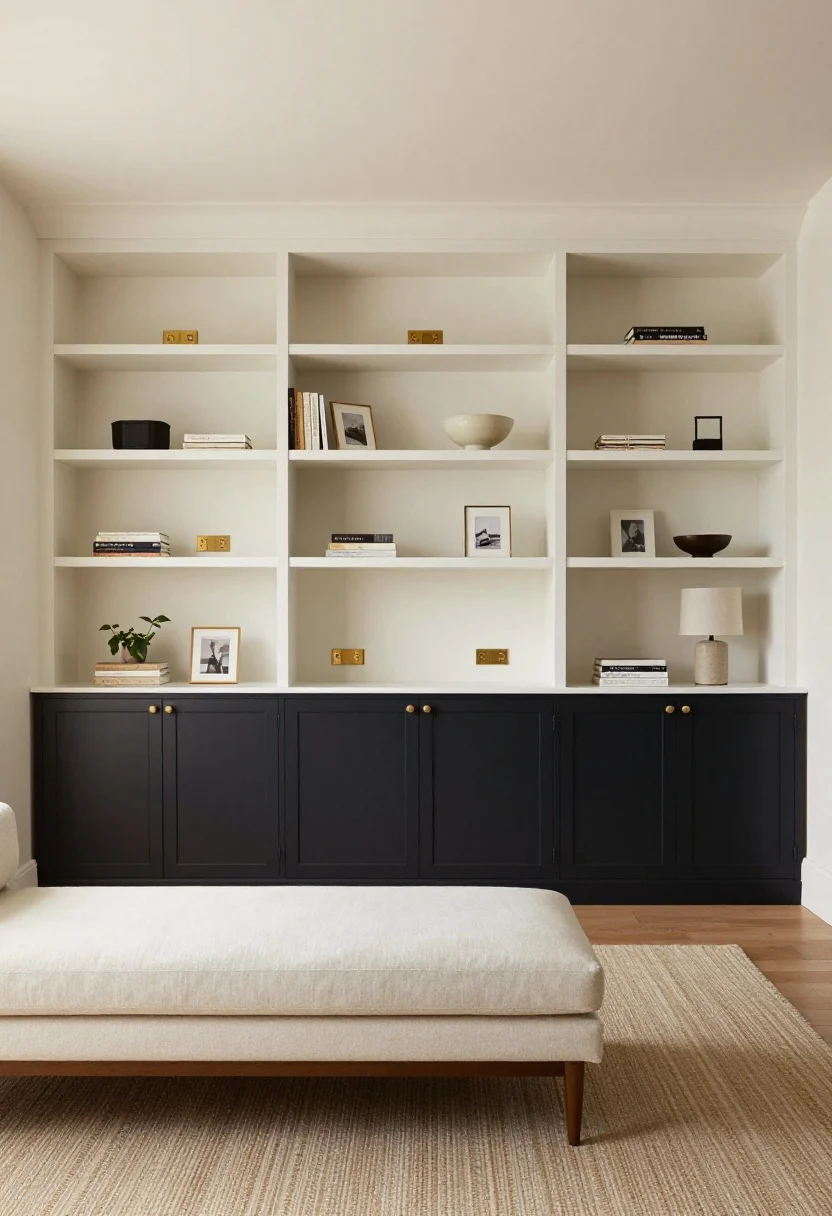
1. Slim Built-Ins With Warm White Walls And Brass Details
This image is by AI for inspiration only.
You want a living room that stops feeling like a scatter of baskets and starts reading like a custom space.
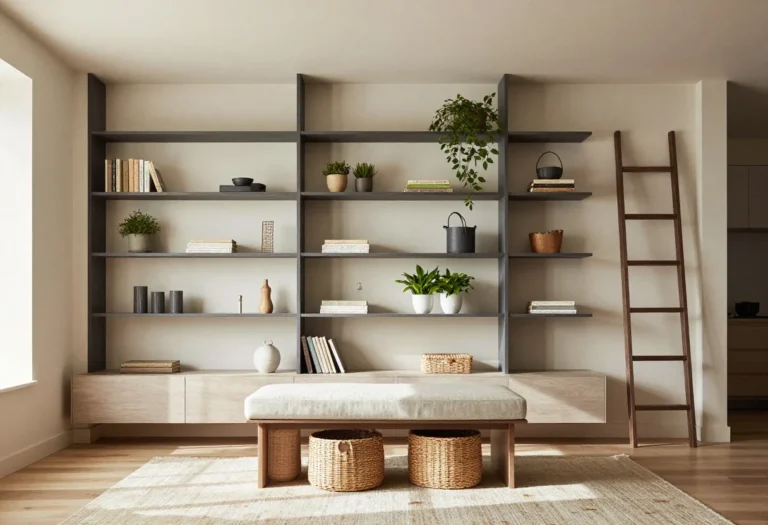
Why this works: Slim, wall-to-wall built-ins visually square up a small room and create a real focal point. Painting them the same warm white as the walls (think Benjamin Moore White Dove or Sherwin-Williams Alabaster) removes visual breaks so the room feels larger. Closed lower cabinets hide the mess; open shelves up top display just enough to feel personal. Brass picture lights and small brass shelf brackets add shine, so it doesn’t turn into a white box.
How to recreate it:
- Go floor-to-ceiling at 10–12 inches deep. That’s enough for books and baskets without eating the room.
- Use IKEA Sektion or Billy frames with custom doors or trim for a “built-in” look. Caulk gaps, add crown, and paint everything to match the walls in a satin finish.
- Run closed storage on the bottom third: doors with soft-close hinges and matte black or antique brass pulls.
- Keep the layout simple: an 8×10 rug under the front sofa legs, a low-profile sofa (32–34 inches deep) centered on the shelves, and a slim, closed media cabinet in the center bay if you have a TV. Use cord grommets and a cable sleeve—no loose wires.
- Lighting: plug-in brass picture lights over the shelves or small puck lights inside the top bays. Add a linen drum table lamp for softness.
Budget notes and where to spend:
- Save with stock boxes; spend on good doors and pulls.
- Use pine or MDF for trim; invest in a quality primer so the finish reads custom, not patchy.
Best for: small living rooms, homeowners and long-term renters willing to patch walls, low- to medium-light rooms.
Mistake to avoid: Over-styling shelves. Keep only 30–40% of shelf space filled: stacked books, a couple of framed photos, a ceramic bowl, and a plant. Too much small decor equals visual noise.
Once you corral the living room, the entry will set the tone the second you walk in—so tackle it with a piece that earns its footprint.
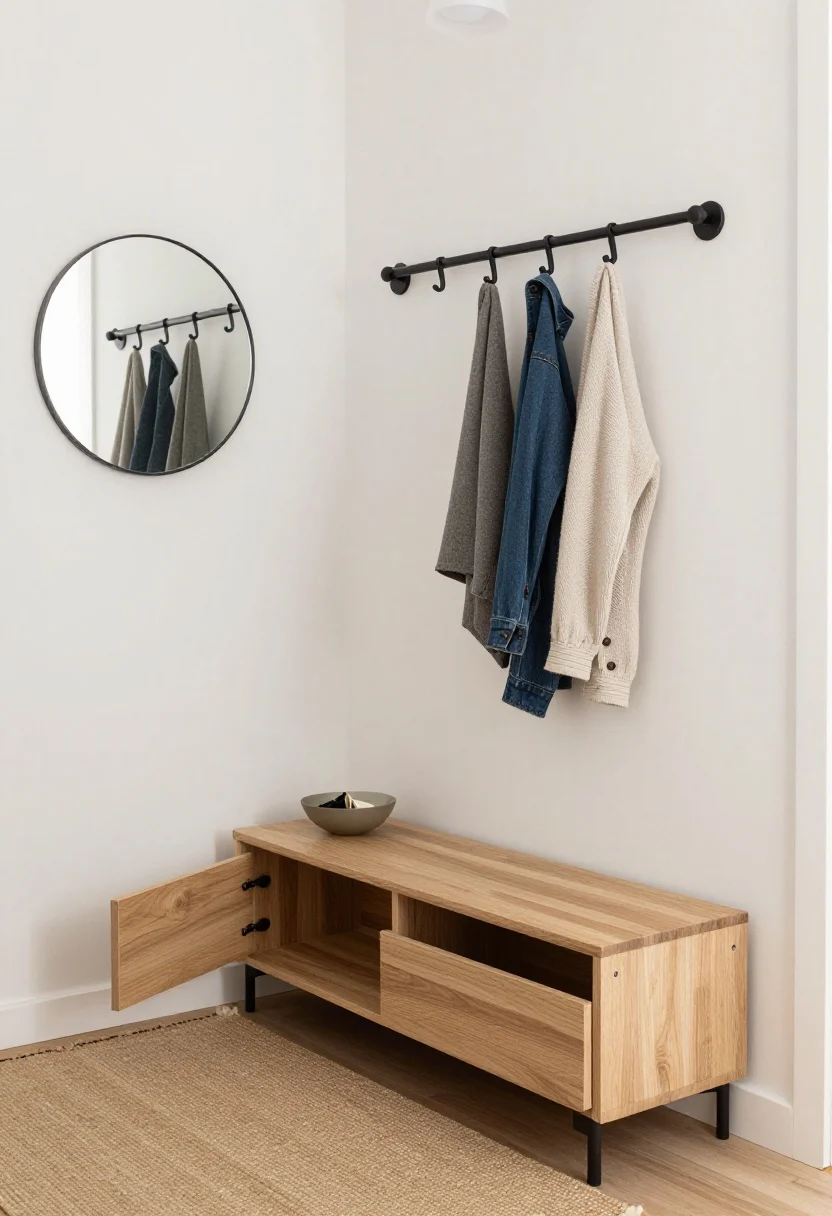
2. The Narrow Entry Bench With High Hooks And Hidden Shoe Drawers
This image is by AI for inspiration only.
There’s nowhere for shoes, keys, or mail; the entry doubles as a drop zone and a choke point.
Why this works: A bench that’s only 12–14 inches deep gives you a seat without stealing the walkway. Drawers or a flip-up top catch sneakers and scarves. Mounting a rail of hooks high (at about 70 inches) keeps jackets from overlapping the bench, leaving breathing room below. A mirror above bounces light back into the hallway and gives your keys a home if you add a small bowl on the bench.
How to recreate it:
- Palette: warm white walls, black hooks, light oak bench, natural jute runner cut to length with rug tape.
- Bench: look for a 36–48 inch long, 12–14 inch deep bench with closed storage. If you only find open cubbies, add lidded baskets so clutter isn’t in sight.
- Hooks: a single linear rail avoids Swiss-cheese walls. Space hooks 6–8 inches apart. Use matte black so fingerprints disappear.
- Mirror: 18–24 inches wide. Round mirrors soften a narrow hallway; an arch reads considered.
- Lighting: swap the builder dome for a flush mount with opal glass; 3000K bulbs so coats don’t read dingy.
Budget notes and where to spend:
- Save on baskets; spend on sturdy hooks (solid metal, not hollow). Cheap hooks bend and look sad in six months.
- Use peel-and-stick wall protectors behind the hooks if you rent.
Best for: apartments, renters, small entry halls, families who shed bags at the door.
Mistake to avoid: Over-deep benches. Anything over 15 inches can block the walkway and makes the space feel cramped.
With the entry calm, the next clutter trap is the bedroom floor—usually laundry and nightstand overflow. A real bed base can fix that.
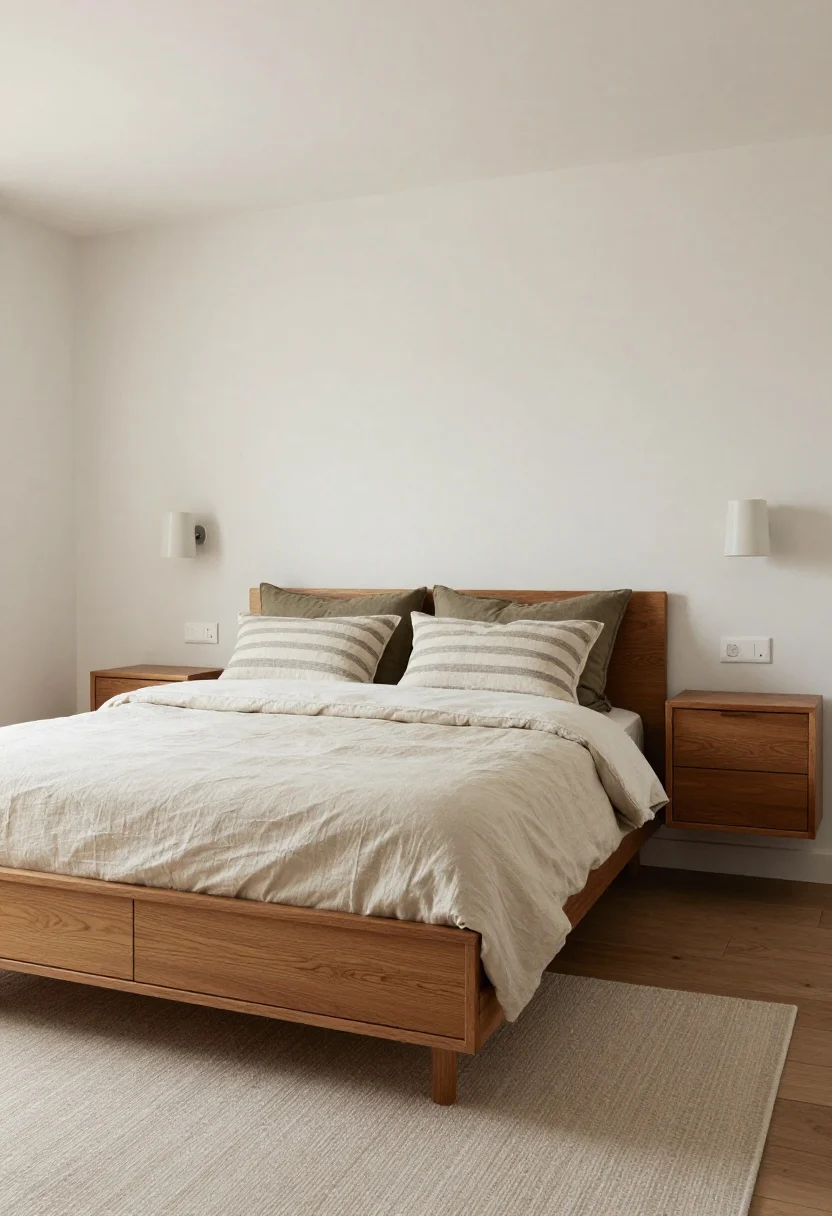
3. Platform Bed With Full-Extension Drawers And Linen Slipcovers
This image is by AI for inspiration only.
Your bedroom is tidy for one day, then the chair turns into a mountain of clothes and extra blankets slide off the footboard.
Why this works: A platform bed with drawers the full length of the frame replaces a dresser in tight rooms. It reclaims the biggest footprint in the room for hidden storage. Linen or cotton slipcovered bedding softens the boxiness and takes washing well, so it doesn’t feel like a storage unit you sleep on.
How to recreate it:
- Choose a bed with 12–14 inch high drawers on smooth full-extension glides so you can access the back. If the room is narrow, choose drawers on just one side and push the bed off-center by 6 inches.
- Color palette: warm white walls, oak or walnut bed frame, ecru linen duvet, two pillows with subtle stripe, one lumbar in a muted green or terracotta.
- Nightstands: go wall-mounted with drawers (18–20 inches wide) to free floor space for drawer clearance. Add plug-in sconces with cord covers painted to match the wall.
- Rug: 6×9 under a queen, perpendicular, stopping 12 inches from the nightstands so drawers glide freely.
Budget notes and where to spend:
- Spend on the drawer hardware; cheap slides fail under real-life load.
- Save by buying a platform without headboard and adding a slim upholstered headboard hung on a French cleat.
Best for: small bedrooms, renters who can’t add closets, low-light rooms needing warmth through texture.
Mistake to avoid: Skirted bed frames without structure. Dust ruffles hide chaos but don’t organize it; drawers do.
Once the bedroom loads are handled, the kitchen is where clutter shouts the loudest. Go vertical and choose materials that wipe clean.
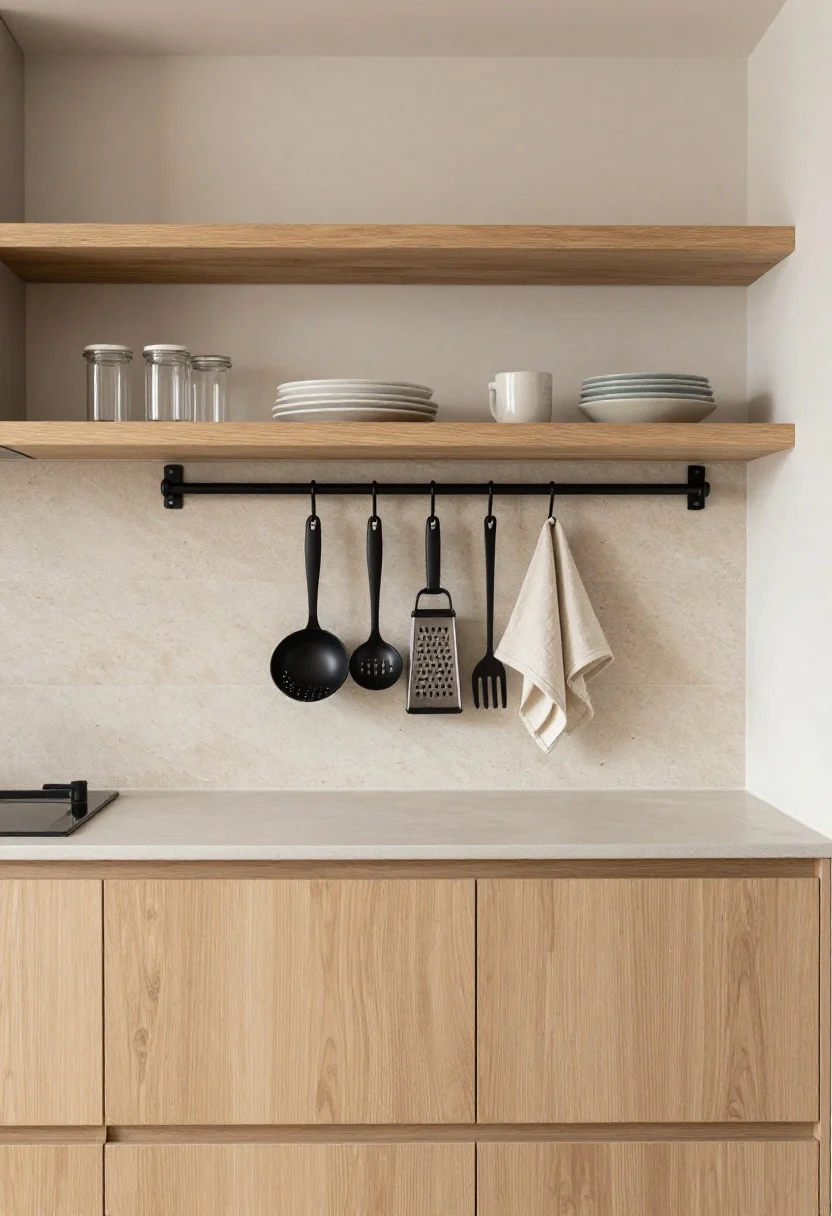
4. Rail-and-Shelf Galley: Vertical Kitchen Storage With Closed Bases
This image is by AI for inspiration only.
Your counters host everything: utensils, oils, mail, and the big cutting board because there’s no cabinet space left.
Why this works: Closed base cabinets hide the bulk. Above, a simple run of 10-inch-deep shelves paired with a metal rail keeps daily tools within reach but off the counter. Using a single material tone—light oak shelves with matte black brackets and rail—reduces visual clutter. A peel-and-stick backsplash protects the wall without the commitment of tile.
How to recreate it:
- Layout: in a galley or one-wall kitchen, run two shelves the length of your prep zone. Keep them 16–18 inches above the counter. Limit to dishes and a few lidded canisters; oils and vinegar move to a tray inside a base cabinet door-mounted rack.
- Rail system: mount a black or stainless rail under the lowest shelf for S-hooks. Hang a small colander, ladle, grater, and a linen towel. Skip 20 gadgets; choose 6 you truly use.
- Backsplash: choose a light, stone-look peel-and-stick at 4–6 inches high if you rent, or full-height if you can. Wipeable is non-negotiable.
- Counter color: mid-tone (light ash, pale concrete-look) hides crumbs and fingerprints better than jet black or bright white.
- Lighting: under-shelf LED strips at 3000–3500K to keep food looking appetizing.
Budget notes and where to spend:
- Save with laminate counters; spend on soft-close hinges and drawer dividers so interiors stay organized.
- Buy fewer canisters but better ones: clear, airtight, square footprint. Round jars waste space.
Best for: renters, small kitchens, open-plan apartments where visual calm matters.
Mistake to avoid: Overloading open shelves with mismatched mugs and branded packaging. Decant or keep most pantry items behind doors.
With cooking gear handled, the multipurpose office/guest nook often becomes a paper lagoon. Conceal the chaos with furniture that reads like a sideboard, not a filing cabinet.
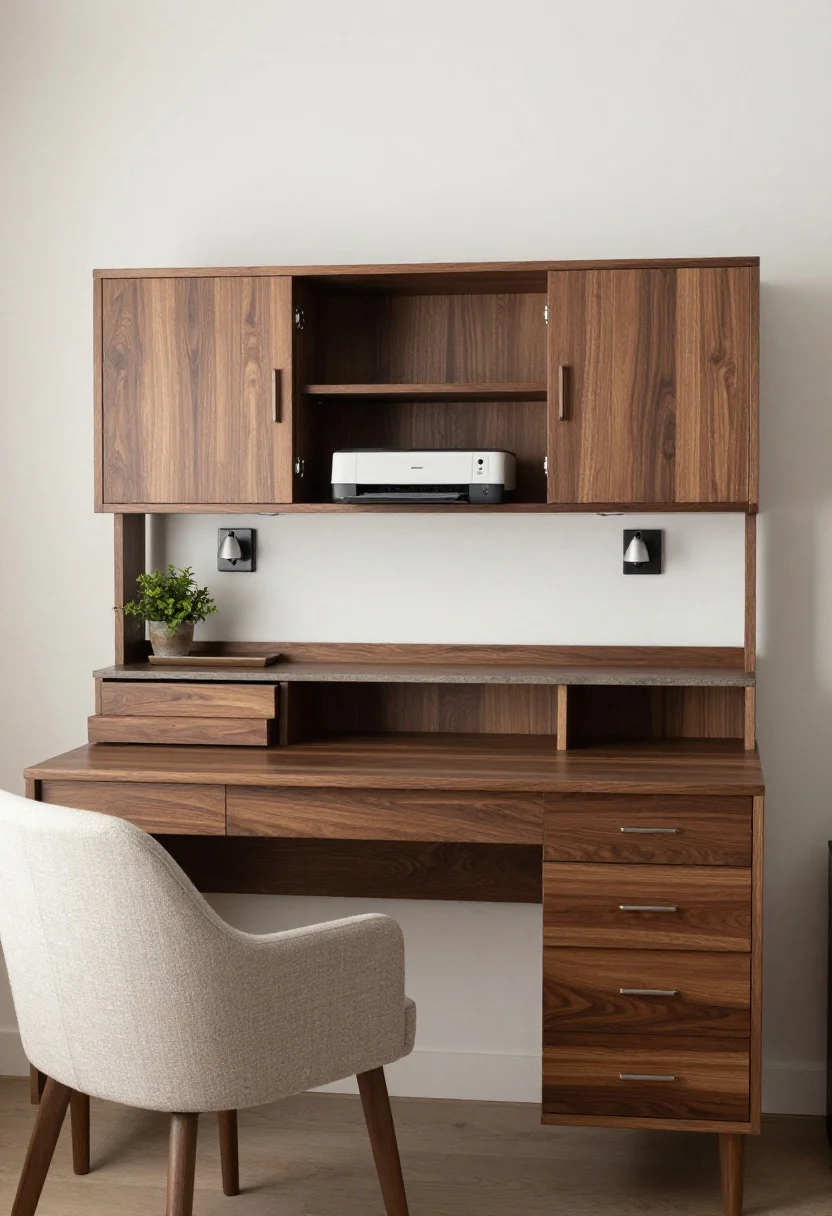
5. Secretary Desk Wall With Closed Cabinets And Plug-In Sconces
This image is by AI for inspiration only.
Your work area is the dining table, your printer lives on the floor, and paper piles breed overnight.
Why this works: A classic secretary desk folds your workday away. Pair it with flanking closed cabinets (12–15 inches deep) so the printer, shredder, and supplies disappear. Two plug-in sconces mounted above the desk give the wall intention and free up surface space for a small plant and a tray.
How to recreate it:
- Choose a secretary with a drop-down surface 28–30 inches high and interior cubbies for cords and a laptop. Walnut veneer hides smudges better than lacquer.
- Place two narrow cabinets on either side, topped with matching wood or stone-look slabs. Fit a printer inside one with a rear cord hole and a sliding shelf.
- Palette: warm white walls, oak or walnut furniture, matte black sconces with linen shades, a woven basket under one cabinet for rolled wrapping paper.
- Chair: a small-scale upholstered dining chair (17–18 inch seat) that also works at the table when guests arrive.
- Cable management: stick-on under-desk tray and a power strip mounted inside the cabinet.
Budget notes and where to spend:
- Save by buying secondhand wood cabinets and painting them; spend on the drop-front desk hinge—it takes daily stress.
- Use peel-and-stick cord covers painted wall color; no drilling required.
Best for: apartments, renters, small dining rooms doing double duty, low-visual-noise households.
Mistake to avoid: Glass-front cabinets. They invite visual clutter and glare from screens. Keep fronts solid and hardware simple (matte black knobs).
Now for the bathroom, where bottles multiply and towels have nowhere to live. Bring the storage up off the floor and into the door and wall space you already have.
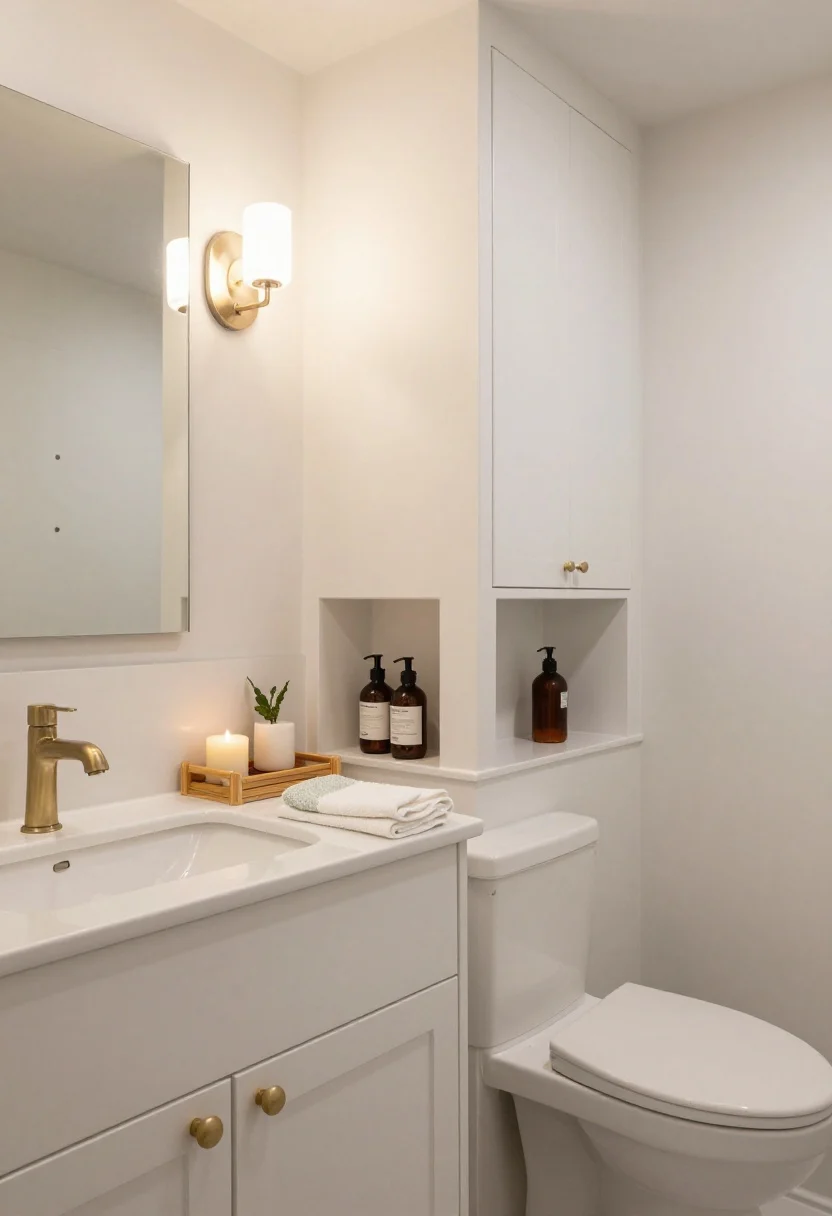
6. Spa-Ledge Bath: Over-Toilet Cabinet, Niches, And A Shallow Vanity
This image is by AI for inspiration only.
The vanity top is a pharmacy, the shower products balance on the tub edge, and spare rolls float around without a home.
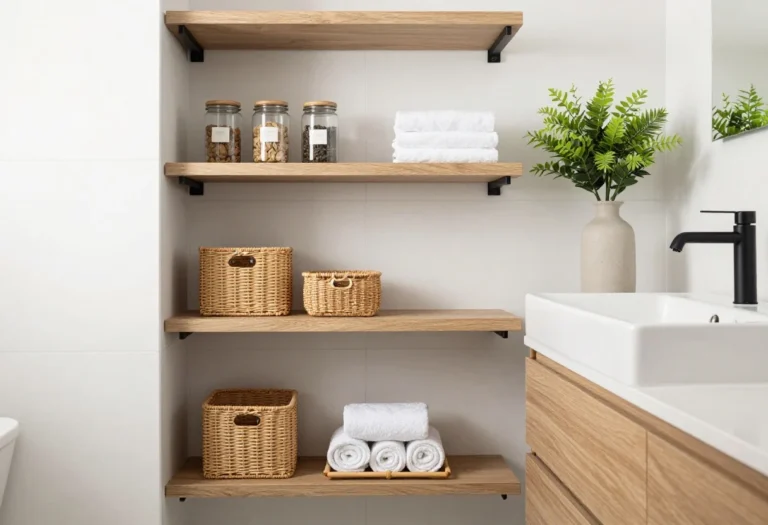
Why this works: Building storage into negative spaces—over the toilet, inside a wall niche, and in a shallow vanity—gets clutter off surfaces. A single ledge line visually ties the room together and makes it feel planned.
How to recreate it:
- Install a 24–30 inch wide over-toilet cabinet at least 10 inches deep with doors. Paint it the wall color for a built-in feel.
- Create a shower niche at chest height (if renovating) or use a slim, rustproof corner caddy if not. Use matching pump bottles to reduce label chaos.
- Choose a 16–18 inch deep vanity with two drawers. Add a bamboo organizer top tray inside the first drawer for daily skincare.
- Add a narrow ledge (4–5 inches deep) along one wall at 44 inches high to hold a plant, candle, and spare towel. Use moisture-safe paint or tile.
- Lighting: swap the bar light for two plug-in sconces flanking the mirror; it’s more flattering and frees the top of the mirror from glare.
Budget notes and where to spend:
- Spend on the vanity faucet and drain—cheap chrome pits fast. Brushed nickel or brass ages better.
- Save with peel-and-stick floor tile over old vinyl if you rent; choose a quiet pattern that doesn’t fight small footprints.
Best for: small baths, renters (with removable options), low-light rooms that need reflective surfaces.
Mistake to avoid: Towering floor shelves next to the toilet. They feel precarious and make the room look top-heavy. Keep storage either built-in or anchored to the wall.
The last clutter magnet is the catchall living space—especially if it doubles as a play area or hobby zone. Choose pieces that serve two lives and hide their second job.
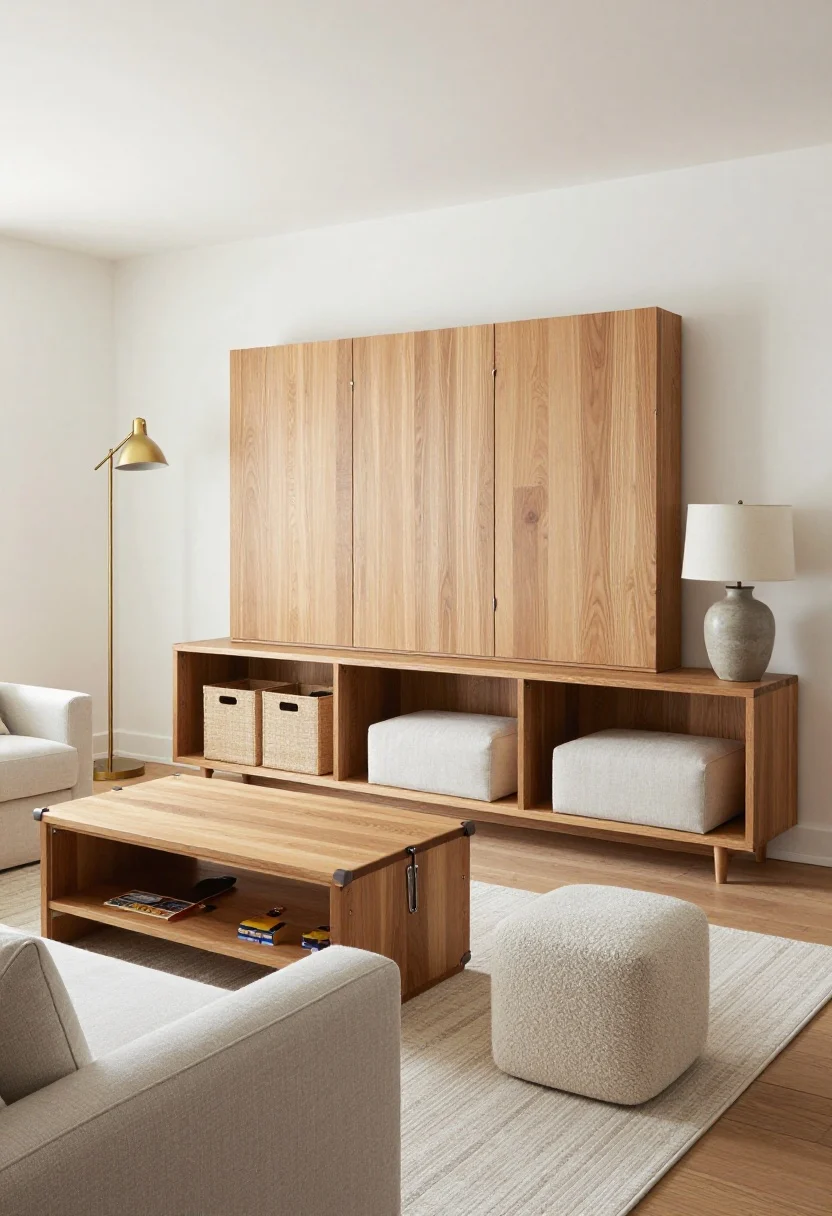
7. Coffee Table Trunk And Modular Ottomans With Washable Textiles
This image is by AI for inspiration only.
Your living room needs to host guests, store kids’ toys, and give you a place to put your feet—without looking like a daycare.
Why this works: A coffee table that’s actually a trunk or lift-top hides bulky items: board games, throw blankets, train tracks. Modular ottomans slide under a console or join as a footrest, storing crafts or controllers inside. Washable slipcovers on the sofa and ottomans mean you can have a pale palette without fear.
How to recreate it:
- Choose a trunk or lift-top coffee table 40–48 inches long; look for soft-close hinges and rounded corners if you have kids.
- Palette: warm white walls, oak tones, a boucle accent chair for texture, brass floor lamp with a dimmer, and a woven lidded basket beside the sofa for remotes and chargers.
- Use a media console with doors; run baskets inside for labeled categories (puzzles, remotes, chargers). Label the back of doors, not the front.
- Lighting: layered lamps—one brass floor lamp, one ceramic table lamp with a fabric drum shade. Avoid only overheads; they emphasize clutter.
- Rug: go large—8×10 minimum in most apartments. Bigger rugs make rooms feel calmer and anchor floating furniture so storage pieces don’t look random.
Budget notes and where to spend:
- Spend on washable slipcovers or performance fabric. It saves money long term.
- Save with a secondhand trunk; sand and finish with a matte water-based poly. Matte finishes hide fingerprints better.
Best for: families, small living rooms, open-plan homes that must look tidy quickly.
Mistake to avoid: Open toy bins as decor. They read messy even when “organized.” Use lidded storage and rotate items seasonally.
With multi-use furniture doing the heavy lifting, you can fine-tune choices based on your specific small-space challenge. The quick comparison below helps you pick a direction.
| Design | Best For | Key Feature | Budget Tip |
|---|---|---|---|
| Slim Built-Ins With Warm White Walls And Brass Details | Small living rooms, low-medium light | Floor-to-ceiling closed bases + open uppers | Use stock boxes with custom doors and paint |
| The Narrow Entry Bench With High Hooks And Hidden Shoe Drawers | Apartments, busy entries | 12–14 inch deep bench + high hook rail | Choose baskets over custom cubbies to save |
| Platform Bed With Full-Extension Drawers And Linen Slipcovers | Small bedrooms, limited closets | Under-bed drawers replacing a dresser | Buy headboard separately; invest in drawer slides |
| Rail-and-Shelf Galley: Vertical Kitchen Storage With Closed Bases | Renters, galley kitchens | Open shelves + utensil rail; clear counters | Peel-and-stick backsplash; fewer, better canisters |
| Secretary Desk Wall With Closed Cabinets And Plug-In Sconces | Home office nooks, dining rooms | Drop-front desk hides workday | Paint thrifted cabinets; upgrade hinges |
| Spa-Ledge Bath: Over-Toilet Cabinet, Niches, And A Shallow Vanity | Small bathrooms, renters | Wall-ledges + closed over-toilet storage | Peel-and-stick floor tile refresh |
| Coffee Table Trunk And Modular Ottomans With Washable Textiles | Families, open-plan living | Lift-top trunk + lidded storage | Buy secondhand trunk; matte finish it |
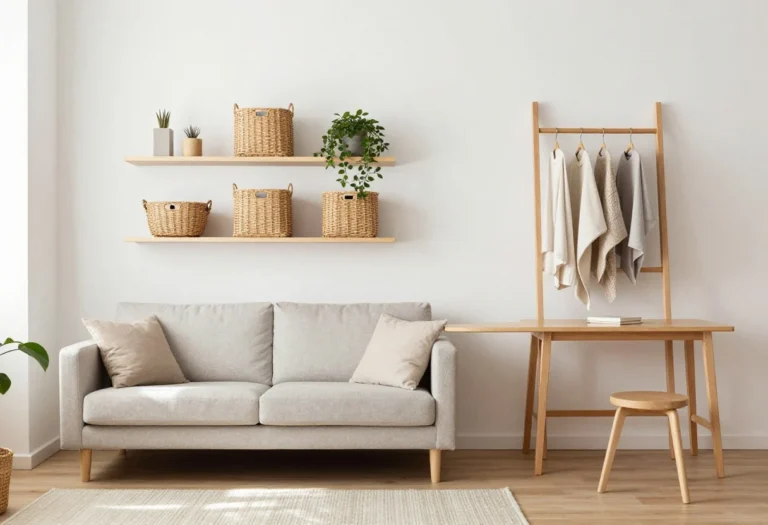
This image is by AI for inspiration only.
FAQ
How do I choose the right storage depth for small rooms?
Aim for 10–12 inches for bookcases and wall cabinets in living spaces; 12–14 inches for benches; 16–18 inches for bathroom vanities and shallow wardrobes. Measure door swing and drawer clearance before buying.
Should I go all open storage to save money?
Not in small spaces. Use closed storage for 70–80% of items and keep 20–30% open for display. Open-only plans look cluttered quickly and cost you calm. Mix both: doors for bulk, open shelves for personality.
What color palette reduces visual clutter the fastest?
Warm whites on walls, mid-tone woods (oak or walnut), and two metals max (brass + black or nickel + black). Keep textiles in solids or small-scale patterns and repeat colors in three places: a lamp, a pillow, a frame.
If you’re deciding where to start, pick the area you touch first every day. For many, that’s the entry; for others, it’s the kitchen counter. Any one of these seven storage solutions for small spaces will instantly reduce clutter when you scale the furniture correctly, stick to a calm palette, and favor closed storage where the eye needs rest. Make a list of real items that need a home—shoes, remotes, mail, mixers—and choose the design that solves for those first. The styling comes together once the mess has a place to live.

One Comment