Small Bedroom Organization for People With Too Many Shoes

When the floor of a modest bedroom is dotted with sneakers, heels, and the occasional sandal, the space can feel cramped before you even step inside. The problem isn’t just visual; piles of footwear can block natural light, make bedtime routines slower, and even affect the room’s air quality. This article walks you through seven practical ideas that turn a shoe‑filled nightmare into a tidy, inviting retreat. Each approach respects the limited square footage of a small bedroom while giving your favorite pairs a home that looks intentional rather than chaotic.
1. Take Stock and Sort With Purpose
This image is by AI for inspiration only.
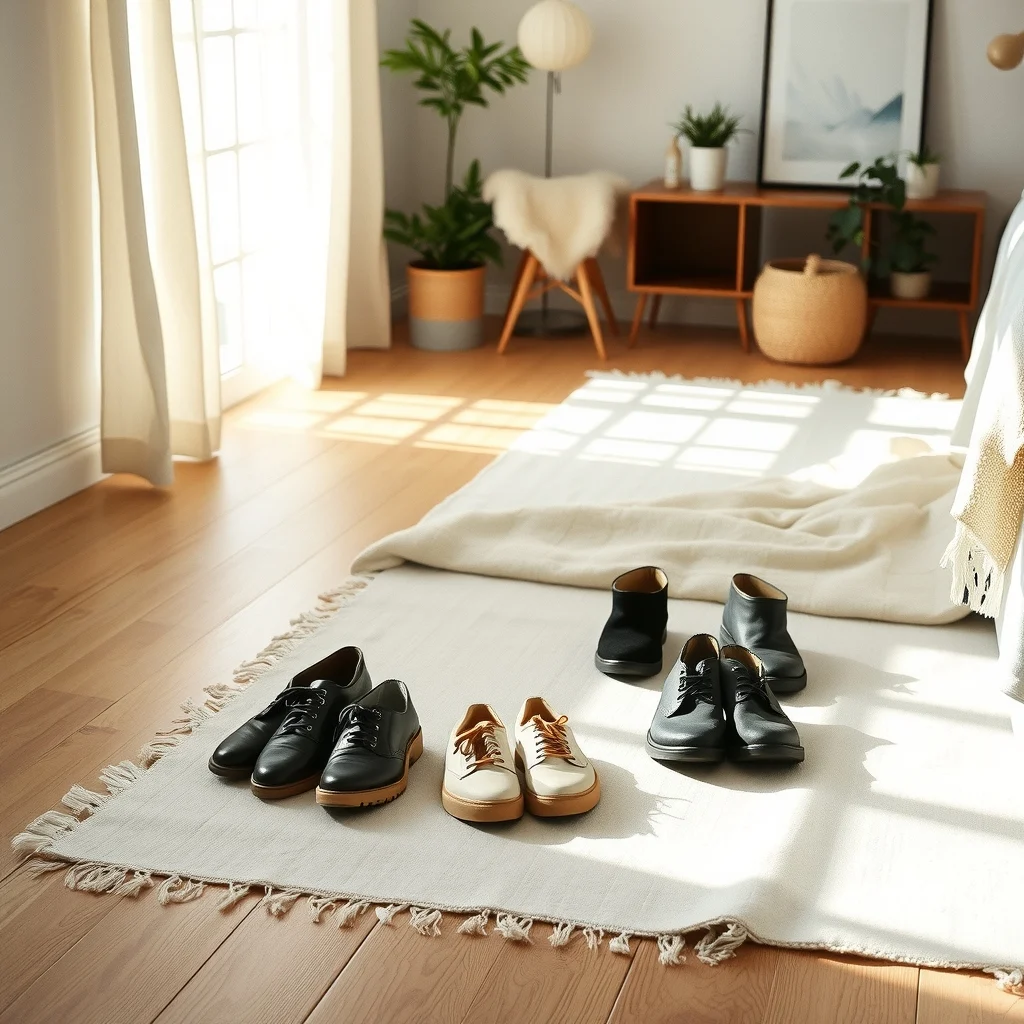
The first step is a quick audit of every pair you own. Lay the shoes on the floor and separate them into three piles: everyday wear, occasional use, and “maybe someday.” This visual exercise reveals hidden redundancies—two identical work shoes or a pair of boots you never wear in the climate you live in. By deciding what truly belongs in the bedroom, you free up space for storage that actually serves you. Keep the everyday pile within easy reach, tuck the occasional shoes into longer‑term solutions, and consider donating the “maybe someday” lot. The act of sorting also creates a mental map for the storage methods you’ll apply later, ensuring each shoe has a logical place.
2. Match Storage to Shoe Type
This image is by AI for inspiration only.
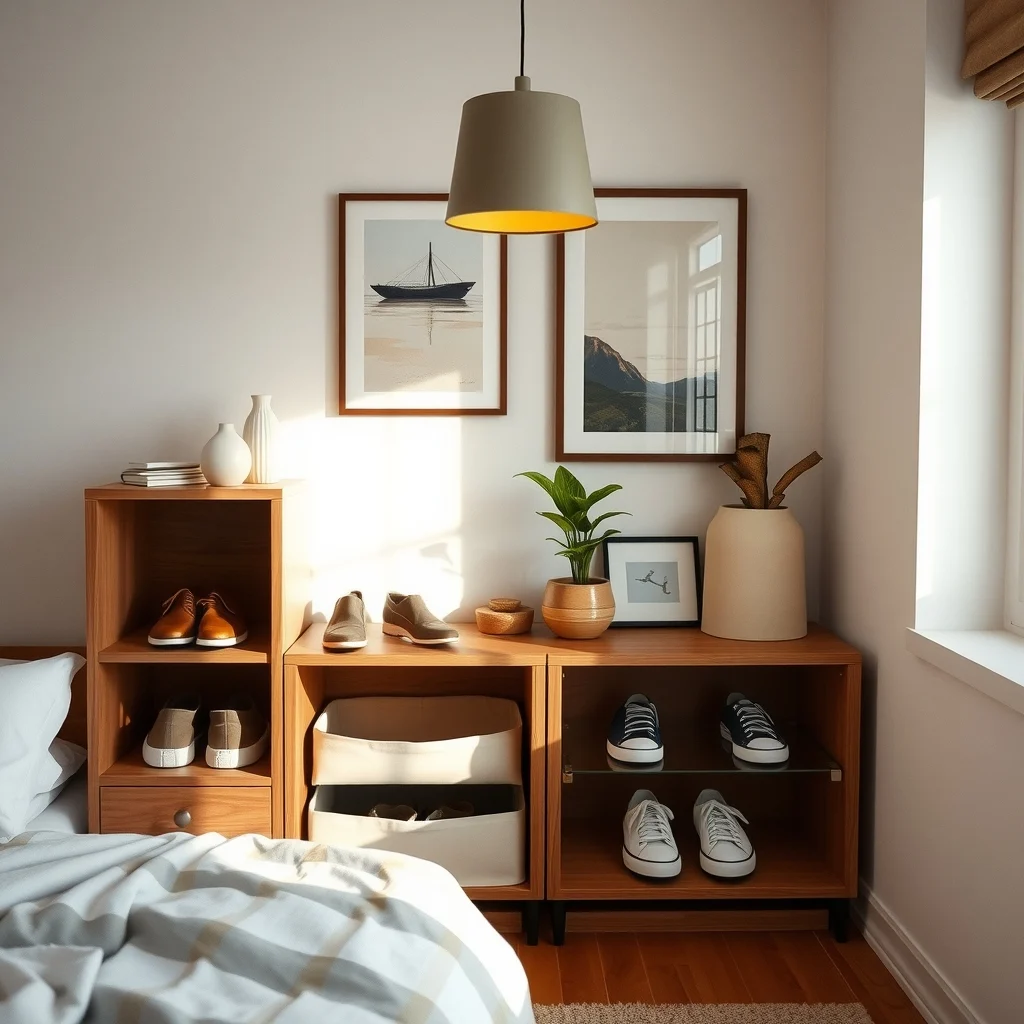
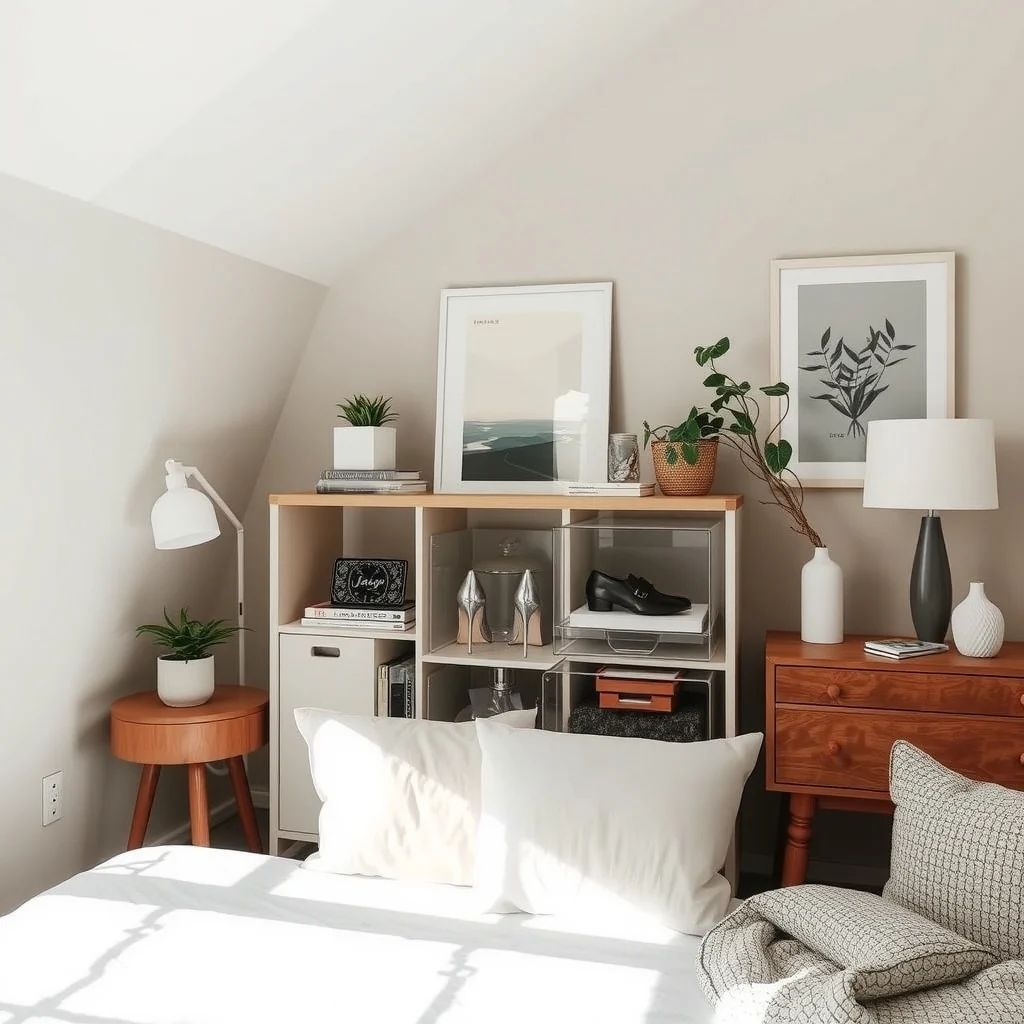
Different shoes demand different environments. Leather loafers appreciate a breathable container, while canvas sneakers tolerate tighter stacks. Open‑front wooden cubbies work well for low‑profile flats, allowing you to see the silhouette at a glance. Clear acrylic boxes protect delicate heels from dust while still showing their shape, which helps you locate the right pair without opening every container. For high‑top sneakers, a slatted shoe rack that leans slightly forward prevents the toe from crushing the upper. Selecting a storage style that respects the material and shape of each shoe reduces wear and makes retrieval smoother, turning a cluttered floor into a curated display.
3. Turn the Space Under Your Bed into a Shoe Vault

This image is by AI for inspiration only.
Most small bedrooms already have a bed with a modest clearance beneath it. Low‑profile rolling drawers or fabric bins can slide under the mattress, offering hidden compartments that keep shoes out of sight yet accessible. Soft‑sided containers are especially forgiving; they flex around irregularly shaped boots without denting the wood. The trade‑off is that you lose the ability to see the contents at a glance, so labeling each drawer with a small tag or using a color‑coded system helps maintain order. Because the area is out of the main visual field, this solution preserves the room’s aesthetic while still providing generous storage capacity.
4. Install a Dedicated Shoe Wall
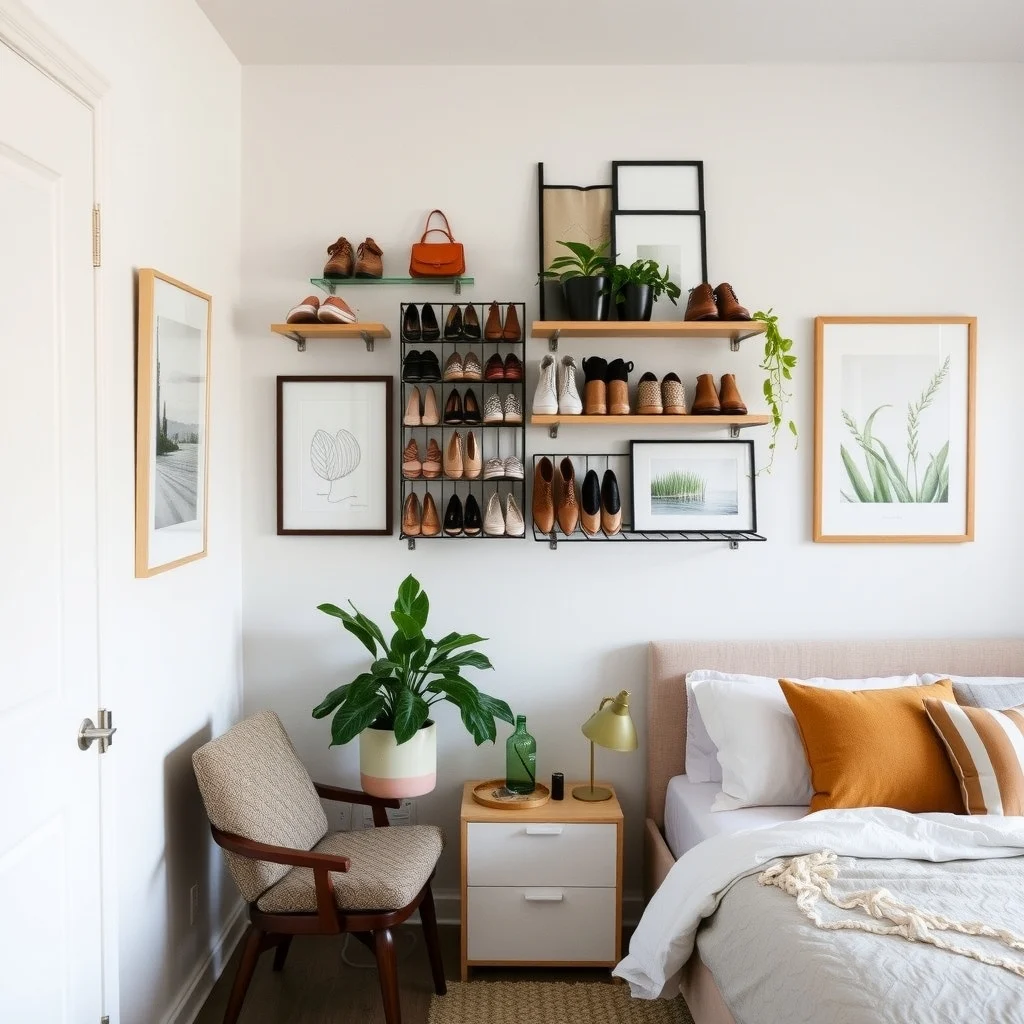
This image is by AI for inspiration only.
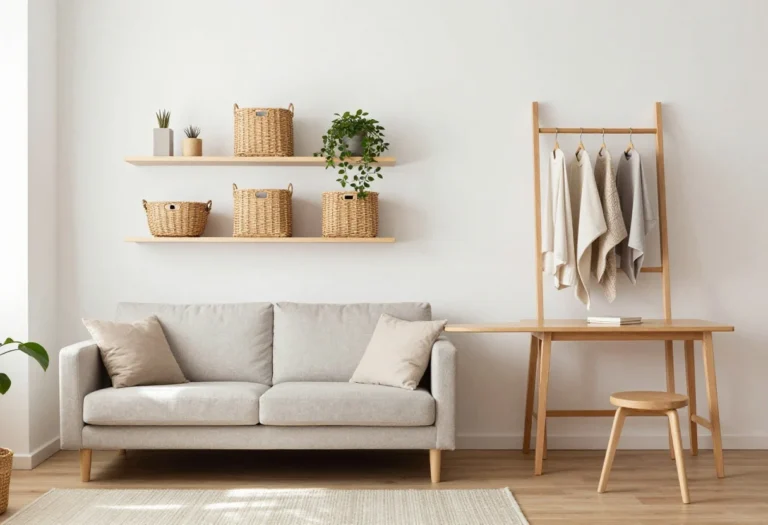
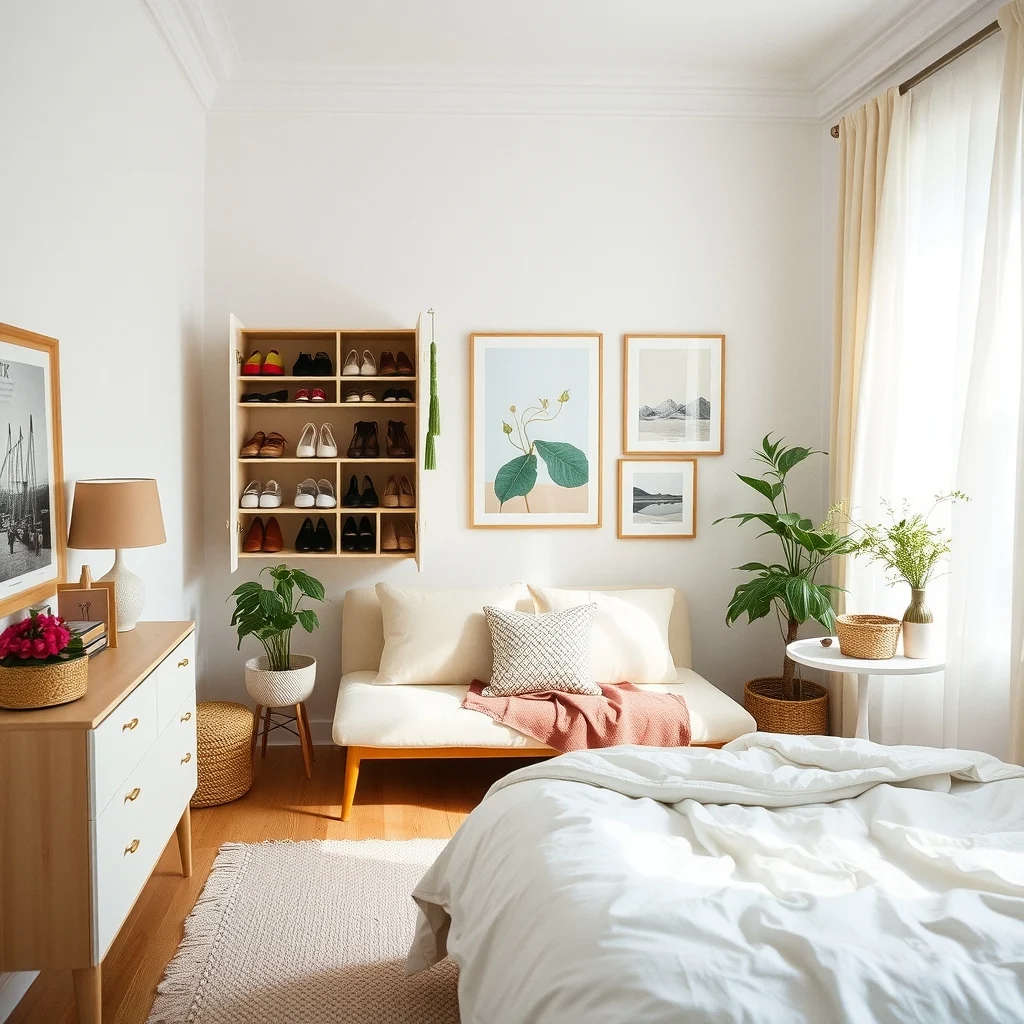
A narrow strip of wall space—perhaps beside the closet or above a dresser—can become a sleek shoe showcase. Wall‑mounted cubbies, metal grids, or a series of floating shelves create vertical storage that uses height rather than floor area. When the cubbies are painted a soft matte hue that matches the room’s palette, the wall feels like an intentional design element rather than a storage afterthought. The vertical approach works best for shoes with a low heel or flat sole; taller boots may need a deeper compartment or a small step ladder. By concentrating footwear on a single wall, you free the rest of the room for sleeping and dressing activities.
5. Choose Seating That Doubles as Storage
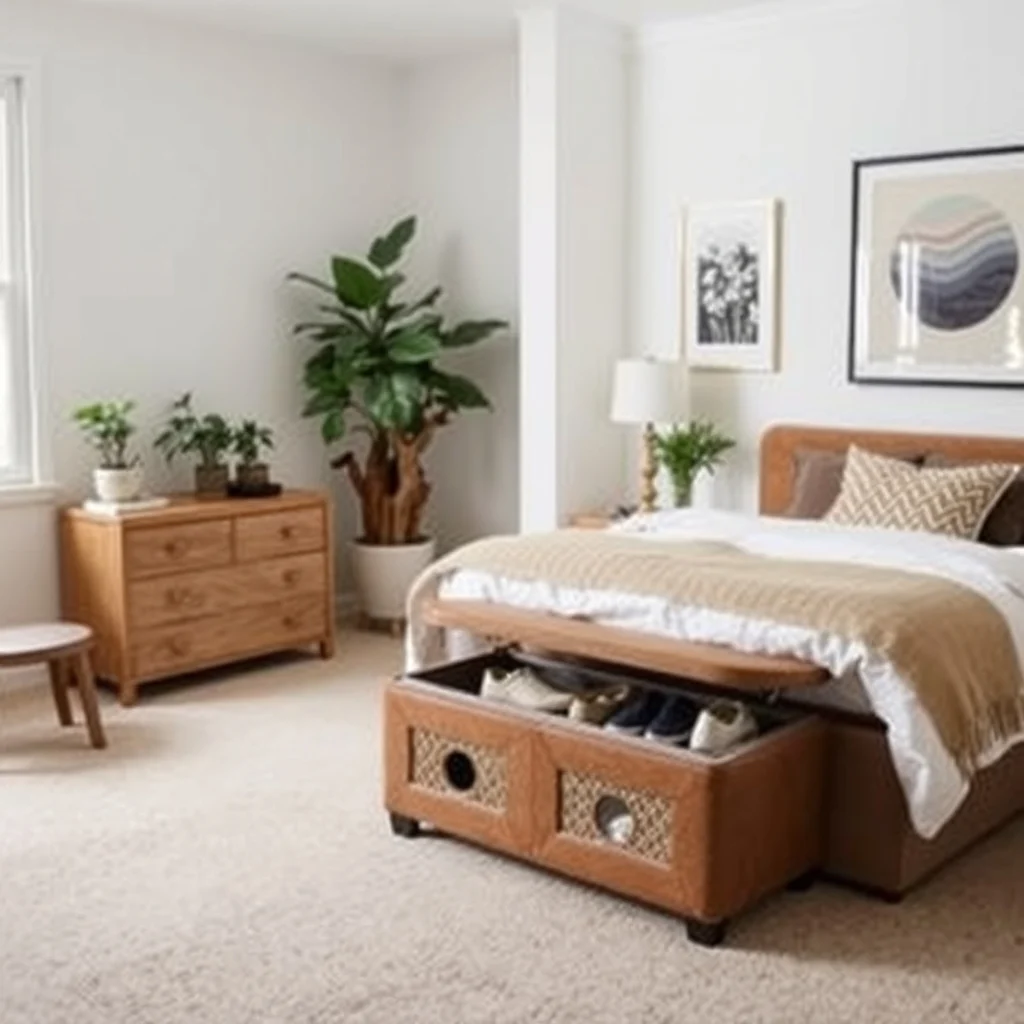
This image is by AI for inspiration only.
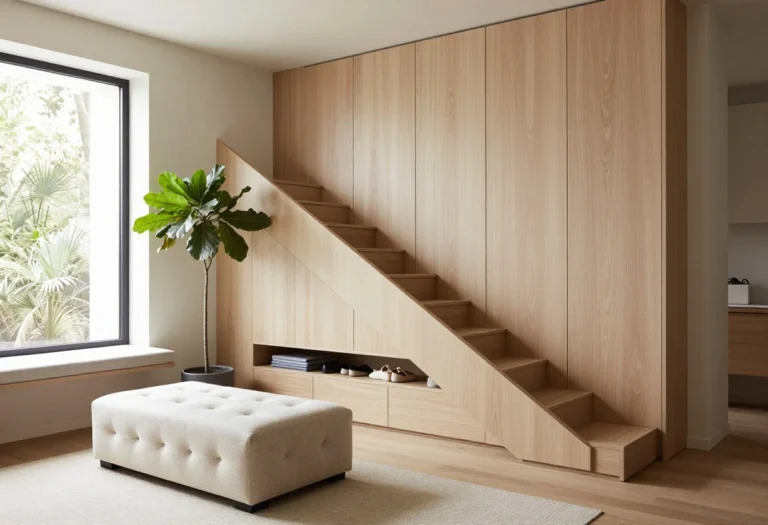
A bench at the foot of the bed or a low ottoman can hide a handful of shoes inside a lift‑top or hinged lid. Upholstered in a durable, stain‑resistant fabric, the piece adds a cozy spot for putting on shoes while concealing them when not in use. The dual function reduces the need for separate storage furniture, which is a luxury in a compact room. One limitation is the weight capacity; heavy boots should stay on sturdier platforms, while lighter sneakers fit comfortably inside the bench. Selecting a piece that complements the room’s color scheme ensures the storage remains discreet and the seating feels purposeful.
6. Explore Overhead Options for Seasonal Shoes
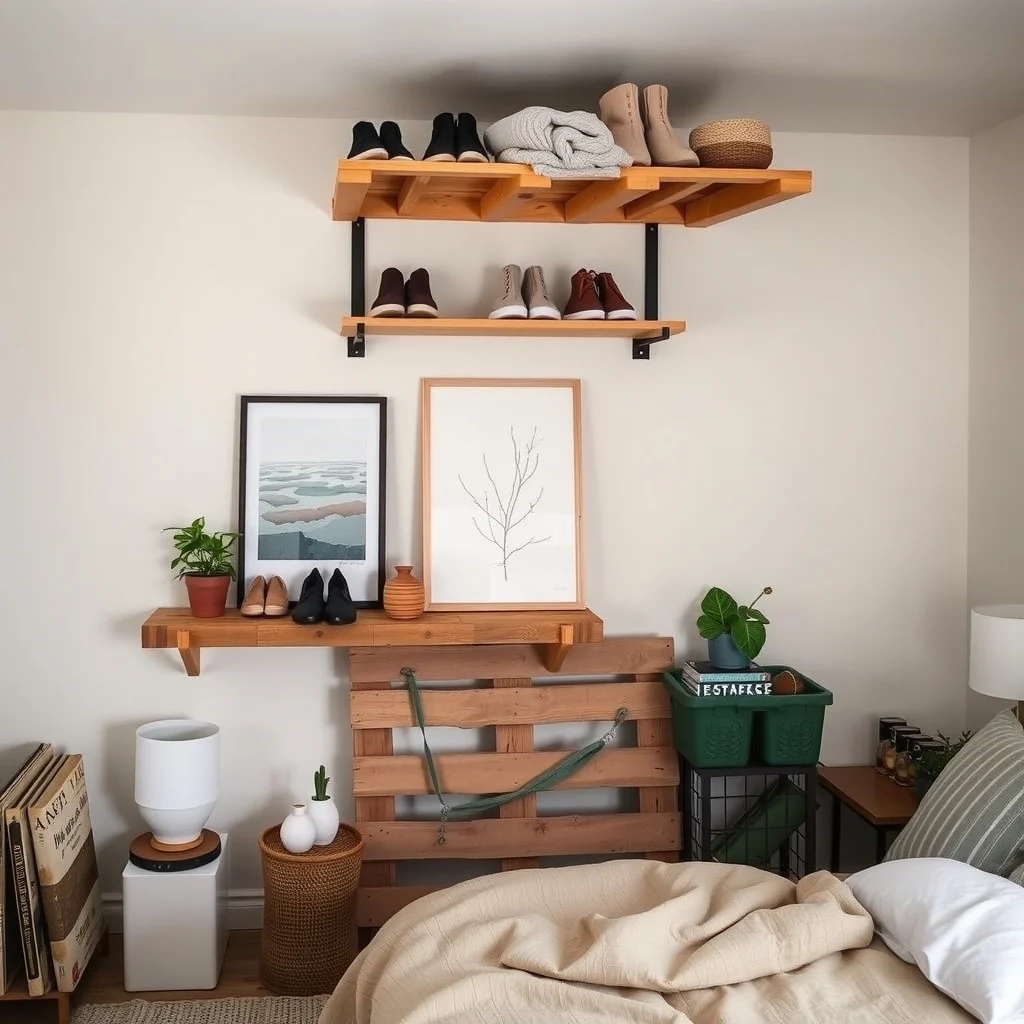
This image is by AI for inspiration only.
If the ceiling height permits, a low loft or a ceiling‑mounted hanging rack can store shoes you only wear seasonally. A simple wooden pallet fixed to the wall with sturdy brackets creates a rustic shelf that holds a row of boots or sandals, keeping them off the floor entirely. Because the rack sits above eye level, it does not interfere with daily movement, and the visual weight is balanced by the room’s existing lighting fixtures. The downside is that reaching the topmost shoes requires a step stool, so this method is best for items you won’t need frequently. Properly anchored hardware ensures safety while adding a surprising visual interest to an otherwise plain ceiling.
7. Build a Routine to Keep the System Working
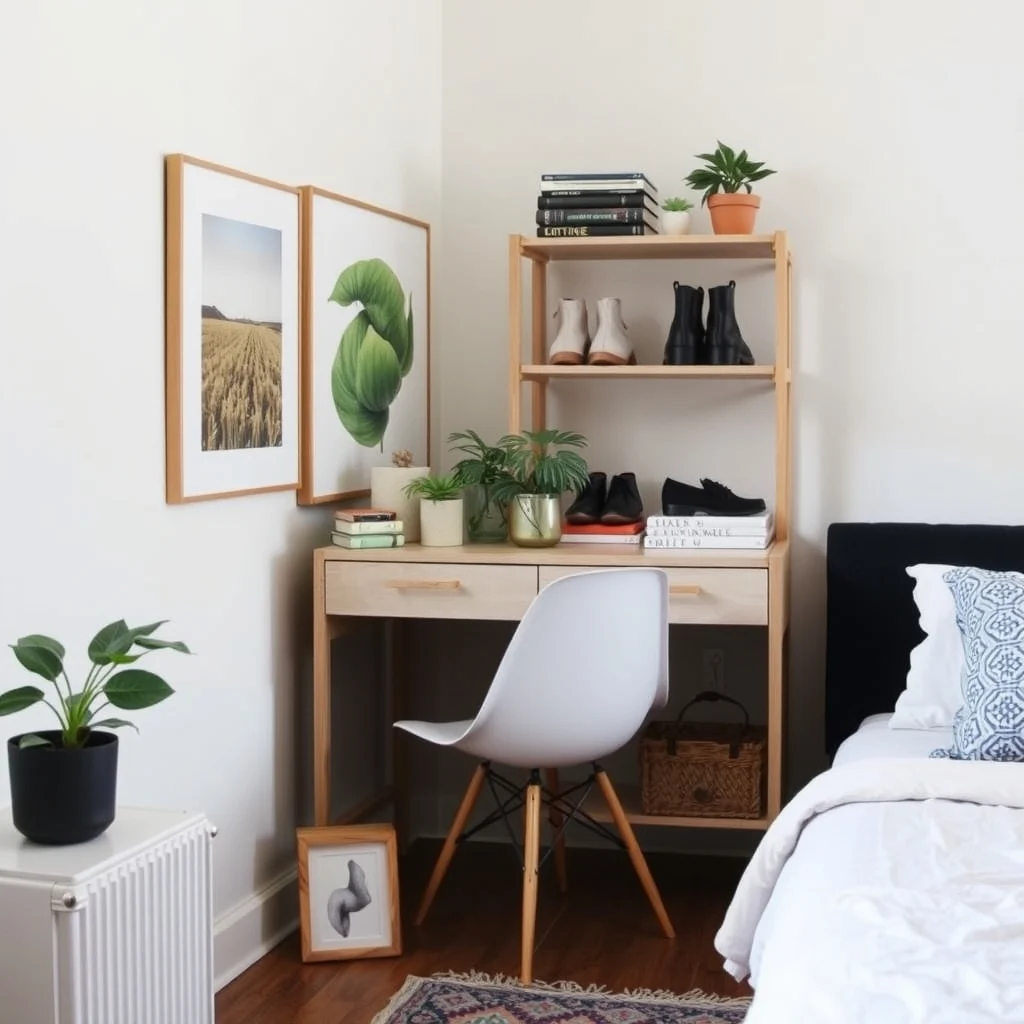
This image is by AI for inspiration only.
Even the most thoughtfully designed storage will crumble without regular maintenance. Set a weekly “shoe sweep” where you return each pair to its designated spot after use. A quick wipe with a microfiber cloth keeps dust from accumulating on leather and suede, extending the life of your collection. When you acquire a new pair, repeat the initial sorting process before finding a home for it; this prevents the gradual creep of excess shoes. If a particular storage solution feels cumbersome—perhaps a drawer that never fully closes—adjust the arrangement before it becomes a habit. Consistency turns a one‑time organization project into a lasting habit.
FAQ
This image is by AI for inspiration only.
How can I store high heels without damaging them?
Place high heels in clear acrylic boxes that support the heel and keep the shoe upright. The boxes protect the delicate straps from dust and pressure while allowing you to see each pair at a glance.
Is it okay to keep shoes in a closet that isn’t climate‑controlled?
Yes, as long as you avoid storing leather or suede in damp areas. Use breathable fabric bags or slatted racks to allow air circulation, which reduces the risk of mold and odor.
What’s the best way to organize shoes for a roommate who also needs space?
Assign each person a separate vertical cubby column or a set of labeled under‑bed bins. Clear division prevents accidental mix‑ups and makes it easy for each roommate to maintain their own collection.
Can I use a rolling garment rack for shoes?
A rolling rack works well for sneakers and flats that can be stacked horizontally. However, it may not support boots or shoes with tall heels, which could tip the rack if overloaded.
How often should I declutter my shoe collection?
Aim for a quick review each season; shoes you haven’t worn in the past six months are good candidates for donation or storage elsewhere. Seasonal pruning keeps the bedroom’s footprint manageable.
Final Thoughts
This image is by AI for inspiration only.
Living with a love of shoes doesn’t have to mean sacrificing a calm, spacious bedroom. By assessing what you truly need, matching storage to shoe type, and using every inch of vertical and hidden space, you can create a room that feels organized and inviting. The key is to treat footwear as part of the room’s design rather than an afterthought—selecting containers and placements that complement the existing palette, lighting, and furniture. With a routine to keep the system tidy, your small bedroom can become a place where you start and end each day without tripping over a sneaker or searching for a favorite sandal. The result is a room that reflects your style while honoring the limits of its square footage.