How to Organize Shoes in A tiny Entryway

When the front door opens onto a narrow hallway, the first thing you see is often a pile of shoes that seems to grow faster than the space can contain. A cramped entryway can feel chaotic, but a few thoughtful storage choices turn that clutter into a tidy welcome. Below are seven ideas that blend function with style, helping you keep each pair in its place while preserving the room’s sense of openness.
1. Embrace the Wall with Slim Shelving
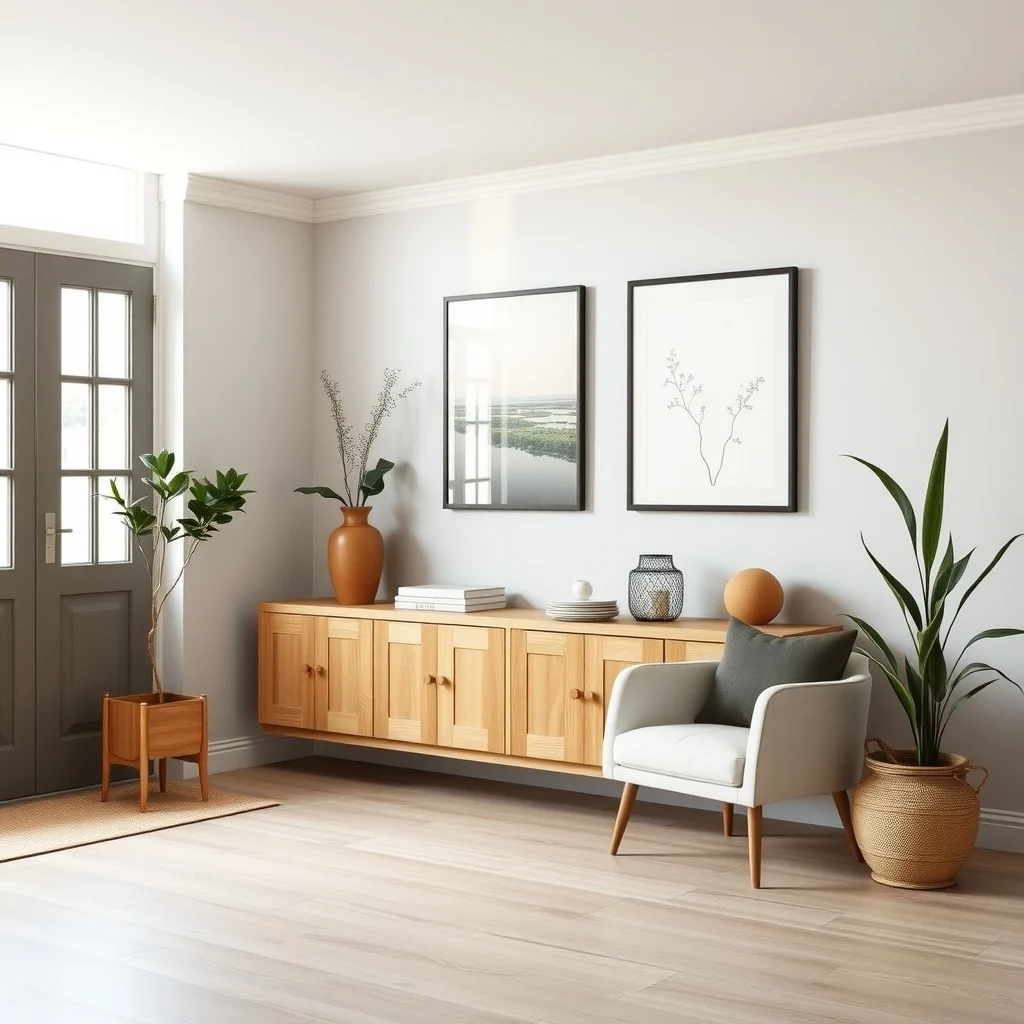
This image is by AI for inspiration only.
Installing a low-profile shelf that runs the length of the wall gives you a dedicated surface for shoes without sacrificing floor space. A shelf made from brushed pine or matte white lacquer can blend with the surrounding paint, while the narrow depth—often no more than six inches—prevents the unit from jutting into the pathway. Arrange sneakers and flats in rows, letting the natural grain of the wood become a subtle visual cue for each pair.
The advantage of a wall‑mounted system is that it uses vertical space that would otherwise sit idle. Because the shelf is anchored to the wall, it remains stable even when you pull a boot out. The main trade‑off is the need for a stud or solid backing; if the wall is drywall only, you’ll need anchors that can hold the weight of multiple shoes. In that case, a modular metal track that slides into a wall cleat can provide extra security without a full‑length stud.
2. Use a Narrow Bench with Hidden Compartments
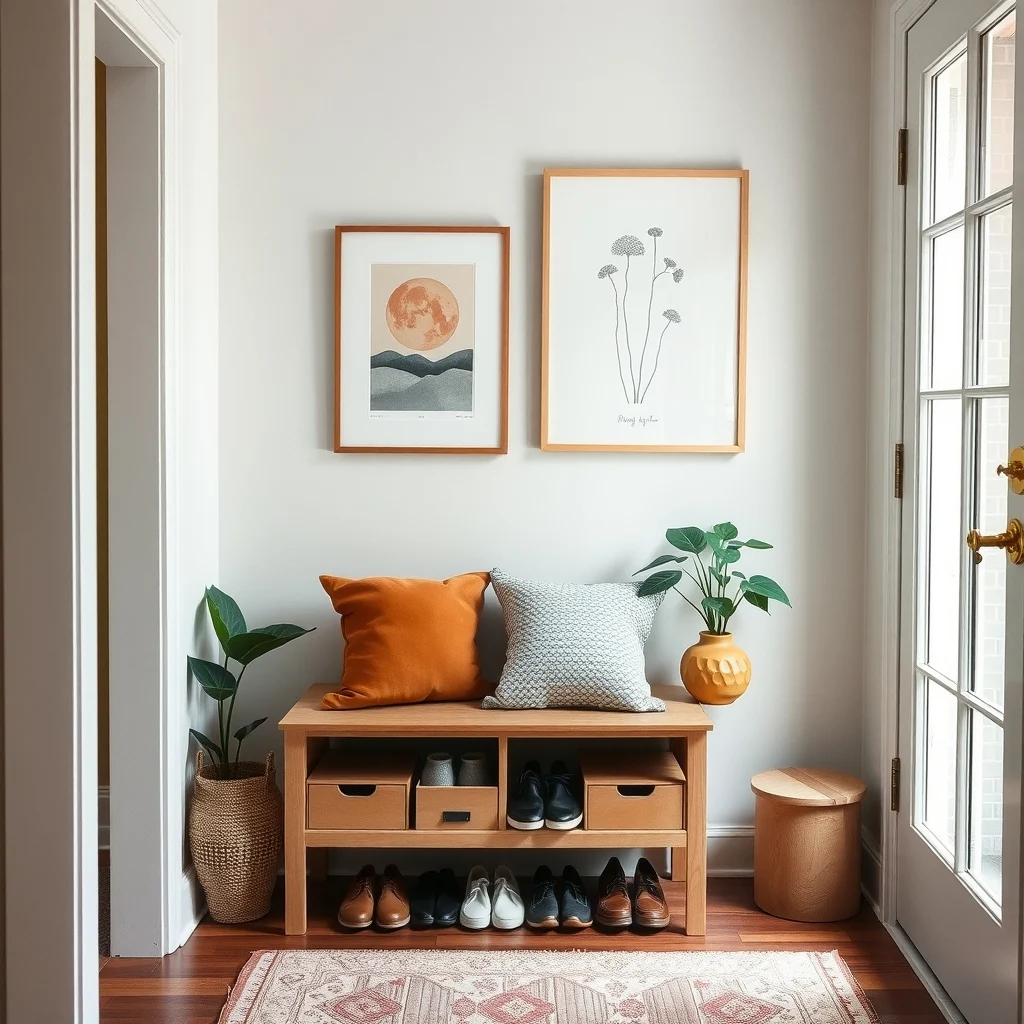
This image is by AI for inspiration only.
A bench that fits the width of the entryway offers a place to sit while you slip on shoes, and many designs feature a lift‑up lid that opens to reveal a shallow drawer. Choose a bench upholstered in a durable, low‑pile fabric such as linen‑blend in a neutral taupe; the softness invites you to pause, while the hidden compartment keeps everyday pairs out of sight.
The dual function of seating and storage reduces the need for separate pieces, which is essential in a limited footprint. When you open the lid, the interior can hold a stack of flats or a few pairs of sandals, keeping the floor clear. One limitation is the depth of the drawer—typically just four inches—so it works best for shoes without high heels or thick soles. If you own many boots, consider pairing the bench with a tall, narrow shoe rack nearby.
3. Hang a Shoe Rack from the Back of the Door
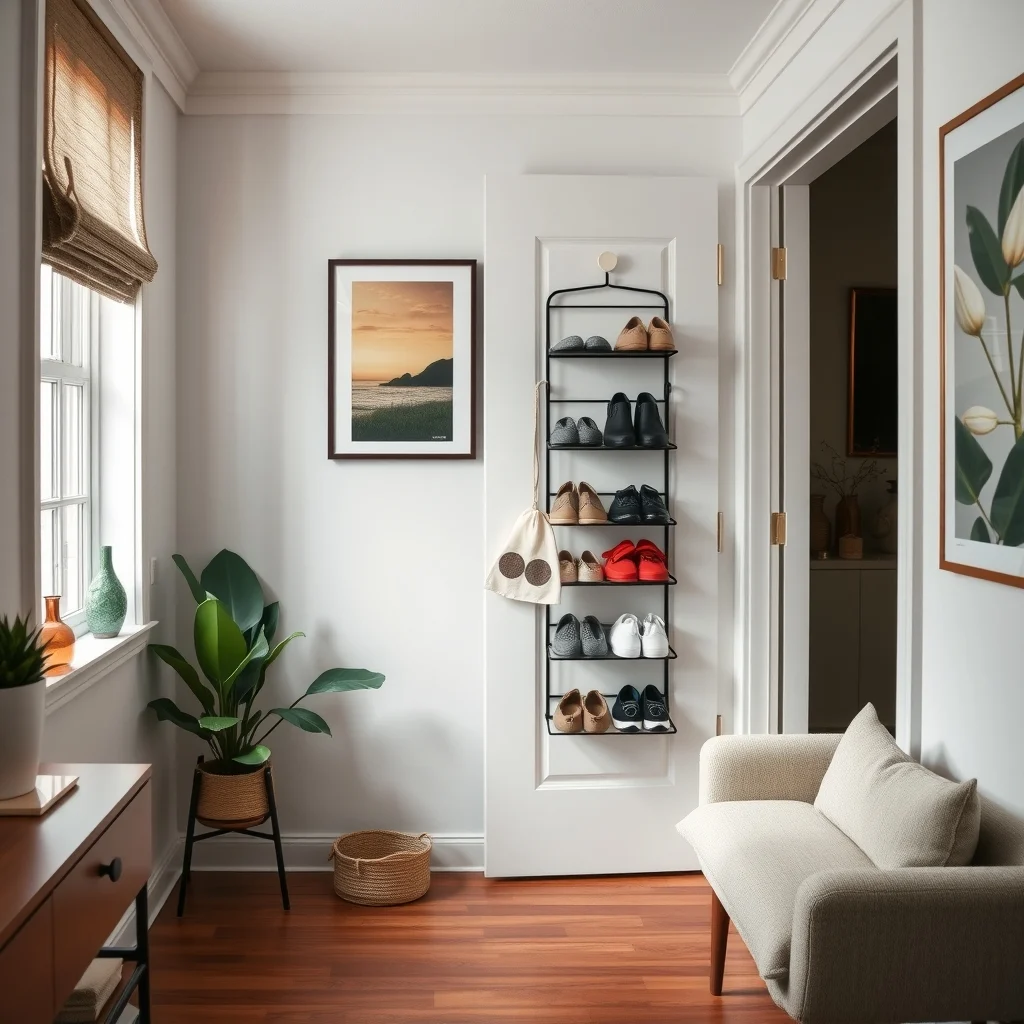
This image is by AI for inspiration only.
For renters or anyone hesitant to drill into walls, the back of the entry door becomes a convenient mounting point. A hanging rack with tiered slots, crafted from powder‑coated steel in a soft charcoal, can accommodate five to seven pairs without taking up any wall area. The rack swings open as the door opens, allowing you to slide shoes in and out with a single motion.
This solution is especially useful when the entryway lacks a free wall. The metal construction holds up well to the weight of sneakers and loafers, and the dark finish contrasts nicely against a light‑colored door. The main drawback is the limited vertical clearance; taller boots may not fit, and the rack can be a visual obstacle if the door is frequently used by children. Adjust the height of the slots to match the shoes you own most often, and store larger items elsewhere.
4. Incorporate a Pull‑Out Drawer Under the Console
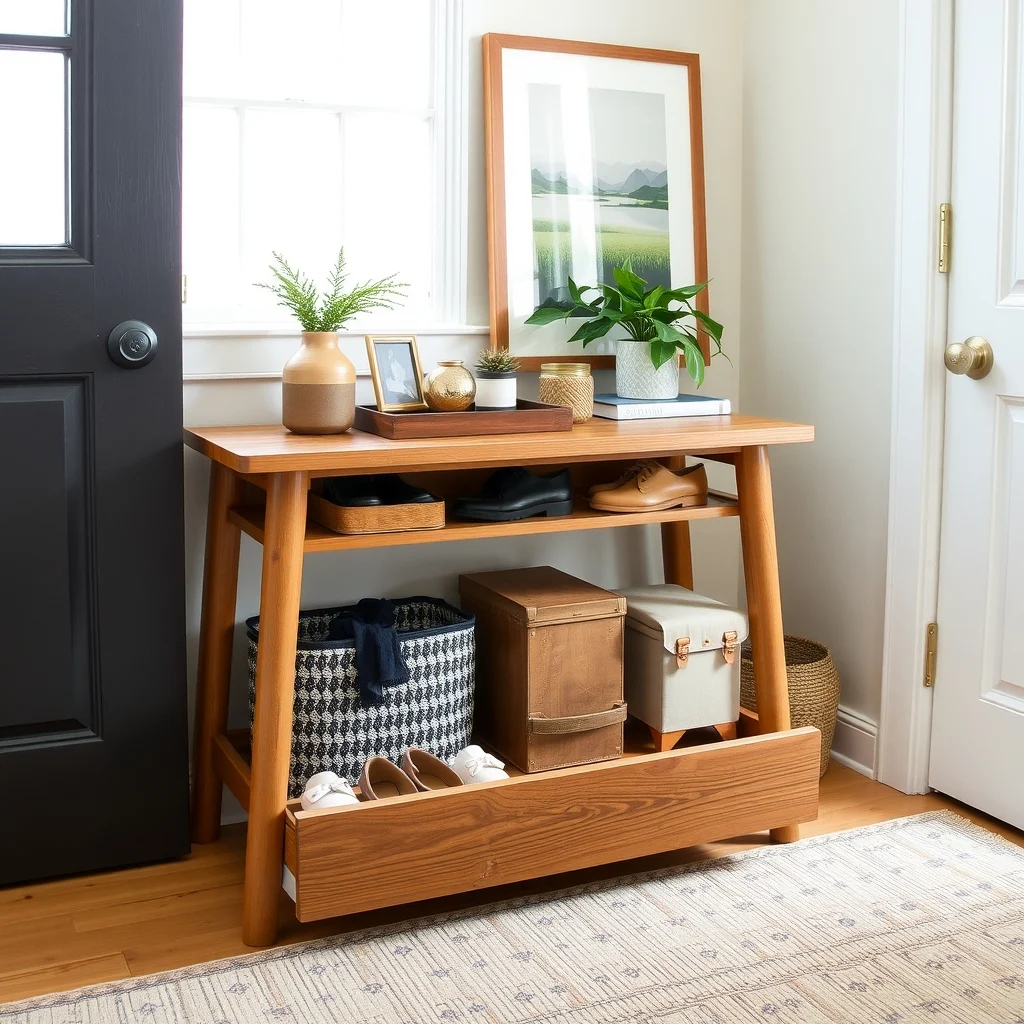
This image is by AI for inspiration only.
If you already have a console table by the door, a custom pull‑out drawer can add hidden storage without altering the room’s silhouette. A drawer built from reclaimed oak, finished with a warm amber stain, slides on ball‑bearing rails for smooth operation. Inside, add a thin, felt‑lined divider to keep shoes from rubbing against each other.
The drawer stays out of sight when closed, preserving the clean lines of the console. Because it sits low, it doesn’t block sightlines across the hallway, which helps the space feel larger. The trade‑off is that the drawer’s capacity is limited by the console’s depth; it works best for a handful of everyday shoes rather than a full family’s collection. If you need more room, pair the drawer with a wall‑mounted shelf for seasonal footwear.
5. Add a Stylish Ladder Shelf for Seasonal Pairs
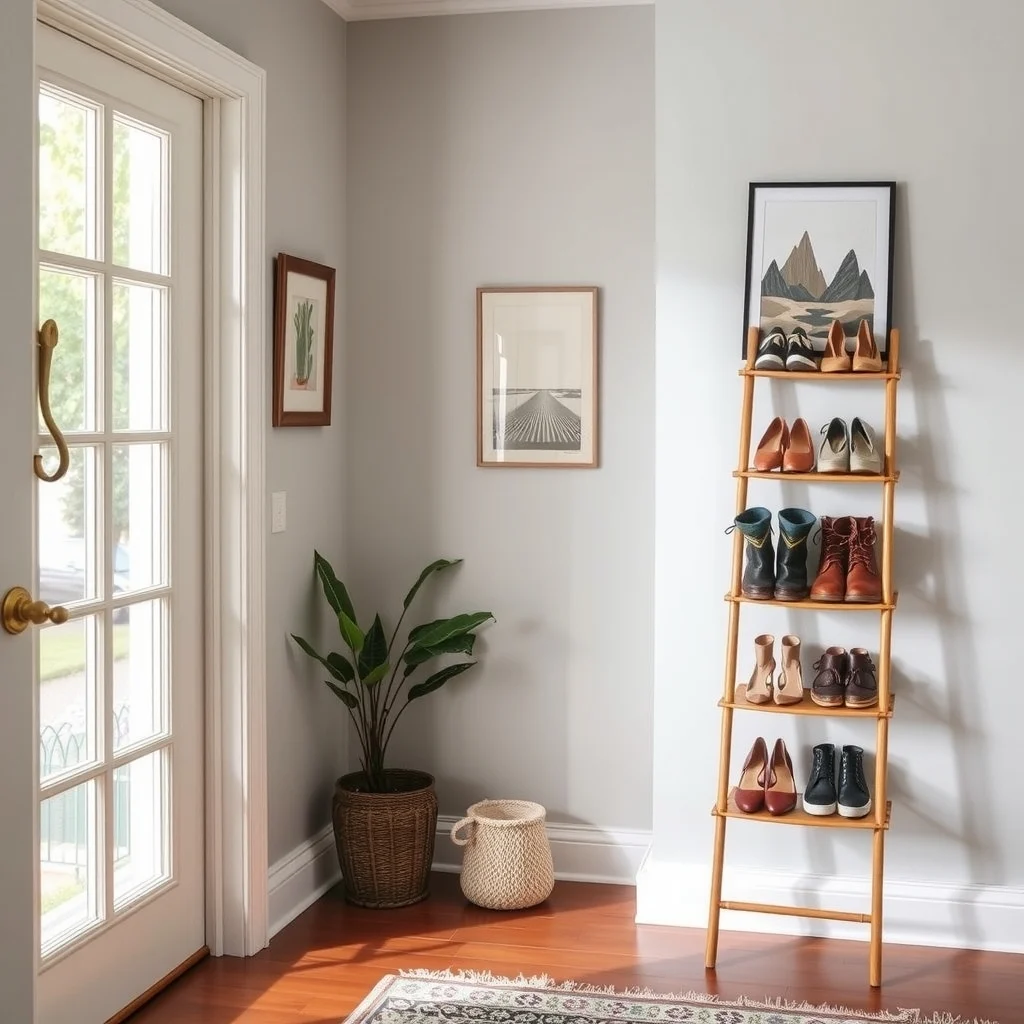
This image is by AI for inspiration only.
A leaning ladder shelf made from powder‑coated aluminum or natural bamboo can serve as a decorative yet functional shoe display. Position the ladder against an empty corner, letting the rungs hold boots, sandals, or even a basket of shoe care products. The open design allows light to pass through, preventing the entryway from feeling boxed in.
Ladder shelves excel at showcasing shoes you want to keep visible, such as polished oxfords for guests or bright sneakers that add a pop of color. The airy structure keeps the visual weight low, which is essential in a narrow corridor. However, the open rungs mean dust can settle more quickly, so a quick wipe each week maintains a tidy look. For homes with pets, consider a ladder with rounded edges to avoid snagging claws.
6. Choose a Coordinated Color Palette to Keep the Space Calm
This image is by AI for inspiration only.
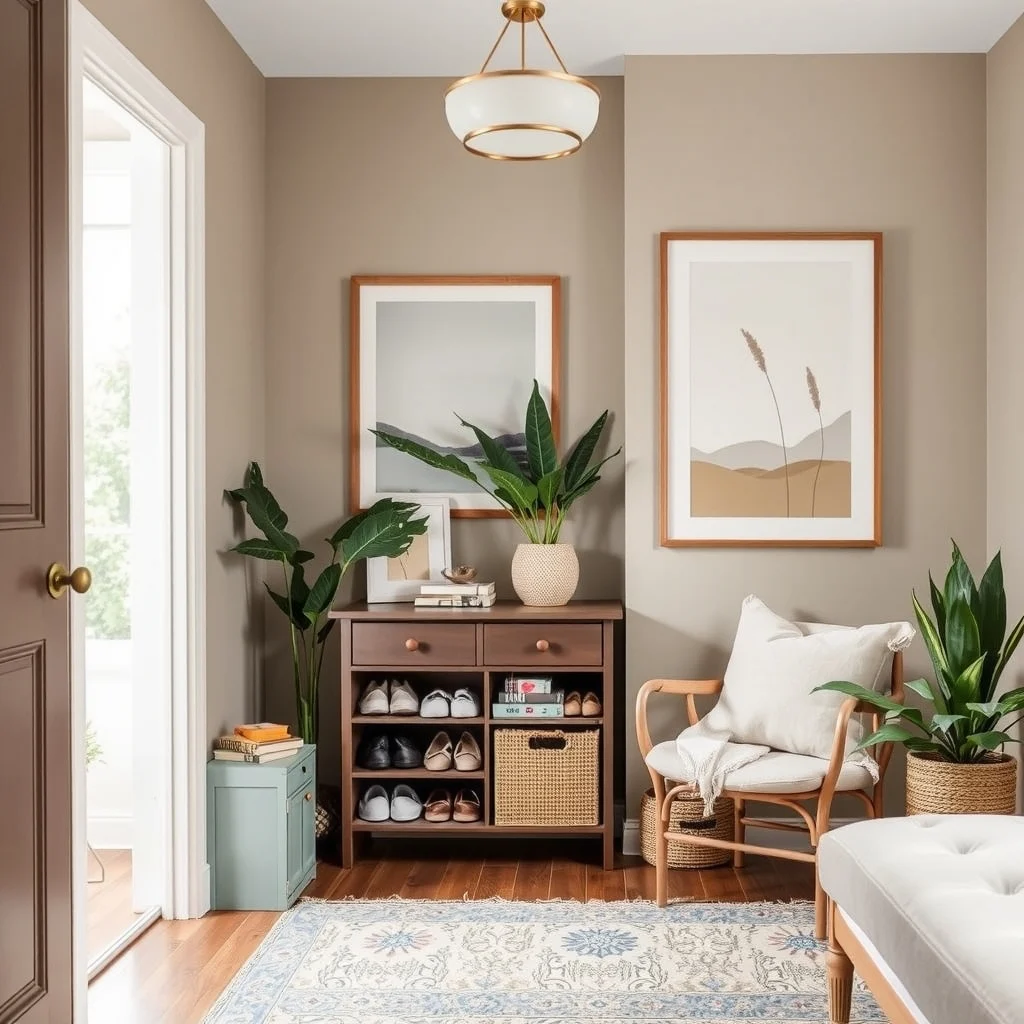
When the entryway is already tight, a harmonious color scheme can make it feel more spacious. Selecting a base of soft greige for the walls and pairing it with storage pieces in muted sage or warm walnut creates a soothing backdrop that lets the shoes themselves become the accent. A matte finish on shelves and benches reduces glare, while a subtle sheen on a rug adds texture without competing for attention.
Consistent tones help the eye flow across the room, reducing the perception of clutter. The downside is that a very neutral palette can feel bland if not layered with texture; adding a woven jute mat or a brushed‑metal light fixture introduces interest without breaking the calm. If you prefer a splash of color, limit it to one element—perhaps a deep teal bench cushion—to keep the overall feel balanced.
7. Keep the Floor Clear with a Minimalist Mat
This image is by AI for inspiration only.
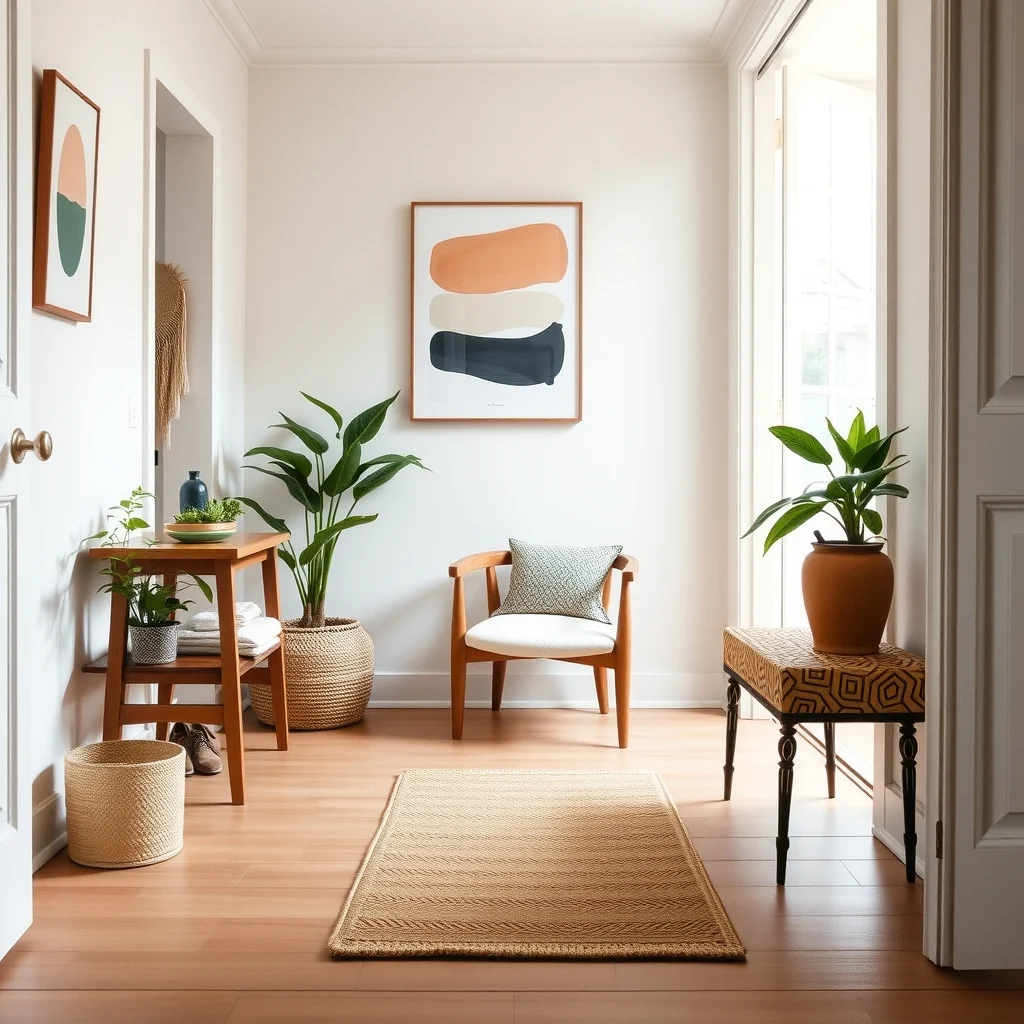
A low‑pile runner or a flat mat made of natural sisal can protect the entryway floor while defining the walking path. Choose a mat that is slightly narrower than the doorway, allowing the edges of your storage units to remain visible. The natural fibers soften footsteps and trap dust, which helps maintain the cleanliness of shoe surfaces.
By limiting floor coverage, you avoid the illusion of a crowded space and give the eye room to rest between storage pieces. The main consideration is durability; a high‑traffic area benefits from a mat with a non‑slip backing to prevent accidents. If you live in a rainy climate, select a mat that dries quickly and can be shaken out without losing its shape.
FAQ
This image is by AI for inspiration only.
How many shoes can a tiny entryway realistically hold?
The number varies, but most compact solutions accommodate between ten and fifteen pairs when used together.
Can I install wall shelves without drilling into studs?
Yes, using heavy‑duty toggle bolts or adhesive mounting strips designed for the weight of shoes provides a secure alternative.
What material is best for a shoe bench in a high‑traffic area?
A bench with a solid wood frame and a fabric cushion that resists stains, such as a polyester‑linen blend, offers durability and comfort.
Is a hanging shoe rack safe for children?
It is safe if the rack is firmly attached and positioned high enough that small hands cannot easily pull it down.
How often should I clean the shoe storage area?
A quick dusting weekly and a deeper wipe with a damp cloth monthly keep the surfaces looking fresh.
Final Thoughts
This image is by AI for inspiration only.
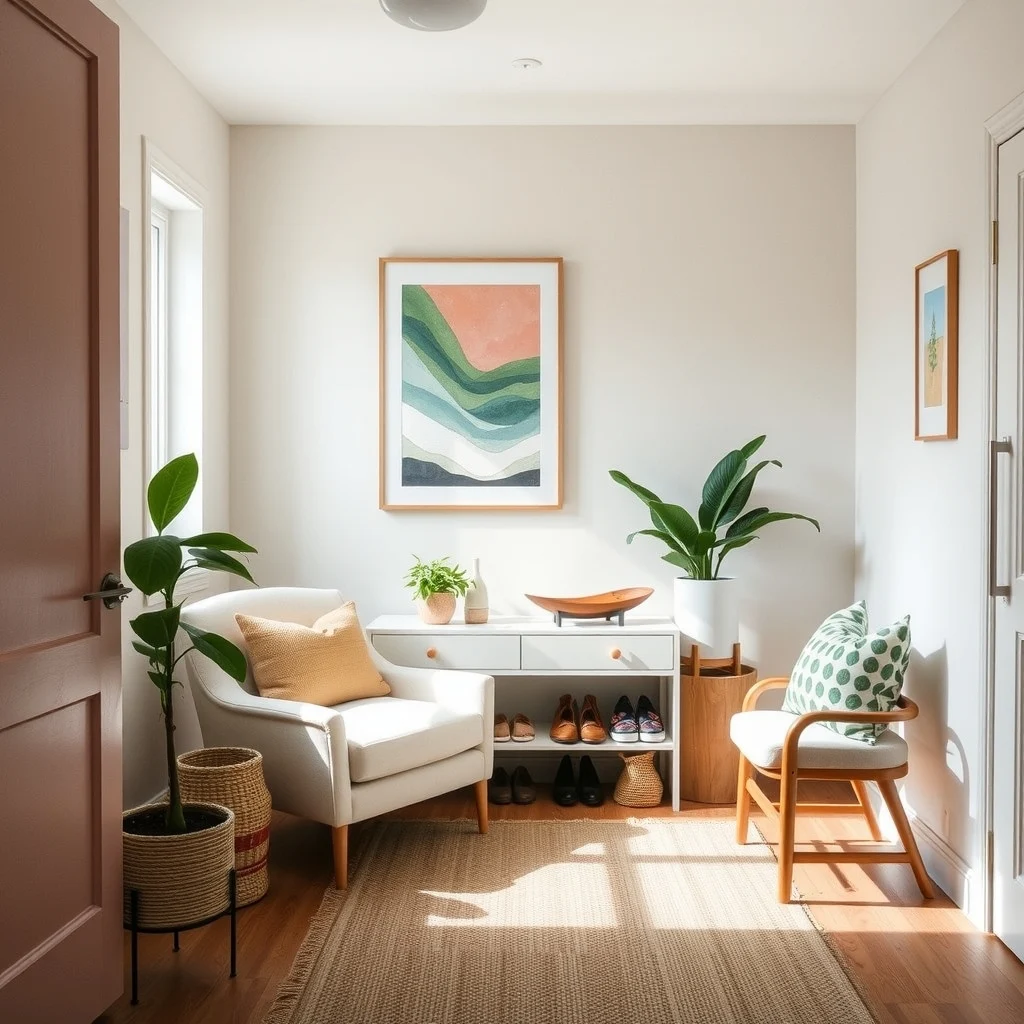
Organizing shoes in a tiny entryway is less about squeezing every last inch and more about choosing pieces that serve multiple purposes while respecting the room’s proportions. By thinking vertically, using hidden compartments, and keeping the visual palette simple, you can create a welcoming threshold that feels orderly rather than cramped. The effort you put into a well‑planned entryway pays off each time you step through the door, greeting yourself with a space that is both functional and inviting.