Space‑saving Towel Storage Ideas for a Narrow Bathroom

When a bathroom feels more like a hallway than a sanctuary, every inch counts. A slim floor plan often forces you to choose between a tidy look and the towels you need at hand. The good news is that clever storage can turn a cramped washroom into a functional, inviting space without sacrificing style. Below are seven approaches that make the most of vertical planes, hidden corners, and multi‑purpose pieces, allowing you to keep towels organized, dry, and within reach even in the tightest of layouts.
1. Over‑the‑Door Towel Rack
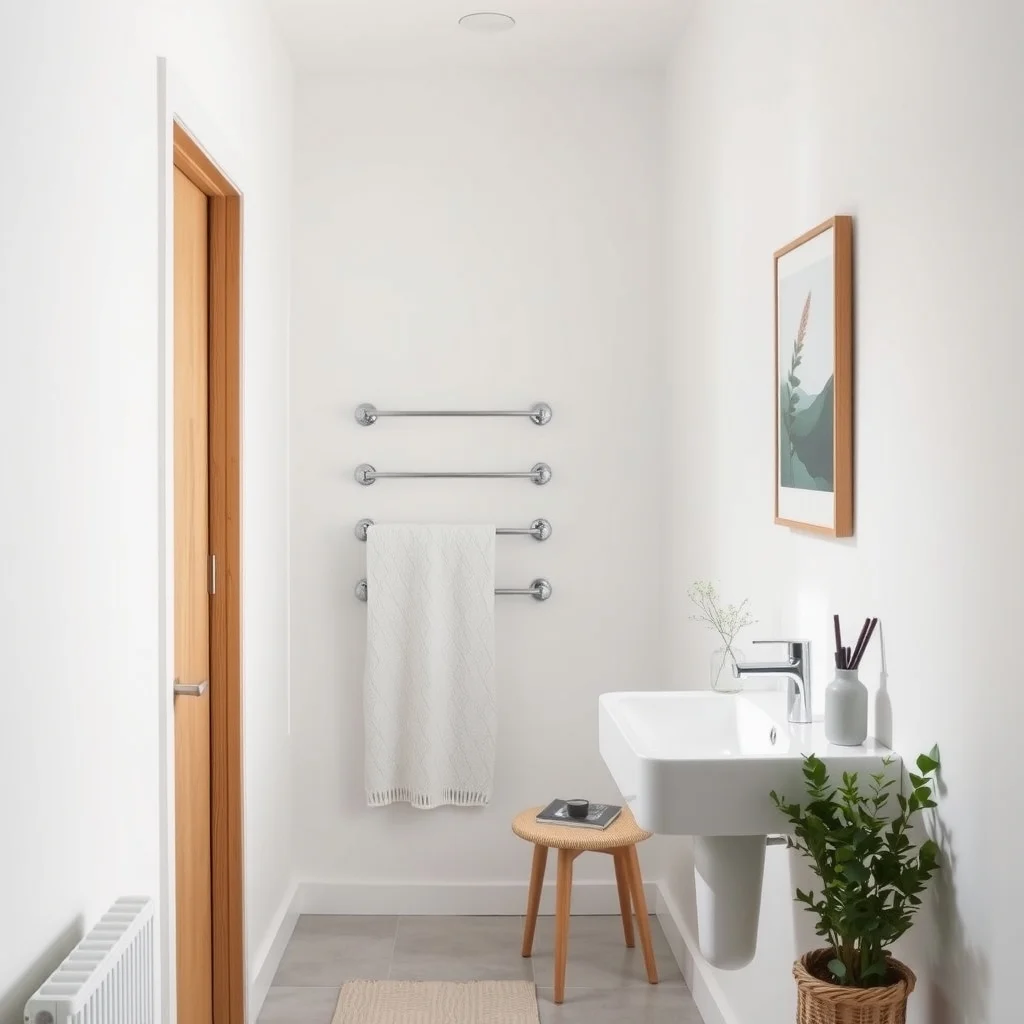
This image is by AI for inspiration only.
Installing a towel rack on the back of the bathroom door instantly creates a hanging surface without encroaching on floor space. A simple brushed‑nickel bar with two or three bars offers room for a hand towel, a washcloth, and a medium‑size bath towel. Because the rack hangs from the door’s top edge, it moves with the door, keeping the towels accessible whether the door is open or closed. The metal finish reflects a bit of light, helping the narrow room feel brighter. One thing to watch is the weight of the towels; heavier fabrics can strain a flimsy hook, so choose a rack with sturdy mounting hardware. When the bathroom is used by multiple people, consider a double‑rod version that separates each person’s towels to avoid mix‑ups.
2. Recessed Wall Niches with Towel Bars
This image is by AI for inspiration only.
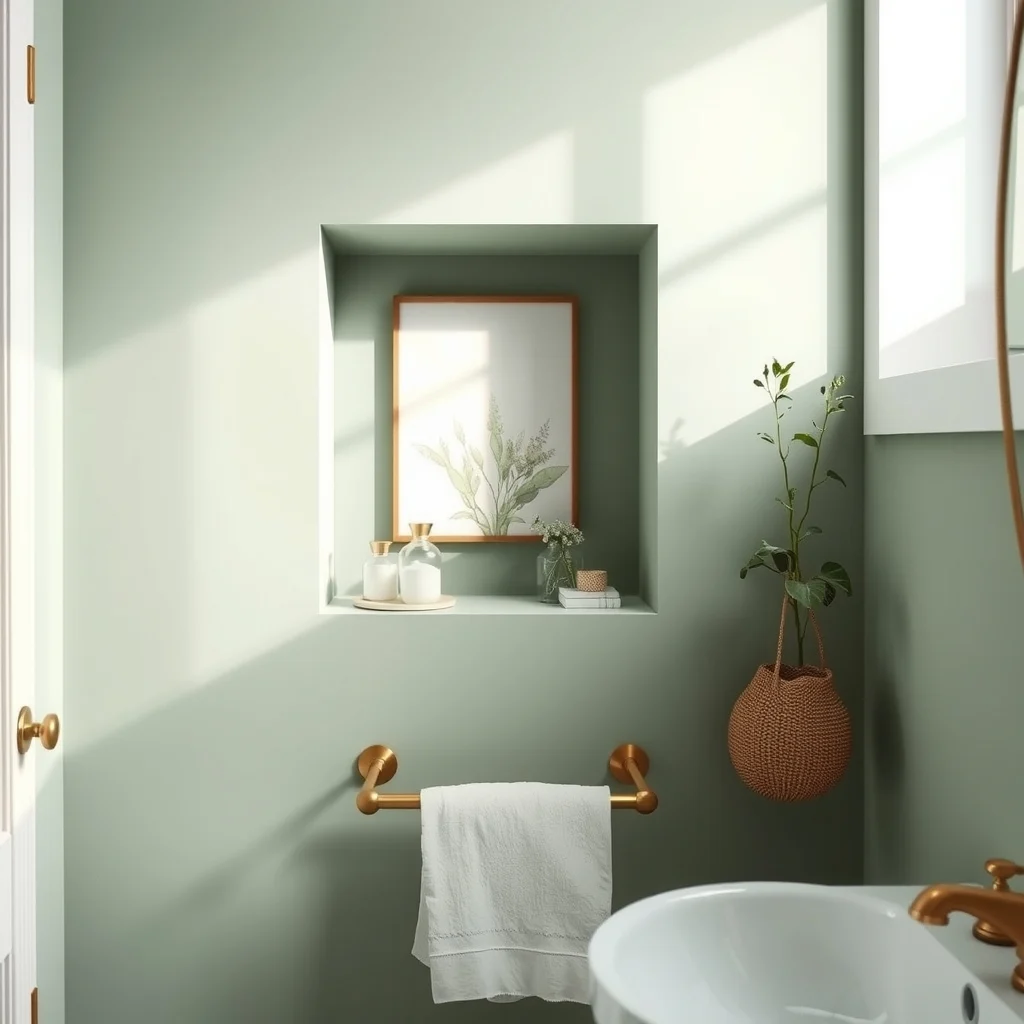
A shallow niche carved into a wall eliminates the need for protruding shelves while providing a dedicated spot for towels. By placing a brushed‑brass towel bar at the niche’s lower edge, the towel hangs just above a smooth, waterproof surface that can double as a shelf for small toiletries. The recessed design keeps the visual line of the wall uninterrupted, which is especially flattering in a narrow bathroom where clutter can make the space feel cramped. Installing a niche does require a small amount of demolition, but the payoff is a clean, built‑in look that resists accidental knocks. If the wall is tiled, match the niche’s tile to the surrounding area to maintain continuity.
3. Ladder‑Style Towel Shelf

This image is by AI for inspiration only.
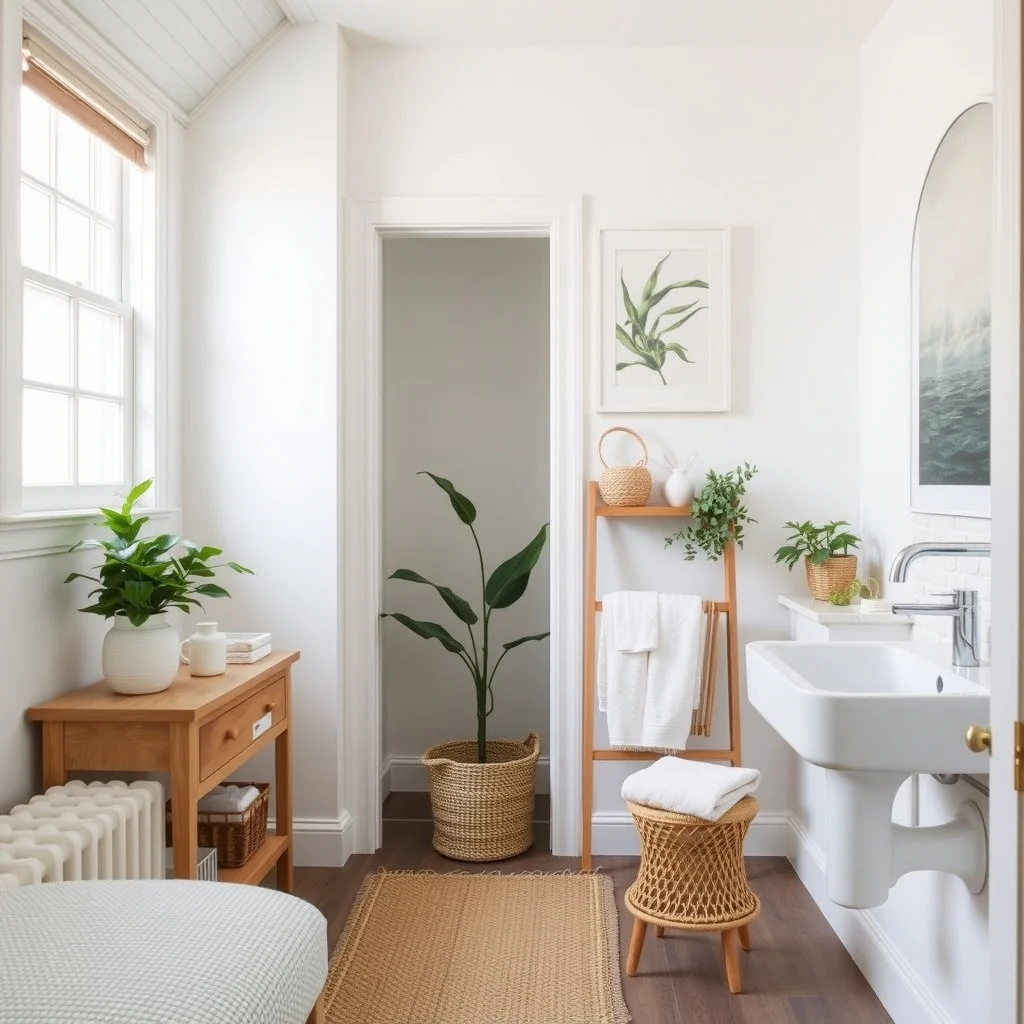
A leaning ladder shelf made from reclaimed oak or painted pine adds a touch of rustic charm while using vertical space efficiently. The slatted steps act as individual ledges, each capable of holding a folded towel or a stack of washcloths. Because the ladder leans against the wall rather than being affixed, it can be repositioned as needed, which is useful if you rearrange the vanity or shower enclosure. The open‑frame design allows air to circulate around the towels, helping them dry faster—a practical benefit in a bathroom that lacks a dedicated towel warmer. The main limitation is stability; ensure the base sits on a non‑slippery surface or add small rubber pads to prevent sliding.
4. Towel Hooks on the Back of the Vanity

This image is by AI for inspiration only.
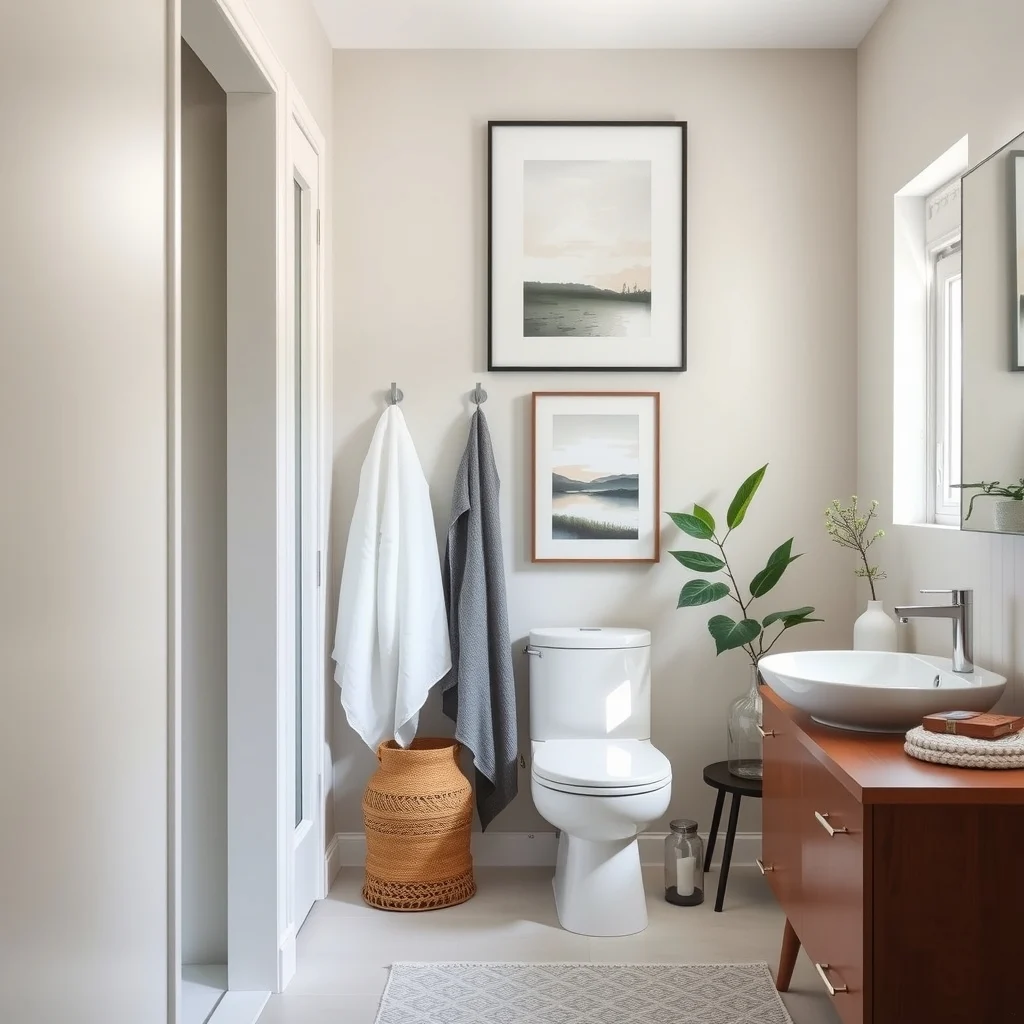
Many narrow bathrooms feature a floating vanity that leaves the wall behind it exposed. Adding a row of sleek, matte‑black hooks to this hidden wall creates a discreet hanging area that remains out of the way of foot traffic. A single hook can hold a hand towel, while a second, slightly lower hook accommodates a folded bath towel. Because the hooks are mounted on a surface that already bears the vanity’s weight, they are less likely to loosen over time. This solution works best when the vanity is shallow enough to leave a gap of at least four inches between the wall and the countertop, ensuring the towels hang freely without catching on the edge. If the vanity is deep, consider a slimmer hook profile to avoid interference.
5. Pull‑Out Towel Bar
This image is by AI for inspiration only.
A pull‑out towel bar slides out from a shallow cabinet or a custom-built niche, presenting a towel only when needed and disappearing when not in use. The mechanism typically consists of a stainless‑steel rod mounted on a small drawer slide, allowing the bar to extend a few inches and then retract flush with the cabinet face. This hidden storage is ideal for a bathroom that doubles as a powder room, where a full‑length towel would look out of place. The bar’s concealed nature keeps the room’s lines clean, and the sliding action adds a tactile element that many find satisfying. Installation does require precise measurements to ensure the bar does not protrude beyond the cabinet’s depth, and the hardware can be pricier than a simple wall hook.
6. Towel Rings on the Tub or Shower Wall
This image is by AI for inspiration only.
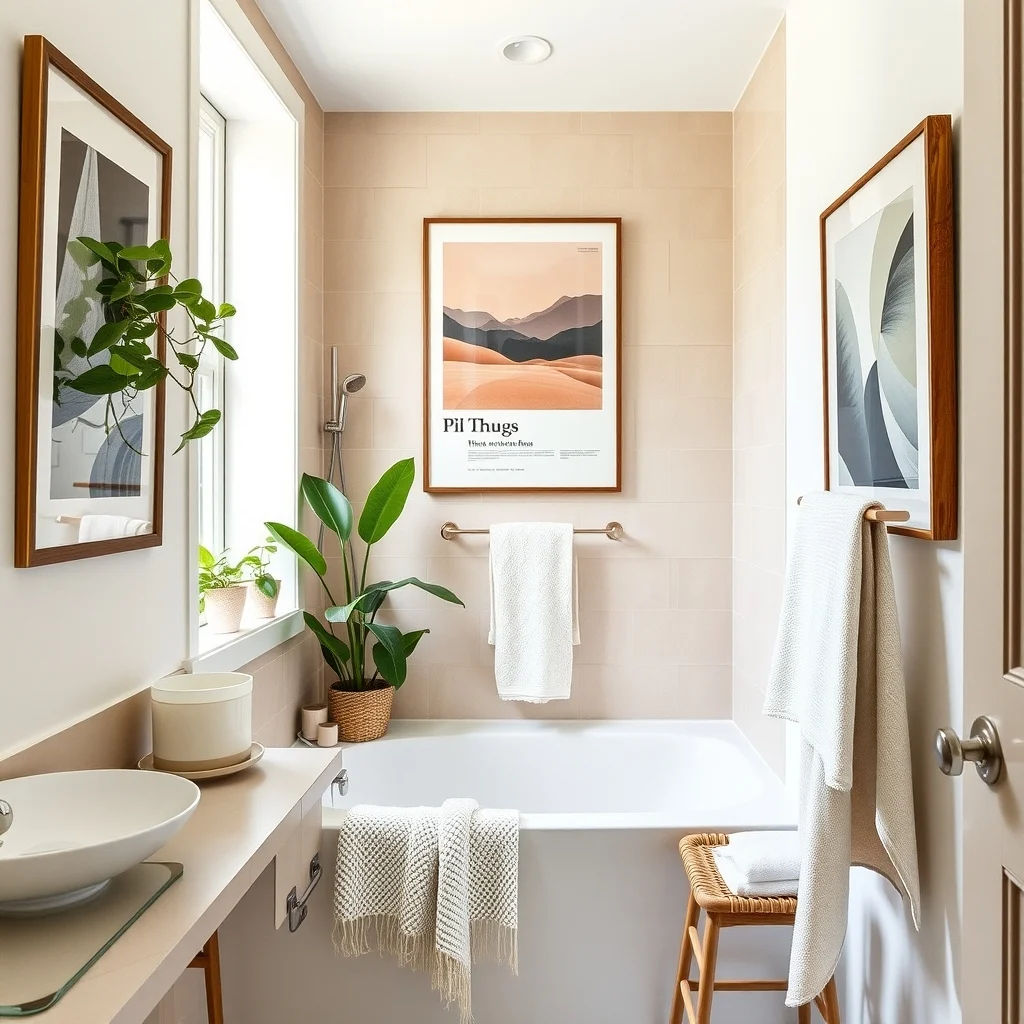
Instead of relying on a separate rack, a towel ring affixed directly to the tub’s side or the shower wall offers a compact, single‑point solution. A polished chrome or oil‑rubbed bronze ring can hold a hand towel within arm’s reach, while a second, slightly larger ring nearby accommodates a washcloth. Because the rings are mounted on a surface that is already wet, they are less likely to accumulate dust, and the metal finishes tend to resist corrosion in humid environments. The downside is that a ring holds only one towel at a time, so families may need multiple rings or an additional storage method for larger bath towels.
7. Multi‑Purpose Storage Bench
This image is by AI for inspiration only.
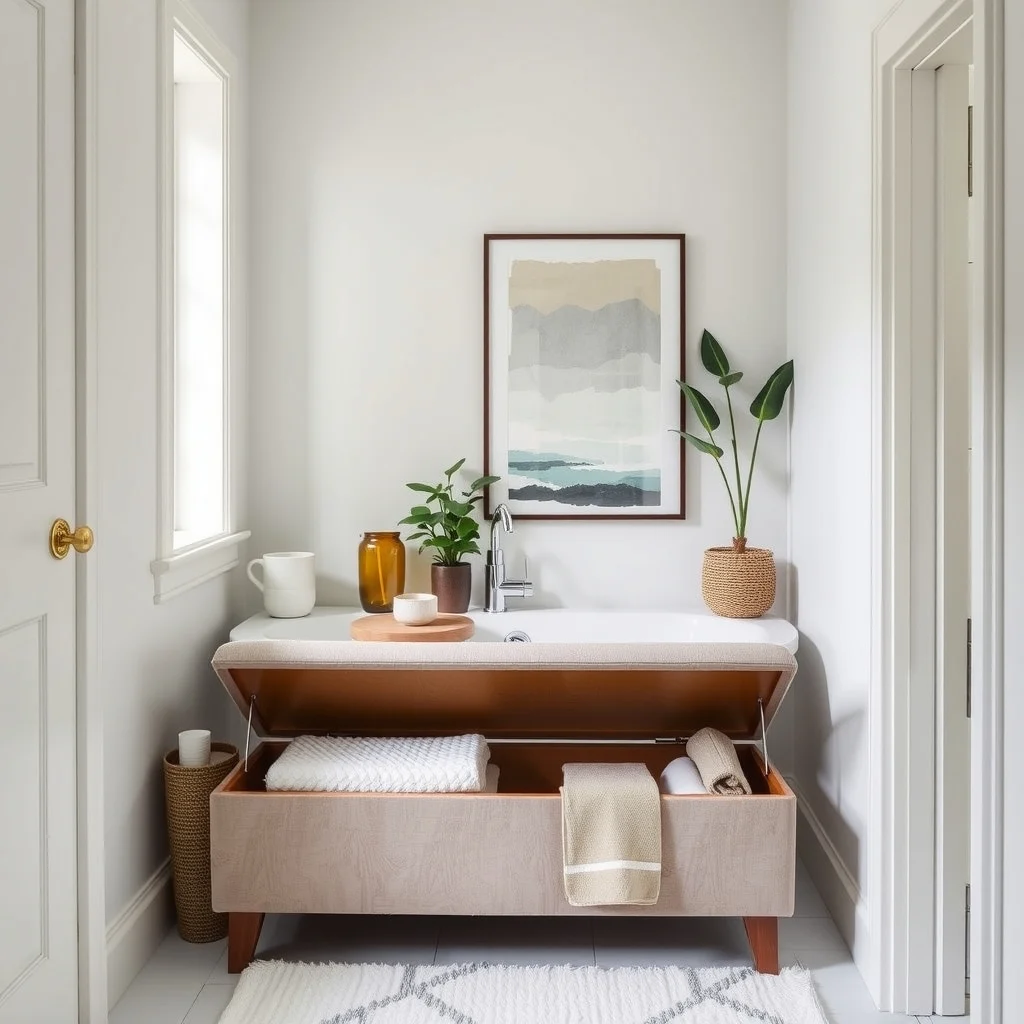
A low, upholstered bench placed at the foot of the bathtub serves as both a seating spot and a concealed towel repository. The bench’s interior can be accessed via a hinged lid, revealing a compartment sized for a folded bath towel and a few extra hand towels. Choose a bench upholstered in a quick‑dry fabric such as performance linen in a neutral shade like soft greige; this keeps the look cohesive while tolerating occasional moisture. The bench adds a touch of comfort for putting on shoes or stretching before a shower, and its presence breaks up the monotony of a long, narrow wall. Consider the bench’s height—typically around 12‑14 inches—to ensure it does not obstruct the flow of traffic in a cramped bathroom.
FAQ
This image is by AI for inspiration only.
How can I keep towels dry in a narrow bathroom?
Hang towels on a surface that allows air to circulate, such as an over‑the‑door rack or a ladder shelf, and avoid stacking them in a closed cabinet where moisture can linger.
Is it safe to install a recessed niche myself?
Minor niche work can be done by a confident DIYer, but cutting into tile or plaster may require a professional to avoid damaging plumbing or electrical lines.
What material should I choose for towel hooks to prevent rust?
Stainless steel, brushed nickel, or oil‑rubbed bronze are moisture‑resistant options that maintain their finish in humid bathroom conditions.
Can a pull‑out towel bar be added to an existing cabinet?
Yes, provided the cabinet depth allows the bar to extend without hitting the floor; you may need to modify the cabinet interior to accommodate the sliding hardware.
How do I prevent a ladder shelf from wobbling?
Place rubber pads under the base or secure the top to the wall with a discreet bracket; this adds stability without compromising the ladder’s aesthetic.
Final Thoughts
This image is by AI for inspiration only.
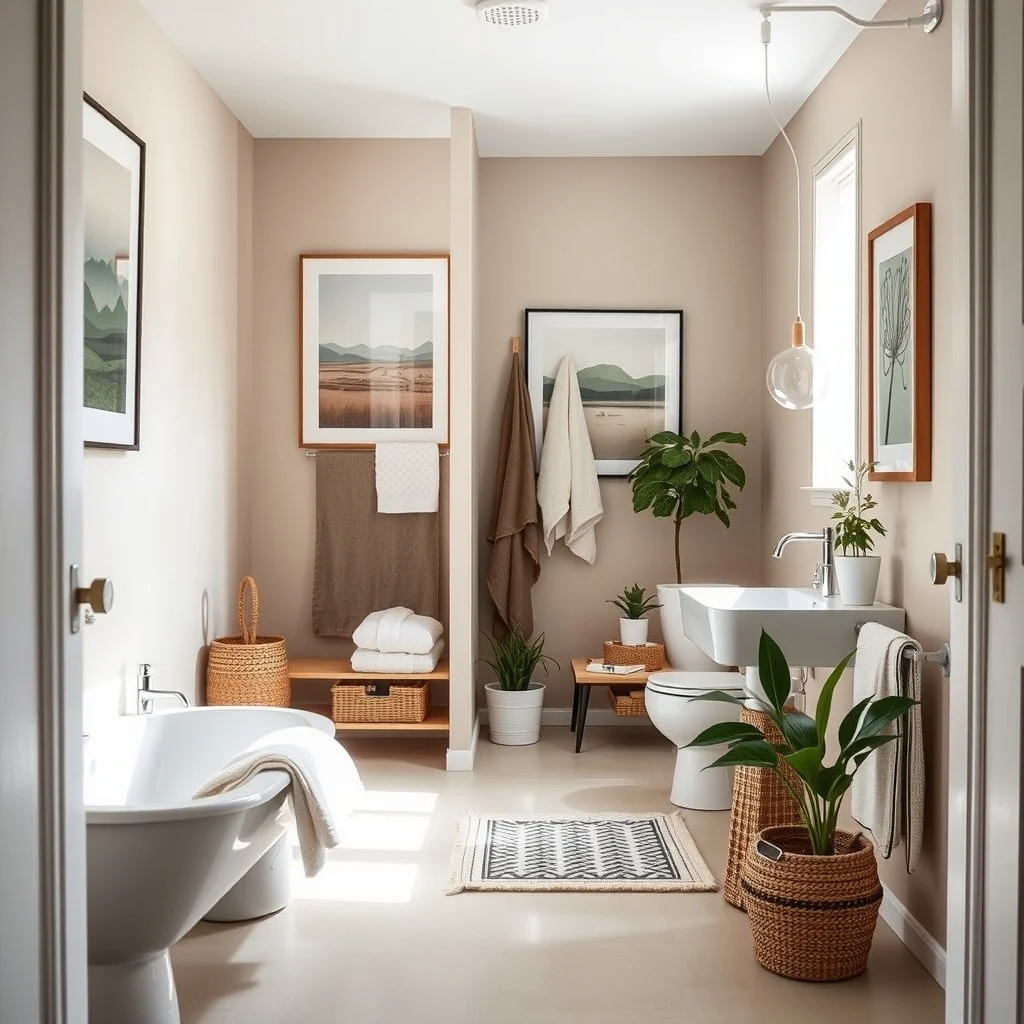
Even the slimmest bathroom can accommodate a functional towel system when you think vertically, use hidden niches, and select pieces that double as décor. Each of the seven ideas above offers a different balance of accessibility, style, and practicality, so you can mix and match to suit the specific dimensions and habits of your space. By focusing on airflow, sturdy materials, and thoughtful placement, you’ll keep towels dry, organized, and within reach without crowding the room. A well‑planned towel solution not only streamlines daily routines but also contributes to a calmer, more spacious feel—proving that good design thrives even in the narrowest of rooms.